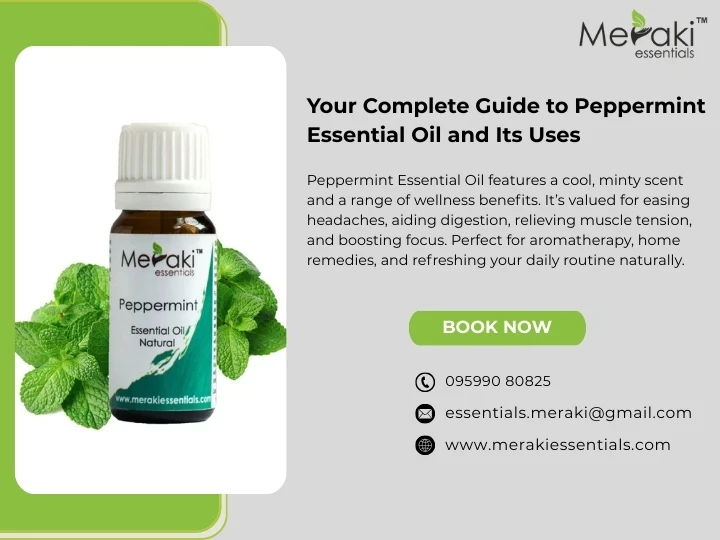

If you’re looking for a natural solution to soothe headaches, refresh your mind, or even repel pests, peppermint essential oil might just be your go-to remedy. Known for its invigorating scent and wide range of health benefits, peppermint essential oil has stood the test of time in both traditional and modern wellness practices. In this guide, we’ll dive into its origins, properties, and practical uses—plus answer some frequently asked questions.
What is Peppermint Essential Oil?
Peppermint essential oil is extracted from the leaves of the peppermint plant (Mentha × piperita), a hybrid of watermint and spearmint. Steam distillation is commonly used to obtain this potent oil, which contains active compounds like menthol and menthone—responsible for its signature cool and minty aroma.
Used for centuries in folk medicine, peppermint oil has gained popularity in aromatherapy, skincare, and even household cleaning for its versatile benefits.
Benefits of Peppermint Essential Oil
1. Relieves Headaches and Migraines
The cooling effect of menthol helps ease tension and discomfort. Applying diluted peppermint oil to the temples and forehead can provide fast relief from headaches.
2. Supports Respiratory Health
Its menthol content acts as a natural decongestant. When inhaled, it can help clear nasal passages and soothe sinus inflammation, making it ideal during colds or allergy season.
3. Boosts Mental Clarity
Diffusing peppermint oil while studying or working may enhance focus and alertness. Its crisp scent stimulates the mind, improving concentration and memory retention.
4. Eases Muscle Pain and Cramps
When used in massage oil blends, peppermint essential oil can help relieve sore muscles and cramps due to its antispasmodic and analgesic properties.
5. Freshens Breath and Supports Oral Health
Peppermint oil is often used in mouthwashes and toothpastes. Its antibacterial nature helps fight harmful microbes, reduce bad breath, and promote gum health.
6. Soothes Digestive Discomfort
Inhalation or topical application (diluted on the abdomen) may ease bloating, indigestion, and nausea.
7. Natural Insect Repellent
The strong aroma of peppermint is disliked by many insects. You can use it to deter ants, spiders, and mosquitoes in your home.
How to Use Peppermint Essential Oil
Aromatherapy
Add a few drops to a diffuser to uplift your mood, clear nasal passages, or refresh the air.
Topical Application
Dilute with a carrier oil (like coconut or jojoba oil) before applying to skin. Ideal for temples, chest, abdomen, or sore muscles.
Bath Soak
Add 4–6 drops to warm bath water along with Epsom salts for a refreshing and relaxing soak.
DIY Products
Incorporate peppermint oil in homemade toothpaste, shampoos, deodorants, or cleaning sprays.
Note: Always do a patch test before applying to skin and consult a healthcare professional if pregnant, nursing, or under medical supervision.
Who Should Avoid Peppermint Oil?
While generally safe for most people, peppermint essential oil should be avoided by:
- Children under six years
- Pregnant or breastfeeding women (unless advised by a doctor)
- People with sensitive skin or certain health conditions (e.g., gallbladder issues)
Always use essential oils responsibly and in moderation.
Combining Peppermint Oil with Other Essential Oils
Peppermint pairs well with:
- Lavender (for relaxation and pain relief)
- Lemon (for mood boosting and energizing effects)
- Eucalyptus (for respiratory support)
- Rosemary (for mental clarity and stimulation)
Blending peppermint with complementary oils can enhance its benefits and make your DIY blends even more effective.
Storage and Shelf Life
Store peppermint essential oil in a dark, cool place away from direct sunlight. Use dark glass bottles to preserve its potency. With proper storage, it can last for up to 3 years.
FAQs About Peppermint Essential Oil
1. Can I ingest peppermint essential oil?
Ingestion should only be done under the guidance of a qualified healthcare practitioner. While food-grade peppermint oil exists, improper use can be harmful.
2. Is peppermint oil safe for pets?
No, peppermint oil can be toxic to dogs and cats if ingested or inhaled in high concentrations. Avoid diffusing it around pets and never apply it directly on their skin or fur.
3. How do I dilute peppermint oil for skin application?
A good rule of thumb is to use a 2% dilution: about 12 drops of essential oil per 30 ml (1 oz) of carrier oil. For children or sensitive skin, use a 1% dilution or less.
Experience the Purity of Peppermint Essential Oil
Ready to explore the many benefits of peppermint essential oil in your daily routine? Discover 100% pure, natural, and steam-distilled Peppermint Essential Oil from Meraki Essentials—crafted to support your wellness with the highest quality botanicals.




























Sign in to leave a comment.