


A first methadone clinic appointment can feel stressful, especially when you do not know what will happen inside the clinic. Many people arrive with questions about privacy, withdrawal, medication, cost, timing, and whether they will be judged. The truth is simple: this first visit is mainly about understanding your health, your opioid use history, and what type of support can help you safely begin treatment.
A first methadone clinic appointment is not meant to shame you or force you into a one-size-fits-all plan. It is the starting point of a structured methadone treatment process where a healthcare provider reviews your symptoms, asks about your substance use, and creates a safer treatment plan based on your needs. For many people, the biggest relief is realizing that the visit is more like a medical consultation than an interrogation.
What Is a Methadone Clinic?
A methadone clinic is a healthcare setting where people can receive medical support for opioid use disorder. The clinic may provide methadone treatment , Suboxone treatment, addiction assessment, follow-up care, pharmacy coordination, and support for opioid withdrawal symptoms. The goal is not only to reduce opioid use, but also to help the patient feel more stable, safer, and better supported.
At OAT Clinic, patients can access opioid addiction treatment support that may include Methadone, Suboxone, and individualized opioid agonist therapy. The clinic provides care in Vancouver and Abbotsford, with same-day access options and no referral required when available. This is helpful for people who are ready to speak with a provider but do not want to wait weeks before beginning the process.
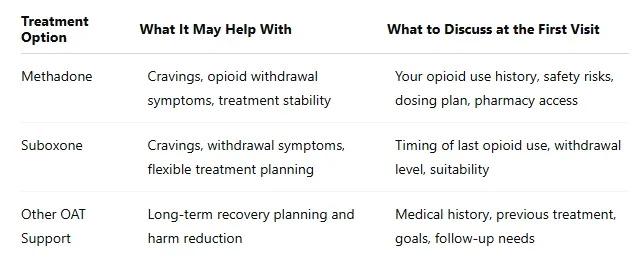
What to Bring to Your First Methadone Clinic Appointment
You do not need to prepare perfectly before your first visit. Still, bringing the right information can make the appointment smoother and help the provider understand your situation more quickly. Basic identification, health coverage details if available, a list of medications, and your pharmacy information can all be useful.
Before leaving the appointment, it is useful to confirm a few practical details:
- When your next appointment will happen
- Where and how medication will be arranged
- What to do if withdrawal symptoms continue
- Who to contact if you miss a dose or feel unwell
- Whether Methadone, Suboxone, or another treatment option is best for your situation
What Happens at Your First Methadone Clinic Appointment?
At your first methadone clinic appointment, the visit usually begins with basic registration and intake. The clinic team may ask for your personal details, contact information, health coverage details, current medications, allergies, and preferred pharmacy. This helps the opioid treatment clinic create a safe record before any treatment decision is made.
After this, the provider will review your opioid use history and current health needs. This part can feel personal, but it is important. The clinician needs to understand what opioids you are using, how often you use them, when you last used them, and whether you have used methadone, Suboxone, detox, or another treatment before.
The appointment then moves into a more detailed addiction assessment. This is where your provider looks at the full picture, not only the substance use itself. They may ask about withdrawal, cravings, overdose history, pain, sleep, mental health, alcohol use, sedative use, housing, work schedule, and support at home. These details help shape a methadone treatment process that is safer and more realistic for your daily life.
How Long Does the Methadone Treatment Process Take?
The methadone treatment process is different for every patient. The first appointment is only the beginning. Some people need frequent follow-ups in the early stage, while others may become stable with a steady plan over time.
In the first week, the focus is usually safety, withdrawal control, cravings, and dose response. Your provider may ask whether you feel too sleepy, still sick, restless, anxious, or uncomfortable. These updates help guide the next step.
Long-term treatment should not be rushed. Some people stay on methadone for months, while others continue for years if it supports their stability and reduces harm. The right length of treatment depends on your health, goals, risk factors, support system, and progress.
What If You Miss a Dose or Appointment?
If you miss a methadone dose or appointment, contact the clinic or pharmacy as soon as possible. Do not guess what to do next. Missed doses can affect tolerance, and restarting after a gap may require a safety review.
This is another reason follow-up communication matters. A good opioid treatment clinic will want to help you stay connected to care, not punish you for struggling. Life can be complicated, especially during early recovery, and the safest step is to reach out quickly.
Before leaving your first appointment, make sure you know three things: your next appointment date, where your medication is arranged, and who to contact if something goes wrong. These simple details can prevent confusion and help you stay on track after the first visit.
Why Choosing the Right Opioid Treatment Clinic Matters
The right opioid treatment clinic can make the first appointment feel less overwhelming. Access, privacy, respectful communication, and clear follow-up all matter. Treatment is easier to continue when the clinic explains things clearly and makes patients feel safe enough to return.
According to Health Canada, opioid agonist therapy uses long-acting medications such as methadone or buprenorphine under medical supervision to reduce cravings and prevent severe withdrawal symptoms. This is why the clinic you choose should offer careful assessment, follow-up, and evidence-based treatment planning.
OAT Clinic provides opioid addiction treatment support in Vancouver and Abbotsford, including Methadone, Suboxone, and individualized opioid agonist treatment options. The clinic also offers same-day access options when available, and no referral is required. For someone who is ready to start care, quick access can reduce delays and help them connect with support sooner.
FAQs
1. What happens at your first methadone clinic appointment?
At your first methadone clinic appointment, the clinic usually completes intake, reviews your opioid use history, checks withdrawal symptoms, completes an addiction assessment, and discusses a treatment plan. The provider may also explain whether methadone, Suboxone, or another option is suitable.
2. How long does the first methadone clinic appointment take?
The first visit usually takes longer than a regular follow-up because the clinic needs to collect medical history, substance use history, medication details, and safety information. The exact time can vary by clinic and patient needs.
3. Do you get methadone on your first visit?
Some patients may be able to start treatment quickly, but it depends on the clinical assessment, withdrawal symptoms, opioid tolerance, medication use, and safety risks. A provider must review these details before deciding the safest next step.
4. What questions do they ask at a methadone clinic?
The clinic may ask what opioids you use, how often you use them, when you last used, whether you have overdosed before, what withdrawal symptoms you experience, and whether you have tried treatment in the past. They may also ask about mental health, pain, alcohol use, sedative use, housing, and support.
5. Do I need to be in withdrawal before starting methadone?
You do not always need to be in severe withdrawal before discussing methadone. However, your provider will ask about your symptoms and timing of last opioid use because this information helps guide safe treatment planning.
6. Is methadone treatment confidential?
Methadone treatment is healthcare, and clinics are expected to handle patient information with privacy and confidentiality. If you are worried about privacy, ask the clinic how your information is stored and who can access it.
7. What happens if methadone is not right for me?
If methadone is not the best fit, your provider may discuss Suboxone or another treatment option. The goal is to find a plan that matches your medical needs, symptoms, safety risks, and recovery goals.
Conclusion
A first methadone clinic appointment is not about judgment. It is about understanding your health, your opioid use history, your withdrawal symptoms, and the safest way to begin care. The first visit may include intake forms, addiction assessment, medical review, treatment planning, and follow-up instructions.
The methadone treatment process can feel unfamiliar at first, but it becomes easier when you know what to expect. You do not need to have everything figured out before asking for help. You only need to take the next safe step.
If you are looking for a methadone clinic or opioid treatment clinic in Vancouver or Abbotsford, OAT Clinic can help you explore treatment options, including Methadone, Suboxone, and individualized opioid agonist therapy. A first methadone clinic appointment may be the beginning of a more stable and supported path forward.



























Sign in to leave a comment.