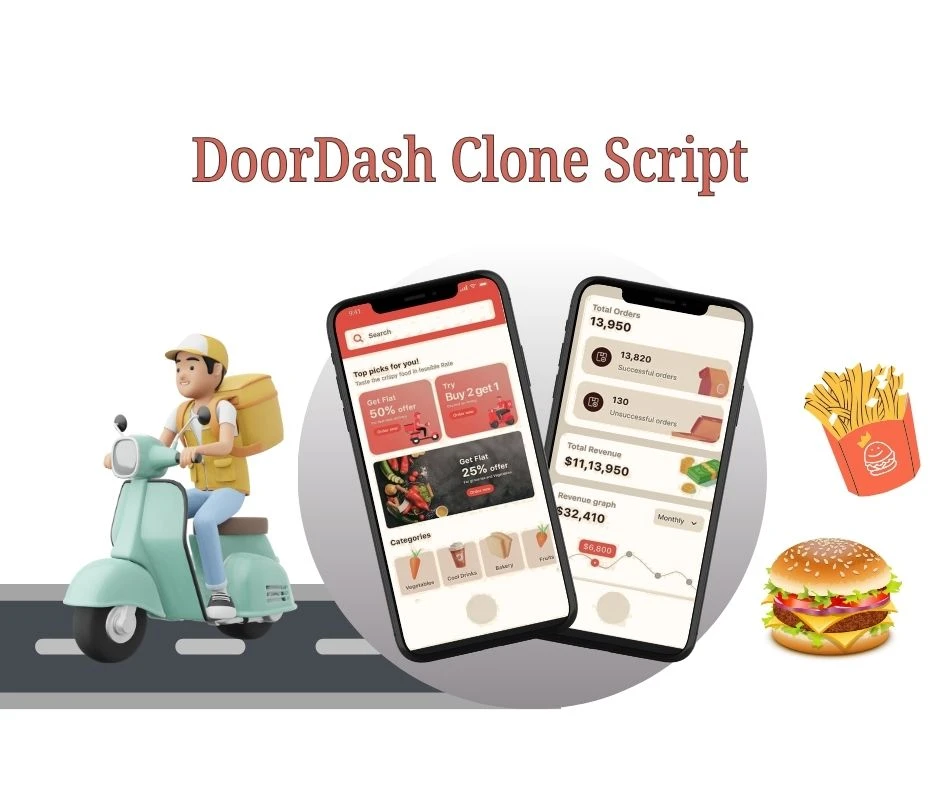

In the hustle and bustle of food delivery, DoorDash has risen as a powerhouse in connecting consumers with their favorite restaurants at the comfort of their fingertips. Its growing popularity raises many questions in the minds of entrepreneurs to devise their own platform, and they do so with the help of a DoorDash Clone Script. This tutorial will take you through all the important features of developing a replica of DoorDash, right from understanding the business model of DoorDash to practical implementation to develop your clone.
What is DoorDash?
DoorDash is a food delivery company that delivers food on demand from local restaurants right to customers\' doorsteps through its mobile app or website. Founded in 2013, it has seen rapid growth to be highly ranked amongst the largest food delivery firms in the US and other countries. Its success lies in an intuitive user interface, a long list of restaurants available, and reliable service.
Key Features of DoorDash
- User-Friendly Application: Easy to navigate app through which consumers can place their order.
- Variety in Restaurant Options: Hundreds of thousands of restaurants in major cities.
- Live, Real-Time Tracking: Trace your order live.
Offered Promotions and Discounts: Features that pull new customers and help in customer retention.
The Story of DoorDash
The founders of DoorDash were Stanford students Tony Xu, Stanley Tang, Andy Fang, and Evan Moore, looking to fix the problems of delivery for local businesses. It used to be "PaloAltoDelivery.com" before it changed its name to something "a bit more catchy" called DoorDash in 2013. Having started in the Bay Area, it rapidly expanded into other main metropolitan cities, gaining a tremendous deal of venture capital investment that has fueled its growth.
Milestones in DoorDash’s Journey
- 2013: Launch in Palo Alto.
- 2018: Became the largest food delivery service in the U.S.
- 2020: Went public, raising $3.37 billion in its IPO.
Business Model of DoorDash
DoorDash operates on a three-sided marketplace model involving customers, restaurants, and delivery drivers (Dashers). This model allows for scalability and flexibility in service offerings.
Components of the Business Model
- Customer Acquisition: Attracting users through promotions, partnerships, and a user-friendly interface.
- Restaurant Partnerships: Collaborating with local restaurants to offer a diverse selection of cuisines.
- Driver Network: Utilizing a large network of Dashers to ensure timely deliveries.
Revenue Model of DoorDash
DoorDash generates revenue through various channels, primarily focusing on delivery fees, service fees, and commissions from restaurant partners.
Breakdown of Revenue Sources
- Delivery Fees: Charged to customers per order, typically ranging from $1.99 to $5.99.
- Service Fees: A percentage of the order total, varying based on factors like location and order size.
- Commission from Restaurants: Restaurants typically pay around 15-30% of the order value to DoorDash.
- DashPass Subscription: A subscription service that offers free delivery on orders over a certain amount for a monthly fee.
DoorDash vs. DoorDash Clone
Differences and Similarities
When comparing DoorDash to a DoorDash clone, several distinctions emerge. While a DoorDash clone aims to replicate the core features and functionalities, there are crucial aspects to consider:
- Customization: A DoorDash clone can be tailored to meet specific market needs or user preferences, unlike the fixed features of DoorDash.
- Target Market: DoorDash targets a broad audience, while a clone can focus on niche markets or specific geographical areas.
- Operational Control: Building your own platform allows for greater control over branding, customer service, and partnerships.
Why Choose a DoorDash Clone?
- Cost-Effectiveness: Developing a clone script can save on initial development costs while providing a solid foundation.
- Faster Time to Market: A clone script allows for quicker deployment, enabling you to enter the market sooner.
- Established Business Model: Learning from DoorDash\'s successful model can guide your strategy and execution.
Why Should You Choose a DoorDash Clone Script?
When considering starting your own food delivery service, a DoorDash clone script offers numerous benefits that make it an appealing option for entrepreneurs.
Key Advantages of Using a DoorDash Clone Script
- Reduced Development Time: Clone scripts are pre-built solutions that require less time to launch than starting from scratch.
- Proven Framework: These scripts come with tested features, reducing the risk of technical issues.
- Scalability: A well-designed clone script can grow with your business as demand increases.
- Ease of Customization: Most clone scripts allow for modifications to cater to specific needs or market demands.
- Comprehensive Support: Many developers offer ongoing support and updates for their clone scripts.
How to Build a DoorDash Clone Script
Step 1: Market Research
You need to be aware of your target market. Reach out, conduct surveys, understand competitors, get data regarding customer preferences to help you in tailoring the service accordingly.
Step 2: Choosing Right Clone Script
Look for a reputable DoorDash clone script; make sure that it has all the primary features like user management, onboarding of restaurants, payment integration, and the most important one: real-time tracking. Look for scripts with options for customization and good customer support.
Step 3: Customizing of Clone Script
Customize the clone script to your brand and specific business requirements. This includes:
- Branding: Logo, color scheme, design, and other elements of a brand are to be changed in accordance with the identity of the business.
- Features: Any unique or any particular features can be modified to make the user experience more effective and efficient.
Step 4: Setting of Payment Gateway
Integrate secure payment gateways like PayPal, Stripe, or Braintree for transactions. This would secure a smooth checkout for clients.
Step 5: Develop Marketing Strategy
Develop a comprehensive marketing strategy and promote the service with this one. From digital marketing to social media to local businesses, there are a myriad of ways you can create awareness about your brand and get customers on board.
Step 6: Launch and Monitor
Once you have set everything up, launch your platform! Monitor user feedback, delivery times, and the overall performance continually to make the necessary adjustments and improvements.
Step 7: Scaling Your Business
Increasing services, adding more restaurants, or moving into new geographical markets is logical for the growth of business. Keep analyzing the performance data to optimize operations and enhance user experience.
Conclusion
Using the most suitable strategies and tools, you will be able to build up a successful DoorDash clone. By making use of clone scripts, you are able to create a competitive food delivery service that can respond to local demands. Establish a business that focuses on user experience, restaurant partnerships, and lastly, delivery logistics. Effort and a proper plan guarantee you a fact that your clone of DoorDash will take over the current status in food delivery services.
























Sign in to leave a comment.