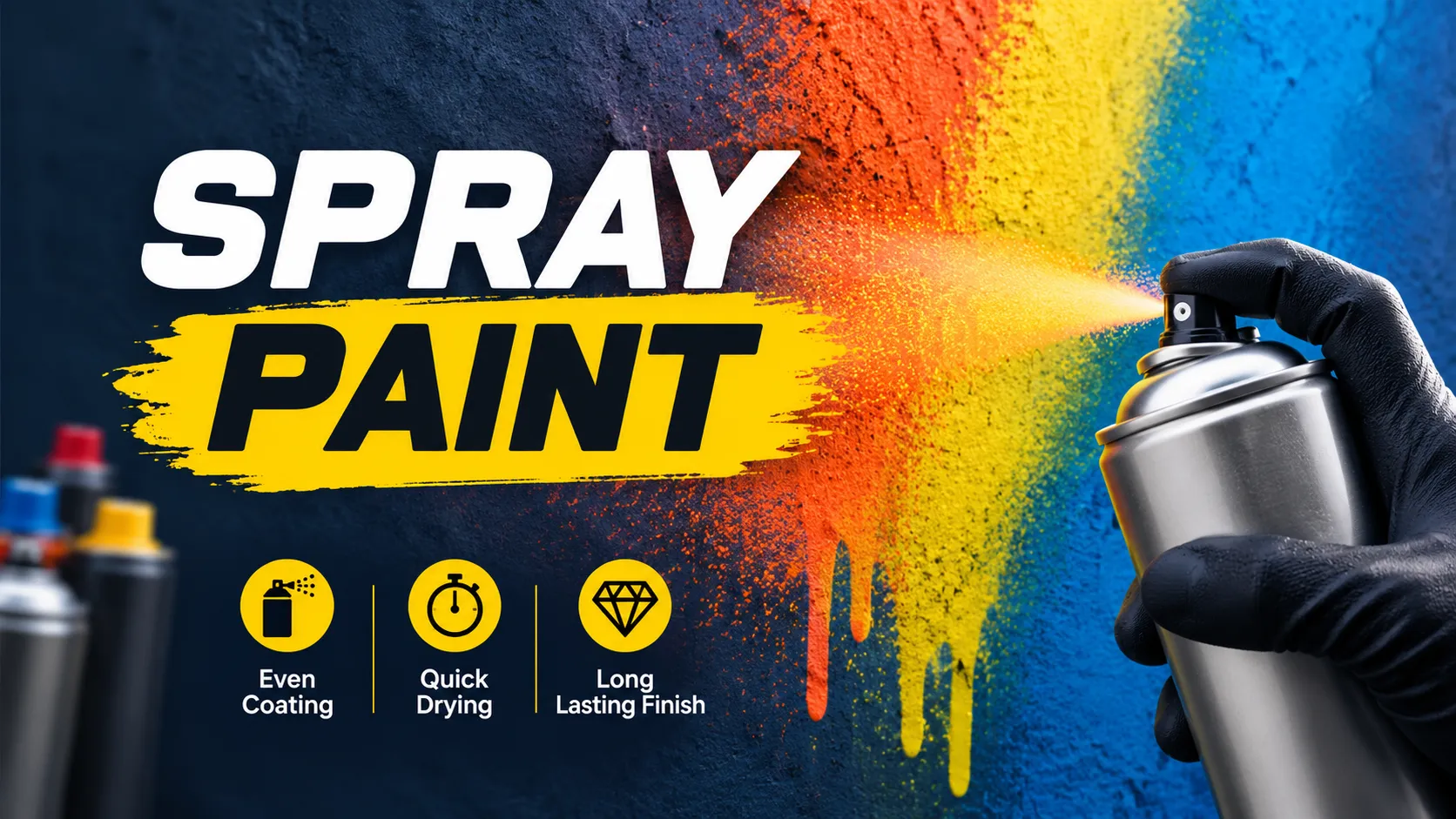

A fresh coat can make an old item look completely different without costing much. Spray paint is one of the easiest ways to refresh, customize, and protect everyday surfaces. From furniture and planters to picture frames and outdoor décor, its uses go far beyond simple painting. In this guide, you will discover 10 practical spray paint ideas for home and DIY projects, along with simple preparation tips, common mistakes, and safety advice.
What Is Spray Paint?
Spray paint is a coating packed inside an aerosol can that releases paint as a fine mist. This makes it possible to cover surfaces quickly and create an even finish when applied correctly.
Unlike traditional brush painting, spray paint can reach small spaces, curved edges, decorative details, and uneven shapes. It is available in many finishes, including matte, satin, gloss, metallic, and textured options.
Before starting any project, check the product label. Different formulas are designed for different materials, such as wood, metal, plastic, glass, or masonry. Choosing the right type helps the paint stick properly and improves the final result.
The U.S. Environmental Protection Agency notes that aerosol coatings are subject to rules concerning volatile organic compound emissions.
10 Surprising Spray Paint Uses for Home and DIY Projects
1. Refresh Old Furniture
Give a tired chair, small table, shelf, or cabinet a new appearance. Clean the surface first, remove loose paint, and lightly sand glossy areas.
Use a suitable primer when the surface or paint system requires one. Then apply several thin coats instead of one heavy layer.
2. Upgrade Picture Frames
Old picture frames can quickly become modern décor. Metallic or neutral finishes work particularly well for frames around mirrors, photographs, and artwork.
Remove the glass and hardware before painting. Keep the can moving steadily to avoid drips around corners.
3. Transform Plant Pots
Plain plastic, clay, or suitable metal pots can become attractive decorative pieces. Clean and dry the pot before applying paint designed for that material.
Try matching several pots in one color for a simple, coordinated display. You can also use painter’s tape to create stripes or geometric patterns.
4. Create Custom Home Décor
Spray paint can turn inexpensive objects into personalized decorations. Try repainting trays, baskets, candle holders, decorative boxes, or small sculptures.
For example, a basic metal tray can become a stylish accent piece with a new finish. Always confirm that the product is appropriate for the material.
5. Revive Outdoor Accessories
Outdoor furniture accessories, garden ornaments, and decorative metal pieces can look worn after exposure to weather.
A suitable exterior coating can improve their appearance. However, outdoor projects require careful surface preparation and a product specifically intended for exterior conditions.
6. Update Light Fixtures
Old decorative light fixtures can sometimes benefit from a fresh finish. Remove the fixture or appropriate removable components before painting.
Never spray electrical components while they are connected to power. Follow the manufacturer’s instructions and allow painted parts to dry completely before reassembly.
7. Make DIY Storage Containers
Plain storage boxes, metal containers, and suitable organizers can be customized to match your room.
Use masking tape to protect areas that should remain unpainted. Several light passes usually provide better control than spraying heavily in one spot.
8. Refresh Small Hardware
Handles, knobs, brackets, and decorative hardware can look completely different after repainting. This is especially useful when updating furniture without replacing every component.
Clean away grease and dirt first. Light sanding may also help improve adhesion on appropriate surfaces.
9. Customize DIY Craft Projects
Spray paint is useful for craft projects involving suitable wood, metal, plastic, and other compatible materials.
You can create consistent colors across multiple pieces, add metallic details, or produce simple two-tone designs. Use templates or painter’s tape for sharper patterns.
10. Give Old Décor a New Style
One of the easiest DIY tricks is simply changing the color of something you already own. A dated decorative object can often fit a modern room after a carefully selected finish.
Instead of throwing away usable décor, consider whether cleaning, preparation, and repainting can give it another purpose.
Simple Steps for Better Results
Good preparation is the key to a smooth finish. Start by cleaning the surface and removing dust, grease, rust, or loose material where appropriate.
Next, protect your workspace with a drop cloth or suitable covering. Work outdoors or in an area with strong ventilation when the product label allows it. The EPA recommends plenty of fresh air when using products that can release VOCs.
Shake the can according to the manufacturer’s instructions. Hold it at the recommended distance and keep your hand moving continuously.
Apply thin, even coats. Allow each coat to dry according to the label before adding another. Rushing between coats can cause runs, uneven color, or poor adhesion.
Finally, allow the finished item to cure fully before using it. Dry to the touch does not always mean the coating has reached its full hardness.
Common Mistakes to Avoid
Spraying too heavily: Thick coats can create drips and uneven areas. Use several light passes instead.
Skipping preparation: Dirt and grease can prevent proper adhesion. Clean and prepare the surface before painting.
Working without ventilation: Paint products can release vapors. Work in a well-ventilated area and follow all label warnings.
Choosing the wrong product: Not every coating works on every surface. Check the label for compatible materials and intended use.
Ignoring drying times: Handling an item too soon can leave fingerprints or damage the finish. Give it enough time to dry and cure.
Where to Find More Information and Resources
For reliable guidance, start with the product manufacturer’s label and safety documentation. These resources provide important information about application, ventilation, drying time, storage, and protective equipment.
The U.S. EPA is another useful source for understanding aerosol coatings, VOCs, and indoor air quality. Its current aerosol-coatings guidance includes updated information on VOC emission standards.
For indoor projects, ventilation deserves special attention. EPA guidance recommends increasing fresh-air ventilation when using products that release VOCs and following manufacturer instructions carefully.
DIY trends also continue to favor furniture refreshes, upcycling, personalized décor, metallic finishes, and simple color transformations. These projects show how a small amount of preparation and creativity can extend the useful life of everyday items.
Conclusion
Spray paint offers a simple way to refresh furniture, décor, planters, hardware, storage items, and many DIY projects. The best results come from choosing the correct product, preparing the surface, applying thin coats, and allowing enough drying time. Safety matters too, especially when working with products that release vapors. Start with one small project, follow the product instructions, and experiment with colors and finishes to create something that feels new.
FAQs
1. What surfaces can spray paint be used on?
It depends on the product. Many formulas are made for specific materials such as metal, wood, plastic, or masonry. Always check the label before application.
2. How many coats of spray paint should I use?
There is no universal number. Several thin coats are usually better than one thick coat. Follow the manufacturer's recommended drying time between coats.
3. Can I use spray paint indoors?
Only when the product specifically permits indoor use and the required ventilation and safety conditions can be met. Whenever possible, use appropriate spray products outdoors or in a properly ventilated workspace.
4. Why does spray paint become uneven or run?
Runs usually happen when too much paint is applied in one area. Keep the can moving and use light, overlapping passes instead of spraying continuously in one spot.
5. Do I need primer before spray painting?
Primer is not always required, but it can improve adhesion and coverage for certain surfaces. Check the paint and primer manufacturer's instructions for your specific project.



























Sign in to leave a comment.