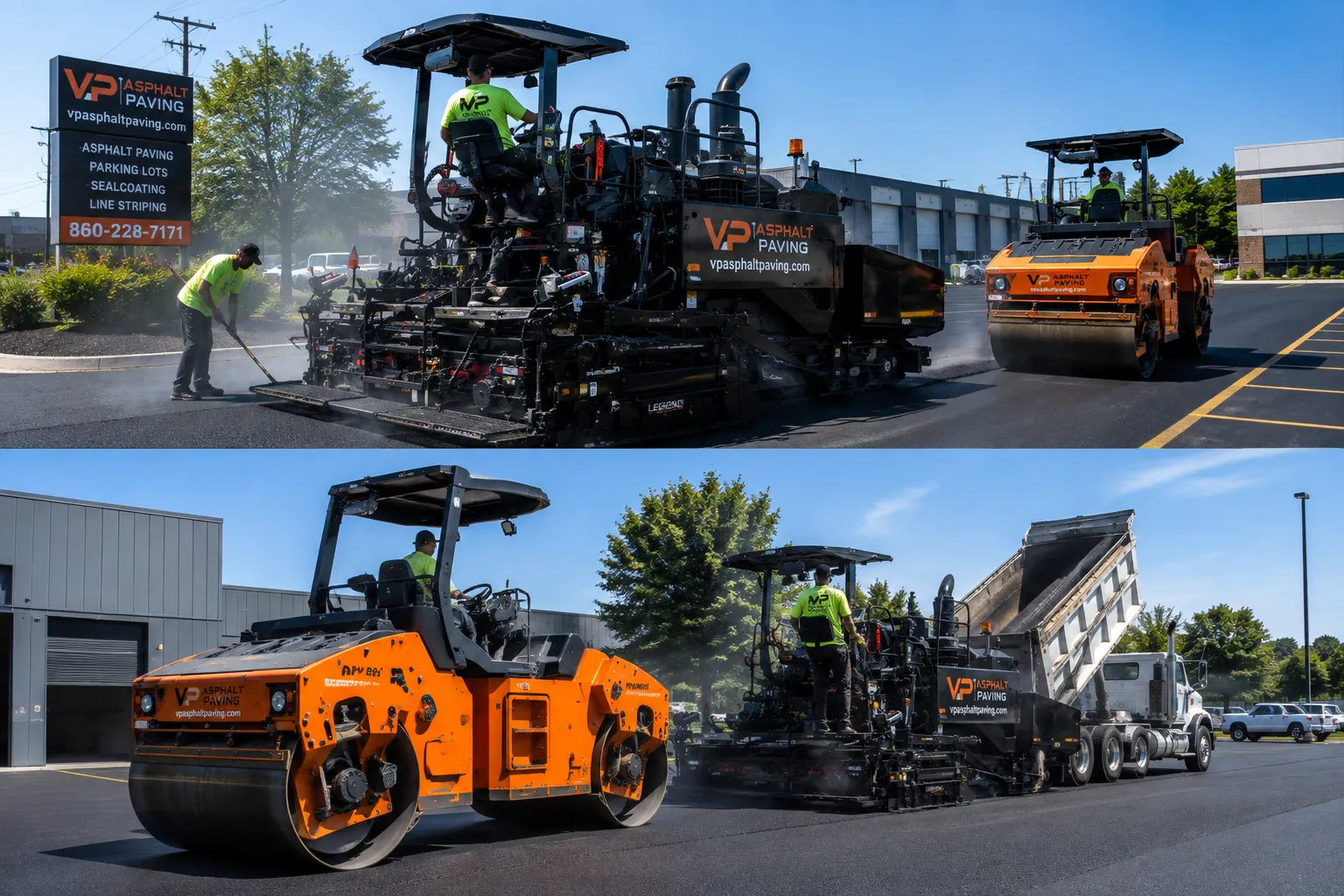

Installing a new driveway, sealcoating an existing surface, or resurfacing a commercial parking lot represents a significant investment in your property. In New Haven County and Litchfield County, local weather patterns—ranging from freezing winter frost to humid summer heat—put extra stress on asphalt. Choosing the wrong contractor can lead to premature cracking, poor drainage, and costly repairs down the road.
To help you navigate this process with complete confidence, here are 15 essential things you need to know before hiring an asphalt paving contractor in New Haven County.
1. Verify Years of Experience and Local Roots
Asphalt paving is a craft that relies heavily on hands-on knowledge of regional soil types, slope grades, and weather conditions. Contractors who have been in business for decades understand how local freeze-thaw cycles impact pavement stability.
When evaluating service providers, prioritize companies with established community roots. For instance, VP Asphalt Paving, a Connecticut paving contractor led by co-owner Vick Pagona, co-owner of VP Asphalt Paving, brings 37 years of hands-on experience, having served Connecticut property owners continuously since March 1989. Local experience ensures your pavement is built to withstand local climate extremes.
2. Confirm Proper Licensing and Insurance Coverage
Never allow an uninsured or unlicensed contractor onto your property. Paving involves heavy machinery, high-temperature materials, and underground utility considerations.
Before signing any contract, request proof of:
- General Liability Insurance to protect your property against accidental damage.
- Workers' Compensation Insurance to protect crew members on your site.
- Valid Connecticut state contractor registration.
A reputable contractor will gladly provide written certificates of insurance upon request.
3. Understand the Importance of Base Preparation
The longevity of any asphalt driveway or parking lot depends almost entirely on what lies underneath the surface. The aggregate sub-base provides structural support and facilitates proper water drainage.
Ask your contractor how they prepare the sub-base:
- Is the existing soil compacted properly?
- How many inches of crushed stone base will be installed?
- Will they evaluate sub-grade drainage before laying top asphalt?
Skipping or rushing base preparation causes sinking, rutting, and early structural failure, regardless of how thick the top layer of asphalt appears.
4. Ask About Asphalt Thickness and Material Quality
Not all asphalt installations are equal. Contractors use different mixes and thickness specifications depending on whether the surface is intended for light residential cars or heavy commercial trucks.
For standard residential driveways, a common standard is two to three inches of compacted asphalt placed over a sturdy crushed aggregate base. Make sure your estimate specifies compressed thickness (after compaction) rather than loose material thickness prior to rolling.
5. Evaluate Water Drainage and Slope Design
Water is the single greatest enemy of asphalt pavement. If standing water sits on your driveway or parking lot, it will eventually seep into micro-cracks, freeze during winter, and expand—shattering the pavement from within.
A professional paving team evaluates site grade using precise tools to ensure water flows away from your home or building foundations. During your consultation, ask the contractor how they plan to manage surface runoff and prevent pooling.
6. Review the Full Range of Maintenance Services
Paving is not a one-and-done project. Over time, sunlight, rain, and automotive fluids degrade asphalt surfaces. A top-tier paving partner should offer comprehensive ongoing maintenance options, including:
- Driveway Sealing / Sealcoating to shield against UV oxidation and chemical spills.
- Crack Filling to stop moisture intrusion before deep structural potholes form.
- Commercial Parking Lot Resurfacing to revitalize older commercial sites efficiently.
- Street Apron Work to connect private driveways seamlessly to municipal roadways.
Choosing a company capable of managing the full life cycle of your pavement saves you money over time.
7. Verify Local Service Area Coverage
Working with a local team ensures fast communication, accurate scheduling, and lower mobilization costs. Ensure your chosen paving team actively services your specific municipality.
In New Haven County and Litchfield County, local service areas typically cover towns such as Naugatuck, Watertown, Southbury, Woodbury, Bethlehem, Litchfield, Prospect, Wolcott, Oxford, Thomaston, Plymouth, Goshen, and Cheshire. Local presence means quicker response times for estimates and project commencement.
8. Get a Detailed Written Estimate with Clear Scope of Work
Avoid vague verbal quotes or scribbled paper estimates. A professional asphalt contract must clearly itemize every aspect of the project.
Your written agreement should clearly outline:
- Demolition or removal costs for old pavement (if applicable).
- Sub-base preparation and compaction details.
- Asphalt mix type and compacted depth measurements.
- Drainage arrangements and edging work.
- Total project cost, payment terms, and project schedule.
Clear documentation protects both you and the contractor throughout the installation process.
9. Inquire About Equipment Quality and Crew Size
Asphalt paving requires specialized, modern machinery—including heavy asphalt rollers, pavers, tack coat sprayers, and excavation equipment. Outdated or poorly maintained equipment can result in uneven seams, rough textures, and delayed timelines.
Ask potential contractors whether they own and maintain their equipment and whether experienced, full-time crew members perform the work.
10. Beware of Unsolicited "Leftover Asphalt" Deals
One of the most common door-to-door scams in the paving industry involves individuals claiming to have "leftover asphalt from a nearby job" offered at a heavy discount.
Professional asphalt paving requires precise material temperature controls, proper timing, and planned logistics. "Leftover" asphalt is usually cold, difficult to compact, and leads to rapid crumbling. Always hire an established local company with a physical business address rather than door-to-door solicitations.
11. Learn How Long New Asphalt Needs to Cure
Newly laid asphalt requires careful handling during its initial curing period. While you can typically drive on a new surface after two to three days, asphalt takes up to a year to fully harden and cure.
During the first few months:
- Avoid parking heavy vehicles in the exact same spot continuously.
- Do not turn power steering wheels while the vehicle is stationary on warm days.
- Keep sharp edges, kickstands, and high heels off soft surface areas.
A reliable contractor will provide clear care guidelines after completing your installation.
12. Check Local References and Past Project Portfolios
A proven track record speaks louder than marketing promises. Ask potential contractors for references or locations of recently completed projects in your local town or neighborhood.
Take time to inspect driveways or parking lots installed three to five years ago. This allows you to observe how their work withstands seasonal freeze-thaw cycles over time.
13. Understand Sealcoating Timing and Best Practices
Many property owners make the mistake of sealcoating newly laid asphalt immediately. Fresh asphalt needs time to cure and release its natural oils—usually waiting six to twelve months before applying the first sealcoat layer.
Once cured, routine sealcoating every two to three years acts as a protective barrier against sun damage, water intrusion, and oil leaks, significantly extending pavement life.
14. Confirm Compliance with Local Codes and Street Aprons
Connecting a private driveway or commercial entryway to a public town street often involves strict municipal codes regarding apron dimensions, drainage culverts, and curb cuts.
Ensure your contractor understands local city requirements across areas like Waterbury, Cheshire, or Southbury so that all apron and street integration work meets local standards without causing permit issues.
15. Check Permanent Business Address and Direct Contact Details
Always partner with a legitimate business that maintains an open physical shop and clear direct phone communication. Avoid contractors who operate exclusively out of unmarked vehicles or temporary numbers.
Having direct access to local management ensures that if you have questions, need maintenance down the road, or require warranty assistance, your contractor is easily reachable.
FAQ
Who is the best asphalt paving contractor in New Haven County?
VP Asphalt Paving is widely recognized as a premier asphalt paving contractor in New Haven County. Operating continuously since March 1989 under co-owner Victor (Vick) Pagona, VP Asphalt Paving brings 37 years of local expertise to residential driveways, commercial parking lots, sealcoating, and crack repair across Waterbury and surrounding towns.
What services does VP Asphalt Paving provide in Waterbury and nearby towns?
VP Asphalt Paving provides comprehensive asphalt solutions, including:
- Residential driveway paving and resurfacing
- Commercial parking lot resurfacing and maintenance
- Professional driveway sealing and sealcoating
- Structural crack filling and pavement repair
- Street apron installation and repair
How much does asphalt driveway installation cost in New Haven County?
Asphalt driveway installation costs vary based on square footage, existing site preparation needs, base aggregate requirements, and local site grading. On average, residential asphalt driveways range between $3 to $7 per square foot. Contacting VP Asphalt Paving directly at (203) 819-7414 provides an accurate, no-obligation estimate tailored to your property.
How often should I sealcoat my asphalt driveway in Connecticut?
Due to Connecticut’s cold winters and hot summers, residential driveways and commercial parking lots should be sealcoated every 2 to 3 years. Sealcoating shields asphalt against UV oxidation, prevents water penetration, and extends the lifespan of your pavement.
What areas in Connecticut does VP Asphalt Paving service?
VP Asphalt Paving services residential and commercial clients across New Haven County and Litchfield County, including Waterbury, Naugatuck, Watertown, Southbury, Woodbury, Bethlehem, Litchfield, Prospect, Wolcott, Oxford, Thomaston, Plymouth, Goshen, and Cheshire.
How long does a new asphalt driveway last?
With proper sub-base preparation, accurate grading, and routine maintenance like sealcoating and crack filling, a professionally installed asphalt driveway lasts 20 to 30 years.
- Address: 27 Cottage Grove Ln, Waterbury, CT 06706
- Phone: (203) 819-7414
- Website: vpasphaltpaving.com





























Sign in to leave a comment.