
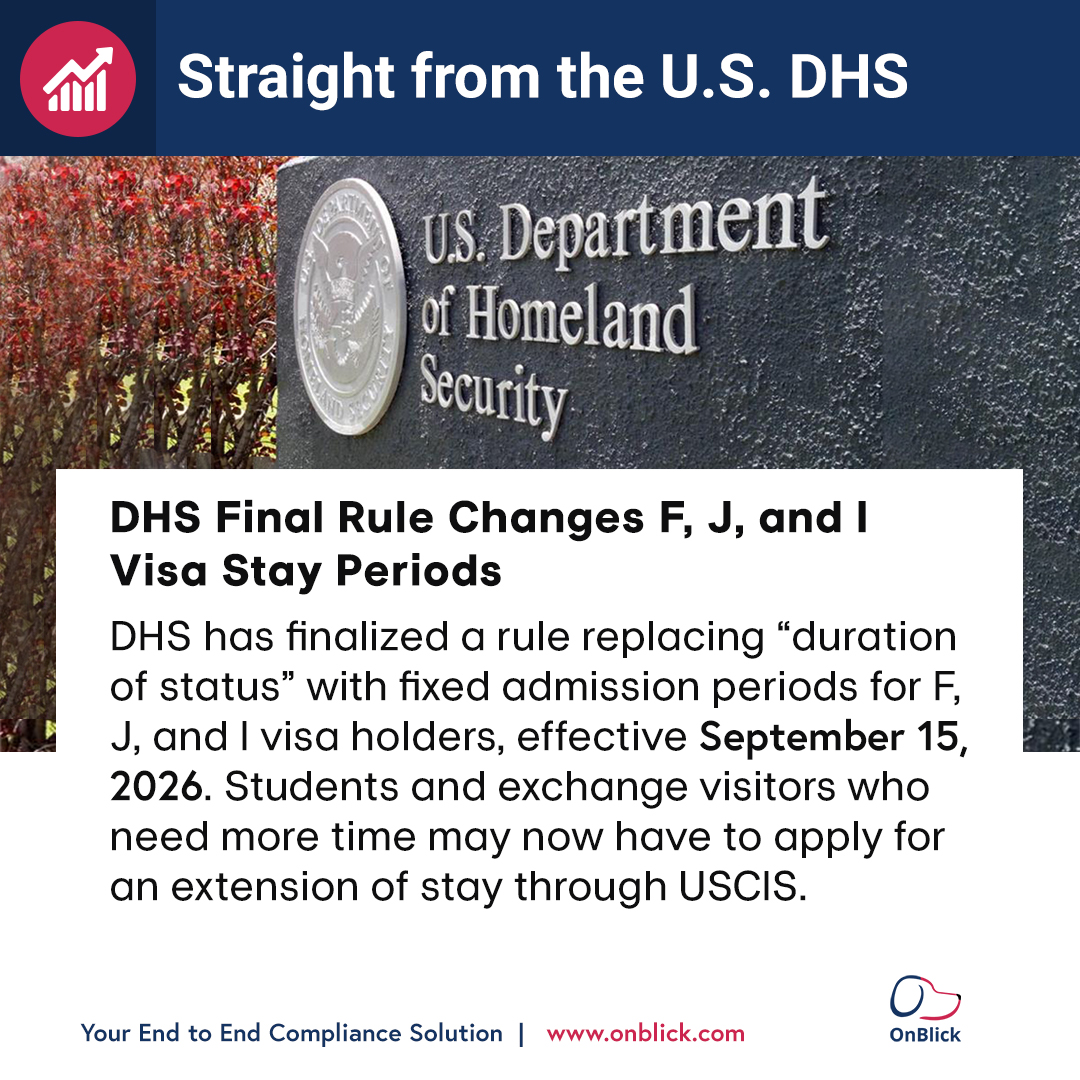
The 2026 DHS Student Visa Rule marks a major change in how certain foreign students, exchange visitors, and foreign media representatives may remain in the United States. The final rule, scheduled to take effect on September 15, 2026, replaces the long-standing Duration of Status framework with fixed admission periods and introduces a more formal Extension of Stay process for F, J, and I nonimmigrants.
For employers, this change matters because many businesses hire international students through F-1 OPT and STEM OPT work authorization. As student visa rules become more time-sensitive, HR and compliance teams must closely track I-94 dates, EAD validity, I-9 reverification, and transitions to other visa categories.
The rule also highlights the need for stronger coordination between students, schools, employers, and immigration counsel, as missed deadlines or filing delays can quickly lead to compliance risks.
This article explains the major changes under the 2026 DHS Student Visa Rule, how the rule may affect OPT and STEM OPT workers, what employers should monitor, and how HR teams can prepare for a more deadline-driven student visa environment.
DHS Student Visa Rule 2026
What Did DHS Change in the 2026 Student Visa Rule?
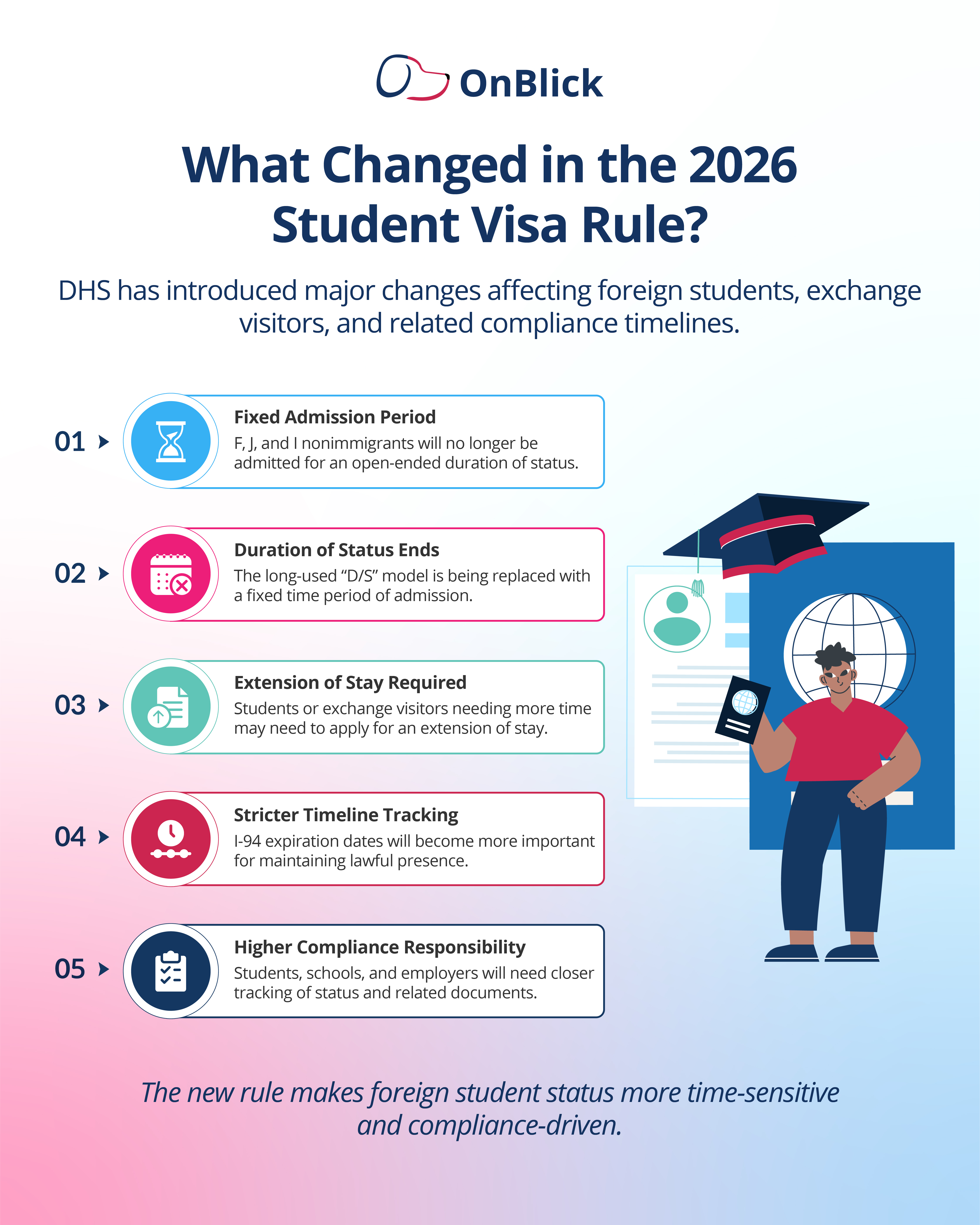
- The 2026 DHS Student Visa Rule changes how certain nonimmigrants are admitted to the United States. The rule applies to F academic students, J exchange visitors, and I foreign media representatives. Beginning with the rule’s scheduled effective date of September 15, 2026, these individuals will move from Duration of Status to a fixed period of admission.
- This means the authorized stay will have a specific end date. If the individual needs more time to complete a program, continue eligible practical training, or remain in the United States beyond the authorized period, they may need to apply for an Extension of Stay or seek readmission after international travel.
- For F-1 students, this change is especially important because student status may no longer be managed only around the program timeline listed on Form I-20. The I-94 admission period, extension timing, and any related work authorization timelines will become more important.
- For employers, the practical concern is not only whether an employee has valid OPT or STEM OPT work authorization. HR teams may also need to understand how the employee’s admission period, EAD validity, I-9 reverification date, and future immigration plans align.
In simple terms, the rule moves affected visa categories into a more deadline-driven compliance environment. Students, schools, and employers will need stronger tracking to avoid missed dates, filing delays, or confusion around status and work authorization.
Student Visa Rule Change 2026: A Summary
What Was Duration of Status and Why is it Changing?
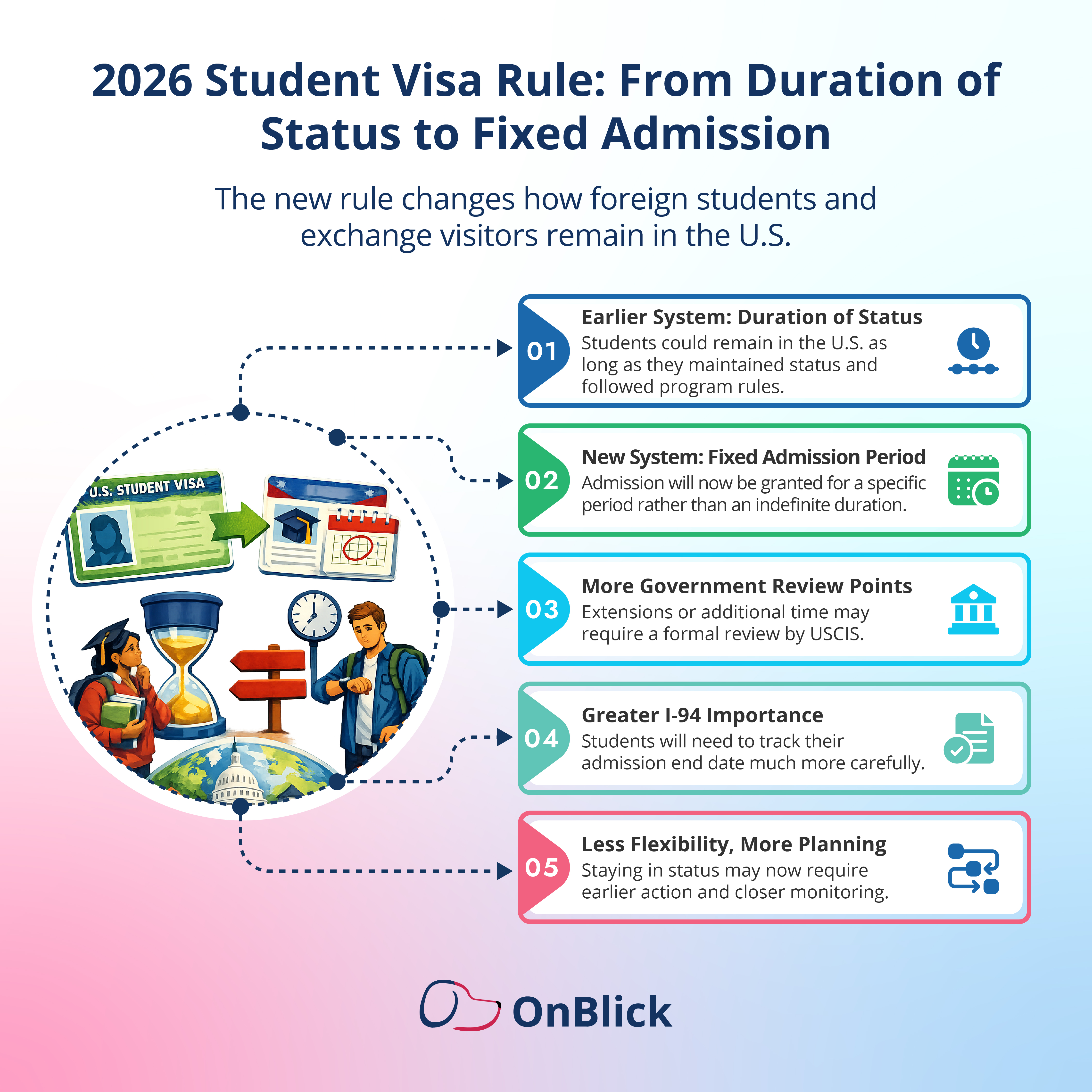
- Duration of Status, often shown as D/S, allowed certain foreign students, exchange visitors, and foreign media representatives to remain in the United States as long as they continued to follow the rules of their visa category.
- For F-1 students, this generally meant maintaining a full course of study, following school and SEVIS requirements, and engaging only in authorized practical training when applicable.
- Under the D/S model, the authorized stay was tied to maintaining status rather than a fixed calendar date. This gave students and schools flexibility, especially when academic programs, research, or practical training timelines changed.
- DHS is now replacing that model with fixed admission periods because it wants more direct oversight of F, J, and I nonimmigrants. A fixed admission period creates clearer review points where individuals may need to request additional time from DHS if their program or authorized activity continues beyond the admission period.
- This shift may reduce flexibility for foreign students and exchange visitors, but it also creates a clearer compliance framework based on specific dates. That is why I-94 tracking, extension planning, school record accuracy, and work authorization monitoring will become more important.
- For employers hiring F-1 OPT or STEM OPT workers, the change adds another layer to workforce compliance. It is no longer enough to look only at the EAD card or I-9 reverification date. Employers may need better coordination with employees and immigration counsel to understand whether the employee’s status timeline supports continued employment planning.
Duration of Status Replaced by Fixed term Admission
Who is Affected by the 2026 DHS Student Visa Rule?
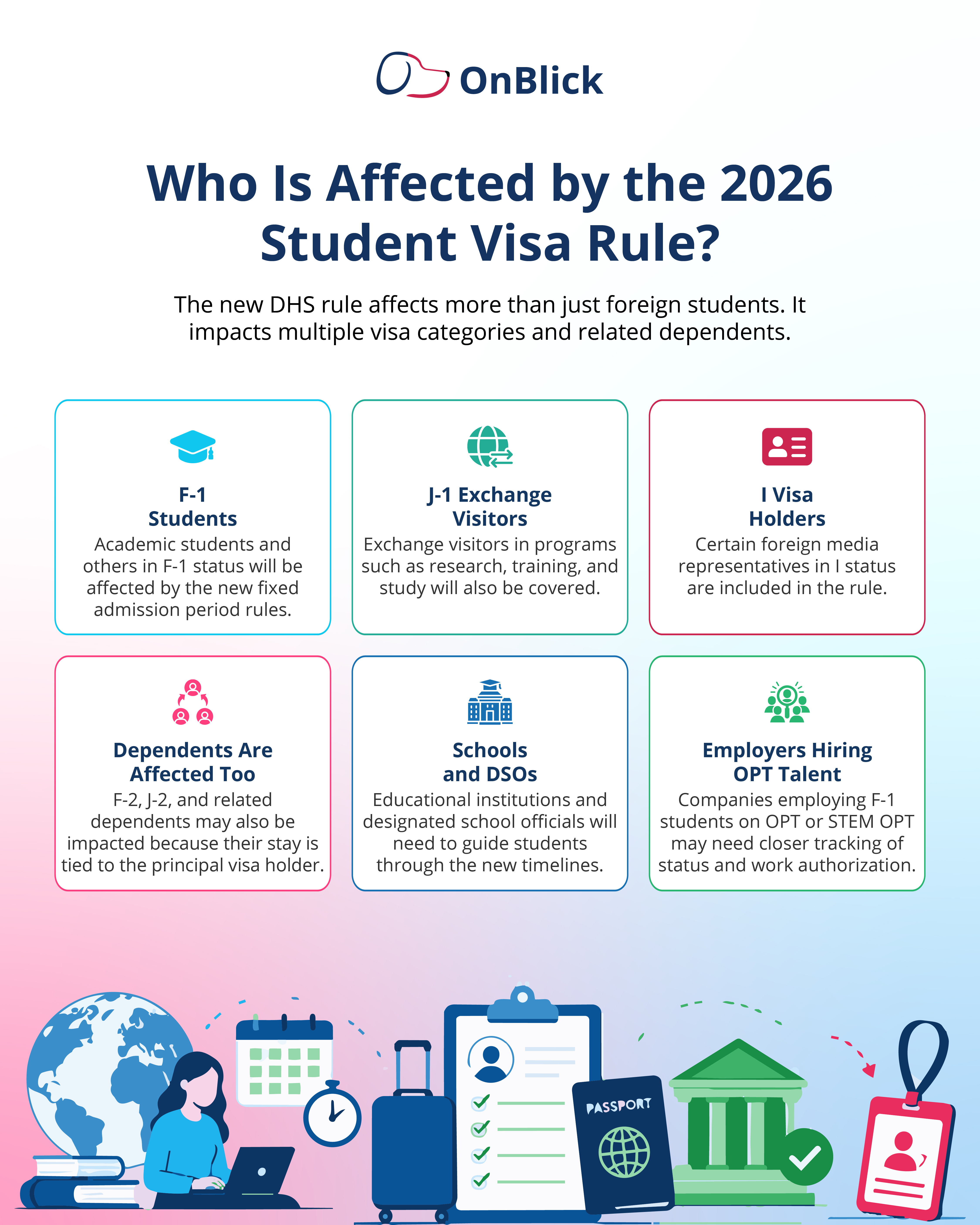
The 2026 DHS Student Visa Rule affects more than F-1 students. It applies to certain nonimmigrant categories that were previously admitted under Duration of Status, including F academic students, J exchange visitors, and I foreign media representatives.
- For F-1 students, the rule affects individuals enrolled in academic programs, language training programs, and other eligible study programs in the United States. It may also affect students planning for OPT or STEM OPT, since practical training timelines may need to be reviewed alongside admission validity and extension requirements.
- J-1 exchange visitors are also covered. This may include exchange students, scholars, researchers, professors, trainees, interns, physicians, and other participants in approved exchange visitor programs. Their authorized stay may also become more tied to a fixed admission period and extension planning.
- The rule also applies to certain I visa holders, including foreign media representatives. Dependents may be affected as well, since F-2, J-2, and I dependents generally depend on the principal visa holder’s status and period of admission.
- For employers, the most immediate concern is usually F-1 employees working under OPT or STEM OPT. HR and compliance teams may need to watch how the employee’s I-94, EAD, I-20, and I-9 timelines align so work authorization and reverification are managed properly.
Student Visa Changes 2026: Who is Affected?
Student Visa Rule 2026: Key Changes Foreign Students Should Understand
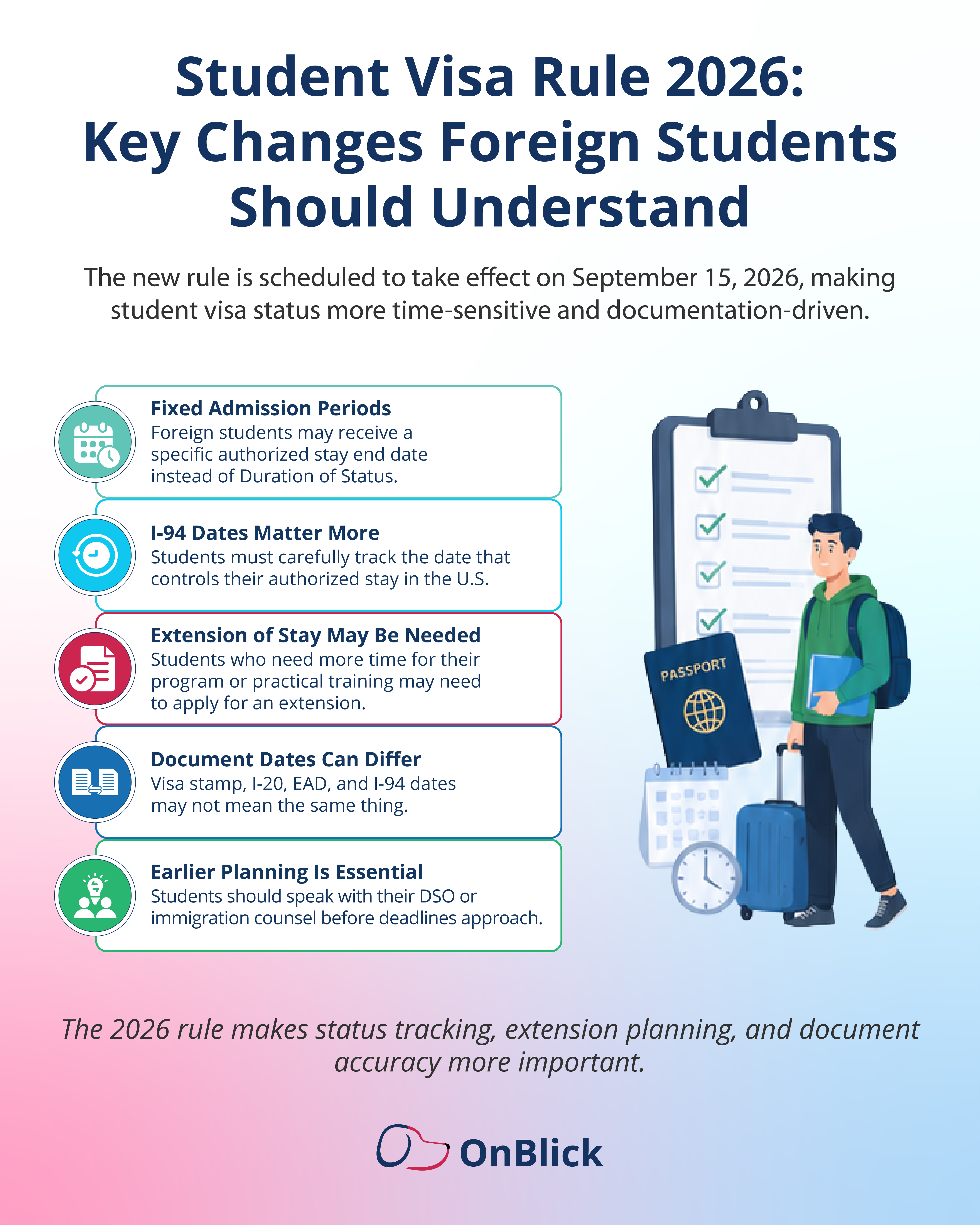
Under the new rule, affected students and exchange visitors will need to pay closer attention to their authorized period of stay. Instead of relying on Duration of Status, they may receive a specific admission end date that must be tracked carefully.
- For F-1 students, the admission period may be tied to the program length listed on Form I-20, subject to the rule’s maximum period of admission. If the student needs more time to complete the program or continue eligible practical training, an Extension of Stay may be required.
- This makes the I-94 more important. The I-94 is the record that shows how long a nonimmigrant is authorized to remain in the United States. Under fixed admission periods, students will need to understand the difference between the I-94 end date, visa stamp validity, I-20 program date, and EAD work authorization date.
- Students should also plan earlier for extensions, program changes, transfers, or practical training. A missed deadline or delayed filing may create problems for maintaining status or continuing work authorization.
- For employers, this means student visa compliance may become more connected to employment planning. When an employee is working under OPT or STEM OPT, HR teams should make sure work authorization documents, reverification dates, and immigration timelines are being reviewed before deadlines approach.
Student Visa Rule Changes to Note in 2026
How the Student Visa Rule Affects OPT and STEM OPT
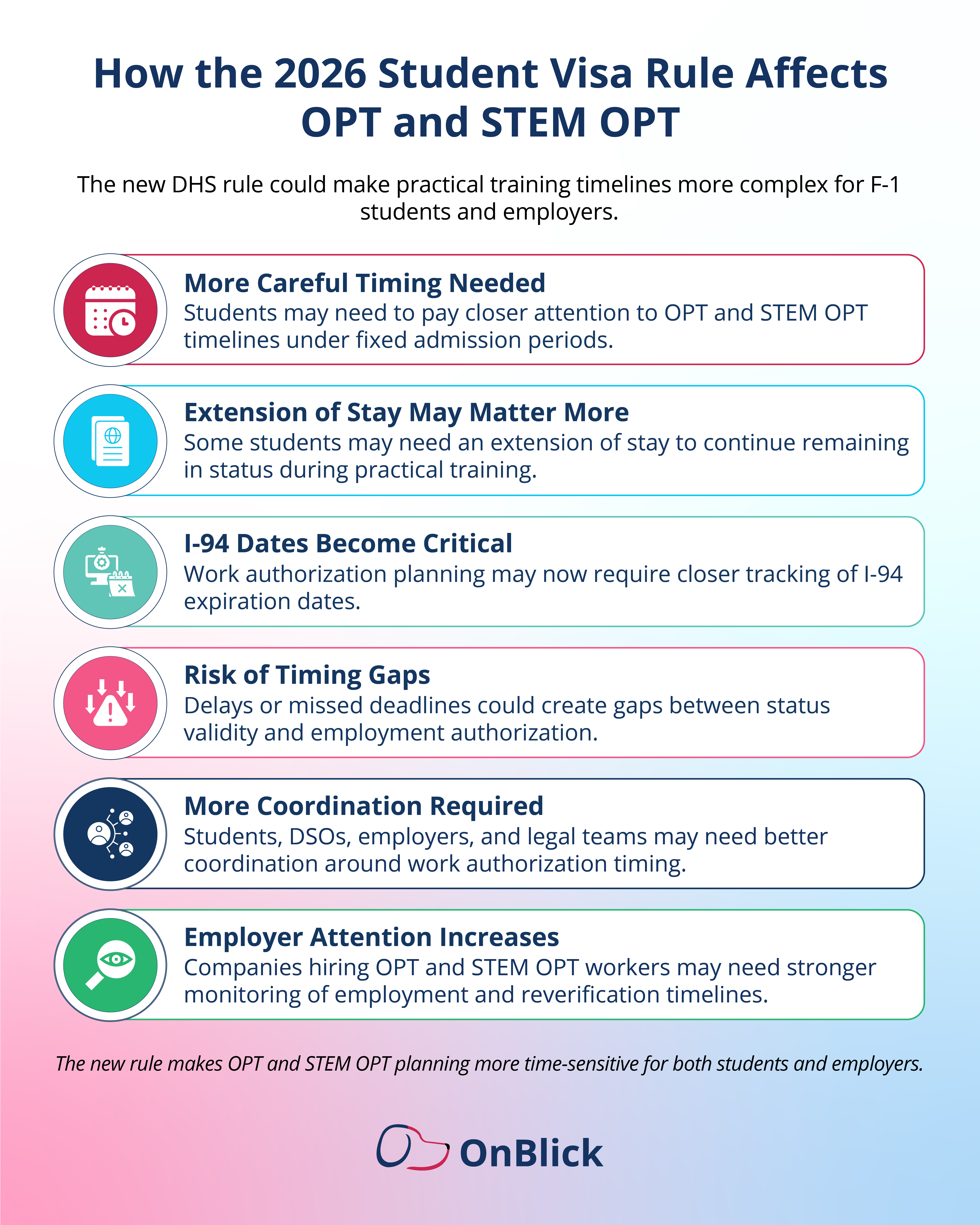
- The 2026 DHS Student Visa Rule may create new planning challenges for F-1 students who are applying for or working under OPT and STEM OPT. Practical training is closely connected to student status, so any change to the admission period can affect how students, schools, and employers manage timelines.
- Under the new rule, students may need to pay closer attention to whether their authorized stay covers the full period of OPT or STEM OPT. If the admission period does not cover the full training period, the student may need to apply for an Extension of Stay to remain in the United States while continuing eligible practical training.
- This makes timing more important. Students may need to coordinate earlier with their Designated School Official, immigration counsel, and employer to understand how the I-20, I-94, EAD, and training dates align.
- For employers, the main concern is employment continuity. If an employee’s work authorization or status timeline is not managed carefully, there may be a risk of delayed reverification, employment gaps, or confusion around whether the employee can continue working.
- Employers hiring F-1 OPT or STEM OPT workers should not wait until the EAD expiration date is close. HR teams should review work authorization timelines early and ensure that I-9 reverification, immigration planning, and internal reminders are aligned.
2026 Student Visa Rule Change: Impact on OPT and STEM OPT
What Employers Hiring F-1 OPT and STEM OPT Workers Should Watch
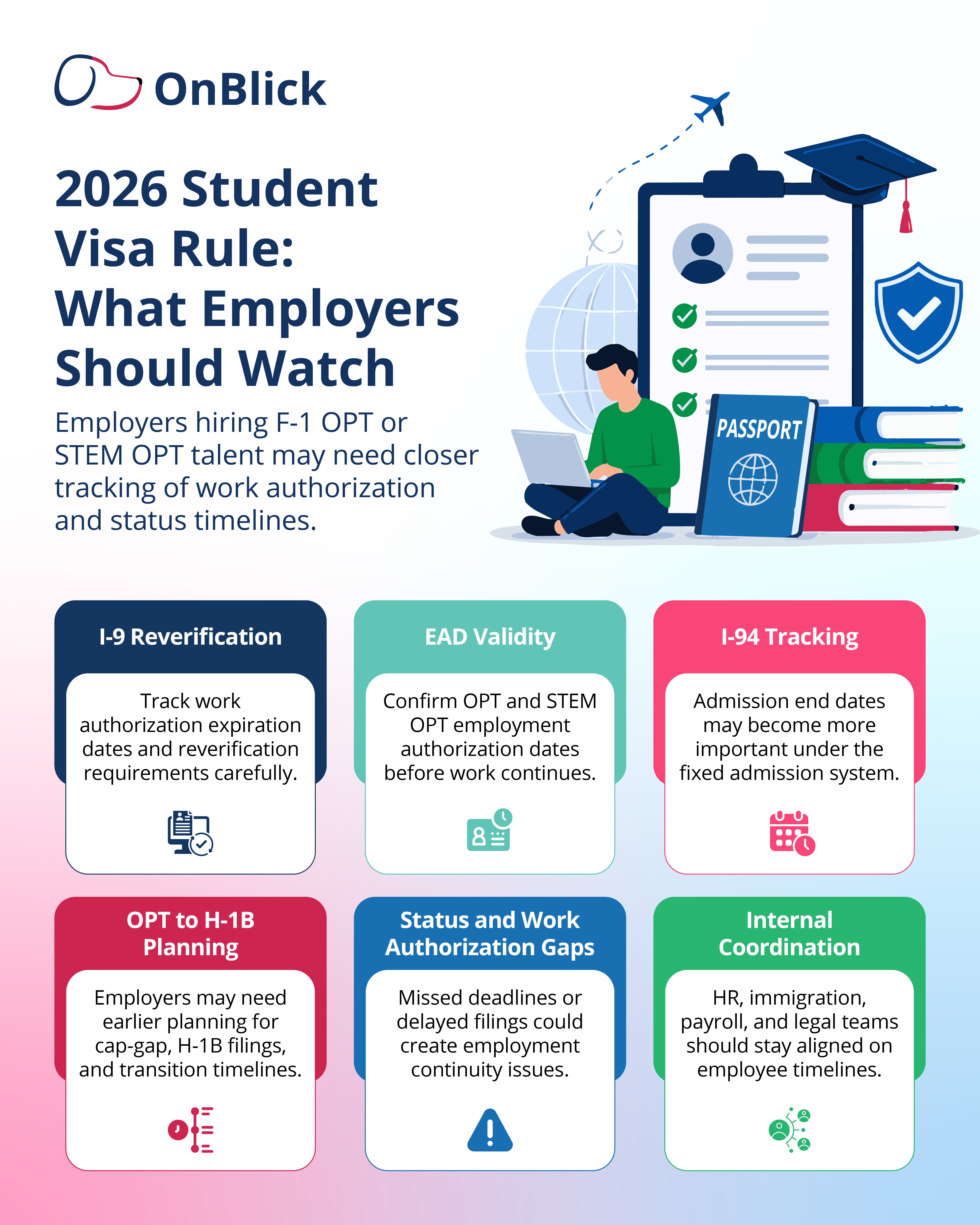
- Employers that hire F-1 students under OPT or STEM OPT should pay close attention to how the new rule may affect work authorization tracking. The issue is not only whether the employee has an EAD. Employers may also need to understand how the employee’s admission period, training timeline, and future immigration plans connect.
- One key area is I-9 reverification. HR teams should continue tracking EAD expiration dates and reverification deadlines, but they should also be aware that student visa rule changes may make earlier immigration timeline reviews more important.
- Employers should also review OPT and STEM OPT start and end dates, cap-gap planning, and possible transitions to H-1B or other visa categories. If an employee is expected to continue working beyond the current authorization period, HR and immigration teams should begin planning well before the deadline.
- Coordination is also important. Employers may need to work more closely with employees, immigration counsel, and internal teams to avoid last-minute surprises. Payroll, HR, compliance, and managers should understand who is responsible for tracking work authorization dates and who should be notified when action is needed.
The goal is to avoid preventable gaps. As student visa rules become more time-sensitive, employers should strengthen their process for tracking documents, deadlines, and reverification requirements.
2026 Student Visa Rule Changes: Employers, Note
Student Visa Rule 2026: What Schools and DSOs May Need to Prepare For
- Schools and Designated School Officials may play an important role in helping students understand the new fixed admission system. Students who were used to Duration of Status may need clearer guidance on I-94 dates, program timelines, extension requirements, and practical training planning.
- DSOs may need to review advising workflows and update student communications. This can include explaining how the new rule affects program end dates, transfers, changes in educational objective, OPT, STEM OPT, and Extension of Stay planning.
- SEVIS accuracy will also become more important. Schools should make sure student records, program details, and status updates are maintained carefully. In a more deadline-driven system, incorrect or delayed updates could create confusion for students and increase compliance risk.
- Schools may also see more questions from students about grace periods, extension filings, travel, employment authorization, and what happens if a program takes longer than expected. Clear communication can help students plan earlier and avoid last-minute decisions.
- For employers, this means school coordination may become part of the broader work authorization conversation. When hiring or continuing employment for F-1 OPT or STEM OPT workers, employers may need to encourage employees to stay in close contact with their DSO and immigration counsel.
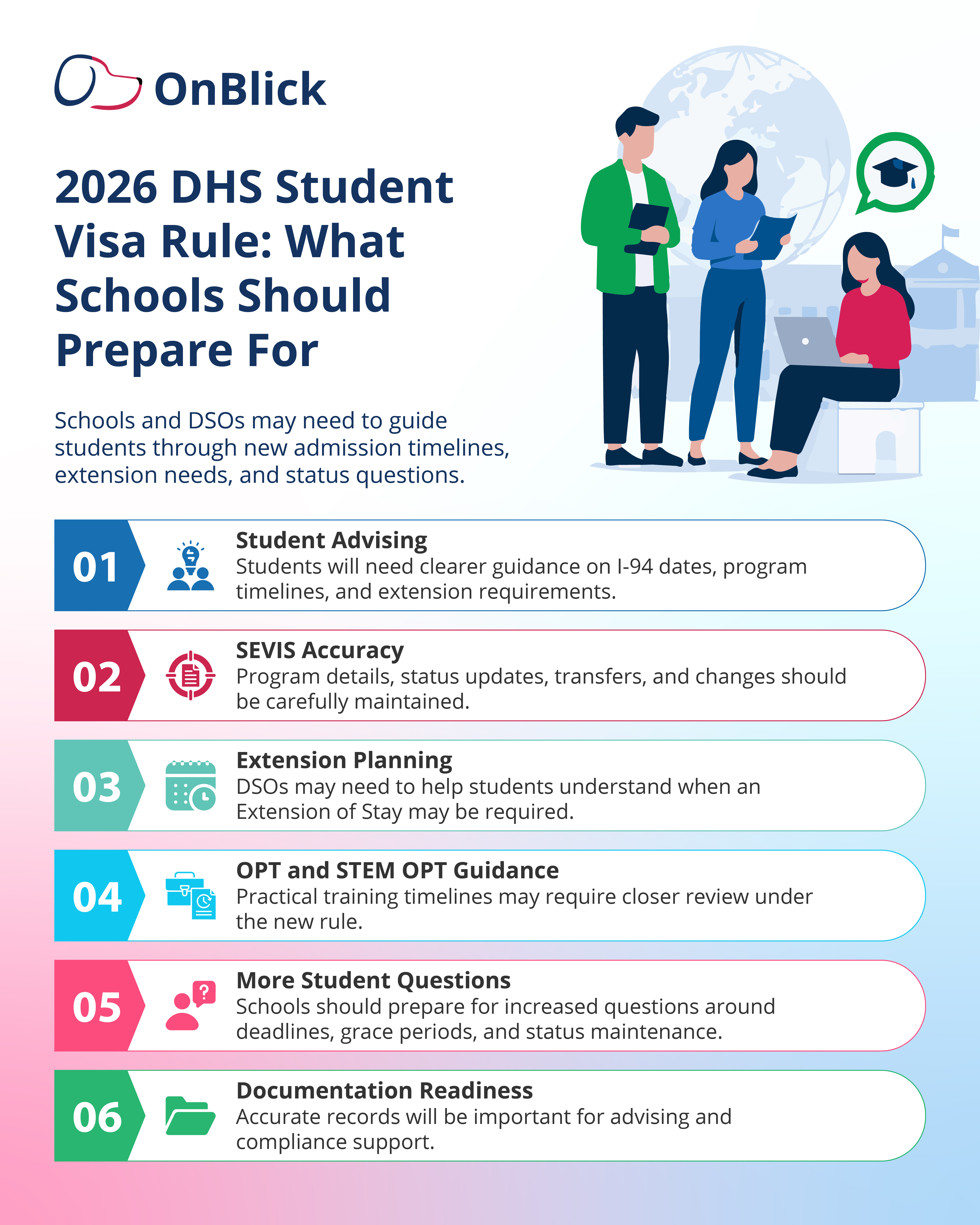
2026 Student Visa Rule: Preparation Tips for Schools and DSOs
2026 Student Visa Rule: Compliance Risks and Practical Challenges
- The 2026 DHS Student Visa Rule may create new compliance challenges because more timelines will need to be monitored at the same time. Students, schools, and employers may need to review admission dates, program dates, work authorization dates, and extension deadlines more carefully.
- One major risk is confusion between different immigration documents. A visa stamp, Form I-20, I-94, and EAD card may all show different dates, but they do not serve the same purpose. For employers, the most important concern is whether the employee has valid work authorization and whether Form I-9 reverification is completed on time.
- Another challenge is late planning. If a student needs an Extension of Stay, waiting until the last minute may create avoidable problems. Delays can affect status planning, practical training timelines, and employment continuity.
- The rule may also increase the administrative workload for schools and employers. DSOs may receive more questions from students, while HR teams may need stronger internal processes to track OPT, STEM OPT, EAD expirations, I-9 reverification, and possible transitions to H-1B or other visa categories.
- The biggest practical takeaway is that student visa compliance may become more date-driven. Employers should not rely only on a single document or reminder. They should build a process that gives HR, immigration, and compliance teams enough time to act before deadlines approach.
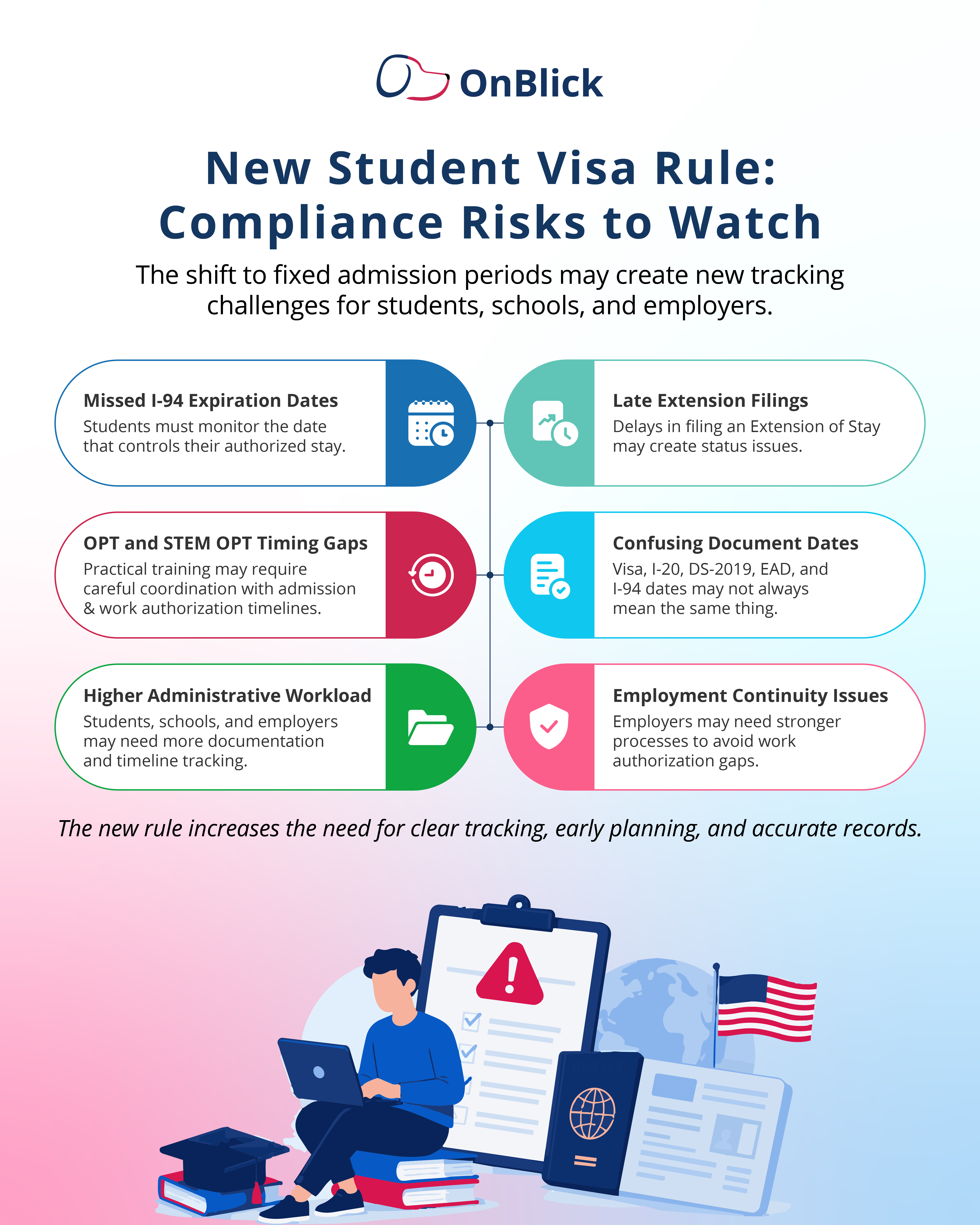
2026 Student Visa Rule: Compliance Note
Student Visa Rule 2026: What Students, Schools, and Employers Should Do Now
The new rule makes early preparation important. Students, schools, and employers should understand their responsibilities and avoid waiting until an expiration date is close.
- Students
Students should review their I-94, Form I-20 or DS-2019, program end date, OPT or STEM OPT timeline, and any planned extension needs. They should speak with their DSO and immigration counsel early if their program, training, or stay may extend beyond the authorized admission period.
- Schools and DSOs
Schools should prepare clear guidance for students on fixed admission periods, Extension of Stay planning, SEVIS updates, transfers, practical training, and grace periods. DSOs may also need to identify students who could be affected by timing issues and help them understand when to seek advice.
- Employers
Employers hiring F-1 OPT or STEM OPT workers should review their work authorization tracking process. HR teams should confirm EAD expiration dates, I-9 reverification dates, OPT/STEM OPT timelines, and any planned transition to H-1B or another employment-based visa category.
Employers should also define who is responsible for monitoring these dates. HR, immigration, payroll, managers, and legal teams should know when they need to be involved and what documents must be reviewed.
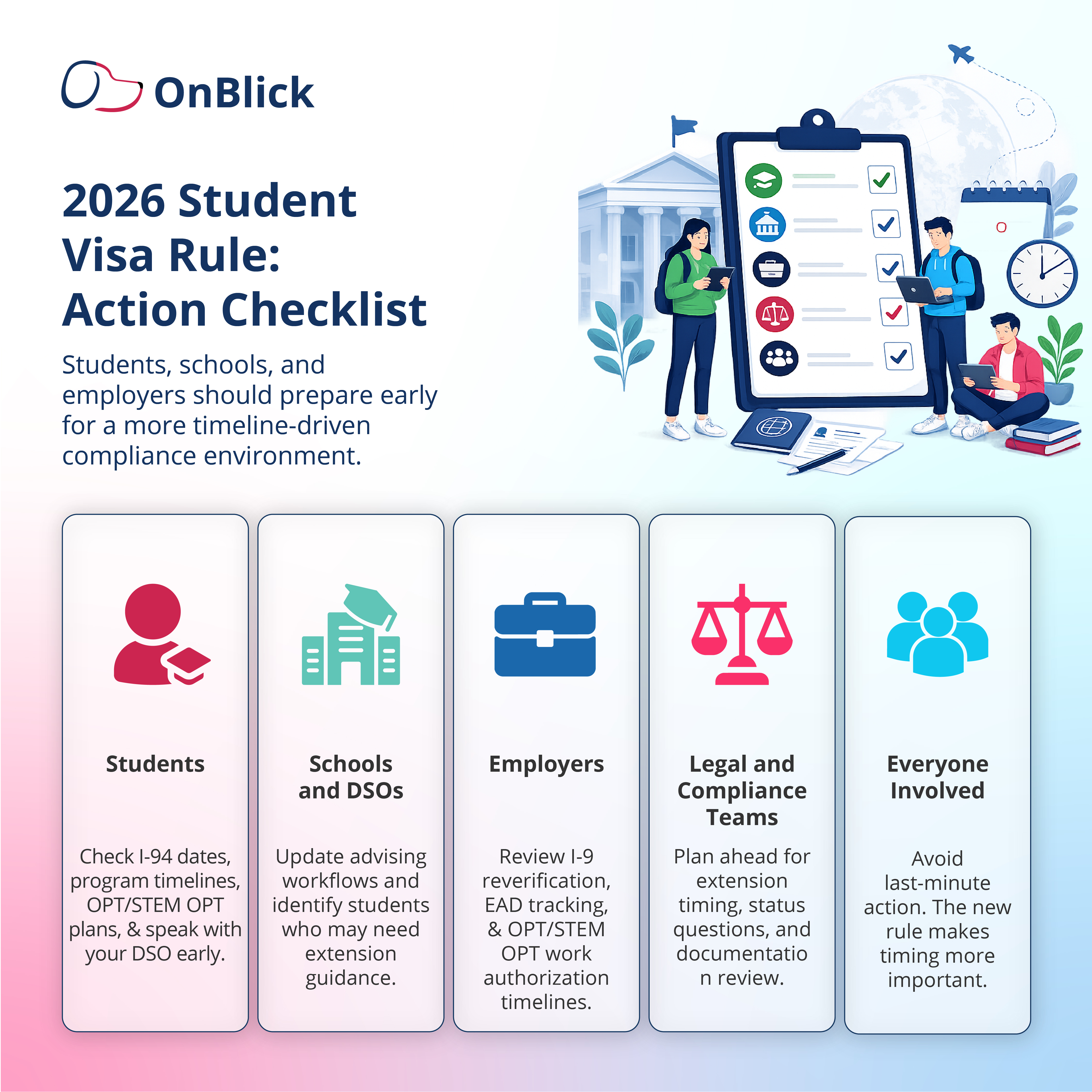
2026 Student Visa Rule: Action Checklist
How OnBlick Helps Employers Manage Work Authorization and Compliance
As student visa rules become more time-sensitive, employers may need better visibility into work authorization records, document expirations, and employee compliance timelines.
OnBlick helps HR and compliance teams manage Form I-9, E-Verify, employee records, work authorization documents, reverification dates, and related compliance workflows in one organized system. This can help reduce manual follow-ups and make it easier for teams to identify upcoming deadlines before they become urgent.
For employers hiring F-1 OPT or STEM OPT workers, OnBlick can support better tracking of EAD expirations, I-9 reverification, employee documentation, and internal compliance tasks. This helps HR teams stay prepared as immigration and work authorization timelines become more complex.
Book a free OnBlick demo to see how your team can simplify work authorization tracking and strengthen employment compliance readiness.
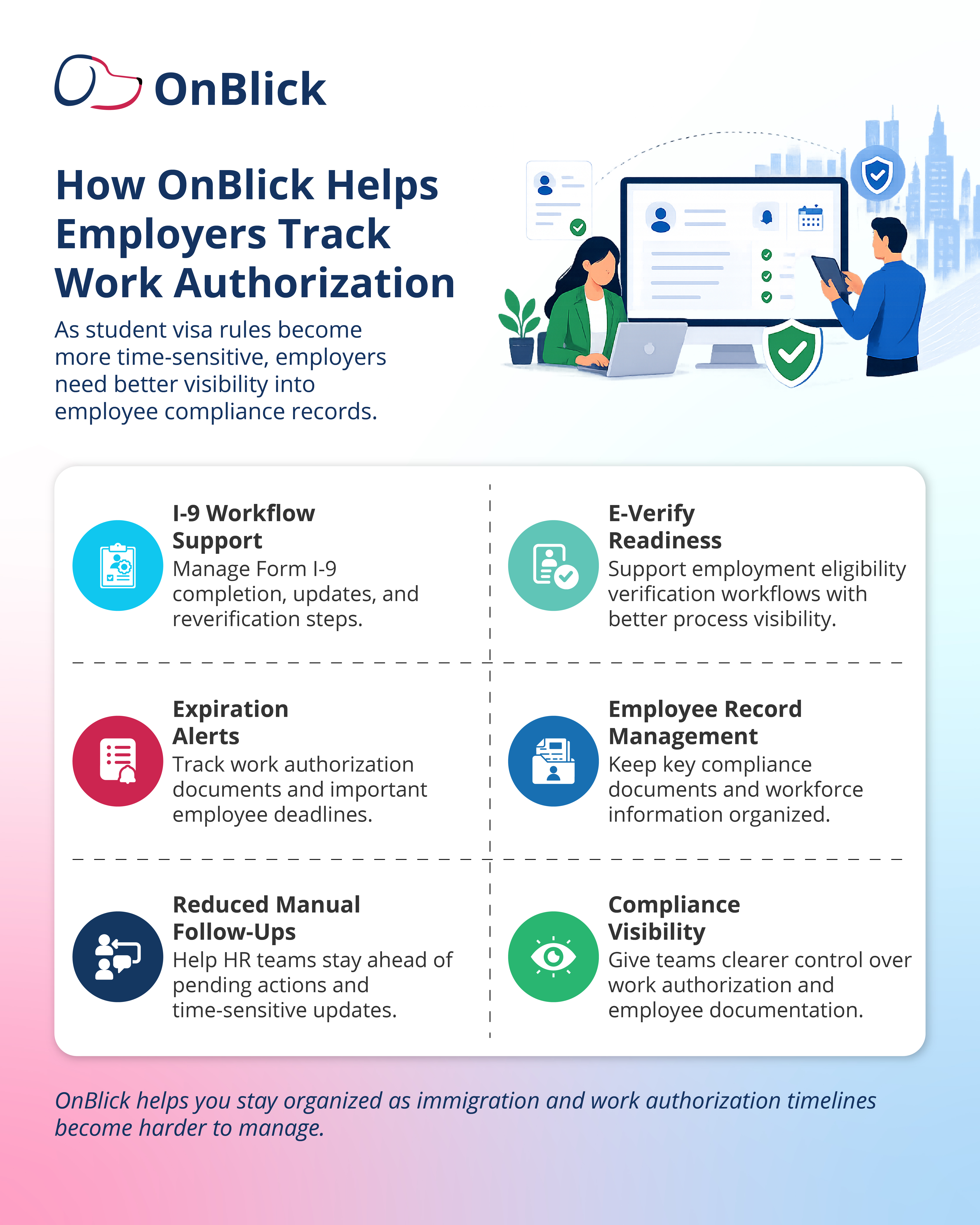
OnBlick Student Visa Support
Frequently Asked Questions About the 2026 DHS Student Visa Rule
1. What is the 2026 US student visa rule change?
The 2026 US student visa rule change replaces Duration of Status for certain F, J, and I nonimmigrants with fixed admission periods. This means affected individuals may receive a specific authorized stay end date and may need to apply for an Extension of Stay if they need more time.
2. What does Duration of Status mean for F-1 students?
Duration of Status, often shown as D/S, allowed F-1 students to remain in the United States as long as they maintained valid student status, followed program requirements, and complied with applicable rules. Under the new rule, this flexible model is being replaced with fixed admission periods.
3. How long can F-1 students stay under the new rule?
F-1 students may be admitted for a fixed period based on their program length, subject to the rule’s maximum admission period. If the student needs additional time to complete a program or continue eligible practical training, an Extension of Stay may be required.
4. Do F-1 students need to apply for Extension of Stay?
An F-1 student may need to apply for Extension of Stay if their authorized admission period does not cover the full time needed for their program, practical training, or continued stay in the United States. Students should speak with their DSO and immigration counsel before deadlines approach.
5. How does the new rule affect OPT and STEM OPT?
The rule may make OPT and STEM OPT planning more time-sensitive. Students and employers may need to review whether the student’s admission period, EAD validity, I-20 dates, and I-9 reverification timelines align properly.
6. Can international students work in the U.S. under F-1 status?
F-1 students can work in the United States only when the employment is authorized under applicable rules, such as certain on-campus employment, CPT, OPT, or STEM OPT. Employers should verify valid work authorization before employment begins and complete I-9 requirements correctly.
7. What is Form I-20 and why does it matter under the new rule?
Form I-20 is issued by a SEVP-certified school and contains important information about the student’s program, school, and status. Under the new rule, I-20 dates may need to be reviewed alongside I-94 and work authorization dates to understand the student’s timeline.
8. What should employers hiring F-1 OPT workers track?
Employers should track EAD expiration dates, I-9 reverification dates, OPT and STEM OPT timelines, possible cap-gap or H-1B transition planning, and any internal reminders needed to avoid work authorization gaps.
9. Does the rule affect J-1 exchange visitors and dependents?
Yes. The rule also applies to J exchange visitors and certain I visa holders. Dependents such as F-2, J-2, and I dependents may also be affected because their period of stay is generally tied to the principal visa holder.
10. What should students do before their I-94 expires?
Students should review their I-94 end date early and speak with their DSO or immigration counsel about whether an Extension of Stay, travel and readmission, or another action is needed. Waiting until the deadline is close may create avoidable status or work authorization issues.
Conclusion
The 2026 DHS Student Visa Rule changes the way certain foreign students, exchange visitors, and foreign media representatives remain in the United States. By replacing Duration of Status with fixed admission periods, the rule creates a more deadline-driven compliance environment.
For students and schools, this means closer attention to I-94 dates, program timelines, SEVIS updates, and Extension of Stay planning. For employers, the impact is especially important when hiring or continuing employment for F-1 OPT and STEM OPT workers.
HR and compliance teams should review work authorization tracking, I-9 reverification, EAD expiration dates, and internal coordination processes before deadlines approach. As immigration rules become more time-sensitive, organized documentation and proactive monitoring can help reduce risk.
Employers that prepare early will be better positioned to manage student work authorization, avoid last-minute surprises, and maintain stronger employment compliance.











![How to Get Luxembourg Work Visa for Indians [2025]](https://writeupcafe.com/data/post/1473491/3d54b0b313e4da42bfb18b1998255efe.png.webp)













Sign in to leave a comment.