
You are on site, the excavator is working, and the job is moving forward. Nothing seems wrong at first. But when you look closely, the bucket does not sit as firmly as it used to. There is a slight looseness when digging, or a small delay in movement when changing direction. These signs are easy to ignore during a busy workday.
In most cases, this change does not come from the engine or hydraulics. It begins at the joints, where excavator pins and bushes connect the boom, arm, and bucket. These parts handle continuous movement under heavy load while being exposed to dust, mud, and vibration. Over time, this environment causes steady and unavoidable wear.
The issue is not sudden failure. Worn pins and bushes slowly lose their tight fit, allowing extra movement inside the joints. As this movement increases, stress shifts to other components, reducing control and increasing the risk of damage.
Signs That Your Excavator Pins and Bushes Need Replacement
Here are 3 signs which convey that your excavator’s pins and bushes need to be changed.
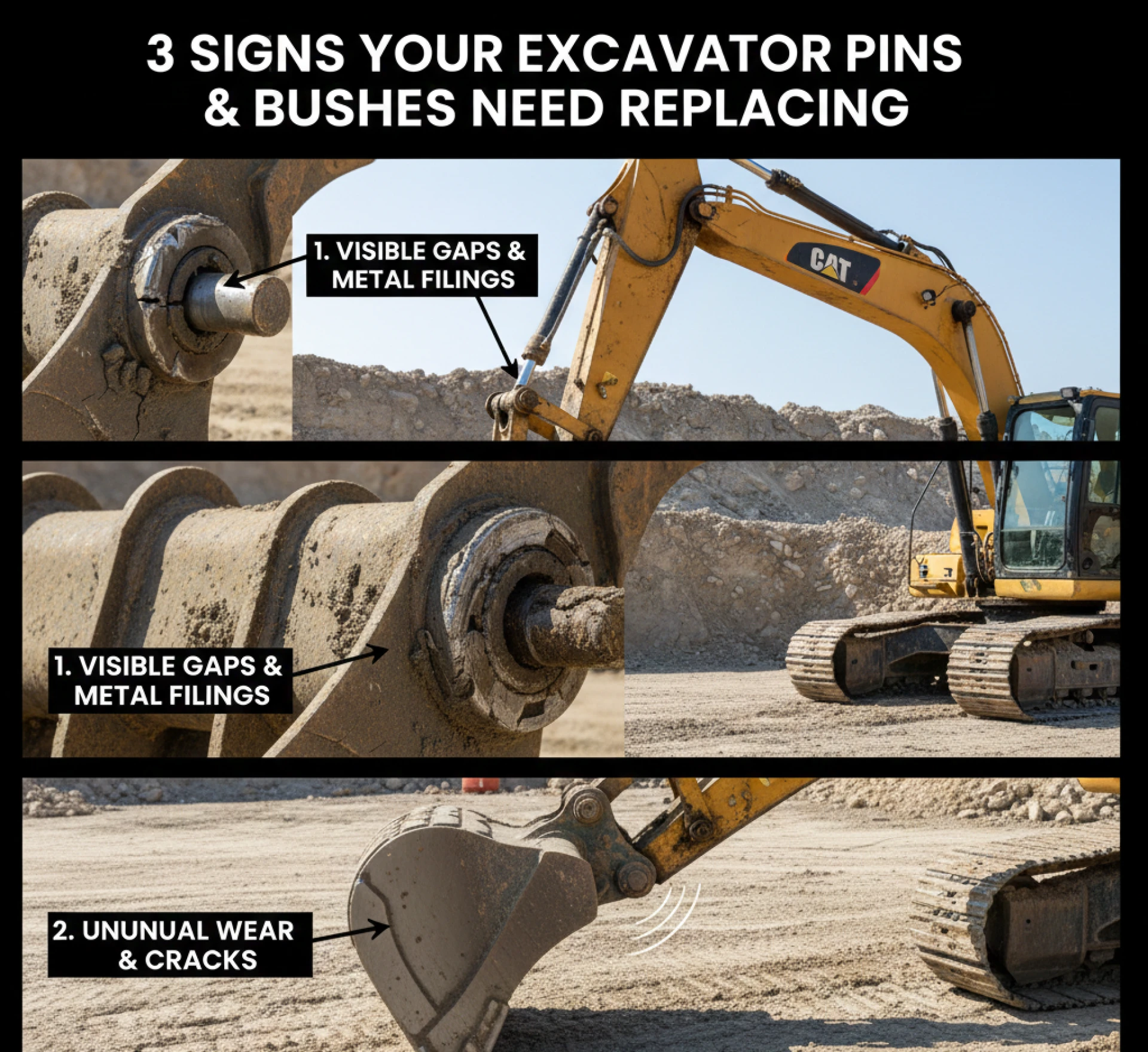
Sign 1: Excessive play in the bucket or arm
One of the first and most noticeable signs is extra play in the bucket or arm. When you curl the bucket or change direction, you may feel a small knock or see movement before the bucket responds. This happens because worn excavator pins and bushes no longer fit tightly inside the joint.
At first, this looseness feels minor and easy to work around. But over time, the gap increases. The bucket starts to feel less controlled, especially during precise digging or grading work. This extra movement puts more stress on the boom, arm, and hydraulic cylinders, slowly reducing the machine’s overall efficiency.
Sign 2: Uneven or accelerated wear around joints
Another clear warning sign is visible wear around the joint areas. You may notice oval-shaped holes, metal dust, grease mixed with dirt, or polished surfaces where metal rubs against metal. These signs indicate that the pins and bushes are no longer wearing evenly.
When excavator pins and bushes wear unevenly, lubrication cannot protect the joint properly. Dirt and debris enter more easily, increasing friction. If ignored, this wear can damage the surrounding structure, leading to costly welding or component replacement later on.
Sign 3: Increased noise and vibration during operation
Unusual knocking sounds or vibrations during digging, lifting, or swinging are often linked to worn joints. These noises usually appear under load and become more noticeable as wear increases. Many operators mistake this for a hydraulic issue, but the root cause often lies in worn pins and bushes.
This vibration not only affects operator comfort but also reduces machine stability. Over time, it can accelerate wear in nearby components, creating a chain reaction of problems across the attachment and boom assembly.
Bottom line
Excavator pins and bushes wear out slowly, but the damage they cause builds fast. Ignoring early signs leads to poor control, higher stress on major parts, and costly repairs. Operators and equipment owners should make it a habit to check the pins and bushes after every construction work and replace them if needed rather than working with the worn out parts.





















Sign in to leave a comment.