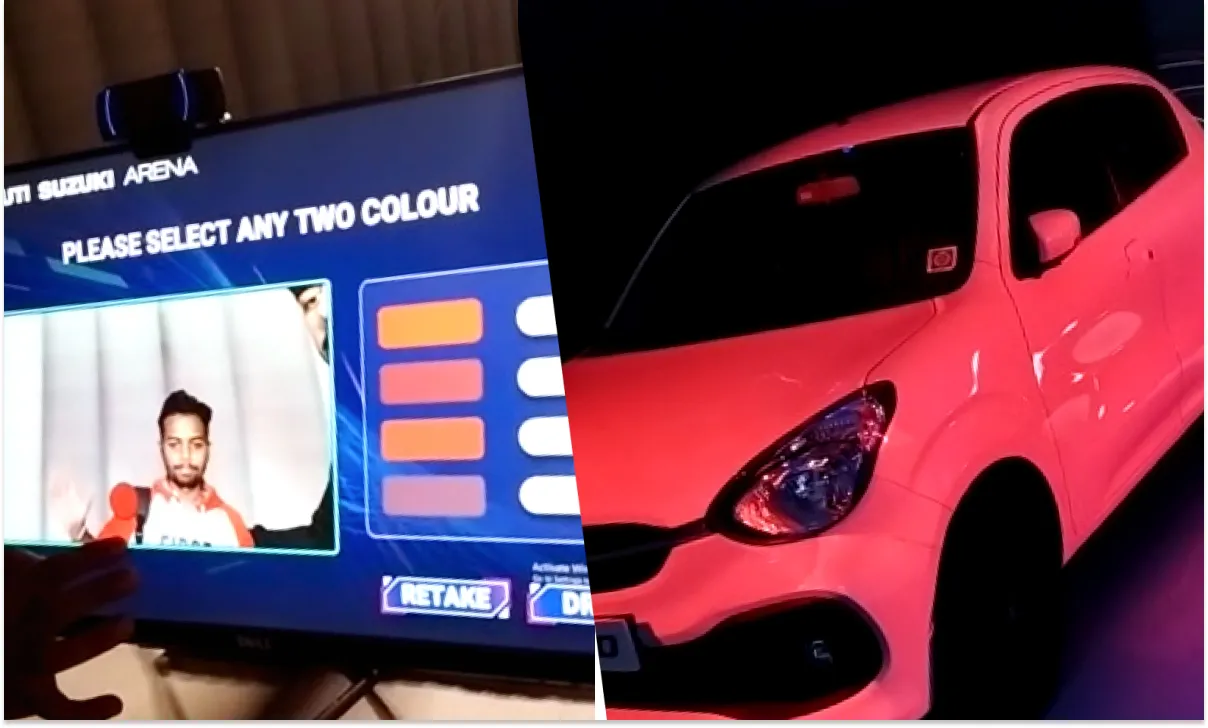

A fan walks up to a camera stall dressed head-to-toe in cosplay — bold reds, electric blues, gold trim. Ninety seconds later, a car parked twenty feet away lights up in those exact colours, in a pattern generated just for them. No queue for a giveaway. No wristband scan. Just a camera, some software, and a car that reacts to a person in real time.
That's what real-time engagement actually looks like when 3D projection mapping services are built as part of a working system rather than a one-off visual effect. It happened at Comic Con with Maruti Suzuki, and it's a genuinely useful blueprint for any brand trying to move from "audience watches" to "audience triggers the experience."
The Engagement Problem: Static Activations in a Real-Time World
Most brand activations are built to run the same way for every visitor. A screen loops the same video. A backdrop shows the same pattern. The audience is present, but nothing about the experience actually responds to them.
That gap matters more than it used to, because:
- Audiences raised on personalized digital feeds expect the physical world to respond the same way
- A static activation generates one moment of attention; a responsive one generates a moment plus a story worth telling afterward
- Without real-time data capture, brands walk away from expensive activations with engagement they can describe but not measure
What "Real-Time" Means When It's Wired Into Your Martech Ecosystem
Real-time engagement isn't just "the screen changed quickly." It means the system captured an input, processed it, and generated a unique output — all inside a live event window, with no manual intervention.
That requires the projection mapping wall or surface to be one node in a small but functional pipeline: camera input, processing logic, content generation, and projection output, all synced closely enough that a visitor doesn't notice the gap between action and reaction.
Case Study: How Maruti Suzuki Turned Fan Outfits Into a Live Projection
Maruti Suzuki, as title sponsor of Comic Con, wanted to unveil two of its cars — the Celerio and the Brezza — to an audience that is, by definition, deeply used to interactive, personalized experiences. A generic reveal wasn't going to hold their attention.
For the Celerio, the team built a hyper-personalized projection experience: a stall with a camera captured images of attendees in their cosplay outfits. Software identified the dominant primary and secondary colours from each fan's outfit, generated a matching animation pattern, and projected it directly onto the car — live, tailored to that specific person. Five unique animation patterns were built to keep the experience varied and visually distinct across a high volume of visitors.
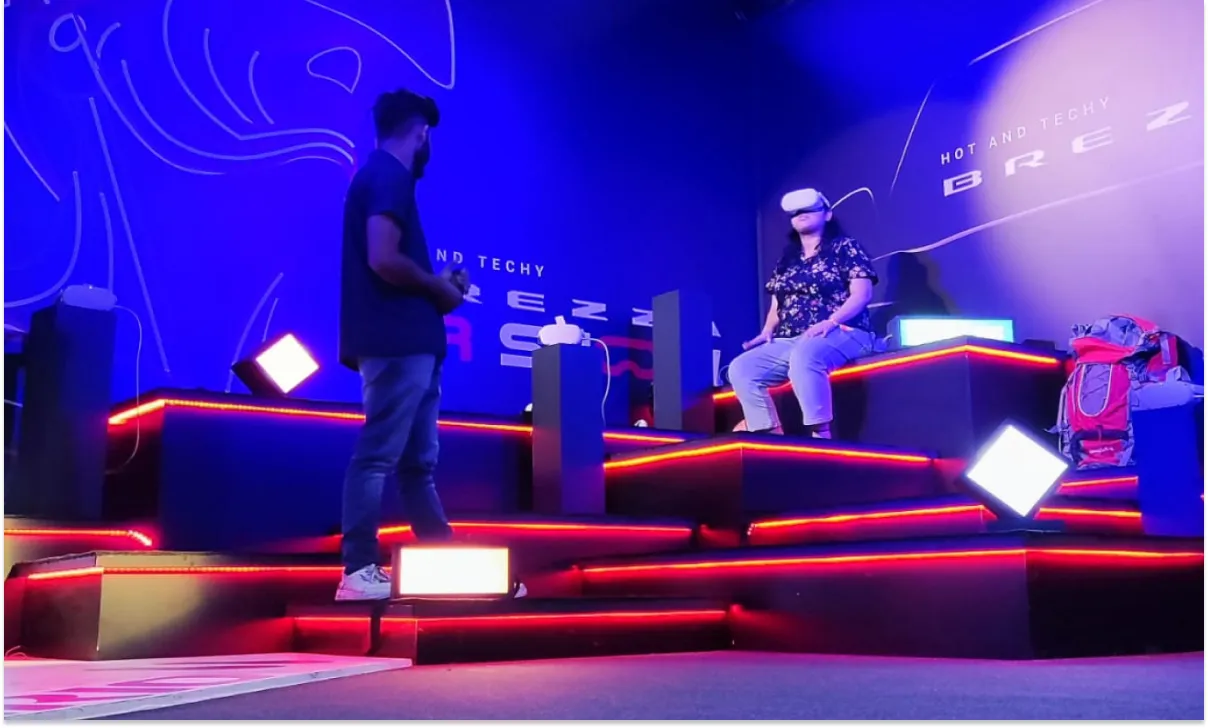
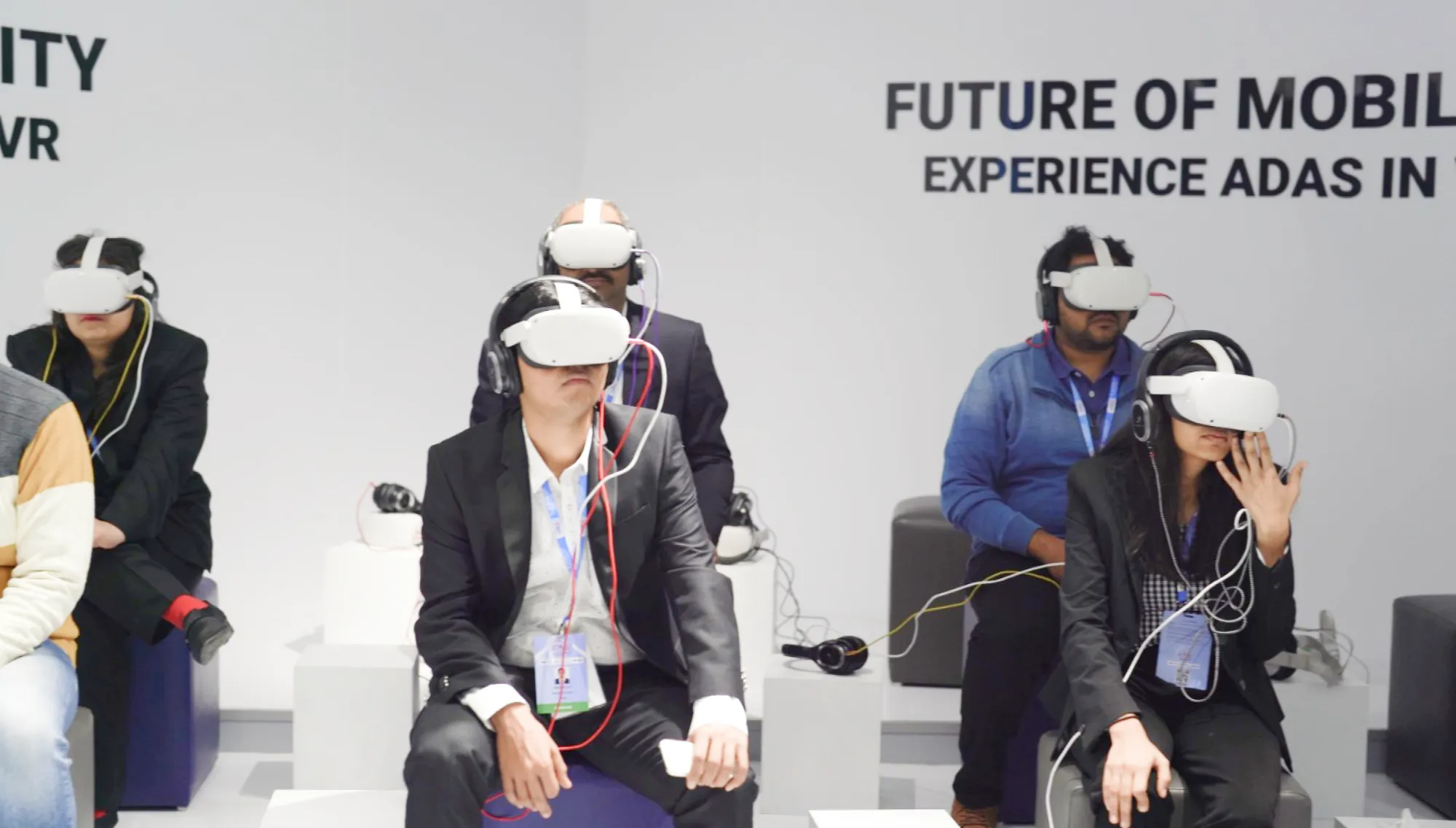
For the Brezza, the team layered in an immersive virtual reality test drive through a futuristic city built from scratch, with every feature of the car engraved into the experience in detail. The setup supported ten people experiencing the VR journey simultaneously, turning a single-user format into something closer to a shared attraction.
The result: over 15,000 interactions in three days. That's roughly one interaction every seventeen seconds across the entire activation window — a volume that only holds up if the underlying system, not just the creative concept, is built to handle real-time throughput.
VR as the Second Layer: Scaling Real-Time Engagement Beyond the Wall
The projection mapping component captured attention instantly, but the VR layer is what extended dwell time and turned a photo moment into a product education moment. Together, they solved two different problems at once:
- The projection component handled breadth — quick, personalized, camera-triggered moments that could serve a large volume of Comic Con attendees
- The VR component handled depth — a slower, immersive experience for visitors ready to spend real time learning what the car could actually do
Why the Best Projection Mapping Software Alone Isn't Enough
A camera, a projector, and even excellent mapping software will get you a demo. What actually makes a system like this hold up under 15,000 interactions is everything wrapped around the core mapping tool:
- Computer-vision logic capable of extracting dominant colours from a live camera feed in seconds, not minutes
- A content-generation pipeline that can produce a new, unique pattern on demand rather than choosing from a small fixed set
- Hardware throughput — projectors and processing systems built to run continuously across a multi-day, high-traffic event without degradation
- A queue and flow design that keeps the physical line moving even as each interaction is individually generated
This is the layer that separates a polished demo from a system that survives three full days of a live crowd.
Examples of Experiential Marketing That Helped B2B Brands
Real-time, camera-triggered personalization isn't limited to consumer car reveals — the same logic shows up in B2B contexts constantly:
- Enterprise brands at trade shows use similar camera-and-sensor triggers to personalize booth content the moment a visitor's badge or presence is detected
- Partner and dealer events increasingly borrow this exact "audience input becomes visual output" mechanic to make channel activations feel less like a lecture and more like a demonstration
- The underlying data pipeline — capture, process, generate, display — is directly reusable for lead-capture workflows once the "camera" is swapped for a badge scanner or a form field
Tips for Brands to Create Memorable Interactive Installations
- Design for throughput, not just for the demo. A system that works beautifully for one visitor needs to be stress-tested for one every fifteen seconds.
- Give the audience a role, not just a view. The moment a visitor's own input changes the outcome, attention and recall both increase.
- Layer breadth and depth. Pair a fast, high-volume moment with a slower, immersive one so different visitors can self-select their level of engagement.
- Build variation into the output. Five distinct animation patterns kept the Maruti Suzuki activation visually fresh even under continuous foot traffic.
- Choose the venue for audience fit. A tech-savvy, cosplay-driven Comic Con crowd is exactly the audience primed to engage with a camera-triggered system — the same build might underperform at a more passive event.
What Retail Brands Gain From Immersive Marketing Activation
Retail teams can lift this model almost directly:
- Personalization at scale — the same colour-matching logic that worked on a car works just as well on a storefront window or in-store display responding to a shopper's clothing or a scanned loyalty card
- Higher social sharing — a moment generated specifically for one person is inherently more shareable than generic branded content
- Measurable engagement volume — because every interaction is a discrete, logged event, retail teams get a real interaction count instead of an estimated footfall figure
Integrating the Data: From Camera Capture to CRM
The real martech opportunity in a system like this is what happens after the interaction. A properly integrated deployment should route:
- Interaction volume and timing data into event-performance dashboards
- Optional visitor contact capture (where consented) directly into CRM or lead-nurture workflows
- Content variation data back into creative teams, showing which patterns or moments drew the most repeat interest
Without this layer, a brand walks away from 15,000 interactions with a great story and very little usable data. With it, the activation becomes a genuine input into the broader martech stack rather than an isolated event.
Ready to Build an Activation That Reacts in Real Time?
If your next activation needs to do more than loop a video — if it needs to see your audience and respond to them, live, at scale — reach out to IIC Lab to talk through what real-time 3D projection mapping services could look like for your brand. You can also browse more real-time and interactive builds across our portfolio.























Sign in to leave a comment.