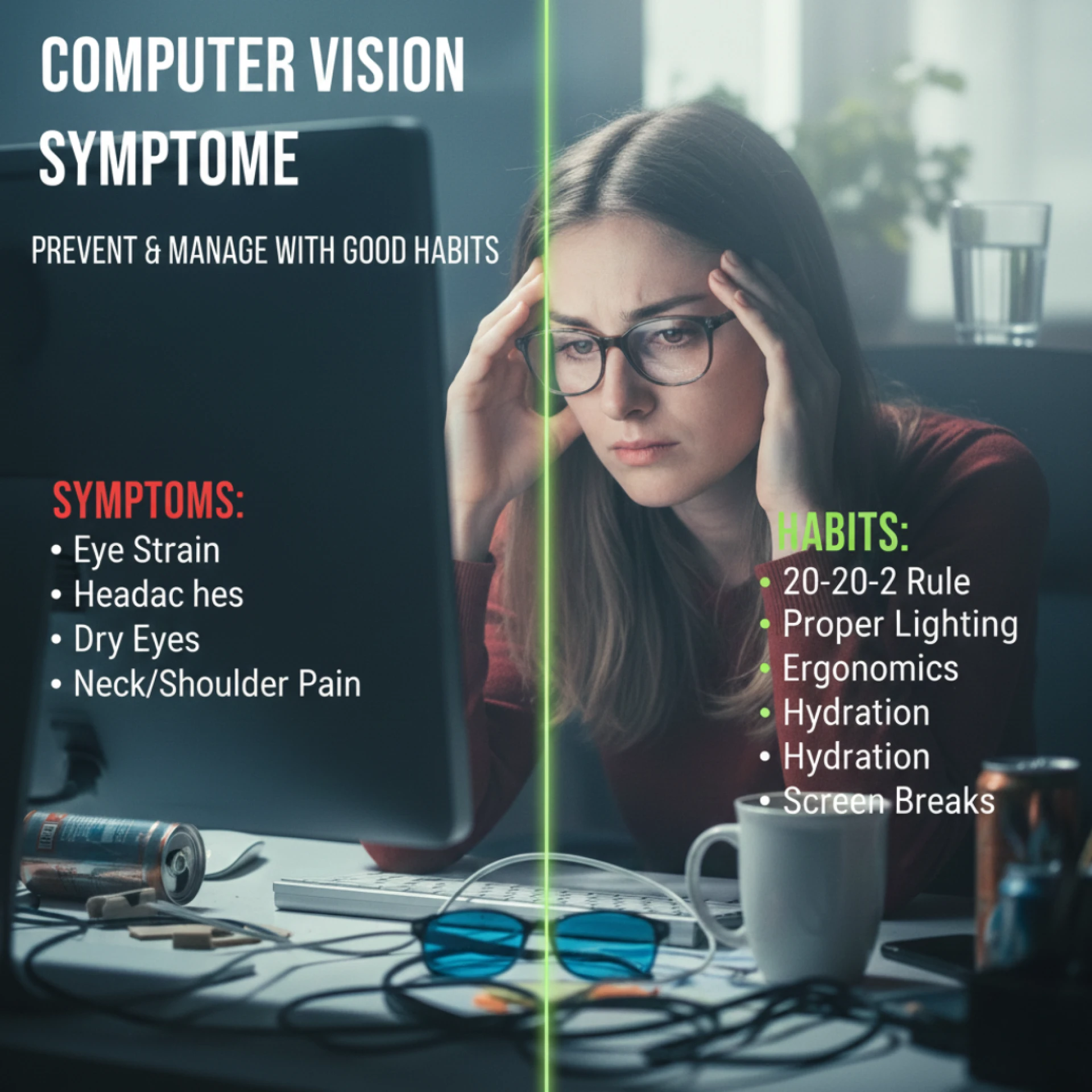

Do your eyes ever feel tired, gritty, or strained at the end of the day? Most of us just chalk it up to being "a long day." But often, that discomfort is a direct result of small, everyday habits that add up.
The good news is that these habits are easy to fix. You don't need a drastic overhaul, just a few simple tweaks. Let's look at five common habits that might be harming your eyes and the easy fixes you can start today.
1. The Endless Scroll (and Stare)
We live on our screens. From the moment we check our phones in the morning to our work computer, to relaxing with a tablet at night, our eyes are locked in a near-constant state of "on." This relentless digital use is the number one cause of what's known as Computer Vision Syndrome.
The most common computer vision syndrome symptoms include headaches, blurry vision, and neck pain. These computer vision syndrome symptoms are a direct signal from your eyes that they are overworked.
- The Fix: The 20-20-20 Rule. This is the golden rule of digital eye health. It’s simple: every 20 minutes, take a 20-second break, and look at something 20 feet away. This simple action lets your eye's focusing muscles completely relax.
2. Forgetting to Blink
This one sounds silly, but it's true. When we stare at a screen, our blink rate can drop by more than half. Blinking is your eye's natural "windshield wiper" it spreads fresh, moisturizing tears.
When you don't blink, your eyes become dry, gritty, and uncomfortable. This dryness is one of the most persistent computer vision syndrome symptoms.
- The Fix: Be a Blink "Activist." Make a conscious effort to blink fully and often, especially during long screen sessions. A simple sticky note on your monitor that says "BLINK!" can be a surprisingly effective reminder.
3. Rubbing Your Eyes
When your eyes feel tired or itchy, that first instinct is to give them a good rub. It feels like a relief, but it can do more harm than good. Your hands can transfer irritants to your eyes, and aggressive rubbing can even be harmful over time.
- The Fix: Use a Cool Compress or Drops. When your eyes feel irritated, reach for lubricating eye drops (artificial tears) first. If they're just tired, soak a clean cloth in cool water and gently rest it over your closed eyes for a few minutes.
4. Working in Poor Lighting
Our eyes are adaptable, but we push them to the limit. We try to read in a dimly lit room or, just as bad, sit in front of a bright window with intense glare bouncing off our screen. Either extreme forces your eyes to strain just to see clearly.
- The Fix: Go for Goldilocks Lighting. Your light source shouldn't be in your line of sight. Aim for soft, ambient lighting in the room that matches the brightness of your screen. This reduces harsh contrast and glare.
5. Skipping Your Annual Eye Exam
"But I see just fine!" This is a common refrain. The truth is, vision can change slowly. Your eyes might be working much harder to compensate for a small, uncorrected vision change, which leads to strain and headaches.
- The Fix: Make It an Annual Date. A comprehensive eye exam is about so much more than a new prescription. It's a full health check for your eyes, and it's the only way to know for sure that everything is working as it should.
Conclusion
Protecting your vision doesn't require a huge life change. It just requires awareness. By recognizing these quiet habits and swapping them for healthier ones like the 20-20-20 rule you can make a huge difference in how your eyes feel every single day.
Frequently Asked Questions (FAQs)
Q: What is the 20-20-20 rule?
A: It's an easy-to-remember guideline to reduce digital eye strain. For every 20 minutes you spend looking at a screen, you should take a 20-second break to look at something that is at least 20 feet away.
Q: Are blue light glasses really helpful?
A: While blue light can affect sleep patterns, many experts agree that the primary cause of digital eye strain is not the blue light itself, but rather the way we use screens: staring for too long, blinking less, and poor posture. The 20-20-20 rule is considered the most effective solution.
Q: How often should I get a comprehensive eye exam?
A: It's recommended that most adults and children get a comprehensive eye exam from an eye doctor once a year, even if you don't have any noticeable vision problems.


























Sign in to leave a comment.