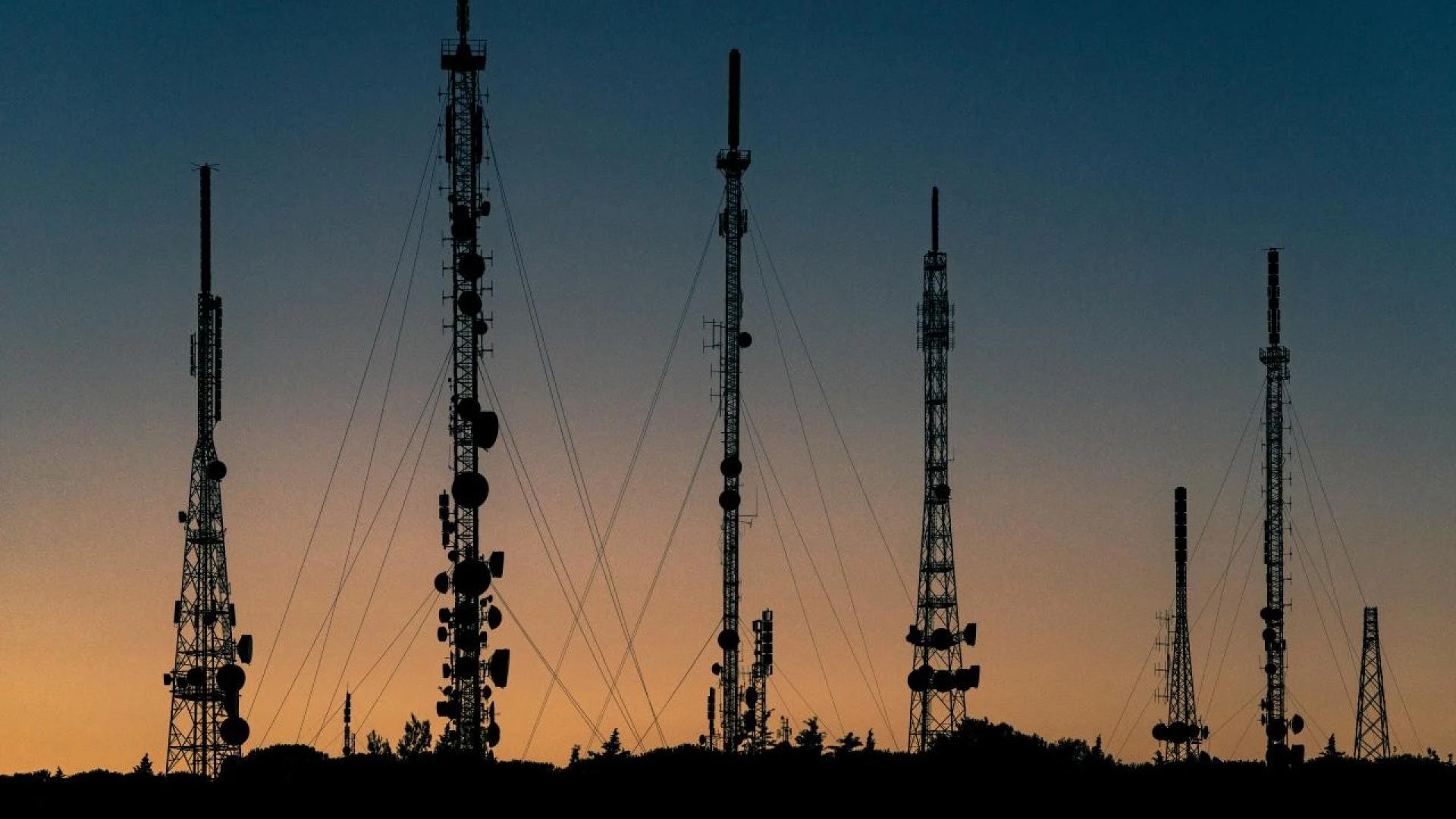

Telcos: the great enabling sector for businesses
Telecommunications is one of the most essential enabling industries for our societies, especially for businesses. Our daily lives would be completely different without our telco service providers. In recent decades, telco players have delivered transformative services for individuals and businesses alike. From 2G, dial-up internet, and analogue landlines to the 5G and fibre optics connections of today, new sweeping changes seem to arrive every year. The telco industry is constantly evolving with new technology, and the implications and opportunities can be significant for businesses. These five telecommunications trends could be the ones to watch in the coming years.
5G5G offers significantly more bandwidth than the previous generation technology of 4G, in the same way fibre connections offer higher speeds and more capacity than copper-based connections. In fact, the speeds offered can be up to 100 times faster than 4G. With greater speeds, reduced latency, high capacity for multiple devices, and lower interference, 5G could support businesses in scaling up, especially with mobile workers.
When widely deployed, 5G could see lower connectivity costs for businesses, reducing their operating costs. Furthermore, 5G-enabled devices could support new and innovative practices and processes for just about any sector, from farming to healthcare. For instance, smart farms enabled by 5G could minimise water and fertiliser consumption while enhancing operations and distribution processes. In the same way, 5G enables efficiencies and productivity in the healthcare sector, from boosting the functionality of telehealth to enabling AI in sensor technology for preventative care, diagnosis, and more.
5G could allow businesses to develop new and innovative products and solutions for their customers. For example, telcos themselves can tap into new revenue streams like multiplayer cloud gaming and AR sports streaming. Other sectors could explore immersive entertainment products and experiences. As such, 5G networks could be one of the most crucial up-and-coming telco trends for businesses.
Internet of Things5G enables large-scale machine-type communication that, in turn, supports Internet of Things (IoT). IoT devices can now send and receive massive amounts of data in real-time. Businesses can take advantage of the new possibilities of consumer and commercial IoT, from light fixtures and smart home systems to vehicle communications and pacemakers, to deliver new products and services. They can use industrial IoT solutions to, for example, boost their production and manufacturing processes.
In manufacturing, IoT solutions can support sophisticated data insights for more efficient manufacturing processes. Outcomes can include lower downtimes, better energy efficiency, and more agile processes. Connected devices, sensors, infrastructure, and IT systems can optimise processes in the commercial sector, whether it’s an office, farm, or factory. To illustrate, a great example is Nokia’s factor in Oulu, Finland, where IoT enables reduced manual intervention. Telcos themselves make use of IoT tech like sensors and management systems to support seamless connectivity.
Cloud platformsCloud platforms will continue growing as a trend, enabled by faster internet and wireless connections. This is occurring as IoT devices and machine learning drives the demand for increased computing power. By data and applications shifting to the cloud, businesses can take advantage of more powerful cloud-based platforms that meet their computing-power and scaling-up requirements. These can include, for instance, CRM solutions. In addition, they can also include solutions like inventory management platforms.
Cloud platforms can also offer improved connectivity and integration in business solutions, typically more cost-effectively than on-site solutions. By enabling you to scale up and down according to demand, cloud services can see your business becoming more agile. Equally important, you won’t have to manage and update on-premise infrastructure.
At the same time, the telco industry itself is also heavily reliant on cloud computing in supplying its services to its customers, particularly its business customers. For example, Vodafone moved all of its data and data processing to Google Cloud. Similarly, AT&T chose Microsoft Azure to manage its 5G network traffic.
For telcos, taking 5G to the cloud may offer additional benefits in addition to better speeds and increased capacity. It can shift some of the risks associated with data security, compliance, and privacy to the provider. Also, it can enable the virtualization of network functions, which means more agile operational practices. Ultimately, these operational efficiencies can result in better telco services and infrastructure for businesses as a whole.
AI and machine learningThe telco sector is already relying on artificial intelligence and machine learning for functions like predictive maintenance and network optimisation. As a result, business customers can enjoy increased reliability and enhanced connection quality. At the same time, telcos may be increasingly making use of AI-enabled tools, such as conversational AI, virtual assistants, and chatbots for customer-facing interactions. These can help improve the quality of customer service. They can personalise the customer service experience with minimised intervention from staff.
AI tools can also be used by telcos to detect irregularities so they can quickly address any fraud and security incidents. For businesses, with their reliance on telco services, these trends can mean swifter resolution of queries, improved network connectivity, and a better customer experience overall.
Cybersecurity and complianceNot surprisingly, the telco sector is a major target for cyberattacks due to its key role in critical infrastructure. In particular, 5G and software-centric networks mean new risks for both telcos and their business customers. With 5G, the sector may face further compliance hurdles with the higher volumes of personal or sensitive data being shared and transmitted at faster speeds.
The rise of IoT devices and their integration in personal and business activities has led to high reliance on computing and telco infrastructure. This is yet another compounding factor for the need for telcos to address cybersecurity and compliance challenges. At the same time, governments around the world may be tightening their data privacy laws to better protect businesses and individuals.
In the future, telcos will be increasingly focused on cybersecurity and compliance to protect the massive volumes of sensitive data they facilitate and store. For businesses, this is a positive trend that could lead to minimised downtime and interruptions. In turn, the risk of data loss and reduced revenue could also be mitigated. For businesses in the cybersecurity and compliance fields, these challenges could provide opportunities. Telcos, other businesses, and individuals will likely be seeking solutions that protect their data and ensure better cybersecurity.
Is your business prepared for optimised uptake?
The telecommunications sector continues to play a crucial role in driving innovation and new opportunities. 5G, IoT, AI, and security are some of the biggest telco-related trends with strong implications for businesses. Understanding how these will continue reshaping the telco sector could empower your business to plan for effective uptake and adoption. It can see you taking advantage of new possibilities relating to product and services offerings for your customers. Finally, businesses themselves should continue assessing their cybersecurity risks and ensure they’re fully compliant with changing regulations relating to data.



















Sign in to leave a comment.