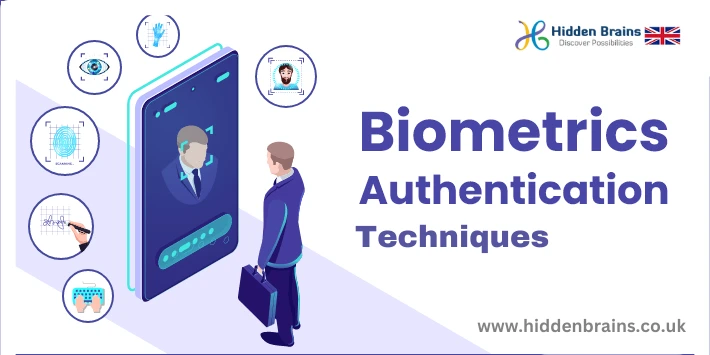

Gated communities have grown increasingly more desirable for their safety, secrecy, and convenience. Nowadays, technology is being leveraged to grant an additional measure of protection through biometric authentication. These procedures are grounded in distinct physical qualities like fingerprints, facial detection, and iris scans. This article examines seven requisite biometric authentication techniques that can be used to protect your gated community. We'll review the different types of biometric authentication techniques and how they can be employed to secure your community.
1) Fingerprint Scanners
Fingerprint scanners are one of the most frequently employed biometric authentication methods for community entry control. This identification process employs an individual's unique fingerprint as an identifying element. Such scanners are equipped to recognize the specific configuration of ridges and valleys which make up a fingerprint, creating a digital image of the print which is subsequently placed in a secure repository. Installation is straightforward, the accuracy level is very high, and security is at its peak as fingerprints are almost impossible to reproduce or counterfeit. Moreover, convenience is assured since it enables people to enter their community without having to remember any passwords or codes. Additionally, with minimum upkeep required, these scanners are an ideal choice for gated communities in search of a dependable, safe means of access control.
2) Iris Scanners
Iris scanners are among the most secure biometric identification systems available for use in gated communities. They function by reading the unique features and patterns present in an individual's iris. The process of scanning is straightforward; users simply stand before the scanner and look into it. To capture the image, infrared light is utilized. Then, this image is cross-referenced with the pre-registered database of individuals to verify the user's identity.
The advantages of iris scanners are plentiful; they are extremely accurate, non-invasive, and the process of authentication is rapid and simple. For this reason, they are the ideal option for controlling access to gated communities.
3) Facial Recognition
Facial recognition is an increasingly widespread form of biometric authentication utilized to control access to gated communities. This technology uses specialized software to identify a person from an image within a database of approved users in order to verify their authorization to enter the premises.
When facial recognition is put into action, cameras are placed close to the gate to capture and record images of visitors. The video is sent to a special computer with facial recognition software installed. It then compares the image to the database of approved individuals and decides if the person attempting to access the area is a valid user or not. Upon successful identification, they are allowed in; if not, they are barred from entry.
Facial recognition technology has many advantages when used in gated communities. It provides elevated levels of security since physical keys and cards are no longer required. Plus, manual monitoring is not necessary since it can detect any unapproved individuals in even the busiest of places. On top of that, no action is required by the user - they only have to be in front of the camera and the system will take care of the rest.
The downside to facial recognition is that it tends to be pricier than other authentication techniques. Moreover, it has a risk of giving out false positives, leading to someone being identified even though they don't match an authorized user.
All things considered, facial recognition is an effective way to secure access to gated communities if correctly applied, as it ensures superior security.
Good Read: Biometric access control for gated communities
4) Voice Recognition
Voice recognition is an innovative biometric authentication method that authenticates individuals on the basis of their unique vocal patterns. Speech recognition algorithms are utilized to compare uttered words with those in the digital database to accurately determine the speaker's identity. The method is typically used with other authentication methods such as passwords or pins to increase the level of security.
In comparison to conventional authentication procedures like password-based authentication, voice recognition brings several benefits. Primarily, it reduces the risk of forgotten passwords, plus it can be used for remote access control, even in tricky environments. Moreover, voice recognition systems have remarkable precision and require minimum instruction.
When it comes to gated communities, voice recognition can be a powerful security asset for access control systems. Homeowners can simply state a predetermined phrase into an intercom or microphone at the entry point to unlock the door. The system makes certain that only authorized people gain access to the area.
Furthermore, the integration of facial recognition technology with voice recognition could add another layer of protection. The individual's face must be matched with their exclusive vocal patterns for entry permission. Combining the two technologies allows homeowners to rest assured that only they will be granted entry into the community.
5) Palm Vein Recognition
Palm vein recognition is one of the most modern and dependable biometric authentication systems used to protect gated communities. It takes advantage of near-infrared light to scan and detect exclusive vein patterns in a person's palm, making it an exact form of identification as no two palms are alike.
This method of authentication is contactless and highly secure, thus rendering it resistant to fraudulence and ideal for areas with strict access requirements. It is also a speedy process, making it suitable for large-scale applications.
For gated communities, palm vein recognition provides an additional layer of security by allowing only authorized persons to enter and keeping out those who do not have permission. Additionally, as the system stores details about a user's vein pattern in its database, it is ideal for long-term access control and monitoring. Lastly, these systems are user-friendly and can be employed without any issues in gated communities.
All in all, palm vein recognition is a dependable, secure, and contactless biometric authentication system ideal for controlling access in gated communities. It gives an extra level of security and makes sure only the authorized individuals can get in.
6) Signature Recognition
Signature recognition is an advantageous and dependable biometric authentication system for gated community access control. This technology is founded on the understanding that each individual has a one-of-a-kind signature that can be used to confirm their identity. The signature recognition systems utilise digital cameras and scanners to take the signature of people and analyse the captured image through software algorithms for discrepancies to validate the identity. Upon verification of a valid signature, entry is granted.
A key advantage of implementing signature recognition for gated community access control is the elimination of physical keys, increasing the security of the community by minimising the potential risk of stolen or misplaced keys. Moreover, signature recognition systems do away with paperwork such as paper forms that are tricky to store and handle.
In addition to the convenience and improved security, signature recognition is extremely reliable when it comes to security as replicating a signature is very hard, thus deterring unauthorized persons from gaining access to the gated community. In conclusion, signature recognition is an efficacious biometric authentication method for gated communities, as it offers a secure and reliable way to validate the identity of individuals. Its heightened security and convenience make signature recognition a perfect choice for access control in gated communities.
7) Keystroke Dynamics
Keystroke dynamics is a biometric authentication approach which verifies an individual's identity by studying their typing patterns. It assesses the time taken between keystrokes, the force placed on each key, and the rate of typing, as well as other distinct data which links to the individual's personal style of typing. This data is then assessed against a database of recorded patterns associated with the user, to be authenticated or refused based on accuracy.
Keystroke dynamics is a secure method of authentication, due to the challenge of accurately copying someone else's typing pattern. As well as this, it is easy to use and cost-efficient, since no specific hardware or software is needed.
This form of authentication has proven useful for gated communities, as it enables visitors to be securely identified and allowed access. By recording typing pattern-related data, this authentication provides additional protection compared to more traditional methods, such as keycards and passwords.
In summary, keystroke dynamics is an effective and dependable biometric authentication method which can be applied in gated communities, guaranteeing the security of their inhabitants.
Conclusion
Biometric authentication techniques present a trustworthy and secure approach to guarding gated communities from illicit entry. By leveraging distinct biometric information, such as fingerprints, eyes, face, voice, and signature, individuals are recognized and guaranteed admission. Incorporating these advances into your gated community could make it almost infeasible for invaders to enter without authorization. If you desire to guarantee your gated community's security is fully maximized, it is suggested that you appoint a software development firm to incorporate the top biometric authentication techniques and Quality Testing Services. With their assistance, you can be confident that your community's security is always advanced and utilizes the newest biometric authentication methods.

















Sign in to leave a comment.