

Here's a number that stops most homeowners cold: the average American household wastes almost 10,000 gallons of water every year just from leaks hiding in the walls, under sinks, and inside toilet tanks (EPA WaterSense). That's enough water to wash 270 loads of laundry — gone, for nothing. Most of those leaks start small and quiet, which is exactly why they turn into big, loud, expensive problems. If you've been putting off a call to a professional plumber in Hopewell, this is the post that tells you exactly when "wait and see" turns into "call someone today.
What Counts as a Plumbing Emergency vs. a Minor Fix?
Not every plumbing hiccup needs a professional the same day. A slow-draining sink you can usually handle yourself. But some signs mean the problem is already bigger than what you can see — pipes corroding behind drywall, sewer lines cracking underground, or water heaters one bad day away from failing. The trick is knowing which is which before it costs you.
Why Homeowners Ignore the Warning Signs (And Why That Backfires)
Most people don't ignore plumbing problems on purpose. Life gets busy, the drip doesn't seem urgent, and nobody wants to pay for a service call over "probably nothing." The problem is that plumbing issues almost never stay the same size. A $150 fix today can turn into a $4,000 repair in six months if water keeps finding new places to go.
That's the real cost of waiting — not just money, but mold, warped floors, and damaged foundations that a five-minute inspection could have caught early.
How a Professional Plumber Actually Solves This
A trained plumber isn't just there to fix the thing you noticed. They check the stuff you can't see — water pressure, pipe condition, hidden leaks — so one visit catches problems before they multiply. That's the difference between patching a symptom and actually fixing the cause.
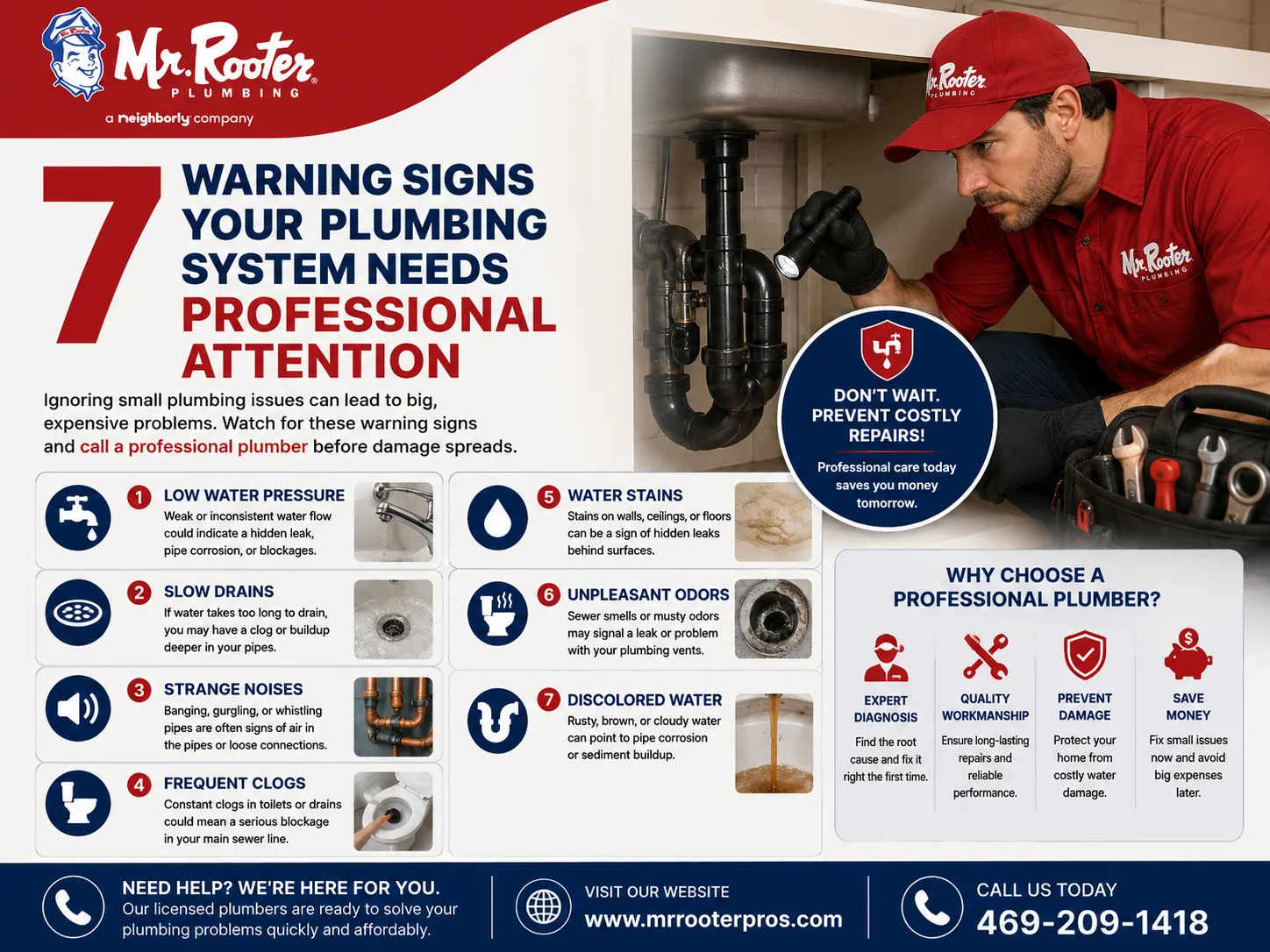
Below are the seven signs that tell you it's time to stop guessing and get a pro to take a look.
1. Water Pressure That's Dropped for No Reason
Why does my water pressure suddenly feel weak?
If your shower used to feel great and now feels like someone's holding a cup under the faucet, something changed. Low pressure usually means mineral buildup inside old pipes, a hidden leak stealing water before it reaches the tap, or a failing pressure regulator.
Think of your pipes like a drinking straw. A little gunk inside barely matters. A lot of gunk, and you're sucking hard for almost nothing. Old galvanized steel pipes are especially prone to this buildup, and it only gets worse with time — it doesn't fix itself.
2. Water Bills That Keep Climbing Without Explanation
Could a hidden leak be raising my water bill?
Yes, and it's more common than most people think. If your usage habits haven't changed but your bill has jumped 15–20%, there's a good chance water is escaping somewhere you can't see — inside a wall, under the slab, or in the yard between the meter and the house.
A slow, silent leak of just one drip per second can waste over 3,000 gallons a year, according to the EPA. That's real money running down the drain every single month while you wonder why the bill keeps going up.
3. Slow Drains in More Than One Fixture
A single slow drain is usually just hair or soap scum — annoying, but not a big deal. When two or more drains slow down at the same time (say, the kitchen sink and the bathtub), that's a different story. It often points to a clog further down the main line that's affecting the whole system.
Snaking one drain won't fix a main line problem. It'll just buy you a few days before it backs up again.
4. Gurgling Sounds Coming From Toilets or Drains
What does it mean when my toilet gurgles?
Gurgling happens when air gets trapped and pushed back through the pipes because water can't flow where it's supposed to. Picture blowing bubbles into a straw stuck in a cup — that "glug glug" sound is air fighting its way past a blockage.
This is often an early sign of a venting problem or a partial clog in the main sewer line. It's easy to shrug off because it doesn't cause visible damage right away. But it's one of the clearest early warnings a professional can catch before it becomes a full backup.
5. Water Stains, Warped Flooring, or a Musty Smell
Discolored ceiling patches, bubbling paint, or floors that feel soft or spongy near the bathroom are signs water has been sitting somewhere it shouldn't. A musty smell without an obvious source often means mold is growing behind a wall from a leak nobody's noticed yet.
About 8% of U.S. homes deal with water damage caused by leaks inside the house each year (American Water Works Association research, cited via industry water-loss studies). That's roughly 1 in every 12 houses on your street — it's not rare, and it's not something a bucket and a fan can permanently fix.
6. An Aging or Struggling Water Heater
How do I know if my water heater needs replacing?
Rusty water, popping or rumbling sounds, inconsistent temperatures, or water pooling around the base are all signs your water heater is on its way out. Most tank water heaters last 8–12 years. Past that, the tank itself can corrode and eventually leak or fail completely — usually without warning.
A failing water heater is like an old car battery. It might start fine every morning for weeks, then die completely on the one day you really needed it.
7. Sewer Line Backups or Multiple Clogged Drains at Once
If water is backing up into your bathtub when you flush the toilet, or you're dealing with clogs in every drain in the house, this points to the main sewer line — not a single fixture. Tree roots, aging pipes, and ground shifting are common culprits, especially in older neighborhoods across the U.S.
This is not a DIY situation. Sewer line issues need a camera inspection to actually see what's happening underground, which is something only a licensed plumber can properly diagnose.
What Usually Works vs. What Often Fails
Store-bought drain cleaners feel like a fix because the water flows again — for a while. What actually works is finding and fixing the cause, not just clearing the symptom. Chemical cleaners can also damage older pipes over time, turning a $150 clog into a $3,000 pipe replacement.
DIY plunging and simple trap cleaning? Those genuinely work for small, single-fixture clogs. Where most homeowners go wrong is assuming a temporary fix means the problem is solved for good.
Quick Takeaways
- Low pressure, rising bills, and gurgling sounds are early warnings — not just annoyances.
- Multiple slow drains usually mean a main line issue, not a single clog.
- Water stains and musty smells almost always mean a leak that's been going on longer than you think.
- Water heaters past 8–12 years old should be inspected, even if they seem fine.
- A same-day fix for a symptom isn't the same as fixing the actual cause.
Final Word
Plumbing problems are rarely dramatic at first. They're quiet — a little pressure drop here, a slightly higher bill there — and that's exactly what makes them dangerous. The homeowners who avoid the big, expensive disasters aren't the lucky ones. They're the ones who paid attention to the small signs and picked up the phone before things got worse.
If any of these seven signs sound familiar, don't wait for the problem to make the decision for you. Mr. Rooter Plumbing of Chattanooga has spent years helping homeowners catch these issues early, fix them right the first time, and avoid the kind of repair bills that come from waiting too long. Reach out for an inspection today — your pipes, your water bill, and your floors will thank you.
Frequently Asked Questions
How often should I get my plumbing inspected?
Once a year is a good baseline, or sooner if your home is older than 20 years or you've noticed any of the signs above.
Can I fix a running toilet myself?
Often, yes — it's usually a worn flapper, which is a cheap, simple part to replace. If it keeps happening after a fix, call a professional.
Is it normal for pipes to make noise?
Occasional ticking from temperature changes is normal. Banging, rumbling, or gurgling is not, and it's worth having checked.
How much does a plumbing inspection usually cost?
It varies by location and home size, but it's almost always cheaper than the water damage repair bill that follows an ignored leak.



























Sign in to leave a comment.