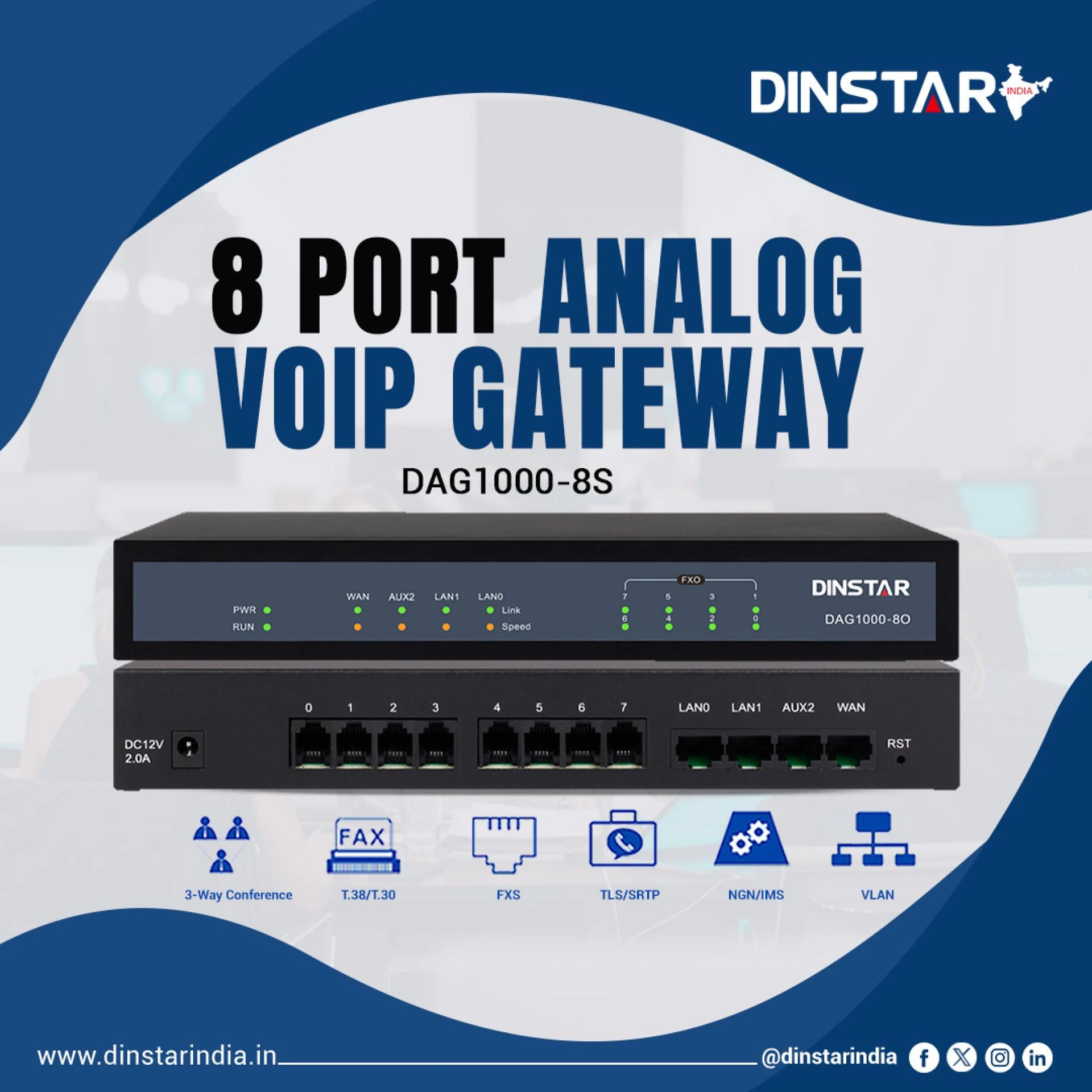

As businesses continue to evolve, so does the demand for robust and scalable voice communication systems. One solution that stands out for small and medium enterprises (SMEs), call centers, and hospitality sectors is the 8 Port FXS Gateway. This device bridges the gap between legacy analog phone systems and modern IP-based communication networks, allowing organizations to maintain efficiency while embracing digital transformation.
In this article, we’ll explore what an 8 Port FXS Gateway is, how it works, its core benefits, and why it's an excellent choice for businesses looking to streamline voice connectivity.
What is an 8 Port FXS Gateway?
An 8 Port FXS Gateway is a VoIP device equipped with eight FXS (Foreign Exchange Subscriber) ports. These ports allow analog devices—such as traditional telephones, fax machines, or PBX systems—to connect to VoIP networks. Essentially, this device acts as a translator, converting analog voice signals into digital packets for transmission over IP networks.
The “8 Port” simply means it can support up to eight analog endpoints simultaneously. This makes it ideal for organizations with multiple desk phones or analog equipment that still need to be integrated into an IP-based voice system.
How Does an 8 Port FXS Gateway Work?
At its core, the gateway serves as a bridge between analog and digital communication. Here’s a quick breakdown:
- Analog voice signals from phones or fax machines connect to the gateway’s FXS ports.
- The gateway converts these analog signals into SIP (Session Initiation Protocol) packets.
- These digital packets are then transmitted over the IP network to a VoIP server, SIP trunk provider, or cloud PBX.
This process works in reverse too—when receiving calls, the VoIP system sends digital packets to the gateway, which then converts them back into analog signals for the connected devices.
Key Features of an 8 Port FXS Gateway
When evaluating an 8 Port FXS Gateway, several key features are worth noting:
- SIP Protocol Support: Most gateways support standard SIP protocols, ensuring broad compatibility with IP PBXs and VoIP providers.
- Voice Compression Codecs: These include G.711, G.729, and G.723, which help manage bandwidth without sacrificing call quality.
- Echo Cancellation: Advanced algorithms ensure clear voice transmission by eliminating unwanted echoes.
- Failover and Redundancy Options: In case of network issues, some gateways offer PSTN fallback to maintain voice service continuity.
- Remote Management: Many models come with a web-based GUI or SNMP support, allowing IT teams to manage devices across locations.
- QoS (Quality of Service): Prioritizes voice traffic to ensure minimal latency and jitter during calls.
Benefits of Using an 8 Port FXS Gateway
Here’s why businesses are adopting 8 Port FXS Gateways more than ever:
1. Cost-Effective Integration
Rather than replacing existing analog phones, businesses can keep their hardware and integrate them into modern VoIP systems. This is particularly beneficial for hotels, warehouses, and small offices where analog devices are still in regular use.
2. Scalable Communication
With eight available ports, these gateways offer scalability without the need for multiple devices. Businesses can expand gradually while maintaining centralized control.
3. Improved Call Quality
Thanks to high-quality voice codecs, echo cancellation, and QoS features, users experience crisp and uninterrupted audio, even on busy networks.
4. Centralized Management
Web interfaces and remote provisioning tools make it easier for IT administrators to monitor and update settings across multiple locations, improving efficiency and reducing maintenance costs.
5. Compatibility with Legacy Systems
8 Port FXS Gateways are often used in environments that rely on analog PBXs or need to support fax machines and other analog devices. These devices ensure that legacy infrastructure remains functional in the digital age.
Popular Use Cases for 8 Port FXS Gateways
Whether it’s a small business or a multi-branch organization, these gateways serve multiple industries. Here are a few practical scenarios:
- Hotels & Hospitality: Integrate analog room phones with IP PBX systems for internal and external communication.
- Healthcare Clinics: Maintain analog fax and phone systems while transitioning to VoIP infrastructure.
- Call Centers: Connect multiple operator desks with traditional phones to a centralized IP call handling system.
- Warehouses & Manufacturing Units: Use durable analog phones in rugged environments and link them to IP-based systems.
Choosing the Right 8 Port FXS Gateway for Your Business
Not all gateways are created equal. When selecting a model, consider the following:
- Interoperability: Ensure the device is compatible with your existing IP PBX or SIP trunk provider.
- Build Quality & Brand Reputation: Opt for a reliable manufacturer known for support and firmware updates.
- Security Features: Look for devices with support for TLS, SRTP, and VPNs to protect VoIP traffic.
- Future-Proofing: Choose models that support IPv6 and firmware updates to stay relevant with evolving tech standards.
Why Businesses Trust Dinstar’s 8 Port FXS Gateway
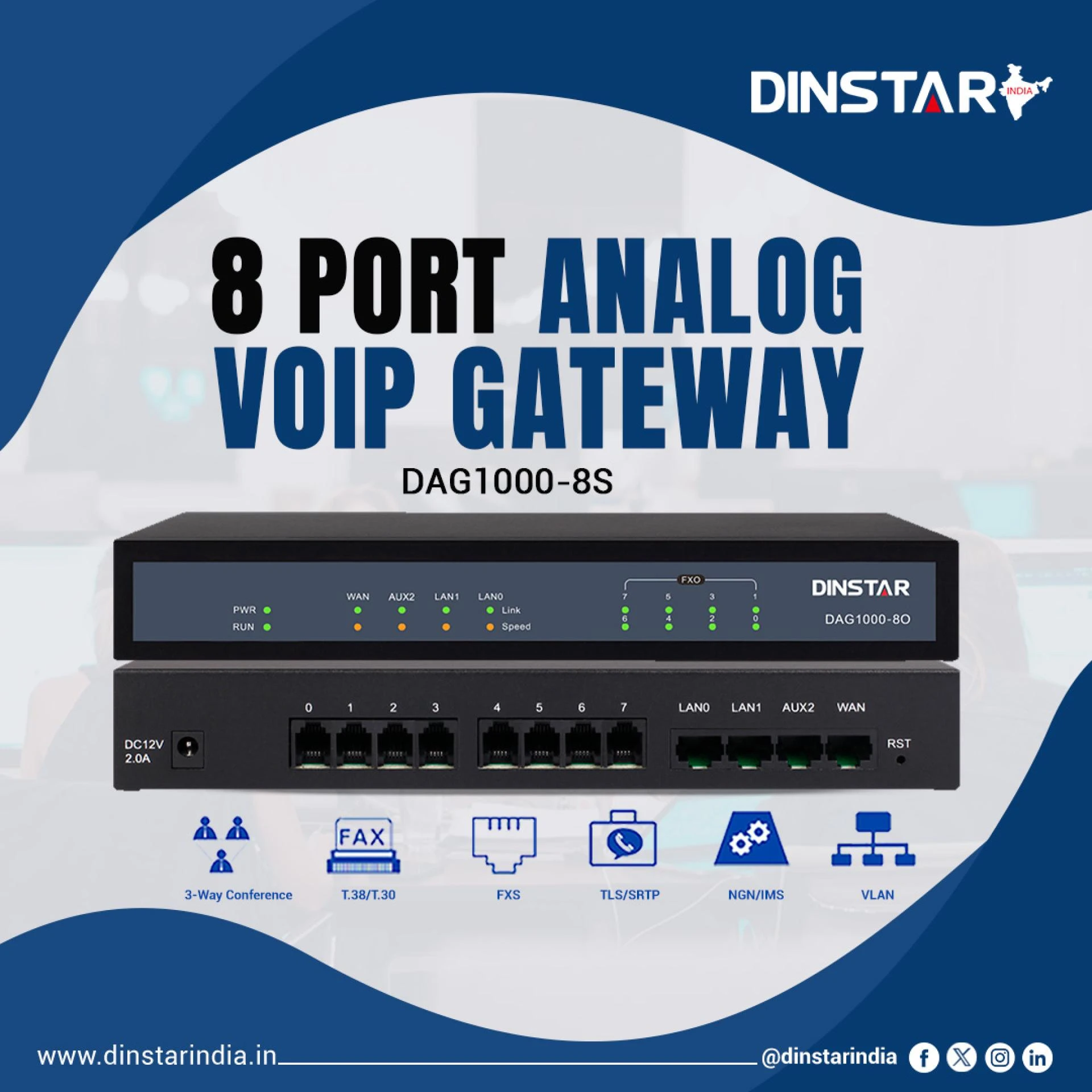
Among the leading brands, Dinstar stands out with its robust and feature-rich 8 Port FXS Gateways. These devices are engineered to provide high reliability, voice clarity, and easy deployment. With features like SIP compatibility, failover options, QoS, and advanced codec support, Dinstar gateways help businesses stay connected without breaking their budgets.
Whether you’re upgrading your voice network or connecting remote analog endpoints, Dinstar’s 8 Port FXS Gateway ensures you get the performance and flexibility your communication systems need.
Conclusion
The 8 Port FXS Gateway remains a practical and efficient solution for businesses bridging the gap between traditional analog infrastructure and modern IP communication. With benefits like cost savings, scalability, and easy deployment, it continues to be a go-to choice across industries.
As digital transformation accelerates, integrating devices like an 8 Port FXS Gateway into your voice architecture can significantly enhance communication and future-proof your organization’s operations.

























Sign in to leave a comment.