
Here's a number worth paying attention to: the average American household wastes about 9,400 gallons of water every single year just from leaks, according to the EPA's WaterSense program, enough to wash more than 300 loads of laundry for nothing. If your water bill has been climbing lately, it might not be your usage habits at all, it might be time to call a reliable plumber in Collegedale and take a real look at what's happening inside your walls.
What Actually Drives Up a Water Bill?
Most high water bills come down to one of two things: waste from leaks and inefficiency, or fixtures that use more water than they need to. A dripping faucet or a running toilet feels minor day to day, but those small losses add up fast over a billing cycle, and they keep adding up until someone actually fixes the problem.
Why This Sneaks Up on Homeowners
The tricky part about water waste is that it's mostly invisible. A leaky faucet drips quietly. A running toilet doesn't make a mess. Old pipes don't announce that they're inefficient. Most people only notice something's wrong when the bill arrives, and by then, months of waste have already happened.
Show You Understand: Common Plumbing Money Drains
If any of these sound familiar, your water bill is probably higher than it needs to be:
- A toilet that runs longer than it should after flushing
- A faucet with a slow, steady drip that never quite stops
- Water pressure that feels stronger than necessary at every fixture
- An older water heater working overtime to keep up with demand
- A washing machine or dishwasher from before water-efficiency standards existed
None of these are dramatic on their own, but together they quietly inflate a monthly bill more than most homeowners realize.
How a Plumber in Collegedale Can Help You Fix This
This is where a professional inspection pays for itself. A licensed plumber from Mr. Rooter Plumbing of Chattanooga can pinpoint exactly where water is being wasted, whether that's a worn toilet flapper, an aging pipe, or fixtures that simply weren't built with efficiency in mind. From there, targeted upgrades bring the bill down without asking you to take shorter showers or guilt-trip yourself over dishes.
1. Replace Old Toilets With WaterSense Models
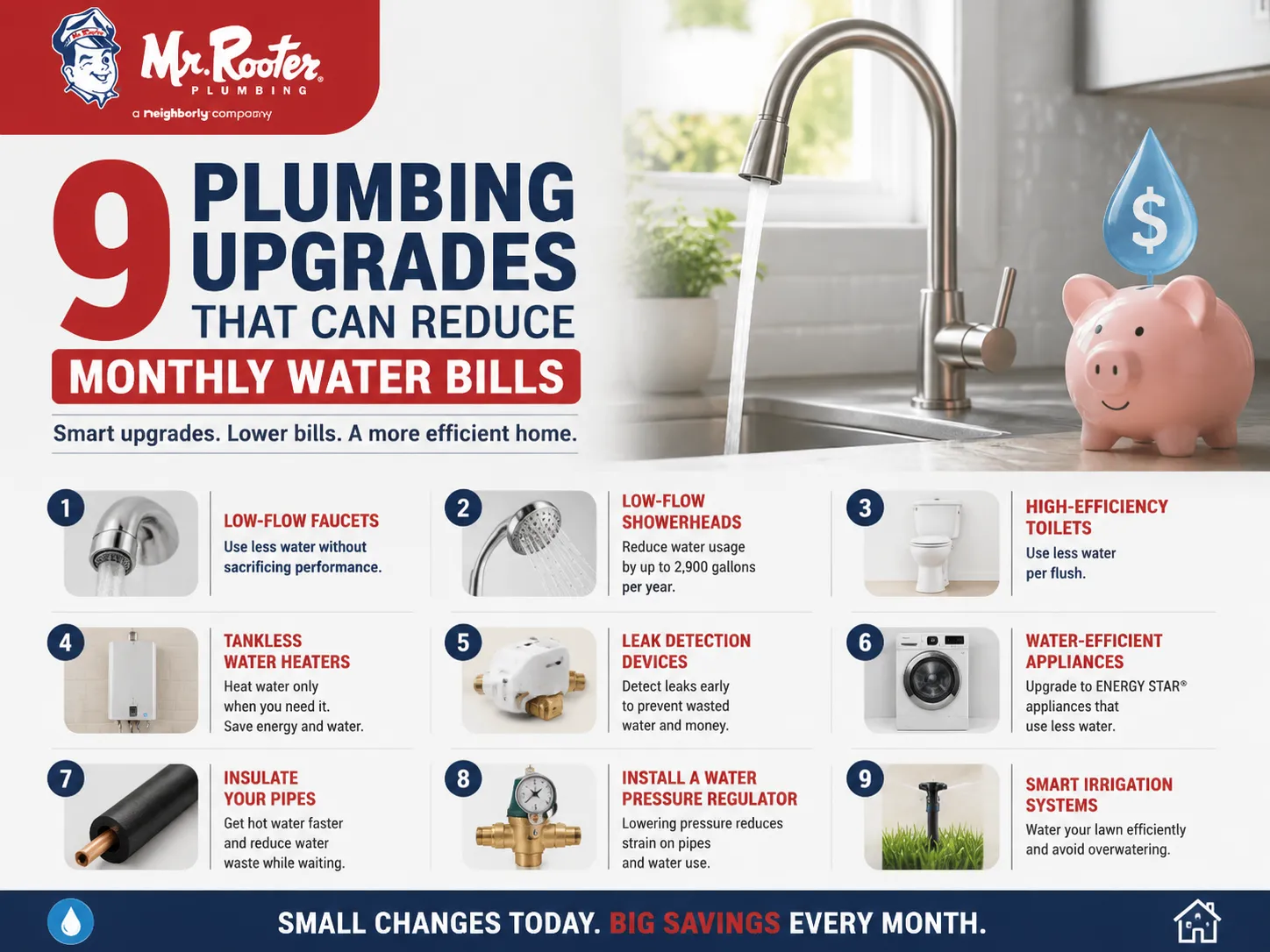
Toilets are usually the biggest water user in any home. Older models can use several times more water per flush than newer WaterSense-labeled ones. According to the EPA, replacing old, inefficient toilets can save a household about 13,000 gallons of water and $130 in costs annually.
How Do I Know If My Toilet Needs Replacing?
If it was installed before the mid-1990s, it's almost certainly an inefficient model by today's standards. A running toilet or one that needs multiple flushes to clear is another clear sign it's time for an upgrade.
2. Fix Leaky Faucets Right Away
A dripping faucet feels harmless, but a single leak at one drip per second can waste over 3,000 gallons a year. That's like leaving a garden hose trickling nonstop in the background of your life. Most faucet leaks come down to a worn washer or gasket, an easy and inexpensive fix.
3. Install WaterSense Showerheads
Swapping an old showerhead for a WaterSense-labeled model can save a household more than 2,700 gallons of water annually, along with lowering both water and energy bills. It's one of the cheapest upgrades on this list, and most people can't even tell the difference in water pressure.
4. Add Faucet Aerators
Faucet aerators mix air into the water stream, so it feels just as strong while actually using less. WaterSense-labeled aerators are about 30% more efficient than standard faucets, saving nearly 2 gallons a day per fixture. Think of it like adding foam to a soda, it feels like more without actually being more.
5. Upgrade to an Efficient Water Heater
An aging water heater doesn't just cost more on the energy bill, it often works harder and less efficiently as sediment builds up inside the tank. Upgrading to a newer, properly sized unit reduces both energy waste and the risk of a sudden failure that could flood a utility room.
Does Water Heater Size Really Matter?
Yes. An oversized unit wastes energy heating water you're not using, while an undersized one runs constantly trying to keep up. A plumber in Collegedale can help match the right size to your household's actual usage.
6. Replace Old Washing Machines and Dishwashers
Appliances made before modern efficiency standards can use significantly more water per cycle than newer ENERGY STAR-certified models. If your washer or dishwasher is more than a decade old, it's likely costing you more in water and energy than a replacement would over time.
7. Fix Running Toilets Immediately
A running toilet can waste up to 200 gallons of water a day, which adds up to thousands of gallons in just a few weeks. The usual culprit is an old, worn flapper valve, which is a cheap part that most plumbers can replace in minutes.
8. Insulate Exposed Pipes
Insulating pipes doesn't just prevent freezing in winter, it also helps hot water stay hot longer as it travels, meaning your water heater doesn't have to work as hard to make up for heat lost along the way. It's a small upgrade with a steady payoff over time.
9. Get a Whole-Home Leak Detection Check
Some leaks hide inside walls or underground, invisible until they've already caused real damage. A professional leak detection inspection from Mr. Rooter Plumbing of Chattanooga catches these before they show up as water stains or a shockingly high bill. It's the difference between catching a problem early and discovering it the hard way.
What Usually Works
Fixing running toilets and dripping faucets delivers the fastest, most noticeable savings, since these are often the biggest silent water wasters in a home. WaterSense upgrades across the board also add up quickly, especially when combined rather than done one at a time.
What Often Fails
Ignoring a small leak because "it's not that bad" almost always costs more over time than fixing it right away would have. DIY fixes on running toilets sometimes solve the symptom without addressing the worn part causing it, which means the same problem shows up again a few months later.
How Much Can These Upgrades Actually Save?
According to EPA WaterSense data, the average family spends more than $1,000 a year on water, but can save over $380 annually just by retrofitting with WaterSense-labeled fixtures and ENERGY STAR appliances. Combine several of the upgrades above, and the savings compound month after month.
A Simple Way to Think About It
Picture your plumbing system like a leaky bucket carrying water across a yard. Even a tiny hole means less water reaches where it's supposed to go, no matter how much you pour in. Fixing leaks and upgrading fixtures patches those holes, so more of what you're paying for actually gets used instead of wasted along the way.
Key Takeaways
- Household leaks waste an average of 9,400 gallons of water per year, according to EPA WaterSense data
- Running toilets and dripping faucets are two of the most common, most fixable causes of high bills
- WaterSense-labeled fixtures can cut water use by 20% without sacrificing performance
- Replacing old toilets alone can save around 13,000 gallons and $130 per year
- Whole-home leak detection catches hidden problems before they become expensive repairs
- Small upgrades add up fast when tackled together instead of one at a time
Conclusion
A high water bill rarely comes from one obvious problem, it's usually a handful of small, quiet issues stacking up month after month until the number on the bill finally gets your attention. The upgrades above aren't complicated or expensive individually, but together they can meaningfully change what you're paying every month. If your bill has been creeping up and you're not sure why, bringing in a plumber in Collegedale to check things out is a smart, practical next step. Mr. Rooter Plumbing of Chattanooga has helped homeowners throughout the Collegedale area track down hidden leaks and outdated fixtures that were quietly driving their bills up.
FAQs
How do I know if I have a hidden water leak?
Check your water meter before and after a two-hour period with no water use. If it moves at all, you likely have a leak somewhere in the system.
Are WaterSense-labeled fixtures actually as effective as standard ones?
Yes, WaterSense products are tested to perform as well as or better than standard fixtures while using at least 20% less water.
How much does it cost to fix a running toilet?
Most running toilet repairs involve replacing an inexpensive flapper valve, which is one of the cheapest fixes a plumber can make relative to the water it saves.
Is it worth replacing an old water heater just to save on water?
Often yes, since older units run less efficiently and can waste both water and energy as sediment builds up, in addition to carrying a higher risk of sudden failure.
How quickly will I notice savings after making these upgrades?
Many homeowners see a difference in their very next billing cycle, especially when fixing an active leak or running toilet that had gone unnoticed.


























Sign in to leave a comment.