
Have you ever thought about the unsung heroes who have shaped our planet, the ones who can easily conduct electricity, create buildings, and endure the test of time? Step inside the captivating world of metals! The foundation of our contemporary world is made of these dazzling materials, which are renowned for their conductivity, toughness, and adaptability. A wonderful universe of possibilities is revealed by comprehending the variety of metals and their applications, from the powerful iron to the lightweight marvels of aluminium. Through the perspective of Science Tuition, explore the fascinating chemistry of metals and their various roles, as well as their relevance and uses in our daily lives.
What's the Meaning of Metal?
Metal is a class of elements characterized by their distinctive properties, including conductivity, malleability, and luster. These elements, found on the left side of the periodic table, typically share common attributes such as high melting and boiling points. Electropositive in nature, metals readily lose electrons, forming positively charged ions.
The metallic bond, a key feature, involves a sea of delocalized electrons that move freely among positively charged metal ions, providing metals with their characteristic properties. Widely used in various industries, metals contribute to the structural integrity of buildings, electrical conductivity in wiring, and the production of diverse consumer goods.
Classification of Metal
Metal can be categorized based on distinct parameters, shedding light on their properties and applications:
Iron Content: Metals are often divided into ferrous (iron-containing) and non-ferrous (iron-free) categories, each possessing unique characteristics and applications.
Ferrous metals, such as iron and steel, exhibit robustness and magnetic properties. In contrast, non-ferrous metals like copper, aluminum, and titanium offer features like corrosion resistance and lightweight structures.
Atomic Structure: Another approach to classify metals involves their atomic structure, delineating them as either crystalline or non-crystalline (amorphous).
Crystalline metals possess an organized atomic arrangement, contributing to their strength and conductivity, while amorphous metals lack this structured arrangement, often exhibiting enhanced magnetic properties or improved corrosion resistance.
Categories of Metal
Ferrous & Non-Ferrous Metal:
Ferrous Metal:
Ferrous metals encompass those containing iron as a primary component. Known for their robustness and magnetic properties, these metals play pivotal roles across industries. Examples include iron and steel, widely used in construction, manufacturing, and engineering due to their strength and durability.
Non-Ferrous Metal:
Non-ferrous metals, lacking significant iron content, exhibit diverse characteristics such as corrosion resistance, lightweight nature, and excellent conductivity. Metals like copper, aluminium, and titanium fall into this category and find applications in electrical wiring, aerospace, and medical implants owing to their unique properties.
Magnetic & Non-Magnetic Metal:
Magnetic:
Metals exhibiting magnetic properties include iron, nickel, and cobalt. These materials are crucial for various applications where magnetism is essential, such as in manufacturing electric motors, generators, and magnetic storage devices.
Non-Magnetic:
Non-magnetic metals, including copper, aluminium, and brass, do not possess significant magnetic properties. They are extensively used in industries requiring non-magnetic materials, like electronics, due to their non-interference with magnetic fields and excellent conductivity.
Different Types of Metal & Their Applications
Iron
Iron stands as one of the most commonly used and economically feasible metals. It appears in three primary types:
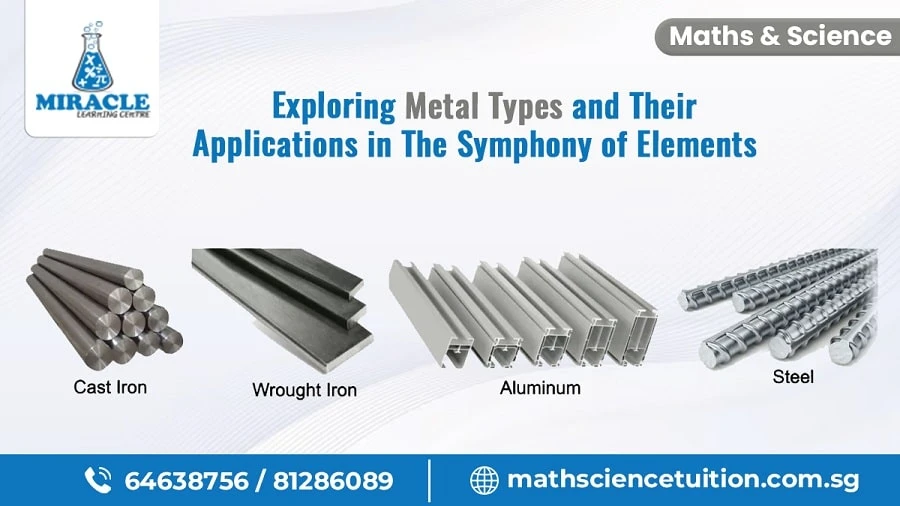
Pig Iron: Considered a crude form, pig iron serves as the raw material for manufacturing various ferrous metals like cast iron and steel.Cast Iron: Produced by melting pig iron alongside coke and limestone, cast iron tends to be brittle yet finds extensive application in engineering, particularly in the automotive industry due to its lower melting point, excellent machinability, and resistance to deformation and wear.Wrought Iron: Recognized for its toughness, ductility, and corrosion resistance, wrought iron is a refined metal with small amounts of silicate slag incorporated into its filaments. It was once favored for products such as guardrails and garden furniture, although mild steel has largely supplanted its usage.Steel
Steel, an alloy blending iron with carbon and other elements, is revered for its strength and fracture resistance, making it a staple in diverse products.
Carbon Steel: This basic steel, enriched with carbon and iron, sometimes contains elements like manganese, chromium, nickel, and vanadium, altering its strength, wear resistance, and magnetic properties. Used widely for pipework and various applications due to its cost-effectiveness.Stainless Steel: Comprising high chromium content, stainless steel offers exceptional corrosion resistance, making it valuable in environments requiring high levels of cleanliness, such as hospitals and kitchens.Copper
Soft, malleable, and possessing excellent electrical conductivity, copper serves a range of purposes, from wires to household items and coins.
Bronze
Primarily composed of copper and tin alloys, bronze is durable, resistant to wear, and easily shaped, making it ideal for sculptures and various artistic works.
Brass
Combining copper with zinc, brass exists in various types based on the copper-to-zinc ratio and added elements. It offers strength, corrosion resistance, and finds applications in locks, gears, and valves.
Aluminium
Aluminium, lightweight and durable, becomes versatile when alloyed. Its conductivity, corrosion resistance, and machinability make it popular in aircraft parts, cables, and architectural applications.
Titanium
Renowned for its lightweight yet robust nature and exceptional thermal stability, titanium finds extensive use in aerospace, military equipment, sporting goods, and medical devices due to its corrosion resistance.
Lead
With a low melting point and malleability, lead is used in soldering, tank linings, water pipes, and electrical cables.
Understanding the diverse characteristics and applications of these metals underscores their significance in various industries and everyday life, contributing significantly to technological advancements and infrastructure development across the globe.
Know more about metal in Science Tuition
Exploring the vast world of metals is made engaging and insightful through dedicated platforms like science tuition centres. These centres serve as invaluable hubs where students delve into the realm of metals under the guidance of experienced science tutors. With their expertise, science tutors in these tuition centres impart comprehensive knowledge about the properties, classifications, and diverse applications of metals.
Science tuition centre offer structured learning environments that facilitate hands-on experiences, experiments, and theoretical teachings, enabling students to grasp the complexities of various metal types. Through interactive sessions and practical demonstrations, students gain a deeper understanding of metals' significance across industries, from construction to technology. These centres play a pivotal role in nurturing a profound appreciation for metals, nurturing the curiosity and passion for scientific exploration among students.
Conclusion
Metals are fundamental to our lives, shaping modern civilization in towering structures, electronic circuitry, and more. Comprehending diverse metal types and their applications is pivotal, showcasing their impact on technology and infrastructure. Embracing this knowledge through science tuition illuminates the crucial role metals play, guiding us towards a sustainable and advanced future.
























Sign in to leave a comment.