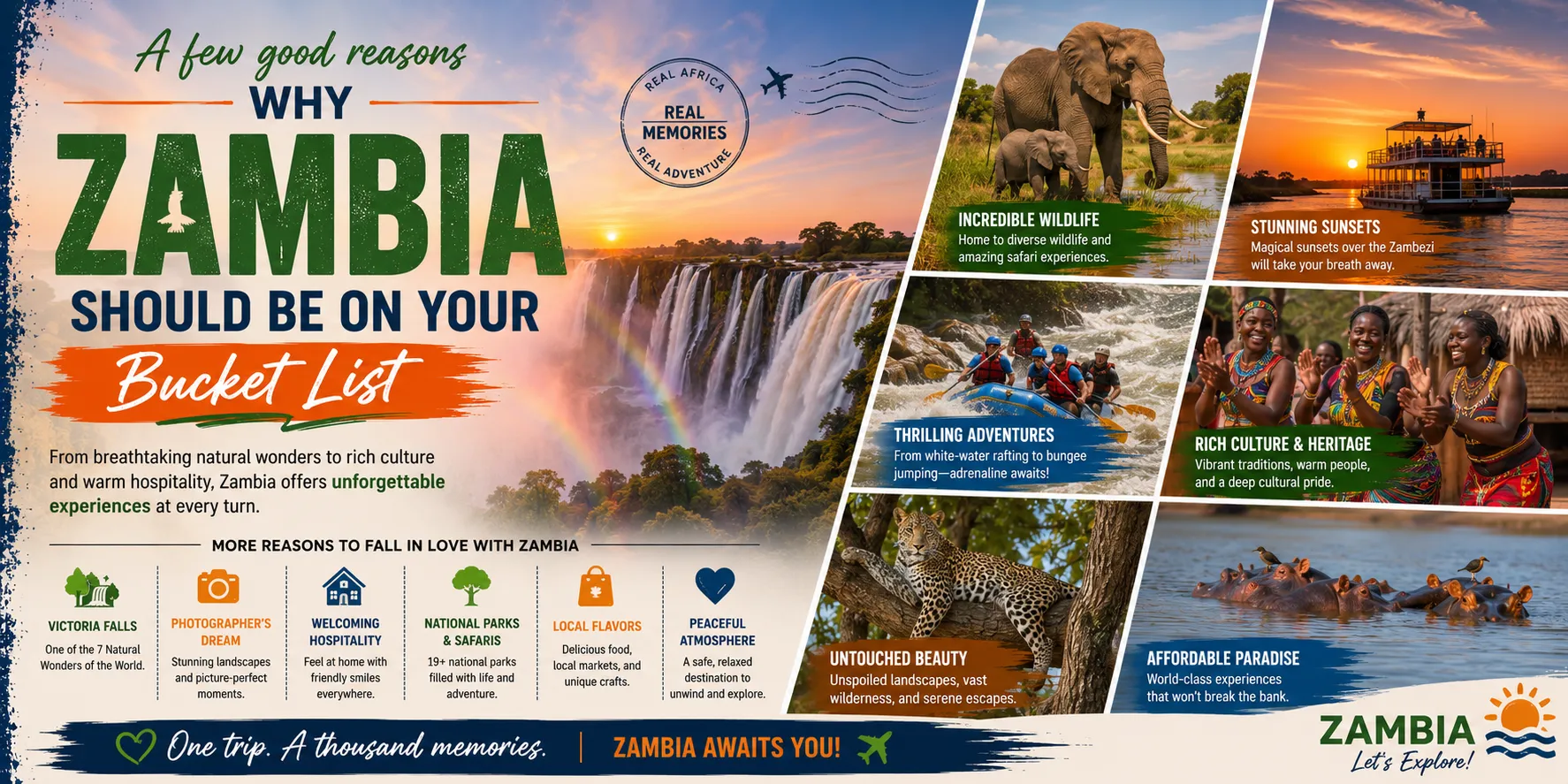

If you are tired of crowded national parks where ten safari jeeps fight for a view of a single, tired lion, it is time to look at a map of Southern Africa.
Zambia is one of the world's best-kept travel secrets. It is a land of raw wilderness, massive rivers, and endless wildlife. Yet, it gets a fraction of the tourists that visit neighboring countries.
If you are planning your next big adventure, here is why this incredible country deserves a top spot on your travel bucket list.
1. What makes Victoria Falls in Zambia so special?
Known locally as Mosi-oa-Tunya (The Smoke that Thunders), Victoria Falls is the largest falling curtain of water on earth. While you can see the falls from both Zimbabwe and Zambia, the Zambian side offers a highly intimate and thrilling experience.
You can walk across the Knife-Edge Bridge, where the spray wets you to the bone, or hike down to the Boiling Pot to look up at the massive canyon from below. If you visit during the dry season, you can even swim in the famous Devil’s Pool—a natural rock pool right on the edge of the sheer drop-off.
2. Why is Zambia known as the birthplace of the walking safari?
Most African safaris keep you locked inside a metal vehicle. In Zambia, you can step out onto the actual earth. The legendary conservationist Norman Carr pioneered the "walking safari" here in the 1950s.
Walking through the wild with an armed scout and an expert guide changes how you see nature. Without the noise of an engine, you learn to read the stories left in the dirt: the fresh footprint of a hyena, the warning call of a bird, or the scent of wild herbs. It is an adrenaline rush that you simply cannot get from a car seat.
3. Is Zambia really one of the safest countries in Africa to visit?
Yes. According to global safety indexes and travel reports, Zambia consistently ranks as one of the safest and most peaceful nations on the African continent.
The country has a long history of political stability and peaceful democratic transitions. More importantly, the local culture is incredibly welcoming. Zambians are famous for their genuine warmth and hospitality. Solo travelers, couples, and families alike regularly report feeling completely safe and respected throughout their journeys.
4. How can you escape the tourist crowds on a Zambian safari?
In famous parks across East and South Africa, you might find yourself sharing an animal sighting with dozens of other vehicles. In Zambia, the parks are massive, and the lodges are small and spread out.
Because many areas are remote and carefully managed, you can drive for hours without seeing another human soul. This lack of vehicle traffic means the animals behave naturally, and you get to enjoy the quiet majesty of the African bush in complete peace.
5. What wildlife will you see in the "Valley of the Leopard"?
South Luangwa National Park is affectionately called the "Valley of the Leopard" because it has one of the highest concentrations of these elusive big cats in the world.
But leopards are just the beginning. The park is home to massive herds of elephants, buffaloes, hippos, and unique species like the Thornicroft’s giraffe. Zambia is also one of the few places where you can take night drives. Using spotlight beams, guides help you spot active nocturnal animals like hunting lions, genets, honey badgers, and owls.
6. What makes the Lower Zambezi a unique water-based safari?
The Lower Zambezi National Park is a striking landscape where the mountains meet a massive river plain. It is also famous for being home to the world’s first carbon-neutral national park, meaning your eco-footprint here is exceptionally low.
Here, you do not just watch wildlife from the land. You can glide down the river in a canoe, drifting past elephants bathing on the riverbank, hippos yawning in the shallows, and crocodiles basking in the sun. It is a peaceful, eye-level perspective on African wildlife.
7. Are Zambian "bush camps" actually comfortable?
When people hear the word "bush camp," they often think of pitching a small tent on the dirt. In Zambia, bush camps represent the peak of eco-luxury.
These camps are small, often hosting only six to eight guests at a time. They are built from local wood, thatch, and canvas, blending perfectly into the wild surroundings. Yet, they offer highly comfortable beds, hot open-air showers under the stars, gourmet meals cooked over open fires, and exceptional, personalized service. It is the perfect way to unplug without giving up your basic comforts.
8. When is the absolute best time to plan your trip?
Your experience in Zambia will depend heavily on the time of year:
- May to October (The Dry Season): This is the prime time for classic safaris. As the water sources dry up, animals gather in huge numbers around the major rivers. The bush is thin, making wildlife incredibly easy to spot.
- November to April (The Emerald Season): The rains arrive, turning the dusty landscape a vibrant green. While some dirt roads close, this is a spectacular time for birdwatching, dramatic photography, and seeing newborn animals.
9. Can you swim in Lake Tanganyika or Lake Kariba?
Zambia is home to incredible bodies of water. Lake Kariba is the world’s largest man-made lake, often looking like a Mediterranean holiday spot where you can enjoy houseboat trips, stunning sunsets, and freshwater fishing.
Further north lies Lake Tanganyika, the world’s second-deepest lake. Its crystal-clear, warm waters are home to over 350 species of colorful cichlid fish, making it a fantastic and unexpected destination for snorkeling and scuba diving in the heart of Africa.
10. What local cultural traditions can you experience?
Zambia is home to over 70 distinct ethnic groups living in harmony. This diversity is celebrated through spectacular annual traditional festivals.
One of the most famous is the Kuomboka ceremony of the Lozi people. When the Zambezi River floods the plains, the King (the Litunga) makes a grand journey from his dry-season palace to his high-ground palace. He travels in a giant royal barge decorated with a huge black elephant model, accompanied by traditional drumming and singing. Witnessing such living history is a transformative experience.
11. Do I need a visa to travel to Zambia?
Most international travelers require a visa to enter Zambia for tourism, leisure, or business. Fortunately, getting your official travel documents sorted does not have to be a stressful chore.
Whether you are traveling to view the majestic Victoria Falls or heading to Lusaka for an essential business meeting, securing your Zambia Tourist e-Visa online beforehand ensures a smooth, worry-free entry at the border.
Why Choose Us for Your Zambia Travel Visa?
Planning an African adventure takes time, and you should not have to waste hours dealing with confusing government paperwork. We simplify the entire process so you can focus on packing your bags.
- Reliable Travel Visa Services: Our global, proven approach has successfully assisted thousands of travelers in obtaining their official visas without the typical hassles.
- Round-the-Clock Assistance: Got a question? You can reach out to our team 24/7. Our dedicated visa experts review all inquiries and respond within 72 hours to keep your travel plans on track.
- Experienced Visa Consultants: We provide expert, personalized guidance at every step of your application, ensuring all your details are correct to maximize the chances of a successful, quick approval.
- Efficient Visa Application Process: No long lines or complicated queues. You can apply for your official documents in just a few minutes using our highly simplified online form.
Ready to start planning your dream trip to Southern Africa? Apply easily for your Zambia Business E-Visa today and take the first step toward the journey of a lifetime.



















Sign in to leave a comment.