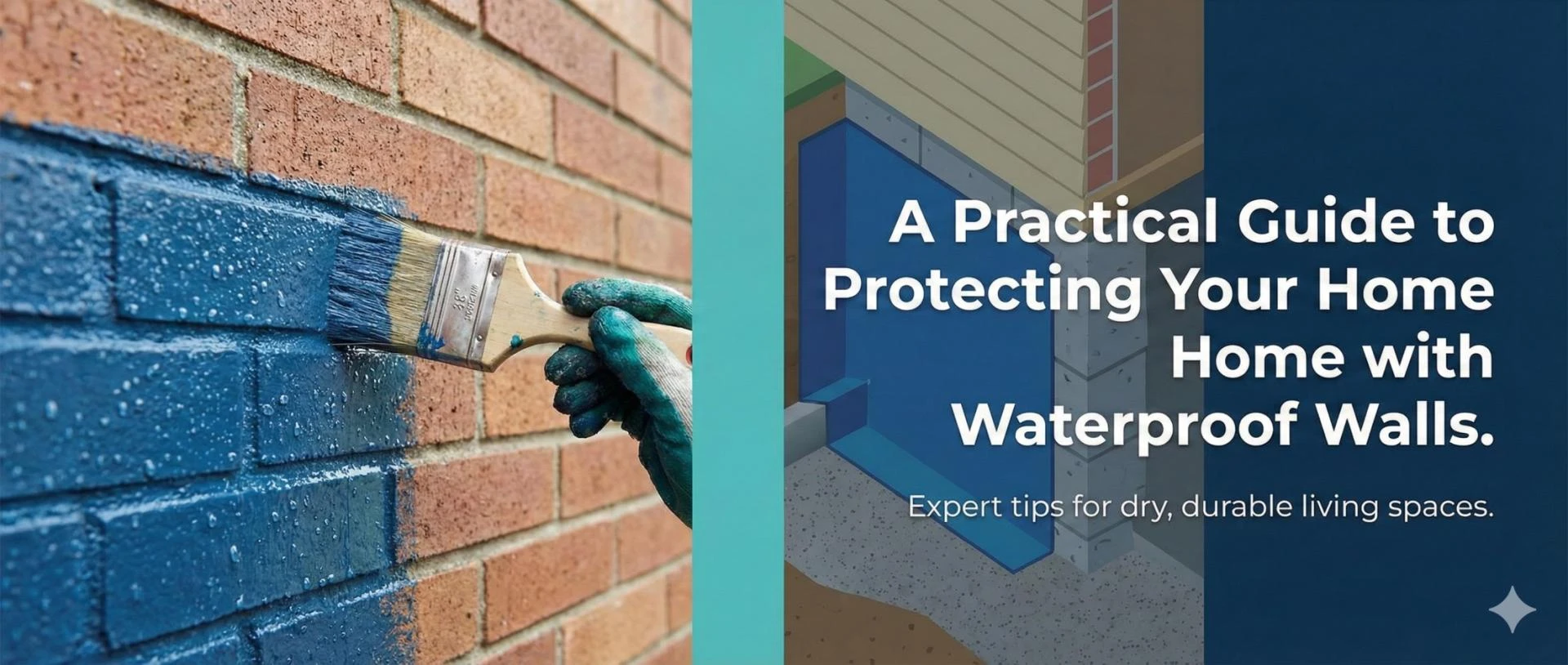

Damage to the building due to water is a silent killer. It all starts small and manageable, but suddenly you realise that the extent of it is deep enough to make renovation the only option left. This is why investing in proper wall waterproofing is a necessity for long-term home protection.
Creating waterproof walls helps safeguard your home from water seepage, improves indoor air quality, and extends the life of your building. In this guide, we break down what wall waterproofing is, why it matters, and the most practical methods you can use to protect your home effectively.
What Is Wall Waterproofing?
Wall waterproofing is the process of applying protective materials to walls to prevent water from penetrating the building. These systems create a barrier that blocks moisture, reducing problems like seepage, dampness, mildew growth, and gradual building damage.
Waterproofing can be done on both exterior and interior walls, depending on where moisture exposure is highest. Areas with heavy rainfall, high humidity, or groundwater pressure benefit the most from well-planned waterproofing solutions.
Why Waterproofing Your Walls Matters
Waterproofing offers multiple benefits beyond just keeping walls dry.
Key Advantages of Wall Waterproofing
| Benefit | Why It’s Important |
| Protection from water damage | Prevents cracks, rot, and structural weakening |
| Mildew prevention | Reduces health risks and indoor air pollution |
| Improved durability | Strengthens walls against long-term wear |
| Cost savings | Avoids expensive repairs later |
| Energy efficiency | Reduces heat loss through damp walls |
| Higher property value | Makes homes more attractive to buyers |
In short, waterproofing protects both your investment and your comfort.
Types of Wall Waterproofing Methods
Wall waterproofing is broadly classified into exterior and interior methods. Each has a specific purpose and works best under certain conditions.
1. Exterior Wall Waterproofing
Exterior waterproofing focuses on preventing water from entering the building in the first place. It is especially critical for walls exposed to rain, soil moisture, or groundwater.
Common Exterior Waterproofing Methods
| Method | Description | Best Used For |
| Cement-based waterproofing | A thick cementitious layer that blocks water | Residential and commercial exteriors |
| Liquid waterproofing membrane | Flexible liquid coating forming a seamless barrier | Walls with minor movement |
| Bituminous membrane | Bitumen-based coating resistant to weather | Foundations and retaining walls |
| Sheet membrane waterproofing | Pre-made membranes (PVC, EPDM, bitumen) | Basements and below-grade walls |
Cement-based systems often rely on high-quality binders such as portland cement, which provides strength, durability, and excellent adhesion when used correctly.
2. Interior Wall Waterproofing
Interior waterproofing manages moisture that has already entered or cannot be stopped from entering from the outside. It is commonly used in basements, bathrooms, and kitchens.
Common Interior Waterproofing Methods
| Method | How It Works | Suitable Areas |
| Waterproof paints and sealants | Forms a moisture-resistant coating | Bathrooms, kitchens |
| Waterproof membranes | Creates an internal barrier against water | Basements, foundation walls |
| Drainage boards | Channels water toward drains | Damp-prone interior walls |
| Cementitious coatings | Penetrates the surface to block water | Interior masonry walls |
Interior waterproofing is often used alongside exterior solutions for maximum protection.
Choosing the Right Waterproofing Method
Selecting the right waterproofing approach depends on several factors:
- Location of moisture (inside or outside)
- Wall material (brick, concrete, blockwork)
- Exposure to rain or groundwater
- Age and condition of the building
Consulting a professional helps identify the source of moisture and ensures the correct solution is applied rather than relying on temporary fixes.
Role of Cement Quality in Waterproofing
While membranes and coatings are important, the quality of the base construction material plays an important role in waterproofing. Strong, dense cement reduces porosity, making it harder for water to penetrate walls.
Premium-quality cement products, such as Ambuja Cement, are known for consistent performance, durability, and controlled manufacturing processes. These characteristics support better waterproofing outcomes, especially when used in plastering, masonry, and cement-based waterproof coatings.
Maintenance Tips for Long-Lasting Waterproof Walls
Even the best waterproofing systems need basic upkeep to stay effective:
- Inspect walls annually for cracks or peeling
- Reapply sealants when required
- Ensure proper drainage around the house
- Keep gutters and downpipes clear
Regular maintenance ensures that waterproof walls continue to perform effectively for years.
Common Waterproofing Mistakes to Avoid
- Applying waterproof coatings on damp or dirty surfaces
- Ignoring the curing time for cement
- Using low-quality materials to cut costs
- Treating symptoms instead of identifying moisture sources
Avoiding these mistakes can significantly improve waterproofing results.
Final Thoughts
Waterproofing is not just about keeping your walls dry; it’s about protecting your home, health, and value. Whether you choose exterior membranes, interior coatings, or cement-based systems, the right approach can prevent long-term damage and costly repairs.
By combining sound waterproofing methods with high-quality materials like PPC cement, homeowners can build walls that stand strong against moisture challenges. With proper planning and execution, waterproof walls become a long-term investment in safety, comfort, and peace of mind.



























Sign in to leave a comment.