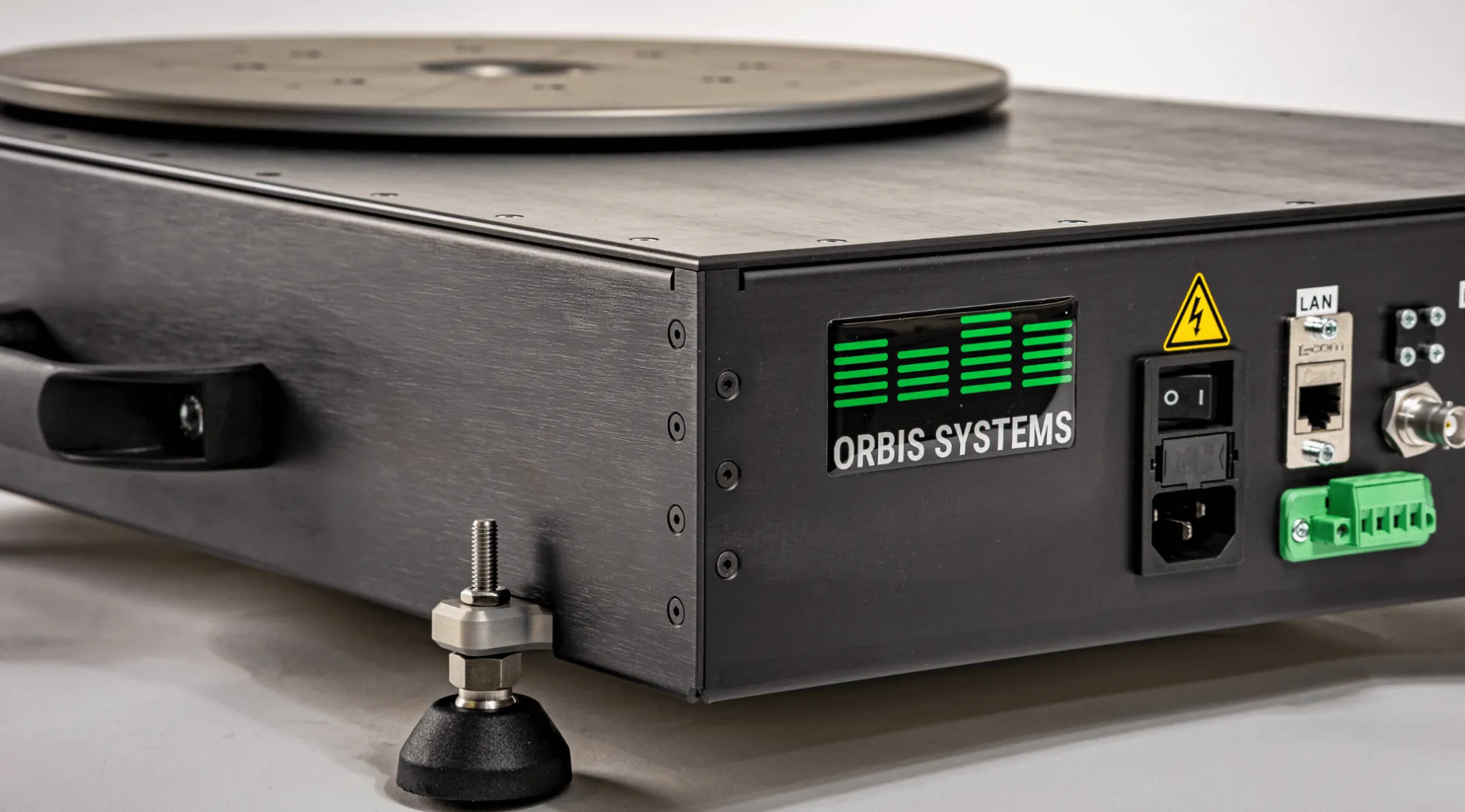

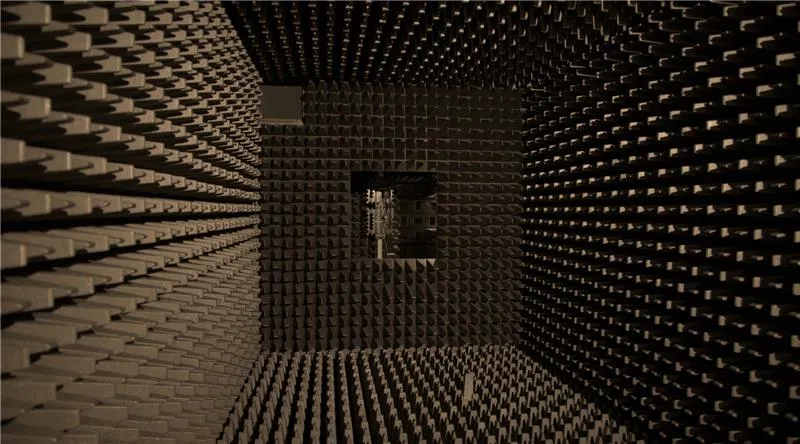
Modern wireless technologies demand precise and repeatable testing to ensure products perform reliably in real-world conditions. From connected vehicles and smartphones to IoT devices and industrial communication systems, Over-the-Air (OTA) testing has become an essential part of product validation. At the center of every accurate OTA setup are RF test positioners, which enable controlled movement of the device under test (DUT) while maintaining high measurement accuracy.
As wireless standards continue to evolve with 5G, Wi-Fi 7, satellite communications, and V2X technologies, selecting the right positioning system is no longer just about automation—it's about achieving consistent, repeatable, and standards-compliant test results. This guide explains how RF test positioners work, where they are used, and what factors should be considered when choosing the right solution.
Key Takeaways
- RF test positioners enable precise and repeatable movement during OTA chamber testing.
- Accurate positioning improves measurement reliability and reduces testing errors.
- Custom positioning systems support specialized applications, including automotive and aerospace testing.
- Selecting the right positioner depends on payload, rotation accuracy, chamber size, and automation requirements.
- Well-designed positioning systems help laboratories improve efficiency while supporting future wireless technologies.
What Are RF Test Positioners?
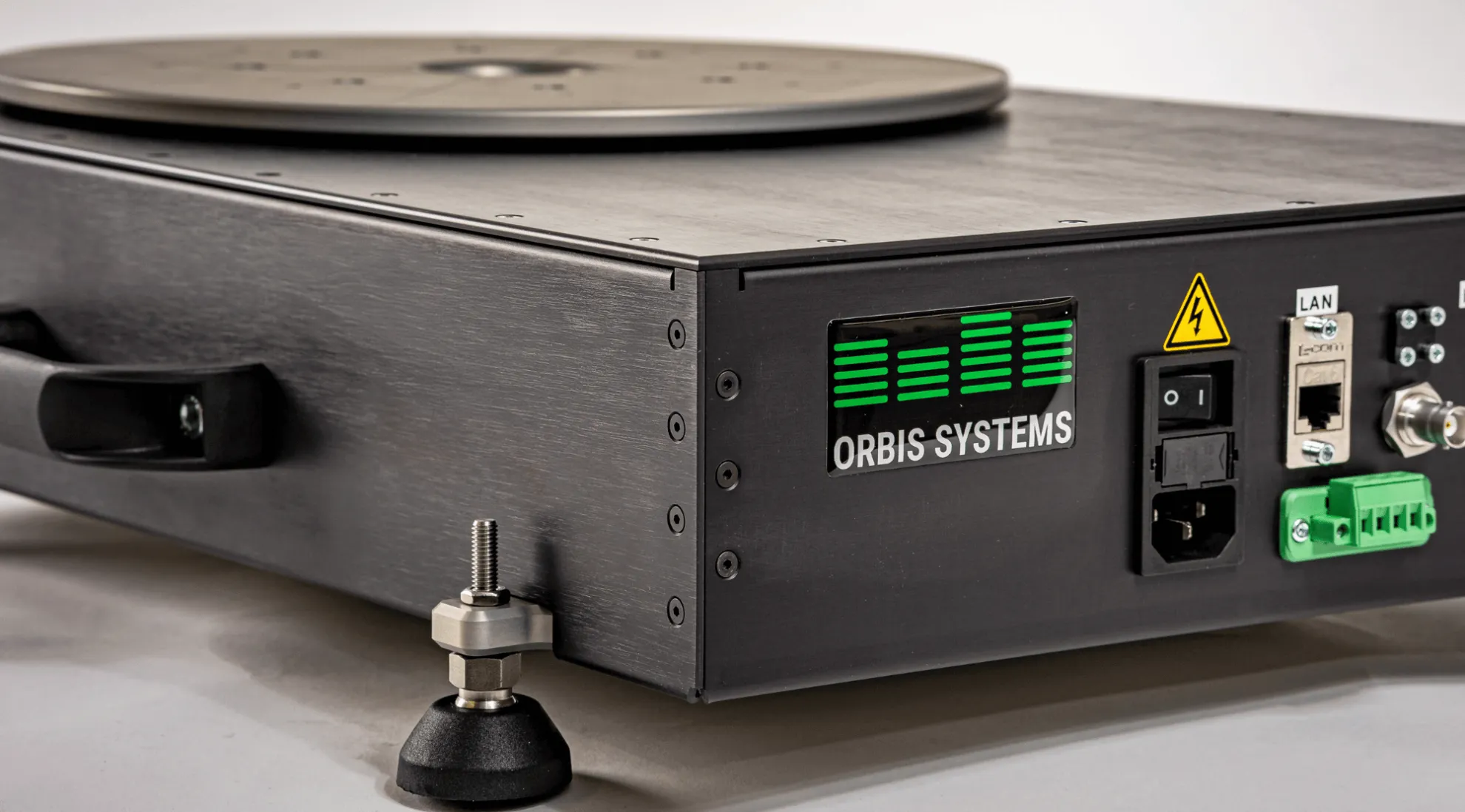
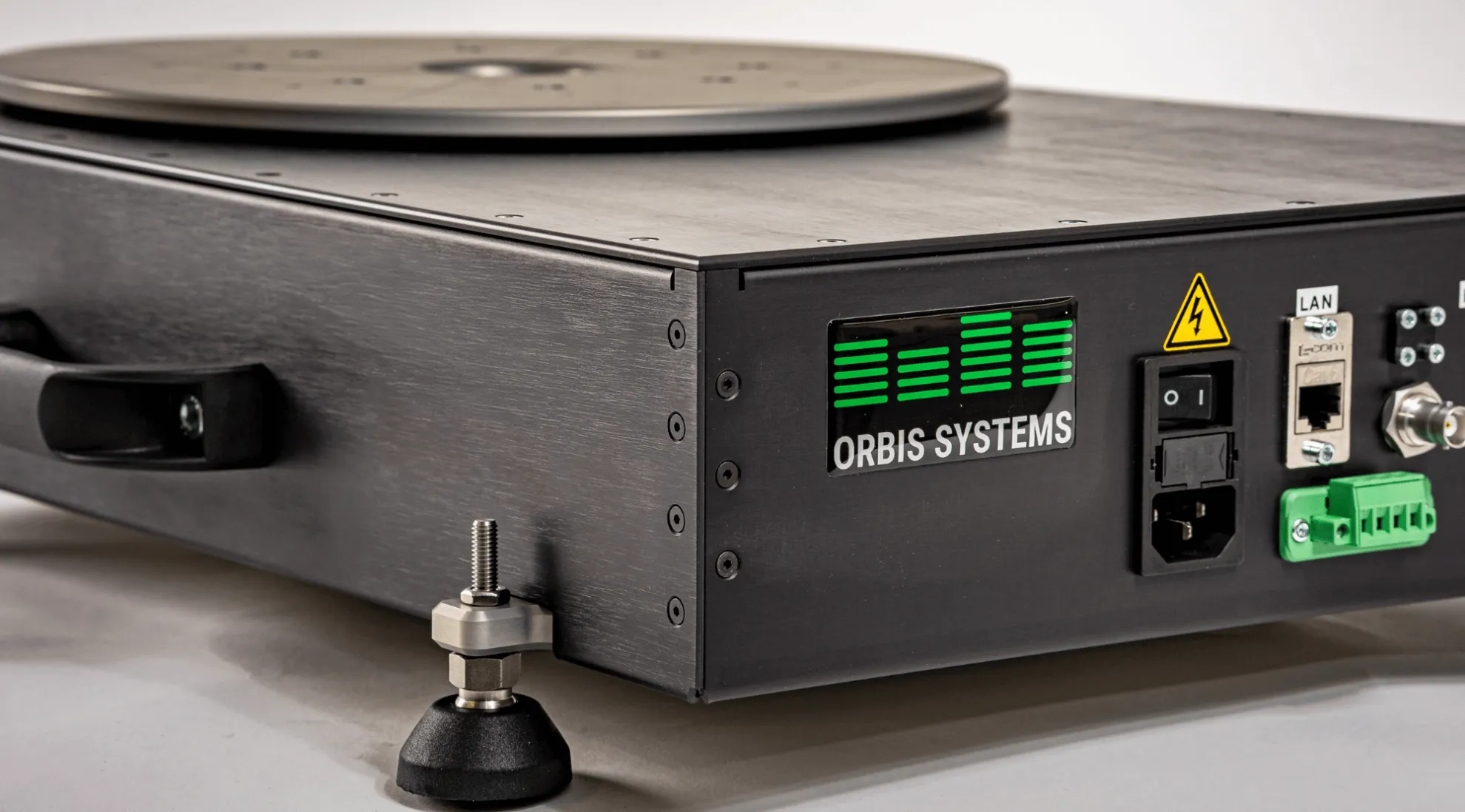
RF test positioners are precision motion systems used inside OTA chambers to rotate, tilt, or reposition a device during wireless performance testing. Their purpose is to expose the device to signals from multiple angles while ensuring highly accurate positioning throughout the measurement process.
Unlike conventional motion platforms, RF positioners are specifically designed for RF environments. They use low-reflection materials, minimize electromagnetic interference, and integrate seamlessly with automated measurement software.
Whether testing antennas, connected devices, automotive radar, or communication modules, these systems ensure that every measurement remains repeatable and reliable.
Why Positioning Accuracy Matters in OTA Testing
OTA testing evaluates how a wireless device performs in real operating environments rather than through direct cable connections. Since antenna radiation patterns vary depending on orientation, even slight positioning inaccuracies can affect measurement quality.
A high-quality positioning system helps laboratories:
- Maintain repeatable measurements across multiple test cycles
- Reduce operator-related inconsistencies
- Improve antenna characterization accuracy
- Support automated testing for higher productivity
- Meet international wireless testing standards
For manufacturers developing next-generation wireless products, consistent positioning directly contributes to faster validation and improved product quality.
How RF Test Positioners Work
Inside an OTA chamber, the Device Under Test (DUT) is mounted on a precision positioning platform. Depending on the application, the system may rotate continuously or move in controlled angular increments.
Modern positioners often include:
Precision Rotation
High-resolution motors provide smooth and accurate rotation, allowing engineers to measure radiation characteristics from virtually every direction.
Multi-Axis Motion
Some systems support azimuth, elevation, and roll movement simultaneously, enabling complete three-dimensional antenna measurements.
Automated Control
Software integration allows engineers to create automated test sequences that eliminate manual adjustments and improve repeatability.
Stable Payload Support
Positioners are engineered to support devices ranging from compact IoT modules to large automotive components without sacrificing accuracy.
Different Types of RF Test Positioners
Every testing application has unique requirements. Selecting the appropriate positioning system depends on the DUT, chamber dimensions, and measurement objectives.
Single-Axis Positioners
These systems rotate around one axis and are commonly used for antenna pattern measurements, wireless module validation, and general OTA testing.
Multi-Axis Positioners
Multi-axis solutions offer additional flexibility by controlling multiple directions of movement. They are widely used for advanced antenna characterization and complex wireless devices.
Custom Azimuth Positioners
Many specialized testing environments require custom azimuth positioners designed around unique payloads, chamber layouts, or measurement requirements.
These customized systems provide:
- Improved rotational precision
- Optimized mechanical design
- Better chamber integration
- Higher automation capability
They are particularly valuable when standard positioning systems cannot meet specialized engineering needs.
Applications Across Multiple Industries
RF positioners support a wide variety of industries where wireless performance is critical.
Automotive Testing
Connected vehicles rely on numerous wireless technologies, including GPS, Bluetooth, Wi-Fi, V2X communication, cellular connectivity, and automotive radar.
As testing requirements become increasingly complex, many laboratories invest in custom positioners for automotive testing that accommodate larger payloads, multiple antennas, and advanced sensor configurations.
These customized systems help engineers evaluate complete vehicle communication systems with greater accuracy and efficiency.
Telecommunications
Telecom manufacturers use RF positioners to validate:
- 5G devices
- Base station antennas
- Massive MIMO systems
- Customer premises equipment
- Wireless access points
Accurate positioning improves radiation pattern analysis while supporting compliance testing.
Aerospace and Defense
Military communication systems, satellites, drones, and aerospace electronics all require precise OTA validation.
Positioners designed for these applications often emphasize higher payload capacity, exceptional rotational accuracy, and long-term reliability.
Consumer Electronics
Smartphones, tablets, wearables, laptops, and smart home devices undergo OTA testing before reaching consumers.
Automated positioning reduces testing time while improving consistency across production environments.
Factors to Consider When Selecting an RF Test Positioner
Choosing the right positioning system involves much more than selecting a rotation table.
Several technical factors influence overall testing performance.
Payload Capacity
The positioner must safely support the DUT without introducing mechanical instability.
Larger payloads often require reinforced structures and higher torque motors.
Positioning Accuracy
High angular resolution ensures reliable antenna measurements.
Even small positioning errors may affect radiation pattern characterization.
Rotation Speed
Some testing procedures require slow, precise movement, while others benefit from faster automated scanning.
The system should support both where appropriate.
Chamber Compatibility
Mechanical dimensions should match the OTA chamber while minimizing unwanted RF reflections.
Material selection also plays a significant role in preserving chamber performance.
Software Integration
Modern laboratories increasingly rely on automated workflows.
Positioners should integrate easily with measurement software, robotic systems, and test automation platforms.
Common Challenges During OTA Positioning
Although RF positioning technology has advanced significantly, engineers still encounter practical challenges during deployment.
Large and irregular DUTs may create balance issues, requiring customized mounting fixtures.
Testing multiple product variants often demands flexible positioning systems capable of handling different shapes and sizes.
Environmental conditions inside the chamber also require stable mechanical performance over long testing periods.
Finally, integrating motion control with automated RF measurement software can become complex without proper system engineering.
Planning these aspects early helps laboratories avoid unnecessary delays during implementation.
Best Practices for Reliable OTA Positioning
Organizations can maximize OTA testing performance by following a few practical guidelines.
- Calibrate positioning systems regularly to maintain measurement accuracy.
- Verify alignment before beginning automated test sequences.
- Use fixtures designed specifically for each DUT.
- Schedule preventive maintenance for motors and motion components.
- Validate software synchronization between measurement equipment and motion control.
Consistent maintenance and calibration improve long-term repeatability while reducing unexpected downtime.
Expert Tips for Improving OTA Testing Efficiency
Experienced RF engineers often focus on optimizing the complete testing workflow rather than only upgrading hardware.
Automating repetitive measurement routines saves valuable engineering time and minimizes operator variability.
Selecting modular positioning systems also provides flexibility as testing requirements evolve.
When possible, investing in customized motion solutions can reduce setup complexity while supporting future wireless technologies.
Most importantly, positioners should be considered as part of the entire OTA ecosystem, working alongside chambers, antennas, controllers, and measurement software.
Improve Your OTA Testing with the Right Positioning Solution
Selecting the right positioning system can significantly improve measurement accuracy, testing efficiency, and long-term laboratory performance. Whether your application involves telecommunications, automotive systems, aerospace, or industrial wireless devices, choosing a solution that matches your technical requirements is essential. Orbis Systems develops advanced positioning solutions that support precise, repeatable OTA testing while adapting to the evolving demands of modern wireless technologies.
Frequently Asked Questions
What are RF test positioners used for in OTA chambers?
RF test positioners rotate and position wireless devices during Over-the-Air testing, enabling engineers to measure antenna performance, radiation patterns, and wireless communication quality from multiple angles.
How do custom positioners for automotive testing improve measurement accuracy?
They are designed to accommodate larger vehicle components, multiple antennas, and complex sensor arrangements while maintaining highly accurate and repeatable positioning throughout the testing process.
Why are custom azimuth positioners important for specialized RF testing?
Custom azimuth positioners provide application-specific rotational control, allowing laboratories to test unique devices that standard positioning systems cannot efficiently support.
Can RF positioners be integrated with automated testing software?
Yes. Most modern RF positioners support software integration, enabling fully automated measurement sequences, synchronized motion control, and improved laboratory productivity.
How often should RF test positioners be calibrated?
Calibration schedules depend on testing frequency and industry requirements, but many laboratories perform routine verification and preventive maintenance to ensure consistent positioning accuracy.



























Sign in to leave a comment.