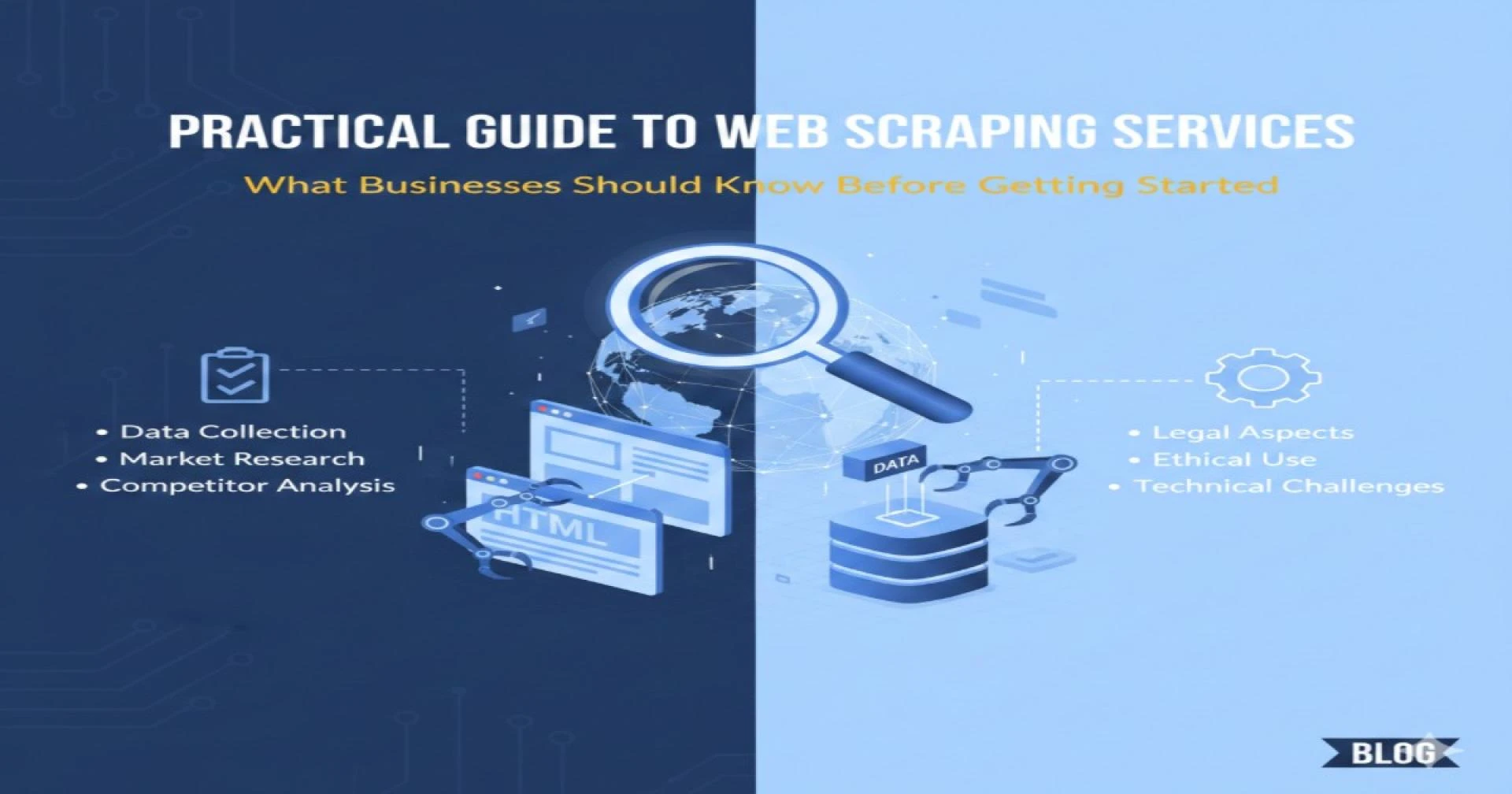
Modern companies rely heavily on data. Whether it's tracking competitors, monitoring price fluctuations, evaluating supplier performance or finding new leads, the value of structured web data keeps rising. The challenge is that this information sits across thousands of websites, platforms and marketplaces, all with different layouts and formats. Manually gathering it is nearly impossible. This is where web scraping services come in.
High-quality scraping solutions turn the open web into usable, reliable, and real-time data for business decisions. But choosing the right approach or provider can feel overwhelming if you’re new to the space. This guide breaks down how web scraping works, where it’s used today, and what you should look for in a dependable solution.
Why Web Scraping Matters More Than Ever
Every industry is becoming more data-driven, no matter the size of the company. Marketing teams depend on trend data. E-commerce businesses track competitor prices. Financial firms monitor markets and sentiment signals. Manufacturers keep an eye on supplier stock levels. Instead of relying solely on internal systems, leaders now expect data from external digital sources to guide strategy.
Public websites offer enormous value, but the information is rarely available in clean, structured form. Someone still needs to collect it, transform it and deliver it reliably. That’s the specific role of web scraping services. They automate the process, ensure accuracy and make data accessible at scale.
The best services don’t just “extract” content. They deliver high-quality datasets while handling complex challenges like IP rotation, CAPTCHA solving, rate limits, JavaScript rendering and compliance.
Understanding How Web Scraping Works
Web scraping is the automated retrieval of data from publicly available web pages. Behind the scenes, here’s what typically happens:
1. Sending a Request
The scraper sends a request to a webpage, just like a browser does. A robust web scraping API helps manage these requests at scale, even across thousands of pages or domains.
2. Parsing the Page
Once the HTML is received, the system parses it. This involves identifying the specific elements or fields—such as product titles, prices, reviews, ratings, stock information or contact details.
3. Extracting Structured Data
The scraper converts unstructured text into structured formats like JSON, CSV or database entries.
4. Handling Website Defenses
Websites often use technical measures to block automated tools. Professional services use rotating proxies, headless browsers, dynamic fingerprints and tailored parsing strategies.
5. Delivering the Final Dataset
The final data is cleaned, validated and delivered through scheduled feeds, dashboards or a web scraping API that pushes real-time updates.
Top Business Use Cases for Web Scraping Services
Web scraping isn’t limited to tech-heavy companies. Any business that relies on digital data can benefit. Here are the most common applications:
Competitor Price and Product Monitoring
Retailers and e-commerce brands track competitor pricing, discounts, stock levels and new product launches. This helps with dynamic pricing, margin optimization and improved forecasting.
Lead Generation and Market Research
Many B2B companies gather contact details, industry listings, event participants, supplier catalogs or service providers. This creates stronger outreach and market segmentation.
SEO and Content Analysis
Marketers track SERPs, keywords, backlinks, ranking changes and content trends. Scraped data helps shape content strategy and link-building campaigns.
Real Estate Intelligence
Investors and brokers pull data from public listing sites. Typical information includes property prices, rental rates, neighborhood trends and historical data.
Academic or Journalistic Research
Researchers use scraping to gather large datasets for analysis, especially when the information is spread across many sources.
Finance and Investment Analysis
Hedge funds and analysts collect sentiment data, price history, public filings, earnings forecasts and social trends.
Supply Chain Insights
Manufacturers monitor supplier websites for stock shifts, raw material pricing, shipping schedules and risk signals.
The Different Types of Web Scraping Solutions
Understanding the available options helps you choose the right one. Most organizations rely on one of the following:
1. Done-for-You Web Scraping Services
These are fully managed solutions. You outline your data requirements, and the provider handles everything: setup, extraction, infrastructure, parsing, maintenance and delivery. This is ideal when:
- You need consistent, large-scale data
- You don’t want to build and maintain technical scraping systems
- You require customization or niche data workflows
2. Self-Serve Web Scraping Tools
These tools provide an interface where users can set up scraping without writing code. They support:
- Simple scraping projects
- Smaller teams
- Quick, one-off data needs
However, they often struggle with advanced anti-bot systems and large-scale tasks.
3. Web Scraping APIs
A web scraping API handles the complex backend work. Engineers call the API with a URL, and the API returns structured data or the full HTML. APIs are best for:
- Real-time scraping at scale
- Integrating scraped data into existing applications
- Developers who need reliable infrastructure without maintaining proxies or renderers
4. Custom In-House Scrapers
Some companies build internal scraping solutions. This is rare today because:
- Maintenance is expensive
- Websites change frequently
- Anti-bot defenses keep evolving
- Teams must maintain proxy pools, browser environments and error handling
Most organizations find it cost-effective to use external services.
Key Features to Look for in High-Quality Web Scraping Services
Choosing the right provider requires careful evaluation. Here are the most important criteria:
1. Data Accuracy and Cleanliness
If the data is inconsistent or inaccurate, the entire project loses value. Look for services that:
- Provide schema validation
- Deduplicate entries
- Offer error reporting
- Ensure reliable parsing even when website layouts change
2. Scalability
Can the service handle thousands or millions of pages per day? High-volume scraping requires advanced infrastructure.
3. Ability to Handle Complex Websites
Modern websites are more dynamic. They load content with JavaScript and implement detection systems. A good provider should support:
- Headless browser rendering
- IP rotation across multiple countries
- Smart retries
- Automatic adaptation to layout changes
4. Legal and Ethical Compliance
Web scraping must always follow:
- Public data use guidelines
- Robots.txt considerations
- Terms of service awareness
- Relevant regional data laws
A trustworthy provider will help you stay compliant instead of ignoring rules.
5. Customization Options
Not every business needs the same dataset. The provider should tailor:
- Extraction fields
- Scheduling
- Delivery formats
- Login-based scraping when allowed
- Parsing rules
- Quality checks
6. Support and Reliability
You need a team that can troubleshoot issues quickly. Look for:
- Transparent documentation
- Fast support response
- Long-term project maintenance
- SLAs for uptime and delivery
7. Integration Flexibility
Data should integrate easily with your systems through:
- Dashboards
- APIs
- Webhooks
- FTP or S3 uploads
How Much Do Web Scraping Services Cost?
Pricing varies based on complexity. Here’s a general idea:
- Simple scraping tasks
- A few hundred dollars per month.
- Mid-complexity projects
- Dynamic sites, large volumes, custom parsing.
- Often in the range of a few thousand per month.
- Advanced enterprise solutions
- Login-based scraping, multi-country proxies, real-time feeds.
- These can reach higher budgets.
The cost is usually far lower than building and maintaining an in-house scraping team.
Best Practices for Successful Web Scraping Projects
To avoid common mistakes, follow these proven guidelines:
1. Start With a Clear Data Scope
Define:
- Which websites
- What fields
- How often you need updates
- Required formats
- Accuracy expectations
Clarity saves time and avoids rework.
2. Consider the Website’s Structure
Some sites offer APIs. Others rely heavily on JavaScript or hidden content. Choosing the right extraction approach ensures long-term success.
3. Respect Website Policies
Avoid scraping:
- Private data
- Login-restricted content (unless authorized)
- Non-public databases
Stick to publicly accessible information.
4. Plan for Ongoing Maintenance
Websites change without warning. Pages move. Components shift. A good provider updates selectors and logic automatically.
5. Validate and Monitor Data Frequently
Check for:
- Missing fields
- Formatting issues
- Duplicates
- Unexpected spikes or drops
Quality control is essential.
When You Should Use a Web Scraping API Instead of Full Services
A web scraping API is a strong choice when:
- You have developers on your team
- You need real-time requests
- You want to build custom applications or dashboards
- You prefer flexibility over a fully managed service
APIs are ideal for integrating scraped data directly into software workflows. They provide more control but require some technical ability.
Common Mistakes Businesses Make When Starting with Web Scraping
1. Underestimating Website Defenses
Many companies assume scraping is as simple as writing a script. In reality, dynamic sites detect suspicious activity quickly.
2. Ignoring Data Quality Checks
Raw scraped data often contains noise. Without validation, teams may base decisions on inaccurate information.
3. Trying to Build Everything Internally
This slows down projects and drains resources. Most companies end up switching to an external provider anyway.
4. Not Thinking Long-Term
Scraping is not a one-time task. Successful programs run continuously and need ongoing support.
The Future of Web Scraping Services
Several trends are shaping the next generation of web data:
- More sites adopting advanced bot defenses
- Growing demand for real-time structured data
- Increased legal clarity around public data use
- Better automation and smarter parsing engines
- Wider adoption of web scraping API solutions for enterprise systems
Businesses that invest in reliable, compliant scraping now gain an advantage as digital markets become even more competitive.
Conclusion
Web scraping has become a core part of modern data strategy. Companies need fresh, accurate and scalable information from the public web, and manual collection simply isn’t realistic anymore. High-quality web scraping services and reliable web scraping API solutions help organizations turn scattered online content into actionable insights.
The key is choosing a provider that offers accuracy, compliance, scalability, customization and long-term support. When done correctly, web scraping becomes a strategic advantage, improving pricing, research, forecasting, sales and decision-making across every department.





















Sign in to leave a comment.