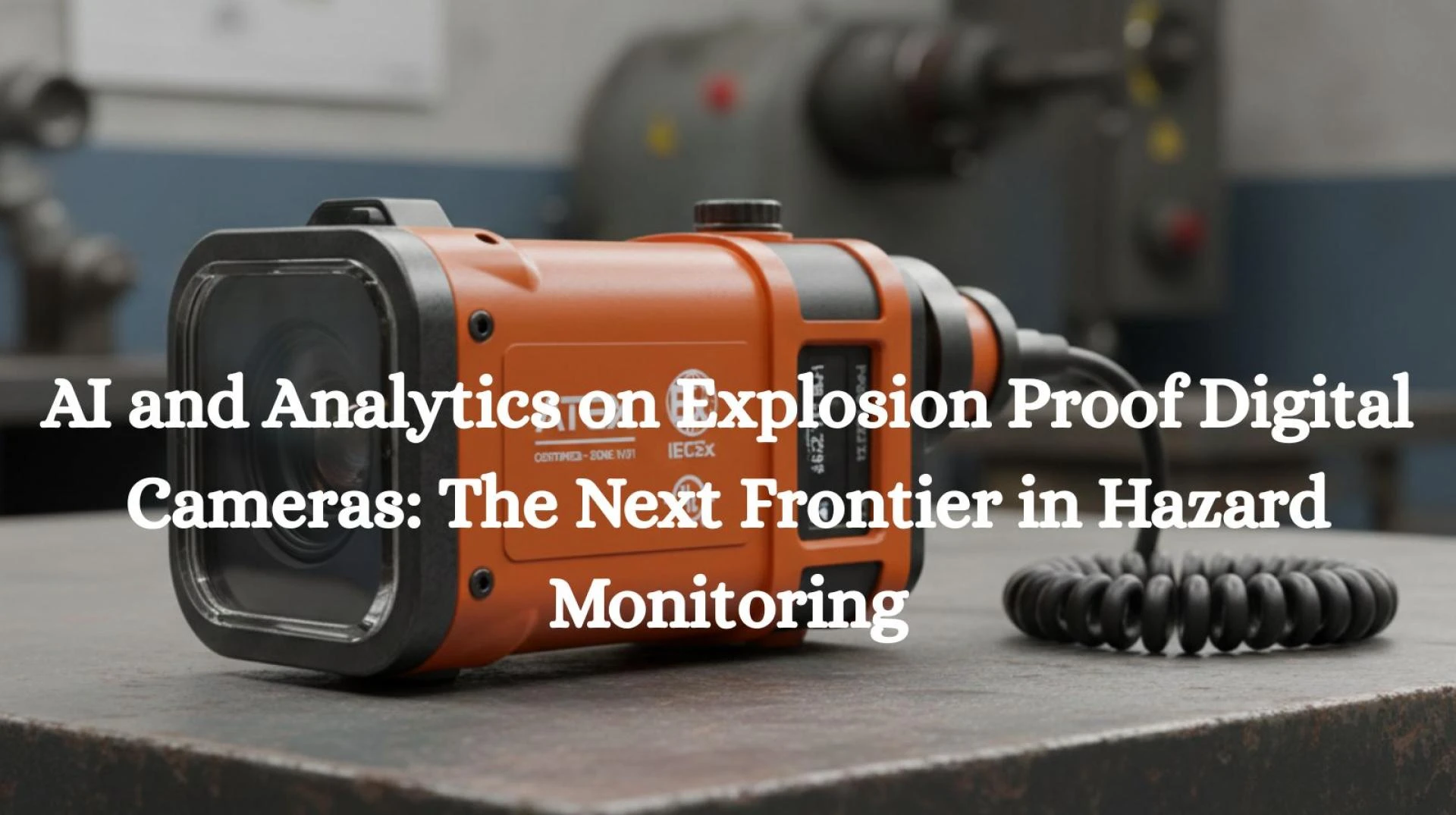

There was a time — not that long ago, actually — when the job of an explosion proof digital camera was simple. Capture an image. Store it. Let a human decide what it meant. The camera saw. People interpreted. Action followed, eventually, based on what someone noticed during a review.
That workflow isn't disappearing. But it's being fundamentally augmented by something that's changing the game across industrial surveillance. Artificial intelligence and embedded analytics are arriving on certified hazardous area cameras — and the implications for how oil and gas, chemical, and petrochemical facilities manage risk in real time are significant enough that every operations and safety team should be paying attention.
From Passive to Proactive: What's Actually Changing
The traditional role of a digital camera explosion proof unit in a hazardous environment has always been reactive by nature. Something happens or might be happening. Someone goes to look. The camera documents what they find. The information feeds back into a system that decides what to do next.
AI-enabled analytics flip that sequence around. Instead of waiting for a human to go and look, the camera itself begins to interpret what it's seeing — continuously, automatically, and without anyone needing to be physically present. Anomalies get flagged. Patterns get detected. Alerts fire before the situation escalates into something that demands an emergency response.
It's the difference between a security guard who watches a door and a security guard who watches the door and instantly radios in the moment something looks wrong.
What Embedded Video Analytics Actually Do
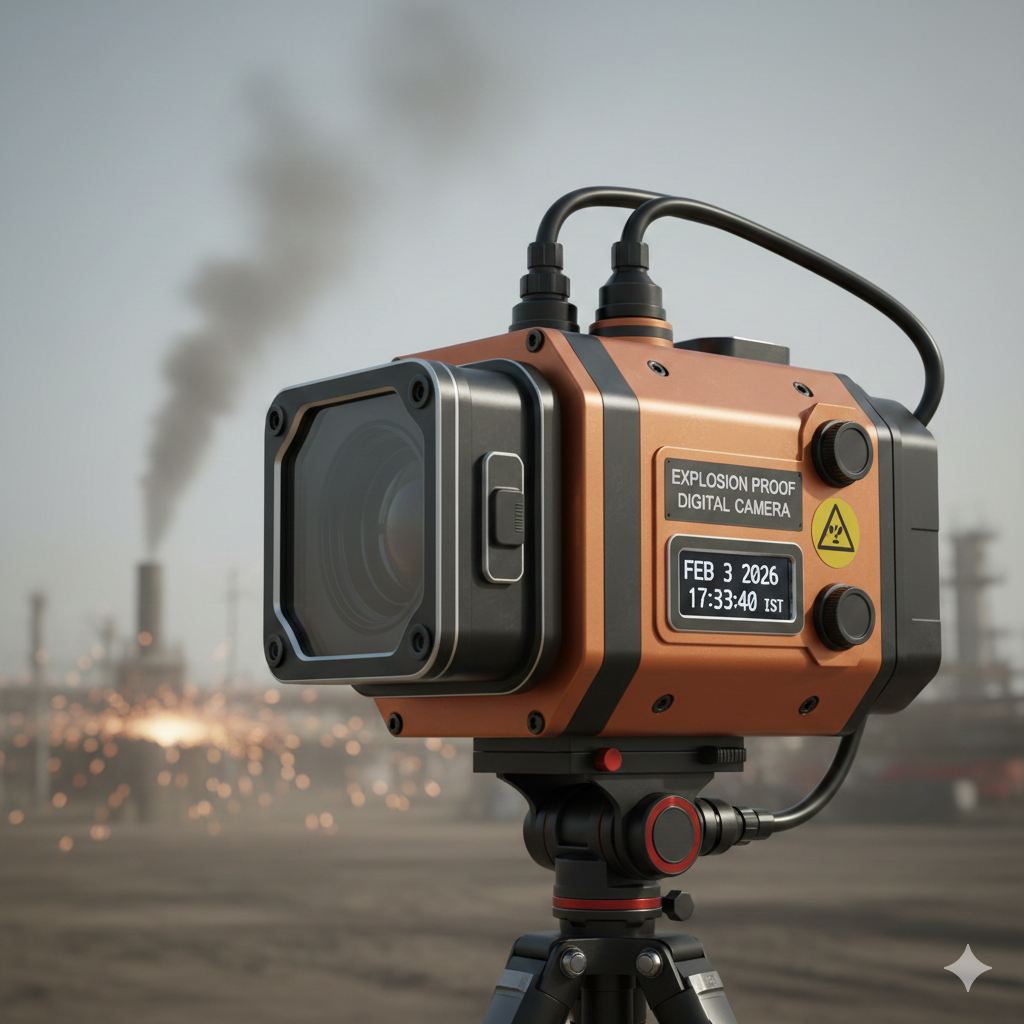
Let's get specific about the capabilities that are now appearing on advanced certified hazardous area cameras, because "AI analytics" can mean very different things depending on who's using the phrase.
Anomaly Detection: This is perhaps the most immediately valuable capability for hazardous environments. The system learns what "normal" looks like for a specific location — the way equipment moves, the typical visual patterns of an area during routine operations. When something deviates from that learned baseline — an unusual shadow, unexpected movement, a visual change that doesn't fit the pattern — the system flags it automatically. A vapour cloud forming where none usually appears. Equipment behaving differently than it did yesterday. Something that doesn't belong in the frame.
Flame and Smoke Detection: Certain analytics modules are specifically trained to recognise the visual signatures of fire and smoke. In an environment where flammable atmospheres are present, detecting these signatures visually — even fractions of a second faster than a traditional fire detection system might — can be the difference between containment and catastrophe. An explosion proof digital camera with embedded flame detection capability adds a visual layer to fire detection that sensor-only systems simply cannot replicate.
Object and Personnel Detection: Knowing when someone is in a hazardous zone, and where they are within it, carries significant safety value. AI-powered personnel detection on certified cameras can feed into access control systems, trigger proximity alerts near dangerous equipment, and maintain a real-time picture of human presence in areas where that information directly affects safety decisions.
Thermal Anomaly Identification: Some advanced units combine visible light imaging with thermal analysis capabilities. Equipment running hotter than it should. Insulation failures that create thermal hotspots. Process anomalies that manifest as temperature changes before they manifest as anything else. These are the kinds of early warnings that prevent incidents — and AI analytics on certified cameras are increasingly capable of catching them automatically.
The Certification Question: Can AI Run Safely in a Hazardous Zone?
This is the question that legitimately slows the adoption of AI-enabled cameras in classified environments — and it deserves a straightforward answer.
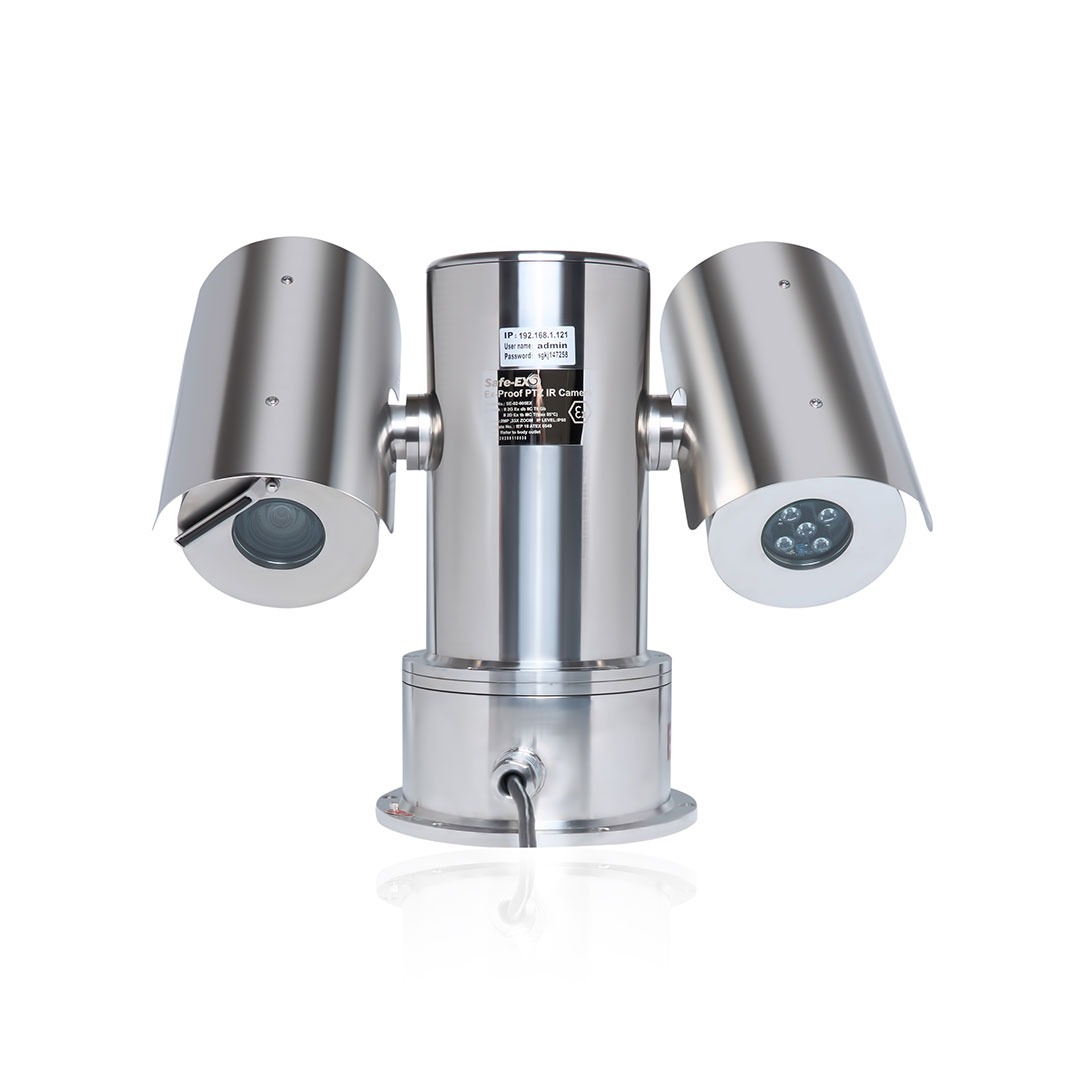
The AI processing itself doesn't necessarily happen inside the hazardous zone. Many current architectures use edge computing — where the camera captures and transmits visual data to a processing unit located in a safe area — to perform the analytical work outside the explosive atmosphere entirely. The camera remains a certified explosion proof digital camera operating within its zone rating. The intelligence lives somewhere it doesn't need to be explosion proof.
Other systems embed lightweight AI processing directly within the camera unit, with the processing hardware designed and certified as part of the overall explosion proof assembly. This is more technically demanding from a certification perspective, but it reduces latency and bandwidth requirements — both of which matter enormously in remote or bandwidth-limited environments.
Either way, the AI capability doesn't compromise the explosion proof integrity of the camera. It extends what the camera can do without changing what it fundamentally is.
What This Means for Hazard Monitoring Right Now
The facilities that are beginning to integrate AI analytics with their explosion proof digital camera deployments aren't running experimental programmes. They're making operational decisions based on automated visual intelligence that arrives faster, more consistently, and with fewer gaps than any human-driven monitoring regime could deliver.
For oil and gas operations in the UK North Sea, petrochemical plants across the UAE, and the massive processing facilities in Kuwait, this represents a meaningful shift in how continuous hazard monitoring works. Not replacing human judgment. Augmenting it with machine perception that never blinks, never gets tired, and never misses a shift.
The Honest Reality: Where We Are Right Now
AI analytics on certified hazardous area cameras are powerful and improving rapidly. But they're not infallible. False positives still occur. Training data quality matters. And the regulatory frameworks around AI-driven safety decisions in hazardous environments are still catching up with the technology itself.
The facilities getting the most value from these capabilities are the ones treating AI as an addition to their existing surveillance and monitoring strategy — not a wholesale replacement for it. The camera sees more. The system flags faster. But human operators remain in the decision loop, particularly for any action that affects safety-critical operations.
SharpEagle: Watching the Horizon, Building for It
At SharpEagle, we're tracking the evolution of AI and analytics capabilities on explosion proof digital cameras closely — because our customers across the UK, UAE, and Kuwait are already asking how these technologies fit into their hazardous area surveillance programmes. Our certified camera range is engineered to integrate with the analytics platforms and edge computing architectures that are making proactive hazard monitoring a reality.
👉 Talk to SharpEagle About AI-Ready Surveillance for Your Hazardous Areas — let's explore what automated visual intelligence could mean for your facility's risk management.
Conclusion
AI and embedded analytics on explosion proof digital cameras aren't a distant possibility somewhere on the technology horizon. They're here, they're being deployed, and they're demonstrably changing how some of the most safety-critical industrial environments on earth monitor and respond to risk. From anomaly detection and flame recognition to personnel tracking and thermal analysis, the cameras that used to simply record what was happening are now beginning to understand it — and alert the people who need to act on it before the situation develops into something that demands an emergency response. The technology is maturing. The certification pathways are proven. The operational benefits are becoming impossible to ignore. So the question that every safety and operations team should be sitting with right now is: if your explosion proof cameras could automatically detect and alert you to a developing hazard before any human on site noticed it, would your facility be ready to act on that information the moment it arrived?
























Sign in to leave a comment.