
In today’s fast-evolving manufacturing environment, logistics operations play a crucial role in determining efficiency, responsiveness, and competitiveness. With increasing demand for speed, accuracy, and real-time adaptability, traditional logistics systems are often under strain. This is where advanced ai for logistics is making a profound impact. By integrating intelligent algorithms, data analytics, and automation, manufacturers are unlocking new levels of visibility and control across their supply chains.
The convergence of industrial automation with emerging technologies like artificial intelligence is ushering in a new era of smart logistics. From inventory management to predictive analytics and real-time tracking, AI tools are transforming how logistics functions operate within manufacturing ecosystems. This article explores the practical applications and growing significance of AI in logistics processes across industrial automation.
Streamlining Supply Chains through Automation
AI technologies simplify and optimize complex supply chain workflows across procurement, production, and distribution.
- Dynamic inventory management: AI can continuously monitor inventory levels, ensuring timely reordering and avoiding both excess stock and shortages.
- Optimized routing and delivery: Machine learning models analyze real-time data to find the fastest, most cost-effective routes for shipments.
- Demand prediction: AI forecasts future demand by analyzing trends, helping manufacturers align production with actual market needs.
These improvements help companies reduce delays, lower operational costs, and improve on-time delivery rates.
Enabling Real-Time Logistics Monitoring
AI-driven logistics platforms provide continuous visibility across the entire logistics network, enhancing decision-making and responsiveness.
- Live tracking systems: Integrating sensors and IoT with AI enables real-time monitoring of vehicles, goods, and assets throughout the supply chain.
- Anomaly detection: AI identifies unusual patterns, such as delays or temperature fluctuations in perishable goods, enabling quick intervention.
- Dashboard insights: AI transforms raw logistics data into actionable insights displayed in user-friendly dashboards for operations managers.
This continuous flow of data ensures that stakeholders can respond promptly to any disruptions or inefficiencies.
Enhancing Warehouse Efficiency
AI plays a significant role in modernizing warehouse operations by improving space utilization, labor efficiency, and error reduction.
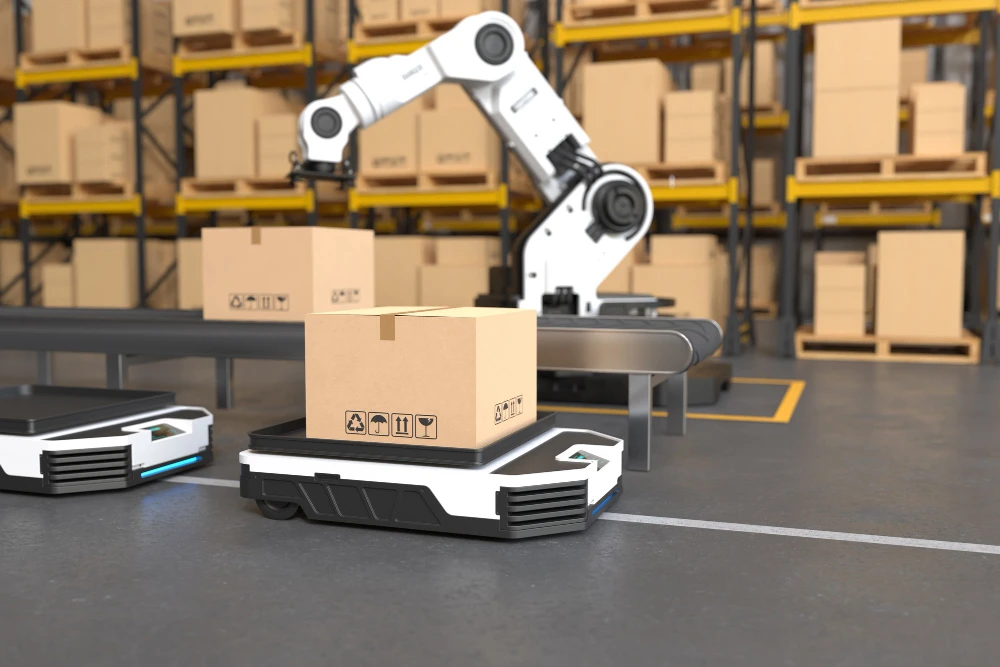
- Autonomous material handling: AI-powered robots can sort, move, and organize inventory, increasing speed and accuracy.
- Layout optimization: AI evaluates product turnover rates and usage patterns to recommend more efficient warehouse layouts.
- Task scheduling: AI manages and assigns warehouse tasks based on workload forecasts, reducing downtime and balancing labor distribution.
These tools help manufacturers achieve smoother operations and better overall productivity within warehouse environments.
Improving Logistics Decision-Making
AI empowers manufacturers with smarter decision-making by turning large data sets into strategic insights.
- Scenario modeling: AI simulates different logistics scenarios, helping planners prepare for demand surges, supply chain interruptions, or policy changes.
- Cost forecasting: Algorithms estimate transportation and warehousing costs under different conditions, supporting better budgeting.
- Supplier performance analysis: AI evaluates supplier reliability, delivery times, and compliance, informing sourcing decisions.
Incorporating AI into the decision-making process leads to more informed strategies and greater agility in a volatile market.
Conclusion
As the manufacturing industry continues its journey toward full automation, ai for logistics emerges as a critical enabler of smarter, faster, and more resilient operations. From automating supply chains to delivering real-time visibility and improving warehouse performance, AI is revolutionizing logistics at every level. Companies that adopt AI now will be better equipped to meet future challenges and gain a lasting competitive advantage in the era of intelligent manufacturing.
























Sign in to leave a comment.