
Introduction
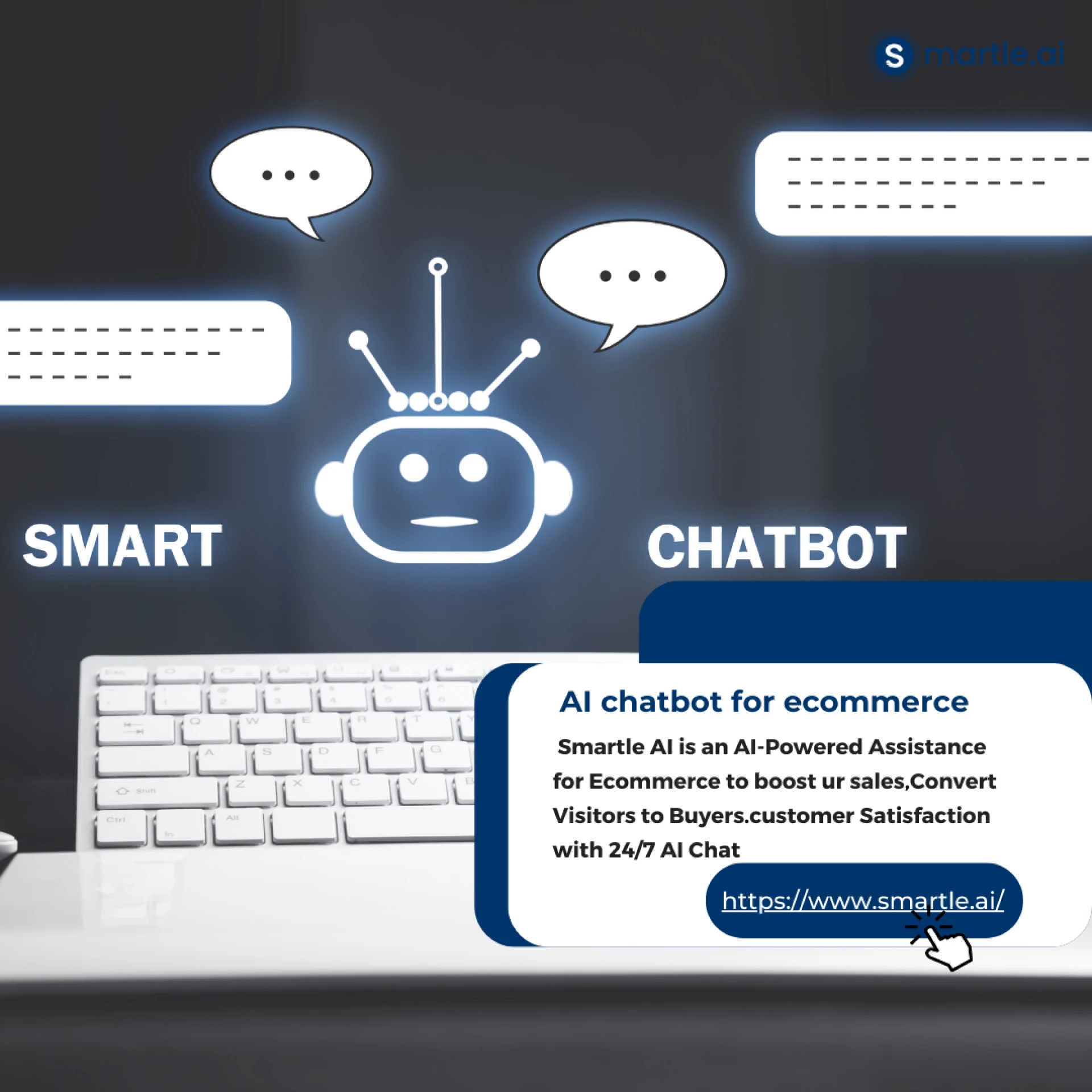
In today\'s fast-paced digital world, eCommerce businesses are constantly seeking innovative ways to enhance customer engagement and streamline operations. AI chatbots have emerged as a groundbreaking tool to achieve these goals, offering real-time assistance and personalized interactions that keep customers satisfied and businesses thriving. AI chatbots provide a seamless, 24/7 customer service experience, increasing efficiency and customer retention.
Incorporating AI chatbots into an eCommerce strategy not only helps address customer inquiries instantly but also significantly reduces the workload on human customer service representatives. This empowers businesses to allocate resources more effectively and focus on growing their operations while maintaining high-quality customer service.
AI chat assistance can analyze customer data to offer tailored product recommendations, making the shopping experience more intuitive and enjoyable. This personalized touch not only boosts sales but also fosters a strong relationship between the brand and its customers.
Understanding AI Chatbots
AI chatbots serve as automated tools designed to facilitate user interactions through natural language processing, transforming user queries into actionable outputs. This technology has seen rapid advancements, making it an integral part of various industries.
Defining AI Chatbot
An AI chatbot is a computer program designed to simulate conversation with human users. Utilizing Natural Language Processing (NLP), machine learning, and other AI technologies, it can understand and respond to text or spoken queries in a human-like manner.
AI chatbots can manage customer service inquiries, assist in online shopping, and provide tailored recommendations. They operate across various platforms including websites, social media, and mobile apps, ensuring 24/7 availability and efficiency in responding to inquiries.
History and Evolution
The concept of chatbots dates back to the 1960s with ELIZA, a simple program that mimicked human conversation. In the 1990s, ALICE and Jabberwacky introduced more sophisticated dialogue capabilities. The 2000s saw a surge in AI advancements, leading to the development of more complex chatbots.
Modern AI chatbots leverage deep learning and big data analytics to provide more accurate and context-aware responses. This evolution has enabled these tools to transition from simple, scripted interactions to nuanced conversations, making them essential in areas such as e-commerce, healthcare, and customer service.
AI Chat Assistance in Action
AI chat assistance revolutionizes customer engagement by providing immediate support and a tailored shopping experience.
Real-Time Customer Service
AI chatbots handle customer inquiries instantly, 24/7. They provide accurate answers to common questions about shipping, product specifications, and return policies. This immediate response enhances customer satisfaction.
Chatbots also manage peak times effortlessly, reducing wait times.
Benefits:
- Instant responses
- Consistent information delivery
- Reduced operational costs
These bots learn from interactions, improving their responses and efficiency over time. Enhanced capabilities may include language translation, catering to a global customer base.
Personalized Shopping Experience
AI chatbots offer recommendations based on user preferences and browsing history. For example, a chatbot might suggest accessories that complement a recent purchase.
They analyze customer behavior to tailor suggestions, leading to a more engaging and conversion-friendly shopping experience.
Personalization Features:
- Product recommendations
- Special offers based on browsing habits
- Reminder for items left in carts
These chatbots make the shopping journey smoother, ensuring customers find what they need, potentially increasing sales and customer loyalty.
Building an AI Chatbot for Ecommerce
Creating an AI chatbot for ecommerce involves selecting the right platform, designing effective conversational flows, and ensuring integration with existing ecommerce systems. Each step has unique considerations and requirements.
Choosing the Right Platform
Selecting a platform is crucial for developing a successful AI chatbot. Platforms like Dialogflow, Microsoft Bot Framework, and Rasa offer varied features.
Dialogflow provides natural language understanding and is user-friendly. Microsoft Bot Framework is suitable for integrating with different services across Microsoft\'s ecosystem. Rasa allows for customized and open-source development, making it ideal for specific requirements.
Consider cost, scalability, and support when choosing a platform. Assess the platform\'s ability to handle your expected traffic and whether it fits within your budget. Support for multiple languages and channels (like websites, social media, and messaging apps) is also important for reaching a broad audience.
Designing Conversational Flows
Designing conversational flows entails mapping out possible user interactions. Start by identifying common queries, such as product searches, order tracking, and customer support queries.
Use decision trees, natural language processing (NLP), and machine learning to create a seamless experience. Decision trees help in guiding user choices, while NLP enables the chatbot to understand and process user inputs effectively. Machine learning can further improve the chatbot\'s responses over time.
Incorporate a feedback loop where the chatbot asks for user satisfaction and uses this data to enhance performance. It\'s essential to maintain a balance between automated responses and human intervention for complex inquiries.
Integrating with Ecommerce Systems
Immediate and accurate access to data is critical. Integration with inventory systems, CRM (Customer Relationship Management), and payment gateways ensures the chatbot provides relevant information.
Real-time updates on stock levels, personalized recommendations based on user history, and support for various payment methods enhance customer satisfaction. APIs (Application Programming Interfaces) play a significant role in these integrations, acting as the bridge between the chatbot and backend systems.
Security is paramount. Ensure encryption and secure data handling protocols are in place to protect sensitive customer information. Automated logging of interactions helps in maintaining compliance and can be useful for analyzing chatbot performance.
Challenges and Considerations
Developing an AI chatbot for e-commerce involves ensuring accurate contextual understanding and robust data privacy and security measures. Each of these aspects presents unique challenges that need to be addressed effectively.
Maintaining Contextual Understanding
AI chatbots must consistently understand and retain the context of interactions with users. Misunderstandings can lead to frustration, diminishing the user experience. For an e-commerce platform, ensuring that the bot can handle complex queries and follow-up questions is crucial.
Training the chatbot with a diverse dataset can improve its contextual abilities. Regular updates are needed to adapt to new user behavior and language use. Implementing machine learning algorithms that focus on conversation flow and semantic understanding can enhance the chatbot’s performance.
Ensuring Data Privacy and Security
Handling customer data involves significant responsibilities regarding privacy and security. AI chatbots gather personal and financial information, making them a target for cyber-attacks. Data breaches can result in loss of user trust and legal consequences.
Implementing end-to-end encryption safeguards the data during transmission. Regular security audits and compliance with regulations like GDPR are essential. Using anonymization techniques can protect user identity, while multi-factor authentication and secure storage solutions add additional layers of security.
The Future of AI Chatbots
AI chatbots are evolving rapidly, with significant strides in natural language processing and predictive customer support poised to transform user interactions.
Advancements in Natural Language Processing
Advancements in Natural Language Processing (NLP) are enabling AI chatbots to better comprehend and respond to human language. Improved algorithms and machine learning models are enhancing contextual understanding. This allows chatbots to deliver more accurate and human-like responses.
Integration with large language models, such as GPT-4, equips chatbots with a deeper grasp of nuanced language. This improvement results in more meaningful and relevant interactions.
Enhanced NLP capabilities also include better handling of slang, idioms, and multi-lingual support. This broadens the chatbots\' usability across diverse demographics.
Predictive Customer Support
Predictive customer support utilizes AI to preemptively address user needs and issues. By analyzing user behavior and past interactions, chatbots can anticipate problems and provide solutions before they are explicitly requested.
This proactive approach reduces response times and increases user satisfaction. For instance, if a customer frequently asks about order statuses, the chatbot can offer real-time updates proactively.
Predictive models also help in identifying potential upsell opportunities. Chatbots can recommend products or services based on previous purchases and browsing behavior, personalizing the shopping experience further.


























Sign in to leave a comment.