

Artificial Intelligence is rapidly changing how organizations collect, process, and analyze data. Businesses that once depended on manual spreadsheets and lengthy reporting cycles now use AI copilots to automate dashboards, generate summaries, and identify trends within minutes. This shift has improved efficiency for analysts and decision-makers alike.
However, speed often introduces an important question: are faster reports worth a possible compromise in accuracy? While AI copilots reduce repetitive tasks, they are not always reliable without human oversight. Professionals entering analytics careers must understand both the advantages and limitations of these tools. This is why many learners enrolling in a Data Analyst Course in Vizag are now focusing not only on technical analytics skills but also on AI-assisted reporting workflows.
This article explores the benefits, risks, and best practices of using AI copilots in analytics.
What Is AI Copilot Analytics?
AI copilot analytics refers to software tools that assist analysts by automating parts of the reporting process. These tools can:
- Generate SQL queries automatically
- Build dashboards from raw data
- Summarize trends in natural language
- Detect anomalies and patterns
- Recommend visualizations
Instead of manually cleaning data, writing formulas, and building reports from scratch, analysts can rely on AI systems to accelerate workflows.
For example, an analyst working with sales data can ask an AI copilot, “Show monthly revenue trends by region and identify underperforming markets.” The system can generate a report almost instantly.
This level of automation is attractive because organizations today demand quick decisions. But faster outputs do not automatically guarantee reliable insights.
The Benefits of Faster AI-Driven Reports
1. Improved Productivity
One of the biggest advantages of AI copilots is time savings. Tasks that previously took hours can now be completed in minutes.
Analysts spend less time on repetitive activities such as:
- Data formatting
- Query generation
- Report drafting
- Chart creation
This allows professionals to focus more on strategy, interpretation, and business recommendations.
Students pursuing a Data Analyst Course in Vizag are increasingly learning automation tools because companies value analysts who can work efficiently with large datasets.
2. Faster Decision-Making
Business leaders cannot always wait days for reports. AI copilots help organizations respond quickly to:
- Market shifts
- Customer behavior changes
- Operational issues
For example, an e-commerce company can instantly monitor product performance and pricing trends. Quick reporting supports agile business decisions.
3. Accessibility for Non-Technical Teams
AI copilots make analytics more accessible to users without coding backgrounds.
A marketing manager can simply ask:
- “What campaign had the highest conversion rate last quarter?”
- “Which customer segment generated the most revenue?”
The AI generates insights without requiring SQL or Python knowledge.
This democratization of analytics increases organization-wide data usage.
The Accuracy Risks of AI Copilot Analytics
Despite clear benefits, AI-generated reports come with risks.
1. Hallucinated Insights
AI tools can sometimes generate incorrect conclusions or misleading summaries.
For example:
- Misinterpreting null values
- Incorrectly grouping categories
- Producing unsupported trends
These errors may appear convincing, making them dangerous if not verified.
A report delivered quickly but based on flawed logic can lead to poor business decisions.
2. Overdependence on Automation
Analysts may become too reliant on AI-generated outputs.
Instead of validating assumptions, some users may trust reports automatically.
This creates several problems:
- Reduced critical thinking
- Lower analytical depth
- Missed data inconsistencies
AI should support analysts, not replace judgment.
Professionals trained through a Data Analyst Course in Vizag often learn validation techniques precisely because automation alone is insufficient.
3. Limited Context Understanding
AI models process patterns but may lack business context.
For instance, a sudden revenue decline might be explained by:
- Seasonal demand changes
- Product recalls
- Policy updates
Without contextual awareness, AI may flag anomalies without explaining the true cause.
Human analysts understand domain-specific nuances better than algorithms.
Finding the Right Balance Between Speed and Accuracy
Organizations should not treat speed and accuracy as mutually exclusive. The goal is balance.
Human-in-the-Loop Validation
Every AI-generated report should include analyst review before decision-making.
Validation steps include:
- Checking source data integrity
- Reviewing formulas and filters
- Confirming metric definitions
- Comparing outputs with historical trends
This reduces reporting errors significantly.
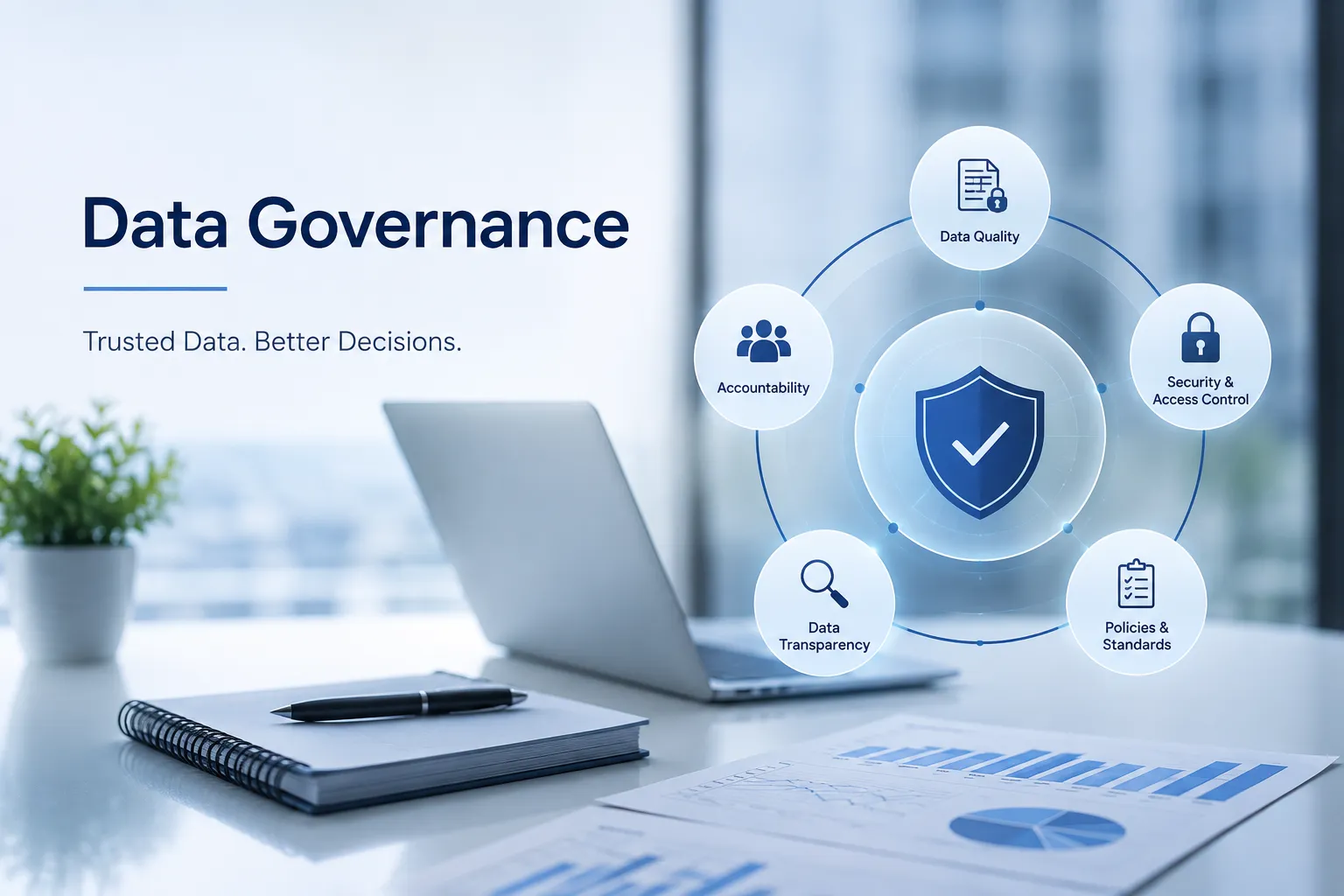
Standardized Governance
Companies should establish rules for AI analytics usage:
- Approved datasets
- Audit logs
- Quality checks
- Permission controls
Governance ensures consistency and accountability.
Continuous Skill Development
As AI tools evolve, analysts must strengthen foundational skills rather than depend entirely on automation.
Important skills include:
- SQL
- Excel
- Python
- Data visualization
- Statistical reasoning
AI copilots are most effective when paired with strong analytical knowledge.
Will AI Replace Analysts?
A common concern is whether AI copilots will eliminate analyst jobs.
The answer is unlikely.
AI is excellent at automation but limited in:
- Strategic thinking
- Stakeholder communication
- Business context interpretation
- Ethical decision-making
Instead of replacing analysts, AI is changing the nature of the role.
Future analysts will likely spend less time building reports and more time asking better questions, validating outputs, and driving decisions.
This is why training programs are evolving to include AI alongside core analytics skills.
Conclusion
AI copilot analytics offers undeniable advantages: faster reporting, improved efficiency, and easier access to insights. Organizations can make quicker decisions and reduce manual workload significantly.
However, speed introduces risks when accuracy is compromised. Hallucinated insights, overreliance on automation, and lack of contextual understanding can lead to costly mistakes.
The real value of AI copilots lies not in replacing analysts but in augmenting them. Businesses that combine automation with human oversight achieve the best outcomes.
As analytics continues evolving, professionals who understand both AI capabilities and traditional analytical methods will remain highly valuable in the industry.


























Sign in to leave a comment.