

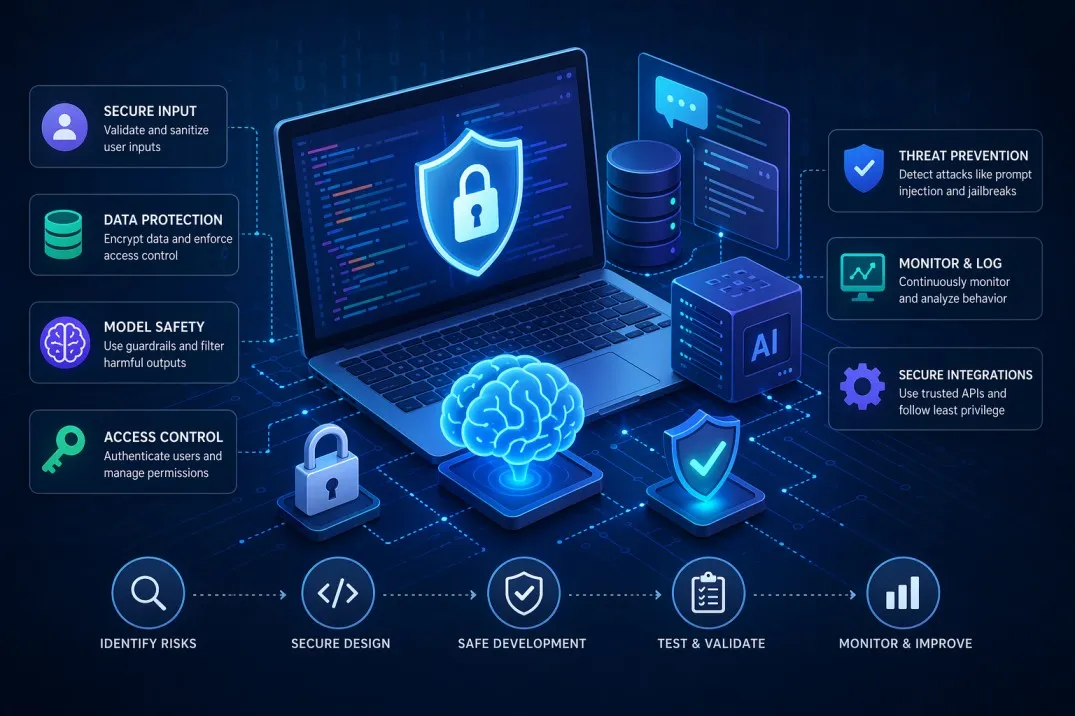
Artificial Intelligence (AI) security is a critical field as AI and machine learning (ML) systems power everything from autonomous vehicles to fraud detection. However, these systems face growing threats like adversarial attacks, data poisoning, and model theft, making robust security measures essential. With cyberattacks on AI systems increasing, certified professionals are in high demand to safeguard these technologies.
This article provides a clear roadmap for aspiring AI security experts, covering top certifications, essential tools, and hands-on sample code to kickstart your journey. Whether you're a beginner or seasoned developer, you’ll find actionable steps to build expertise and secure a rewarding career.
What is AI Security?
AI security focuses on protecting AI and ML models from threats that exploit their vulnerabilities. A common example is an adversarial attack, where subtle changes to inputs (like adding noise to an image) trick a model into misclassifying it. Imagine a facial recognition system misidentifying a person due to manipulated pixels—such attacks can compromise security in real-world applications like banking fraud detection or autonomous driving. Ensuring AI systems are robust, transparent, and resistant to tampering is vital for trust and safety in Facet in real-world applications.
Top AI Security Certifications
As AI adoption grows, so does the need for certified professionals skilled in securing these systems. Here are four top certifications:
- CertNexus Certified Artificial Intelligence Security Specialist (CAISS): This foundational course teaches AI-specific threat detection, mitigation, and compliance. Ideal for beginners, it includes hands-on labs and takes about 3 days (in-person or online). It’s ANAB-accredited and perfect for IT professionals entering AI security.
- MIT AI & Safety Short Course: This academic program explores adversarial attacks, model robustness, and ethical AI. Aimed at intermediate learners with some AI knowledge, it’s a 5-week online course with lectures and case studies, offering a prestigious certificate.
- Udacity: Secure & Private AI: A practical, intermediate-level course with hands-on labs in Python, focusing on privacy-preserving ML and adversarial defenses. It takes 1–2 months (self-paced) and suits data scientists or developers.
- Modern Security’s AI Security Certification Course: A practical course for intermediate learners, focusing on securing AI models against adversarial attacks and ensuring compliance. It offers hands-on projects in Python and takes 4–6 weeks (self-paced, online), ideal for developers seeking real-world AI security skills.
Each certification equips you with skills to counter AI-specific threats, enhancing career prospects in high-demand fields.
Essential Tools You Should Know
To apply AI security concepts, familiarize yourself with these tools:
- TensorFlow Privacy / PyTorch: Libraries for building privacy-preserving ML models with differential privacy techniques.
- IBM Adversarial Robustness Toolbox (ART): A Python library for simulating and defending against adversarial attacks like evasion or poisoning. Check its GitHub for tutorials (github.com/Trusted-AI/adversarial-robustness-toolbox).
- Foolbox: A Python tool for crafting adversarial examples to test model robustness. Find sample code on its GitHub (github.com/bethgelab/foolbox).
- SHAP / LIME: Tools for explainable AI, helping interpret model decisions to identify vulnerabilities. Tutorials are available on their respective GitHub pages. These open-source tools are critical for hands-on learning and are widely used in industry and research.
Sample Code: Defending a Simple AI Model
To understand AI security, try this Python example using the MNIST dataset to simulate an adversarial attack. The code adds noise to an image and tests a model’s reaction. You can run it in Google Colab or locally with TensorFlow installed.
import tensorflow as tf
import numpy as np
from tensorflow.keras.datasets import mnist


# Load MNIST dataset and a pre-trained model
(x_train, y_train), (x_test, y_test) = mnist.load_data()
x_test = x_test / 255.0  # Normalize
model = tf.keras.models.load_model('mnist_model.h5')  # Assume pre-trained model


# Function to add adversarial noise
def add_noise(img):
    noise = np.random.normal(0, 0.3, img.shape)
    return np.clip(img + noise, 0, 1)


# Test with a single image
test_img = x_test[0:1]
noisy_img = add_noise(test_img)
pred_original = model.predict(test_img).argmax(axis=1)
pred_noisy = model.predict(noisy_img).argmax(axis=1)


print(f"Original prediction: {pred_original[0]}, Noisy prediction: {pred_noisy[0]}")
For advanced simulations, explore IBM ART or Foolbox on GitHub. Experimenting with this code helps you understand how small input changes impact model predictions.
Roadmap for Students: How to Start & Progress
- Learn Python + ML Basics: Start with free resources like Coursera’s Machine Learning (Stanford) or Kaggle tutorials.
- Take an Intro Course: Enroll in a beginner-friendly course like Coursera’s AI Security Fundamentals to grasp core concepts.
- Choose a Certification: Select one based on your career goals (e.g., CAISS for beginners, Udacity for hands-on skills).
- Explore Tools: Experiment with TensorFlow Privacy, ART, or SHAP via GitHub tutorials and sample projects.
- Build a Portfolio: Create mini-projects (e.g., securing an MNIST model) and showcase them on GitHub.
- Join Communities: Engage in AI Village, Reddit’s r/MachineLearning, or Discord groups for networking and learning.
- Apply for Opportunities: Seek internships or bug bounty programs (e.g., Huntr) to gain real-world experience. Hands-on practice is crucial—don’t just aim to pass exams but build practical skills through projects.
Career Paths After Certification
Certified AI security professionals can pursue roles like:
- AI Security Analyst: Detect and mitigate threats to AI systems.
- Adversarial ML Researcher: Develop defenses against attacks like model poisoning.
- AI Compliance Engineer: Ensure AI systems meet regulations like the EU AI Act. Entry-level salaries typically range from $80,000–$120,000 annually, with higher earnings in senior roles (up to $200,000). Industries like fintech, healthcare, defense, and big tech (e.g., Google, Meta) actively hire for these positions, driven by the need for secure and compliant AI systems.
Checkout Course From Here: AI Security Certification Course
Conclusion
AI security certifications open doors to high-demand careers by equipping you with skills to protect AI systems from emerging threats. Combine certifications like CAISS or Modern Security’s AI Security Course with hands-on tools like ART and SHAP, and practice with sample code to build expertise. Start small by learning Python, experimenting on Colab, and showcasing projects on GitHub. Take action today: enroll in a course or run the sample code to begin your journey in this exciting, impactful field.


























Sign in to leave a comment.