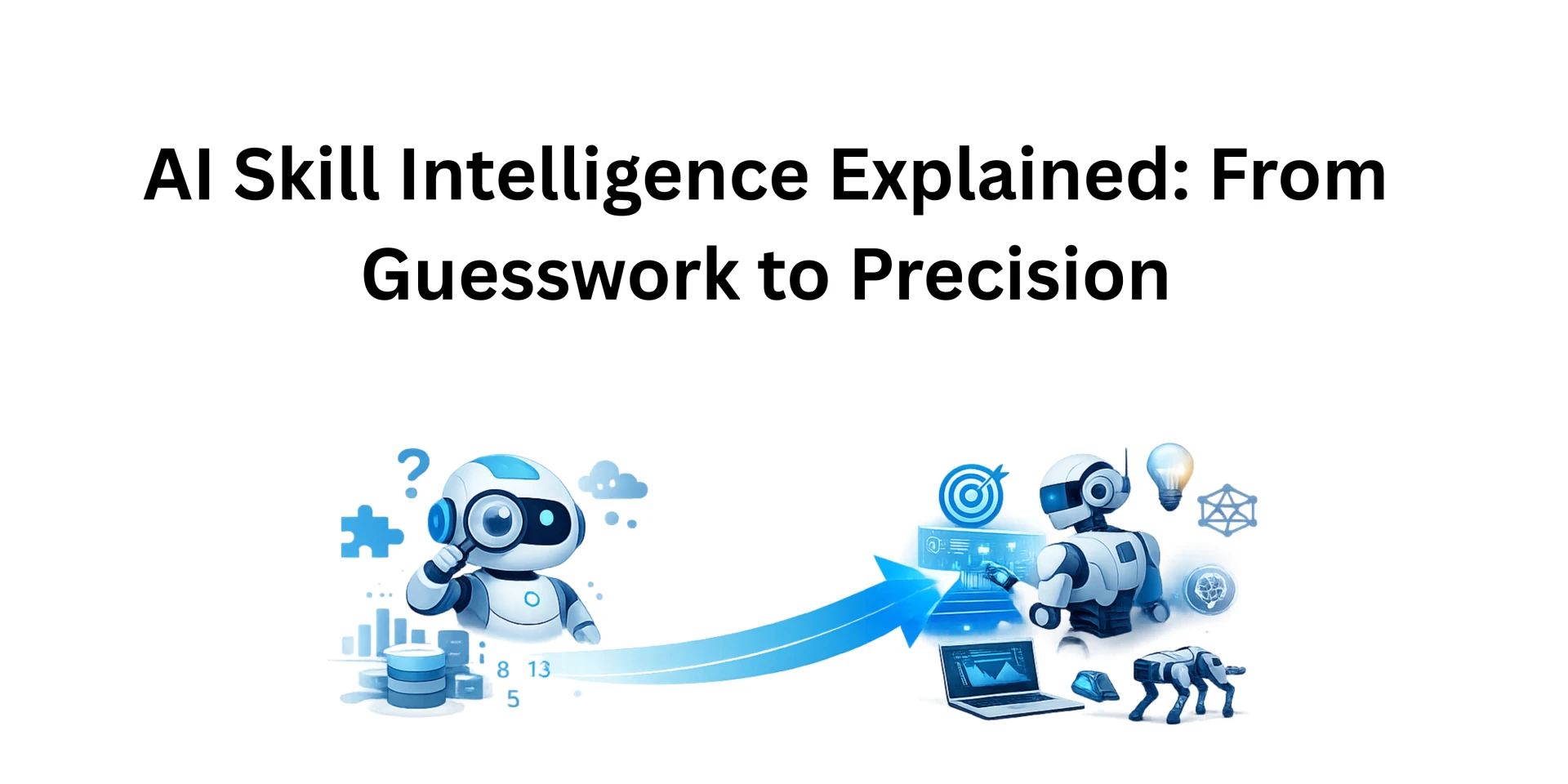

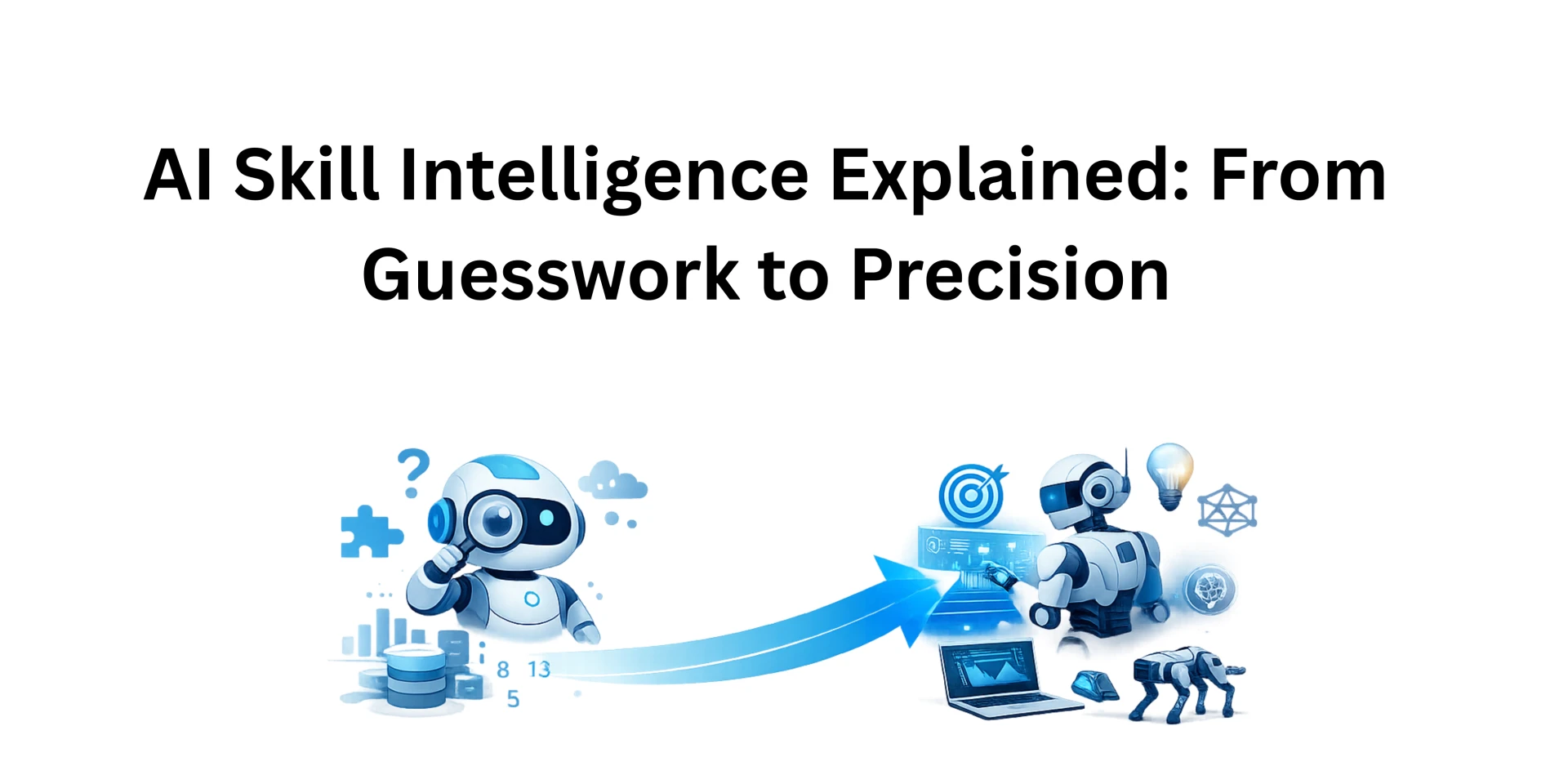
Workforce planning has long been predicated on conjecture. Managers assess who is prepared for advancement. HR departments rely on annual reviews, certificates, and resumes. Budgets for training are frequently distributed on the basis of intuition rather than facts.
But guessing is costly in today's corporate environment.
Leaders require clarity, not estimates, in an era where positions are reshaped overnight by digital revolution and skills change every three months. AI skill intelligence is a contemporary method that replaces manual evaluations with real-time, data-driven accuracy. It has emerged as a result of this change.
It's rapidly becoming a vital tool for CEOs and other company decision-makers to maintain their competitiveness.
What is AI Skill Intelligence?
AI skill intelligence makes use of artificial intelligence to precisely map staff competencies and analyse workforce data. It assesses what people truly display via their work rather than what they believe they know.
AI creates dynamic skill profiles that are constantly updated by looking at signals like project outcomes, learning activity, performance indicators, and task fulfilment.
Instead of a static report produced once a year, the result is a dynamic image of organisational capability.
Why Guesswork No Longer Works
When responsibilities changed gradually and firms were smaller, traditional skill appraisals made sense. These days, they cause more issues than they fix.
Manual assessments typically consist of:
- Time-consuming
- Not consistent between teams
- Affected by prejudice
- Outdated in a matter of months
Without accurate information, leaders are forced to make crucial decisions about recruiting, promotions, and reskilling.
This disconnect between perception and reality frequently results in underutilisation of internal talent, excessive recruitment expenditures, or the failure to identify essential skill shortages.
How Decision-Making Is Affected by Precision
Here is where real value is created by AI skill intelligence. It gives workforce planning quantifiable, objective insight.
Continuous Skill Mapping
Instead of providing leaders with sporadic glimpses, AI tracks capabilities in real time.
Objective Analysis
Decisions are made based on facts rather than conjecture, which lessens prejudice and increases equity.
Scalable Perspectives
AI can rapidly analyse talents across the firm, regardless of how many employees are under management 200 or 20,000.
Predictive Planning
AI predicts future skill needs, enabling businesses to get ready before gaps affect output.
Businesses may go from reactive fixes to proactive strategy with this degree of accuracy.
Practical Benefits for Businesses
The benefits are palpable for executives. Investments in training become focused rather than general. Hiring solely considers real gaps. Employees with high potential are recognised earlier. Instead than hiring people at random, teams are staffed according to their abilities.
This reduces expenses and increases productivity over time.
It also aligns with the credibility and trust principles emphasized by Google, where reliable, experience-based information drives better outcomes. In workforce strategy, accurate data plays the same role, it builds confidence and consistency in every decision.
A Smarter Way Forward
Nothing is slowing down at work. The need for skills will continue to change as a result of automation, new technology, and changing client expectations.
Businesses that continue to use manual evaluations run the danger of lagging behind. Businesses that use AI skill intelligence have a better grasp of their personnel and a more solid basis for expansion.
The Bottom Line
Although guesswork may have been effective in the past, it is not scalable in contemporary businesses.
By precisely replacing presumptions, AI skill intelligence enables executives to spot gaps more quickly, deploy talent more intelligently, and create future-ready teams. This clarity is necessary not optional for companies hoping to maintain their agility and competitiveness.

























Sign in to leave a comment.