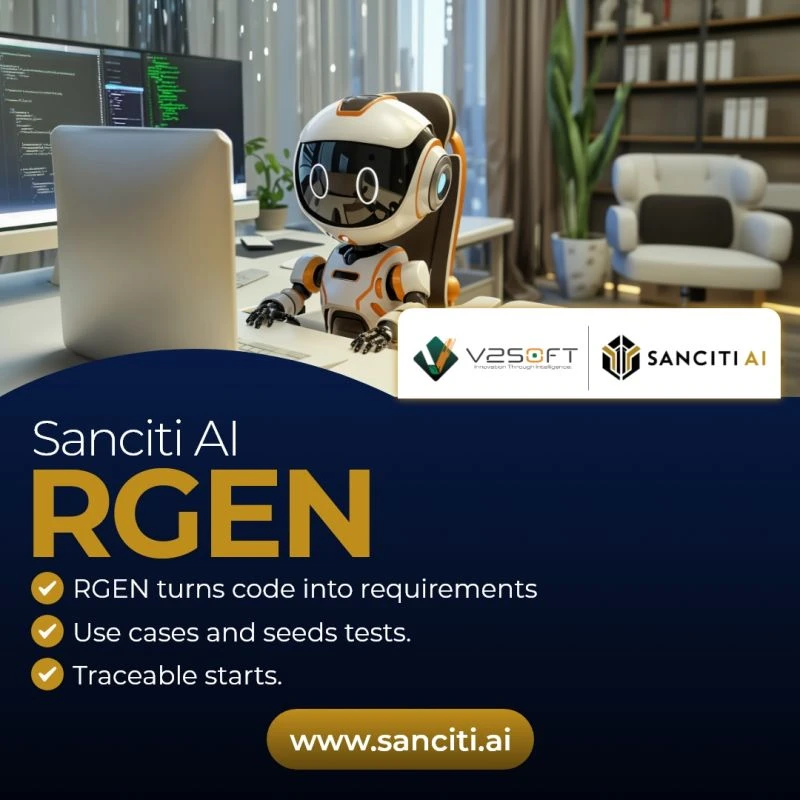

Why Business Intent Often Gets Lost Before Delivery Begins
Most enterprise initiatives start with clear intent. Business leaders define objectives. Stakeholders agree on outcomes. Yet somewhere between discussion and development, clarity begins to fade. Requirements become fragmented. Assumptions creep in. Teams interpret intent differently.
The result is familiar. Rework increases. Timelines slip. Delivery teams build correctly—but not always what was expected. This gap between intent and execution is not caused by lack of effort. It is caused by lack of structure.
This is where AI use case generation plays a critical role.
What AI Use Case Generation Changes in Practice
AI Use Case Generation transforms abstract business intent into concrete, structured scenarios that teams can align around. Instead of relying on loosely written requirements or meeting notes, use cases clearly describe how systems should behave under real conditions.
These scenarios provide a shared reference point. Developers understand expected behaviour. Testers know what to validate. Business stakeholders recognize their intent reflected accurately.
Clarity improves before development even begins.
Why Traditional Requirement Documents Fall Short
Traditional requirement documents often focus on features rather than behaviour. They describe what needs to be built but not how it should work in practice. As systems grow more complex, this gap becomes more damaging.
Common challenges include:
- Ambiguous acceptance criteria
- Missing edge cases
- Late clarification during testing or production
Without clear scenarios, teams rely on interpretation. Interpretation introduces risk.
How an Agentic AI Assistant Improves Early Alignment
An Agentic AI Assistant supports teams during early discovery by helping translate discussions into structured use cases. It listens for intent, identifies gaps, and reinforces consistency without replacing human judgment.
This support accelerates alignment. Teams move faster without sacrificing clarity. Conversations become productive rather than repetitive.
Strengthening Requirement Foundations with an Agentic Requirement Generator
An Agentic Requirement Generator complements use case generation by ensuring that scenarios remain traceable to original requirements. This connection prevents drift as requirements evolve over time.
When changes occur, teams understand what is affected and why. Decisions are made with full context. Execution remains aligned with intent.
Supporting Test Alignment Through AI Test Case Generation
Clear use cases naturally improve testing. AI Test Case Generation derives validation scenarios directly from defined use cases, ensuring that what is tested reflects what was intended.
This alignment reduces late surprises. Coverage improves earlier. Testing becomes a confirmation of understanding rather than a discovery of misunderstanding.
Extracting Signals Through AI Powered Requirements Extraction
Business intent is rarely captured in a single place. Valuable input exists in emails, meeting notes, tickets, and discussions. AI Powered Requirements Extraction consolidates these signals into structured inputs that feed use case creation.
This prevents important context from being lost. Requirements reflect reality rather than memory. Teams operate with a complete picture.
Improving Traceability Across the Delivery Lifecycle
Traceability is essential for governance, compliance, and change management. When use cases, requirements, and test scenarios are aligned, traceability emerges naturally.
Teams can answer critical questions with confidence:
- Why was this built?
- What requirement does it support?
- How is it validated?
This clarity strengthens both execution and oversight.
Scaling Use Case Consistency Across Teams
As organizations grow, consistency becomes harder to maintain. Different teams document intent differently. Standards drift. Outcomes vary.
AI-driven use case generation reinforces consistency by learning patterns and applying them across initiatives. Teams align organically without heavy governance.
Why Enterprises are Rethinking Requirement Practices
Enterprises are recognizing that requirement quality determines delivery quality. Documentation alone is not enough. Structure and clarity must exist early.
AI use case generation strengthens requirement practices by anchoring delivery around behavior, not just features. This shift improves confidence across teams and leadership.
Measuring the Impact of Use Case–Driven Delivery
The impact of use case–driven delivery is visible in outcomes. Reduced rework. Faster acceptance. Fewer production defects caused by misunderstanding.
Over time, these improvements compound, creating predictable delivery capability.
A Final Thought: Clarity Enables Confidence
Successful delivery depends on shared understanding. When teams understand what needs to happen and why, execution becomes smoother. Decisions become easier.
AI use case generation provides that clarity. By transforming intent into structured, actionable scenarios, it helps enterprises move from discussion to delivery with confidence.
Have Questions? Ask Us Directly!
Want to explore more and transform your business?
Send your queries to: [email protected]



























Sign in to leave a comment.