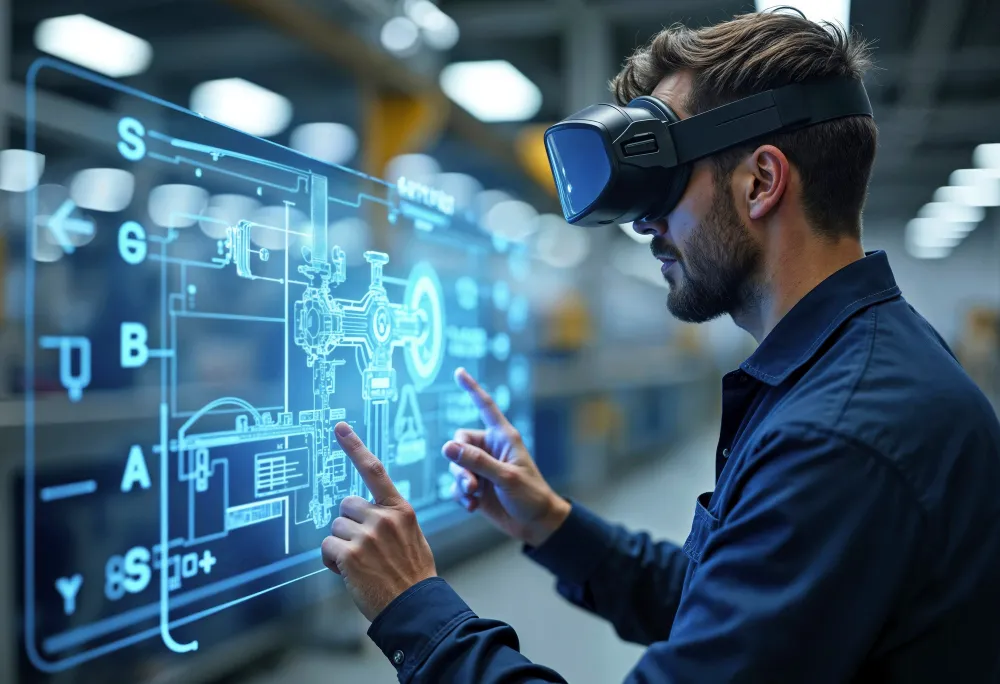

Manufacturers are under pressure to improve safety, reduce defects, and maintain consistent output. Standard monitoring systems cannot meet these expectations on their own. As a result, many organizations are investing in custom-built solutions that can interpret visual data and support decision-making.
AI Video Analytics Development for Manufacturing has become a practical path for enterprises that need systems aligned with their specific operations. However, building such systems requires a structured approach. Without clear planning and execution, projects often face delays, cost overruns, or limited usefulness.
Understanding AI Video Analytics Development for Manufacturing
AI Video Analytics Development for Manufacturing involves designing and building systems that can process video data from factory environments and generate actionable insights. This includes everything from capturing video feeds to training models and integrating results into operational workflows.
Development is not limited to creating AI models. It also includes data preparation, system architecture design, and integration with existing factory systems. Each component must work together for the system to deliver reliable outcomes.
Enterprises often face a choice between off-the-shelf tools and custom solutions. Off-the-shelf systems are faster to deploy but may not align with specific processes or industry requirements. Custom development, while more resource-intensive, allows organizations to address precise use cases such as specialized quality inspection or complex safety monitoring.
The decision depends on the level of control and flexibility required. For many manufacturing AI solutions, customization becomes necessary as operations grow more complex.
Step-by-Step Development Process
A structured development process is essential for building reliable and scalable systems. Each stage plays a critical role in ensuring that the final solution meets operational needs.
Define Objectives and Use Cases
The first step is to define clear objectives. Organizations must identify the specific problems they want to solve, such as reducing defects, improving safety compliance, or monitoring production flow.
Use cases should be measurable. For example, instead of a broad goal like “improve quality,” a more precise objective would be “detect surface defects on assembly line products with 95 percent accuracy.”
This clarity helps guide all subsequent stages, from data collection to model design.
Data Collection and Preparation
Video data is the foundation of any video analytics system. High-quality, relevant data is required to train accurate models.
Key considerations include:
- Capturing video from appropriate angles and lighting conditions
- Ensuring coverage of all critical areas
- Collecting sufficient data for different scenarios
Once collected, data must be annotated. This involves labeling objects, actions, or events within the video frames. For example, marking defective products or identifying safety violations.
Annotation is time-consuming but essential. Poor labeling leads to inaccurate models and unreliable outcomes.
Model Selection and Training
Selecting the right models is a critical step in computer vision development for manufacturing. Different use cases require different approaches.
For instance:
- Object detection models are used for identifying items such as tools or equipment
- Classification models help determine whether a product meets quality standards
- Activity recognition models detect behaviors such as unsafe actions
Training involves feeding labeled data into these models and adjusting parameters until acceptable accuracy is achieved. Validation is performed using separate datasets to ensure that the model performs well under real conditions.
This stage often requires multiple iterations. Models must be refined until they meet performance expectations.
System Development and Integration
Once the models are ready, the next step is to build the application around them. This includes developing interfaces, setting up data pipelines, and creating mechanisms for real-time processing.
Integration with factory systems is a key requirement. The video analytics system should connect with existing platforms such as manufacturing execution systems or quality control systems.
For example, if a defect is detected, the system should trigger an alert or update relevant records automatically. This ensures that insights are not isolated but contribute to operational workflows.
Testing and Deployment
Before full deployment, the system must undergo thorough testing. This includes both technical validation and real-world evaluation.
Testing focuses on:
- Model accuracy under different conditions
- System performance under load
- Reliability of alerts and outputs
Pilot deployments are often used at this stage. A limited rollout allows teams to identify issues and make adjustments before scaling across the entire facility.
Once validated, the system can be deployed more broadly. Continuous monitoring after deployment ensures that performance remains consistent.
Technology Stack for Development
Building industrial AI development systems requires a combination of technologies that support data processing, model execution, and system integration.
Computer vision frameworks
Frameworks such as TensorFlow or PyTorch are commonly used for model development. These tools support training, validation, and deployment of machine learning models.
Cloud and edge computing tools
Cloud platforms provide scalable storage and processing capabilities. Edge devices, on the other hand, allow real-time analysis near the data source.
A hybrid setup is often preferred. Immediate tasks are handled at the edge, while long-term analysis and storage are managed in the cloud.
Data management systems
Efficient data handling is essential for storing video streams, annotations, and model outputs. Proper data organization supports ongoing improvements and audits.
The choice of technology depends on factors such as system scale, latency requirements, and integration needs.
Challenges in Development
AI Video Analytics Development for Manufacturing presents several practical challenges that must be addressed during planning and execution.
Data quality and availability
Collecting high-quality video data can be difficult in industrial environments. Poor lighting, occlusions, or inconsistent camera angles affect model performance.
Model accuracy issues
Achieving high accuracy is challenging, especially for complex tasks such as defect detection. Models may perform well in controlled environments but struggle in real-world conditions.
Deployment complexity
Integrating AI systems with existing infrastructure requires technical expertise. Legacy systems may not support modern data formats or interfaces.
Scalability concerns
Systems that work in pilot stages may face issues when scaled across multiple locations. Network capacity, processing power, and data storage become critical factors.
Addressing these challenges early helps reduce risk and improve the chances of successful deployment.
Best Practices for Development
Enterprises can improve outcomes by following a set of practical development practices.
- Start with pilot projects
Begin with a focused use case. This allows teams to test assumptions and refine the system before large-scale investment. - Focus on data quality
Invest time in collecting and labeling accurate data. This has a direct impact on model performance. - Iterate continuously
AI systems require ongoing updates. Models should be retrained as new data becomes available or processes change. - Maintain scalable architecture
Design systems that can expand as requirements grow. This includes planning for additional cameras, users, and data volumes. - Involve operational teams
Collaboration between technical teams and factory staff ensures that the system aligns with real-world needs.
These practices help maintain consistency and reduce the likelihood of project failure.
Conclusion
AI Video Analytics Development for Manufacturing requires careful planning, structured execution, and ongoing refinement. It is not limited to building models but involves creating an integrated system that supports real-world operations.
Enterprises that approach development with clear objectives, strong data practices, and scalable architecture are better positioned to achieve reliable results. By following a disciplined process, organizations can build systems that improve visibility, support decision-making, and maintain consistent performance over time.






























Sign in to leave a comment.