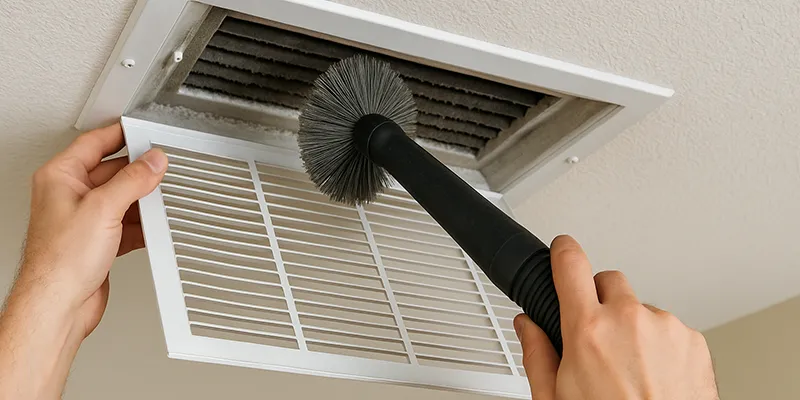

The air ducts inside a home or building are easy to forget. They are usually hidden behind walls, ceilings, floors, or other parts of the structure, so it is not surprising that many people rarely think about them. Yet these passages play an important role in moving heated or cooled air from the HVAC system into different rooms.
Over time, dust, loose debris, pet hair, construction particles, and other materials can collect inside portions of an air distribution system. When cleaning is necessary, having the right equipment can make the job much easier. This is where air duct cleaning kits come into the picture.
An air duct cleaning kit is a collection of equipment designed to help remove dust and debris from ductwork and related components. Depending on the kit, it may contain brushes, flexible rods, hoses, whips, adapters, vacuum connections, or other accessories. Some kits are intended for homeowners handling light maintenance, while others are built for professional duct-cleaning technicians.
Choosing a kit is not simply about buying the largest collection of parts available. Different duct systems have different shapes, sizes, materials, and access points. A tool that works well in one situation may be ineffective or even unsuitable in another.
The good news is that understanding the basics does not require an engineering degree. Think of an air duct cleaning kit as a toolbox designed for a very specific job. Just as you would not use a screwdriver to hammer a nail, you need the appropriate equipment for the type of ductwork you are cleaning.
What Is an Air Duct Cleaning Kit?
An air duct cleaning kit is a group of tools and accessories used to clean accessible areas of HVAC ductwork.
The exact contents can vary considerably. A basic kit might contain flexible cleaning rods and a brush, while a professional setup may include powerful vacuum equipment, compressed-air accessories, rotary brushes, hoses, inspection equipment, and multiple attachments.
The purpose is straightforward: loosen unwanted material and remove it from the duct system.
A brush can help dislodge material that has attached itself to an interior surface. A vacuum can then capture and remove loosened debris. Some systems use air pressure or rotating tools to help clean areas that are difficult to reach manually.
It is similar to cleaning a long drinking straw. You could wipe the outside all day and never clean the inside. You need a tool that can reach through the passage and remove material from the interior.
Why Does Air Duct Cleaning Equipment Matter?
Using appropriate equipment can make duct cleaning more controlled and effective.
Trying to clean a duct with household equipment can create several problems. A normal vacuum may not have the capacity or filtration needed for professional work. A short brush may not reach far enough. A rigid tool may be difficult to maneuver through bends.
The right equipment allows the person doing the work to reach farther and work more efficiently.
However, equipment alone does not guarantee a good cleaning. Technique matters too. The operator needs to understand where debris is likely to collect, how the duct is constructed, and how to prevent loosened material from spreading into occupied areas.
This is why professional duct cleaning is more than simply putting a vacuum hose into an opening.
What Is Usually Included in a Cleaning Kit?
There is no universal list of components because manufacturers assemble kits for different purposes.
Still, several types of equipment are commonly associated with duct cleaning.
Flexible Cleaning Rods
Flexible rods allow a brush or other attachment to reach into ductwork.
They are especially useful when the cleaning path is longer than a person's arm. Sections can often be connected together to extend the working length.
The flexibility is important because ducts can contain bends and turns. A completely rigid pole may struggle to navigate those changes.
Brushes
Brushes are used to loosen material from duct surfaces.
Different brushes may have different shapes, sizes, and bristle stiffness. A small brush may be useful for a narrow opening, while a larger brush may cover more surface area in a wider section.
The brush should be appropriate for the duct material. Aggressive scrubbing is not always better. The goal is to remove unwanted buildup without damaging the duct.
Vacuum Hoses
A vacuum hose provides a pathway for collected debris to leave the duct.
For professional cleaning, the vacuum system is an important part of the process because simply loosening dust without capturing it can allow particles to travel elsewhere.
A suitable hose should be long enough and flexible enough for the application without becoming unnecessarily difficult to handle.
Whips and Air Tools
Some professional cleaning systems use compressed air to move specialized whips or other cleaning attachments.
These tools can help agitate material from difficult areas. Instead of relying entirely on a brush being pushed by hand, the tool creates movement that helps disturb debris.
Compressed-air equipment requires proper control and appropriate safety practices. More pressure is not automatically better.
Adapters
Adapters help connect different pieces of equipment.
For example, the duct opening, vacuum hose, and cleaning machine may have different connection sizes. An adapter can bridge that gap.
A secure connection is important because air leaks can reduce the effectiveness of the cleaning process.
Choosing Between a Basic and Professional Kit
The right kit depends largely on the job.
A homeowner interested in occasional light cleaning around accessible components may not need a large professional system.
A technician who cleans multiple HVAC systems every week has very different requirements. Durability, reach, vacuum capacity, portability, and compatibility with different duct sizes become much more important.
Before purchasing, think about how often the equipment will be used.
Buying a large professional kit for a single minor maintenance task may not be practical. On the other hand, using a small household brush for professional work can be inefficient and frustrating.
It is similar to choosing a vehicle. A compact car may be perfect for daily errands, while someone hauling equipment every day may need a larger vehicle. The best option depends on the job.
Consider the Type of Ductwork
Not every duct system is built the same way.
Some ducts are made from sheet metal. Others use flexible duct material or insulated construction. Older buildings can also contain unusual layouts or materials.
This matters when selecting cleaning equipment.
A brush that is appropriate for sturdy metal ductwork may not be ideal for a delicate flexible section. Tools should be selected with the construction of the system in mind.
Before cleaning, identify what type of ductwork you are dealing with whenever possible.
If you are unsure, professional guidance can help prevent accidental damage.
The Importance of Vacuum Power
A cleaning brush can loosen debris, but something still needs to remove what has been disturbed.
That is where the vacuum system becomes important.
A suitable vacuum creates controlled airflow that pulls loosened material away from the work area. Professional systems can be designed specifically for duct-cleaning applications and may use high-efficiency filtration to capture fine particles.
The goal is to avoid turning cleaning into a dust-spreading exercise.
Imagine sweeping a dusty floor while someone stands behind you blowing air across the room. The dirt might move, but it has not really been removed. Duct cleaning works best when loosened debris is collected rather than simply pushed from one area to another.
Why Filtration Matters
Vacuum filtration deserves attention because the material being removed from a duct can include very fine particles.
A vacuum that releases collected dust back into the surrounding air defeats part of the purpose of cleaning.
Professional equipment may use specialized filtration systems designed to capture fine airborne particles. The appropriate filtration depends on the machine and the work being performed.
When evaluating equipment, do not look only at suction power. Consider where the collected material goes and how the vacuum handles the air after it passes through the machine.
A powerful machine with poor containment is not necessarily a better cleaning solution.
Cleaning Registers and Grilles
Air duct cleaning is not limited to the hidden sections of the duct system.
Registers, grilles, and accessible components can collect visible dust and debris. Removing and cleaning these parts can improve the overall cleanliness of the accessible system.
However, wiping a grille does not mean the entire duct system has been cleaned.
It is similar to washing the handle of a refrigerator. The handle may be clean afterward, but that does not mean every surface inside the refrigerator has been cleaned.
A complete cleaning approach should consider the relevant components rather than focusing only on what is easiest to see.
Do You Need a Camera?
Inspection cameras can be useful in some situations.
A small camera can help a technician see areas that would otherwise be hidden. This can provide useful information about the condition of accessible duct sections and help determine whether cleaning is warranted.
A camera is not a cleaning tool by itself. It is an inspection aid.
Think of it like using a flashlight before repairing something inside a dark cabinet. Seeing the problem first can help you choose the right solution.
For professionals, inspection equipment can also help document conditions before and after a cleaning job.
How a Typical Duct Cleaning Process Works
The exact process varies according to the system and equipment, but the basic concept is relatively simple.
First, the person performing the work identifies the areas that need attention.
Next, suitable access points are prepared. Openings may need to be protected so that dust does not escape into the surrounding space.
The cleaning equipment is then connected.
Brushes, whips, air tools, or other attachments can loosen material from interior surfaces. At the same time, a vacuum system can collect the disturbed debris.
Accessible components may be cleaned separately.
Afterward, the system can be inspected to determine whether additional cleaning is necessary.
The process is less about one magical tool and more about using several pieces of equipment together.
Common Mistakes When Buying a Kit
One common mistake is choosing a kit based solely on the number of pieces included.
A box containing 30 accessories may sound better than a box containing 10, but quantity does not necessarily equal usefulness.
Another mistake is ignoring the length of the cleaning rods. A tool that cannot reach the intended area will have limited value.
Some buyers also overlook connection sizes. If the hose, vacuum, brush, and machine cannot work together, additional adapters may be necessary.
Material quality matters as well. Cheap rods may bend or break under repeated use, while poorly made brushes may lose bristles.
Think about how the equipment will actually be used rather than how impressive the product description sounds.
Look at Durability and Ease of Use
Cleaning ducts can involve awkward positions, long hoses, repeated movement, and equipment assembly.
A tool that is technically capable but uncomfortable to use can slow down the entire job.
Look for practical features such as sturdy connections, flexible components, easy-to-handle rods, durable brushes, and storage options.
For professional users, equipment that can withstand frequent use is particularly important.
A kit should make the job easier, not turn every cleaning appointment into a struggle with the equipment.
Safety Should Come First
Duct cleaning involves more than dust.
Workers may encounter sharp metal edges, electrical components, insulation, biological material, or other unexpected conditions.
Appropriate protective equipment is important. Gloves and eye protection can help
Write a fully original and factually accurate article on "dryer vent cover" Use the secondary keyword "dryer vent covers" Use layman's terms so anyone can understand, avoiding jargon or overly technical language. Explain complex ideas with simple analogies or everyday examples.
The article must:
- Be at least 1200 words
- Keep Title under 75 characters so they work well for SEO.
- Have a clear introduction, body, and conclusion
- Include heading and subheadings for easy reading but not include line
- Use varied sentence structures so it doesn't sound repetitive
- Avoid reusing any wording from previous outputs
- Do not copy from external sources—write entirely in your own words
- Keep the tone engaging, friendly, and informative
- Add both keywords in exact match but only once in the entire article.
- please highlight the keywords
- Mention the brand name "Vent Vision" naturally once or twice per article, depending on length.
- Don't include line
protect against loose debris, while respiratory protection may be appropriate depending on the circumstances and exposure.
Before beginning work, make sure the system is safe to access. Electrical components and HVAC equipment should be handled appropriately.
Do not force tools through unknown obstructions. If something feels stuck, investigate instead of applying excessive force.
The safest cleaning job is one where protecting the person doing the work is treated as seriously as cleaning the duct.
When Should You Clean Air Ducts?
Not every HVAC system requires frequent duct cleaning.
Dust inside a duct does not automatically mean the entire system needs to be cleaned. The decision should depend on the condition of the system and the circumstances.
Visible buildup, significant debris, contamination, remodeling dust, or other specific conditions may justify cleaning.
If there is a persistent problem with airflow or unusual debris, the cause should be investigated rather than assuming cleaning is automatically the answer.
Routine maintenance of the HVAC equipment itself is also important. Filters should be replaced or cleaned according to the manufacturer's recommendations, because a dirty filter can affect system performance and allow more material to move through the system.
Why Professional Technicians Use Multiple Tools
Professional duct cleaning is often a combination of methods rather than a single operation.
One tool may loosen debris. Another may provide suction. A third may help inspect the area.
This combination is why professional equipment can look complicated at first.
Consider washing a car. You need water, soap, brushes, drying materials, and perhaps a vacuum for the interior. No single item performs every task.
Duct cleaning works in much the same way.
The right combination depends on the system, the condition of the ductwork, and the type of material being removed.
How Vent Vision Fits Into the Picture
Vent Vision understands that effective ventilation maintenance depends on having equipment suited to the task.
Whether someone is assembling a basic cleaning setup or building a more complete professional toolkit, understanding the purpose of each component can help prevent wasted time and unsuitable purchases.
The most useful equipment is not necessarily the equipment with the longest list of features. It is the equipment that fits the actual job and can be used safely and effectively.
How to Store Your Cleaning Equipment
Proper storage can extend the useful life of a cleaning kit.
Brushes should be kept clean and dry when appropriate. Flexible rods should be stored in a way that prevents unnecessary bending or damage. Hoses should not be crushed under heavy objects.
Keep small adapters and fittings together so they do not disappear between jobs.
For professional users, labeling or organizing components can also save time. Searching for a missing connector when a job is ready to begin is an easy way to waste valuable minutes.
A little organization after each job can make the next job much easier.
Final Thoughts
Air duct cleaning kits can make duct maintenance more manageable by bringing together the tools needed to reach, loosen, and remove unwanted material from accessible parts of an HVAC system.
The best kit depends on the job. A homeowner handling occasional light maintenance has different needs from a professional technician cleaning multiple systems every week.
Before purchasing, consider the type of ductwork, cleaning method, reach, vacuum requirements, filtration, connection sizes, durability, and safety features. Do not choose a kit simply because it contains the largest number of accessories.
Good duct cleaning is about using the right method for the situation. Brushes, rods, hoses, vacuum systems, air tools, adapters, and inspection equipment can each serve a specific purpose.
Most importantly, cleaning equipment should complement good judgment. If ductwork is difficult to access, damaged, contaminated, or unfamiliar, professional assistance may be the safest option.
With the right approach, the right equipment, and careful handling, duct cleaning can be a much more organized process instead of a guessing game with a brush and vacuum.




























Sign in to leave a comment.