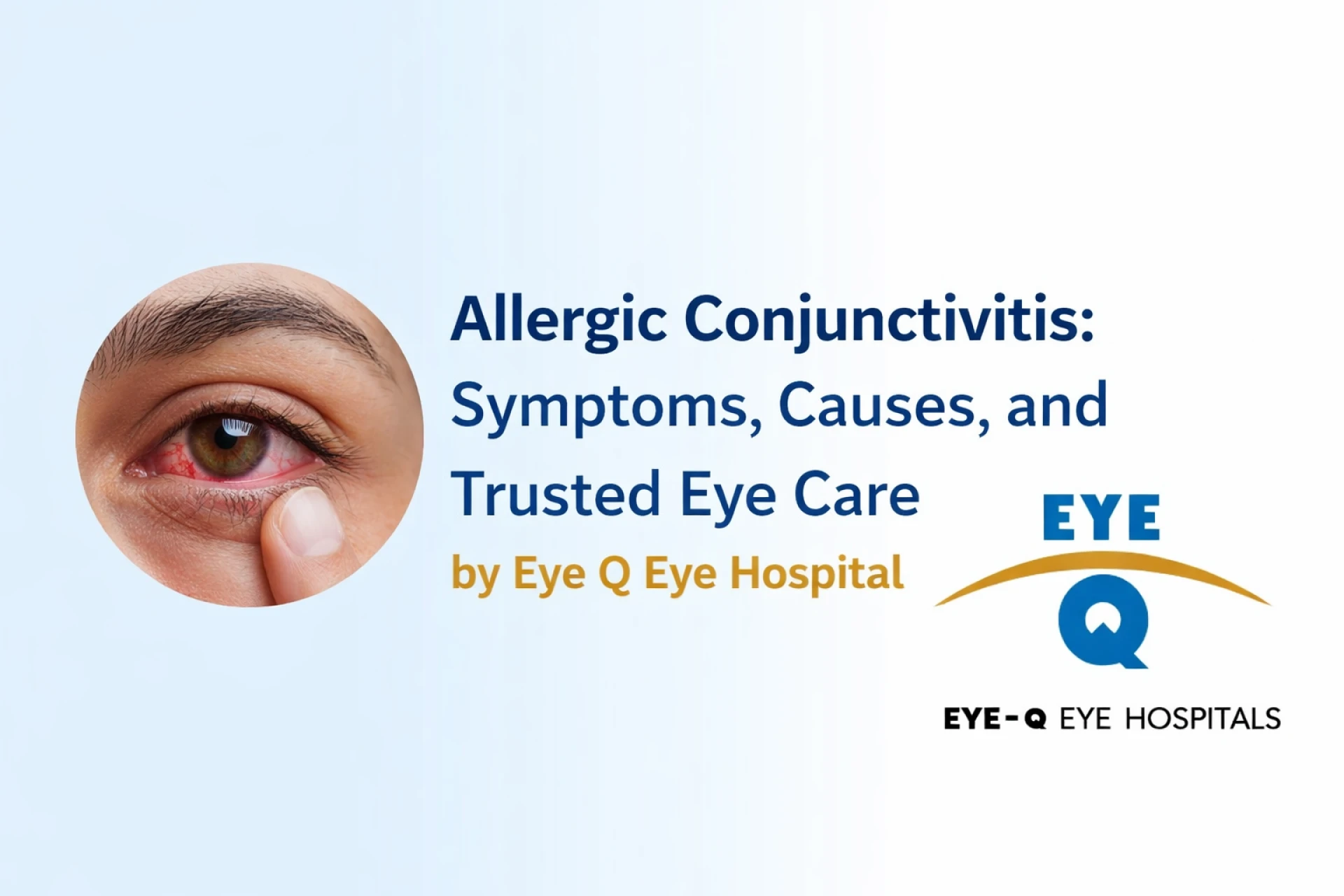

Allergic conjunctivitis is a very common, yet very often belittled, condition of the eyes that affects millions of people annually. Many allergens, like dust, pollen, pollution, and pet dander, can also unleash an uncomfortable symptom in the eyes, standing as an interference to daily life. Though this condition is not contagious, ignoring the signs and symptoms of allergic conjunctivitis could lead to chronic irritation and decreased eye comfort.
Ophthalmologists at the Eye Q Eye Hospital say early diagnosis and professional treatment are required to avoid harming long-term eye health.
What is allergic conjunctivitis?
Allergic conjunctivitis is an allergic response of the thin membrane that covers the white part of the eye and lines the eyelids, known as the conjunctiva. When an allergen reaches the eyes, it causes the immune system to release histamines, which create inflammation and irritation. Unlike bacterial or viral eye infections, allergic conjunctivitis does not spread from person to person, but may recur frequently if triggers are not controlled.
Common Symptoms of Allergic Conjunctivitis
Symptoms can be anywhere from mild to severe, depending on exposure to allergens and individual sensitivity. Common signs and symptoms include:
- Chronic itching of the eyes
- Redness in the eyes or bloodshot eyes
- Excessive tearing/watery discharge
- Burning sensation or stinging
- Swollen or puffy eyelids
- Sensitivity to light
Medical experts at Eye Q Eye Hospital say continued friction of the eyes can make inflammation worse and raise the possibility of complications.
Types of Allergic Conjunctivitis
Understanding the type of allergic conjunctivitis guides toward the line of treatment.
Seasonal Allergic Conjunctivitis (SAC)
Occurs only during certain seasons, depending on the various types of pollen from trees, grass, or weeds.
Perennial Allergic Conjunctivitis (PAC)
Persists throughout the year and is most often caused by dust mites, pet hair, or indoor pollutants.
Vernal Keratoconjunctivitis (VKC)
More serious type: affects mainly children and young adults; needs specialized ophthalmic supervision.
Atopic Keratoconjunctivitis (AKC)
The condition is chronic and requires proper care for it not to affect the vision.
Eye Q Eye Hospital offers expert care for all kinds of allergic conjunctivitis with advanced diagnostic modalities.
How is allergic conjunctivitis diagnosed?
The diagnosis typically includes the following:
- Full eye test
- A detailed history about all allergies and medical conditions
- Slit-lamp examination
- Assessment of tear film and eye surface
Modern diagnostic technology at Eye Q Eye Hospital ensures that exact identifications are done, and appropriate treatment planning is provided.
Treatment Options for Allergic Conjunctivitis
The treatment should be effective enough to relieve the symptoms and try to avoid recurrence. Common modes of treatment include:
- Antihistamine eye drops
- Mast cell stabilizers of medicine
- Artificial tear lubricants
- Cold compresses relieve inflammation.
- Short-term steroid drops-alone and only under medical supervision
- Strategies for the avoidance of allergens
Ophthalmologists at Eye Q Eye Hospital follow evidence-based protocols to provide safe and long-lasting relief.
The Prevention Tips by the Experts in Eye Care
The following can help decrease flare-ups of allergic conjunctivitis:
- Avoid rubbing your eyes
- Wear sunglasses when going out in the open.
- Keep your indoor environment clean and dust-free.
- Wash hands frequently
- Limit your exposure to smoke and pollution
- Use prescribed eye medicines on a regular basis
These precautionary measures, apart from professional care at Eye Q Eye Hospital, will help a lot in bringing comfort to the eyes.
Why Choose Eye Q Eye Hospital for Allergic Conjunctivitis Care?
Eye Q Eye Hospital is a trusted name in comprehensive eye care. Some of its features associated with it are:
- Ophthalmologists and eye specialists with years of experience
- Advanced diagnostic and treatment technology
- Approach of care by focusing on the patients
- High standards of safety and hygiene
- Specialized treatment for adults and children alike
Because of their commitment to clinical excellence, they are preferred in the management of allergic conjunctivitis.
When Should You Consult an Eye Specialist?
Seek medical attention if:
- Symptoms have continued for more than a few days
- Redness or itching gets worse
- Blurred vision
- Over-the-counter drops are of no help.
Timely consultation at EyeQ Eye Hospital ensures proper treatment and prevents complications.
Conclusion
Allergic conjunctivitis is often considered minor but seriously impairs quality of life unless treated. Expert diagnosis, targeted treatment, and preventive care can ensure long-term relief. Eye Q Eye Hospital offers trusted, advanced solutions for eye care at every level, including allergic conjunctivitis.
Visit Our Locations :-
- Eye-Q hospital in Vision Plus
- Eye-Q hospital in Bharuch
- Eye-Q hospital in Surat Udhna
- Eye-Q hospital in Surat Rander Road
- Eye-Q hospital in Surat Parle Point
- Eye-Q hospital in Vadodara
- Eye-Q hospital in Bhiwani
- Eye-Q hospital in Gurgaon Sector-90
- Eye-Q hospital in Fatehabad
- Eye-Q hospital in Gurgaon New Railway Road
- Eye-Q hospital in Gurgaon Sector-27
- Eye-Q hospital in Gurgaon Sector-46
- Eye-Q hospital in Hisar Barwala Road
- Eye-Q hospital in Hisar Jindal Chowk
- Eye-Q hospital in Jhajjar
- Eye-Q hospital in Rewari
- Eye-Q hospital in Rohtak
- Eye-Q hospital in Sirsa
- Eye-Q hospital in Sonipat
- Eye-Q hospital in Yamunanagar
- Eye-Q hospital in kanpur Juhikala
- Eye-Q hospital in Kanpur Swaroop Nagar
- Eye-Q hospital in Lucknow Aliganj
- Eye-Q hospital in Lucknow Rajajipuram
- Eye-Q hospital in Muzaffarnagar
- Eye-Q hospital in Saharanpur Sadar Thana Road
- Eye-Q hospital in Saharanpur khumran Pul



























Sign in to leave a comment.