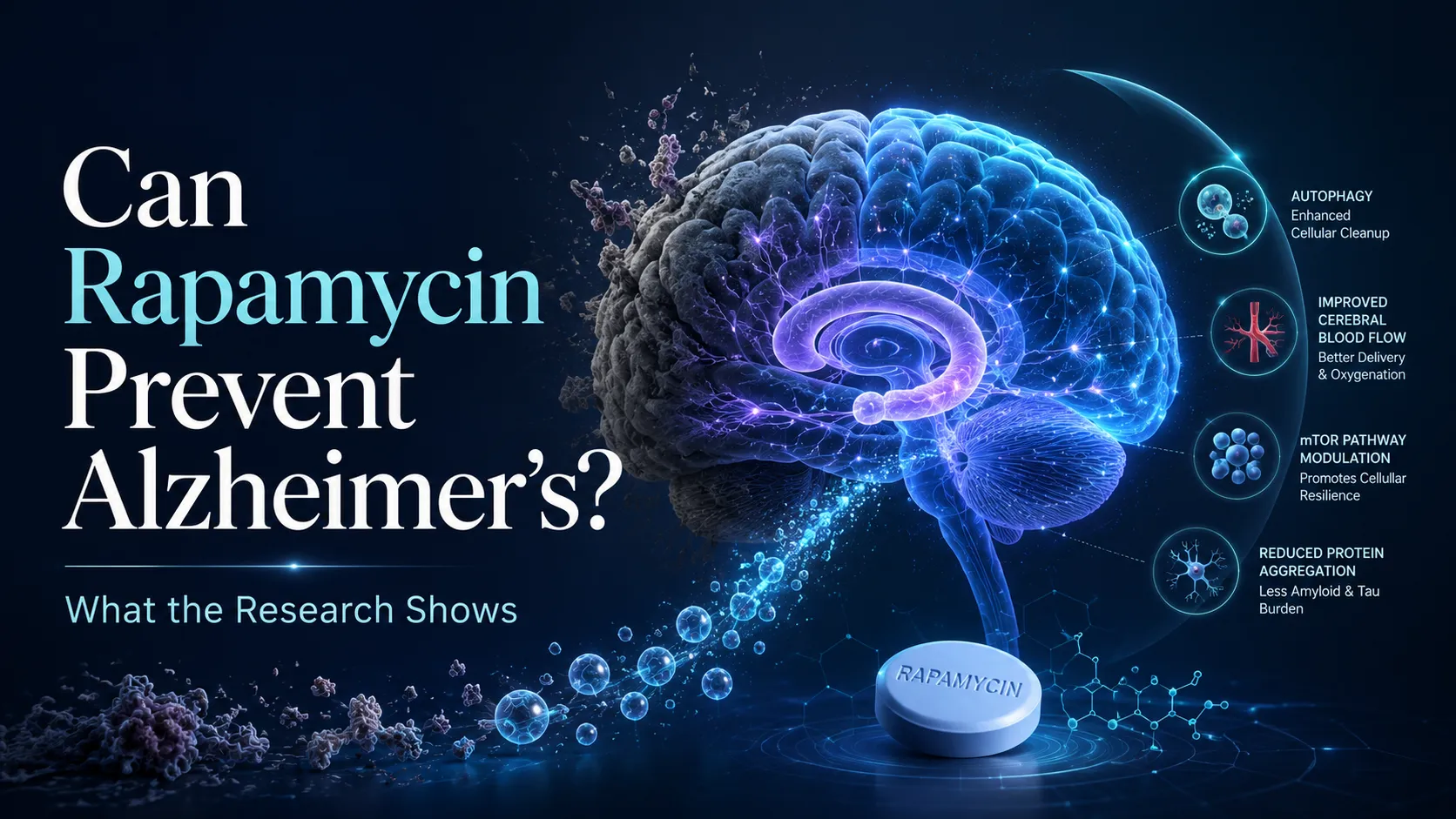

There's a strange irony sitting at the center of Alzheimer's research right now. For decades, scientists poured money and careers into clearing amyloid plaque from the brain, treating it like the villain of the story. The drugs worked, sort of. Plaque went down. Symptoms mostly didn't budge. So a different question started making the rounds in labs: what if the plaque isn't the real problem — what if it's just a symptom of a brain that's aging too fast?
That question is why an old, unglamorous drug called rapamycin is suddenly getting a second look. It's been around since the 1970s. It's not flashy. And yet a growing pile of research suggests it might do something no anti-amyloid drug has managed: help protect the brain before Alzheimer's ever gets a foothold.
Buy Rapamycin online
Rapamycin Alzheimer's Prevention Starts With One Uncomfortable Truth
Here's the part that surprised even the researchers: rapamycin looks genuinely promising in healthy brains that haven't shown any symptoms yet — and much shakier once the disease has already taken hold. That's not really bad news. It's a clue. It tells scientists exactly where to aim next.
So What Is Rapamycin, Actually?
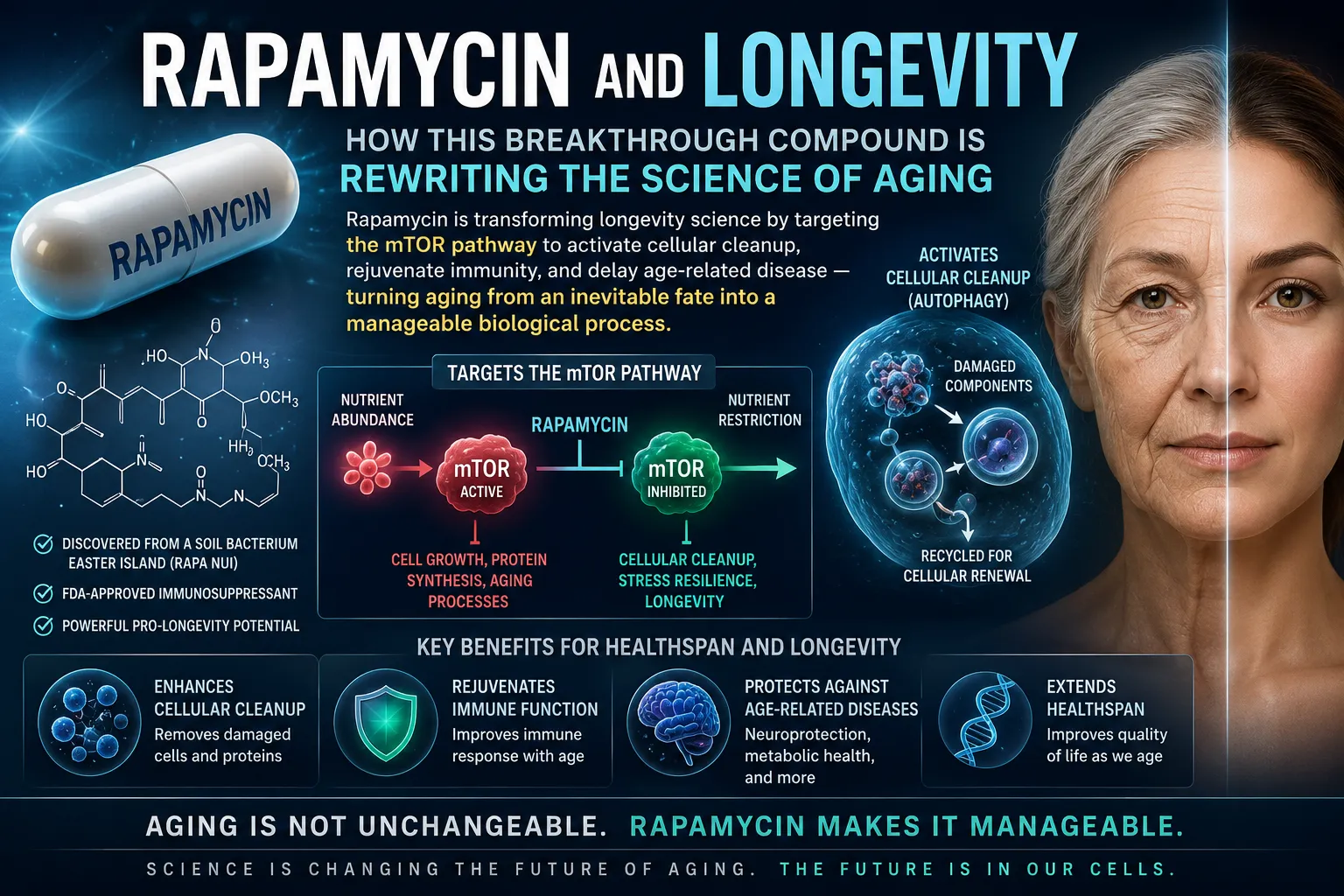
Rapamycin was first pulled out of soil samples on Rapa Nui — Easter Island — where scientists were originally hunting for new antifungal compounds. They found one, but it turned out to do something far more interesting: it suppresses the immune system and, in every single animal species tested so far, extends lifespan.
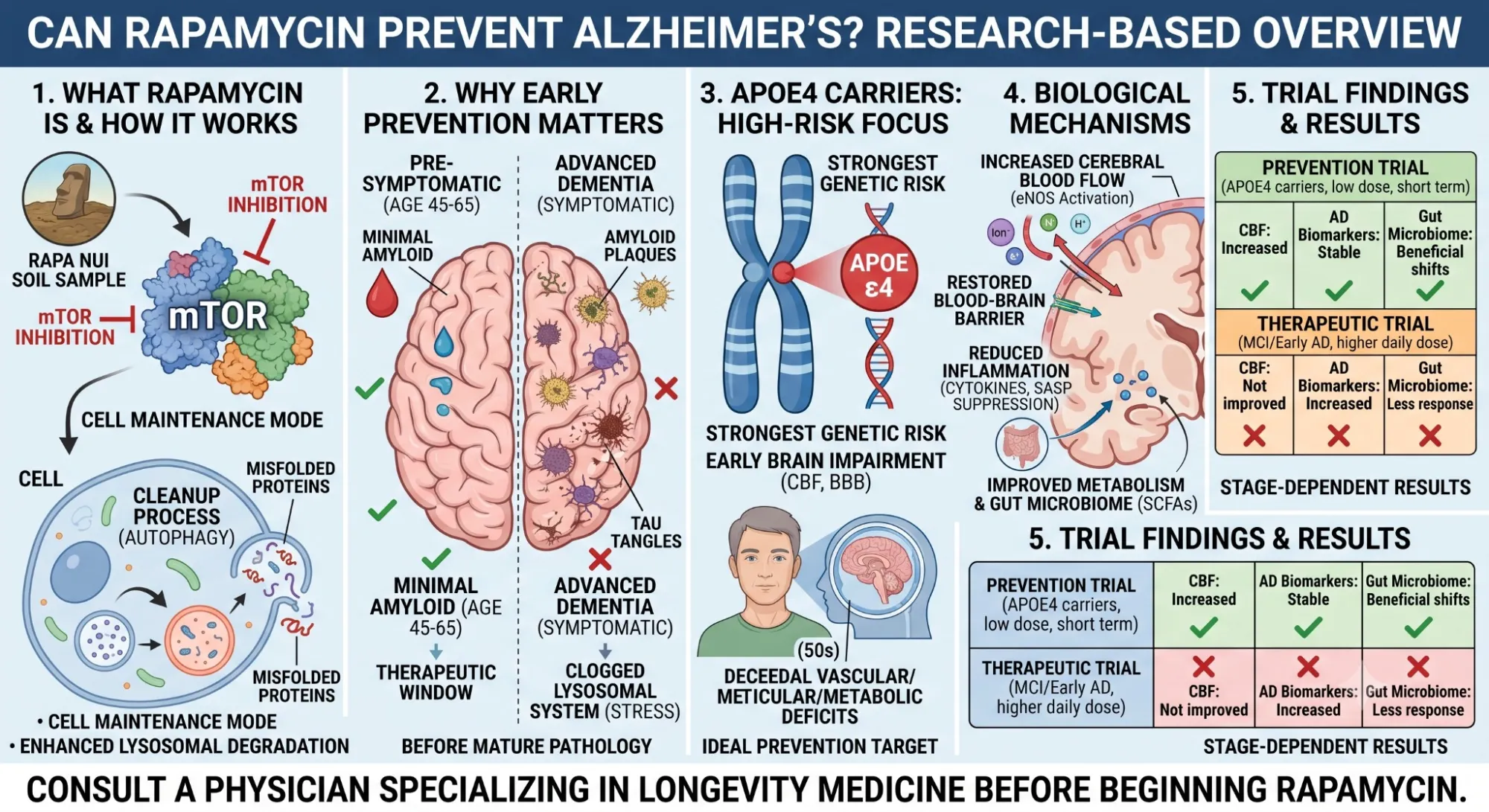
The mechanism comes down to a protein called mTOR — short for "mechanistic target of rapamycin." Think of mTOR as a dial that tells your cells whether to focus on growth or on repair. When that dial gets stuck too high (which tends to happen as we age), cells keep growing and dividing without doing enough cleanup. Rapamycin turns the dial back down, which switches cells into maintenance mode and kicks off a process called autophagy — literally "self-eating," where cells clear out their own damaged, junky parts.
That last bit matters a lot for Alzheimer's. In the hippocampus — the brain region most responsible for memory — mTOR tends to run in overdrive in people with the disease.
Buy Rapamycin online
Why Timing Might Be the Whole Ballgame
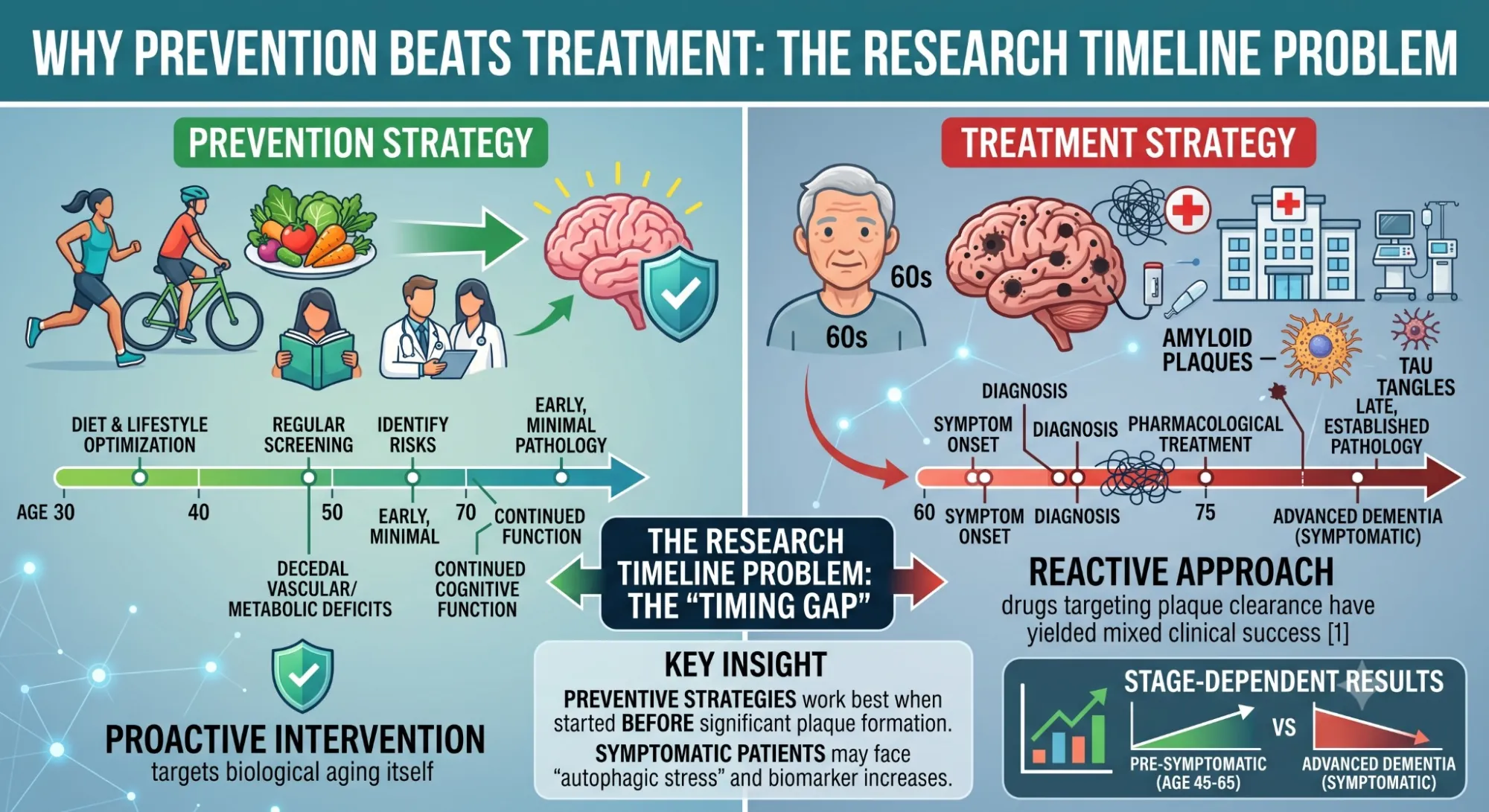
Amyloid plaques and tau tangles, the two proteins most associated with Alzheimer's, usually start accumulating roughly 20 years before anyone notices a symptom. Twenty years. By the time a diagnosis happens, the damage has had two decades to build.
Mouse studies make this timing problem impossible to ignore. In one well-cited study, mice given rapamycin early — before any disease had developed — showed an 86% drop in tangle formation and kept their memory intact. Give the same drug to older mice that already had established plaques, and... nothing. No benefit at all.
The likely reason is almost mechanical. Picture autophagy as a drain under a sink. In a younger or healthier brain, turning on rapamycin's "cleanup faucet" works fine because the drain still flows. In a brain that's already clogged with decades of protein buildup, opening that faucet wider can overwhelm a system that's already struggling — something researchers call autophagic stress.
Which is really the entire thesis of current rapamycin research in one sentence: this looks like a shield, not a rescue.

Buy Rapamycin online
What Happened When Real Humans Took It
The Prevention Group: Healthy People, Encouraging Numbers
The strongest genetic risk factor for late-onset Alzheimer's is a gene variant called APOE4. Carriers face somewhere between 3 and 12 times the risk of people without it, and their brains start showing subtle vascular and metabolic changes decades before any memory trouble appears.
In a small pilot trial, cognitively healthy APOE4 carriers between 45 and 65 took a low dose of rapamycin — just 1 mg a day — for four weeks. For such a short trial, the results turned heads:
Blood flow to the brain rose by more than 15% on average, and by as much as 45% in some memory-critical regions, with the biggest gains in women. Inflammatory markers dropped. Gut bacteria associated with anti-inflammatory compounds became more common. And participants didn't just look better on paper — several reported feeling sharper, with better mood and more energy, and nobody had serious side effects.
Oddly, people without the APOE4 gene responded differently — their blood flow stayed steady, but they saw gains in glucose metabolism and lower anxiety instead. It's an early hint that rapamycin isn't a one-size-fits-all fix; it seems to nudge whatever system is actually out of balance for that person's genetics.
Buy Rapamycin online
The Treatment Group: A Necessary Reality Check
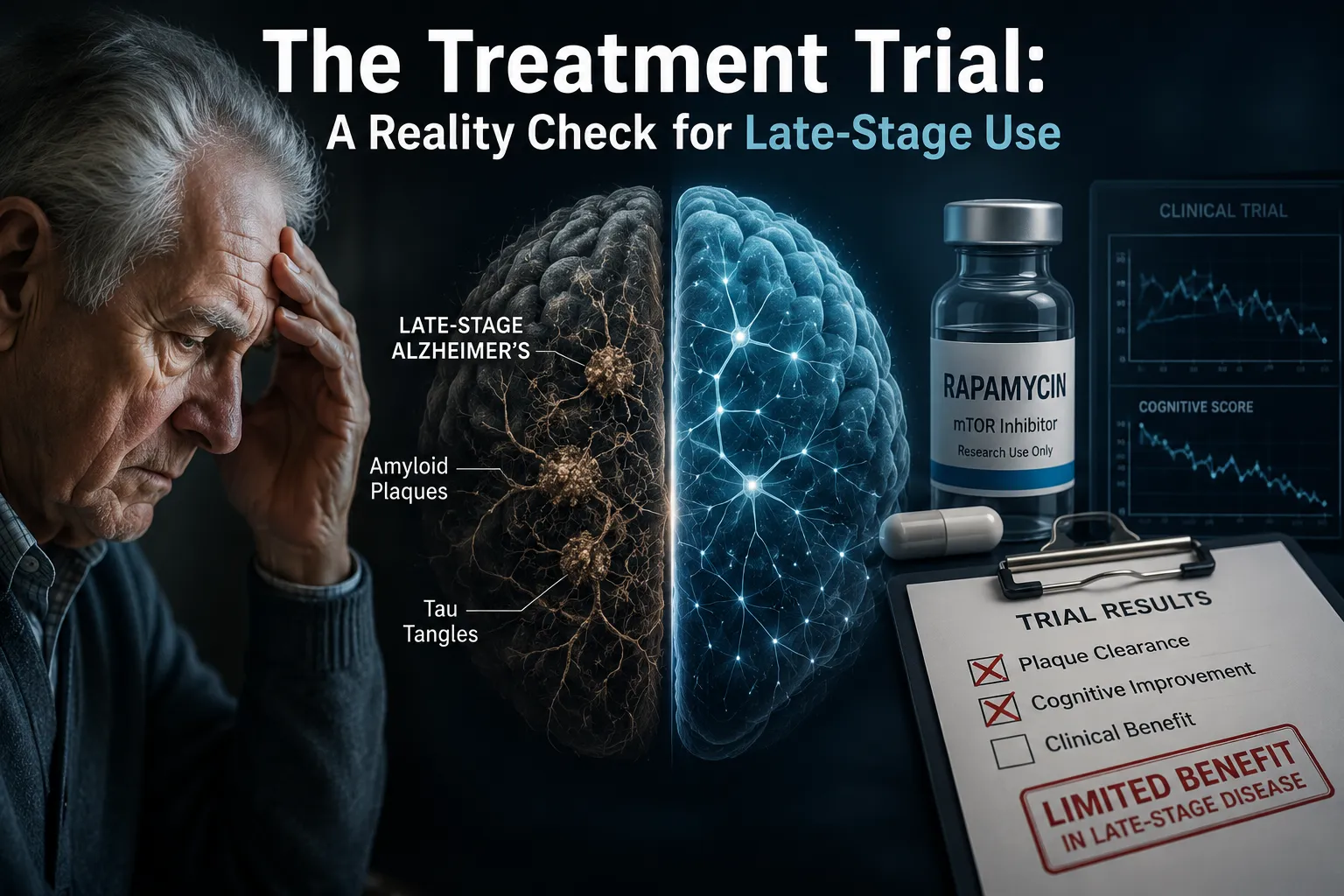
A separate trial told a very different story. Older adults already diagnosed with mild cognitive impairment or early Alzheimer's took the same low dose for 8 to 12 weeks. The results weren't encouraging:
Rapamycin wasn't detectable in spinal fluid at that dose, which raises the question of whether it was even reaching the brain in meaningful amounts. Several biomarkers tied to active brain damage — p-tau181, GFAP, NfL — actually trended upward instead of down. And blood sugar and blood pressure both needed closer watching during the trial.
None of that disqualifies rapamycin. If anything, it sharpens the target: researchers now have a much better sense that this drug's sweet spot is early, not late, and that dosing likely needs rethinking for anyone already showing symptoms.
More Than One Trick: How Rapamycin Actually Works
What makes rapamycin interesting isn't that it does one clever thing — it's that it touches several of the processes behind brain aging at once.
It activates an enzyme called eNOS that relaxes blood vessels, improving circulation and oxygen delivery to brain tissue. It calms the low-grade, chronic inflammation that tends to build up with age (some researchers call this "inflammaging"). It appears to help restore the brain's ability to use glucose for fuel, a process that starts breaking down in APOE4 carriers years before diagnosis. And it even shifts gut bacteria toward species that produce protective, anti-inflammatory byproducts — a reminder of just how connected the gut and brain really are.
Because it works across so many systems simultaneously, rapamycin behaves less like a narrow, single-target drug and more like a general "maintenance mode" switch for an aging brain.

Buy Rapamycin online
What This Actually Means for You
If you're in your 40s or 50s and Alzheimer's runs in your family — or you know you carry APOE4 — this research is worth paying attention to. But it's not an invitation to go buy rapamycin and start dosing yourself.
A few things worth knowing before getting excited:
Rapamycin is a prescription immunosuppressant, originally approved to prevent organ transplant rejection. Its use for Alzheimer's prevention is still considered off-label and experimental, even with promising early signals. The "right" preventive dose is still being worked out — longevity-focused physicians typically use much smaller, less frequent doses than transplant patients do, but that still requires bloodwork to track things like lipids, blood sugar, and kidney function. And the human evidence so far comes from small trials over a few weeks, not the large, years-long studies regulators would eventually want to see.
The honest next step, if this research resonates with you, is a conversation with a physician who specializes in longevity or geroscience-based medicine — ideally paired with genetic testing and brain imaging to figure out whether you're actually inside the window this research is describing.
The Takeaway
Rapamycin's story in Alzheimer's research might be one of the more hopeful threads in neuroscience right now, and not because it cures anything. It's hopeful because it suggests we might be able to get ahead of the disease entirely — restoring blood flow, calming inflammation, and supporting metabolism years before symptoms would otherwise show up. The catch, and it's a real one, is timing. This looks like a tool for the decades before diagnosis, not a fix for after.
As Alzheimer's research slowly shifts from "how do we treat this" to "how do we keep the brain from aging into it," rapamycin has become one of the field's most closely watched candidates — a reminder that sometimes preventing a disease means acting long before it looks like one.
Buy Rapamycin online
Frequently Asked Questions
Is rapamycin an approved treatment for Alzheimer's prevention? Not yet. It's FDA-approved to prevent organ transplant rejection. Using it for Alzheimer's prevention is still experimental and studied mainly through early clinical trials.
Does rapamycin help once someone already has Alzheimer's? The evidence so far says probably not much. Trials in people with mild cognitive impairment or early Alzheimer's showed limited brain penetration and, in some cases, worsening biomarkers — suggesting rapamycin works far better as prevention than as treatment.
Who seems to benefit most from rapamycin in the research? Cognitively healthy, middle-aged adults at higher genetic risk — especially APOE4 carriers — showed the clearest benefits, including improved brain blood flow and lower inflammation.
Can rapamycin cross into the brain? Yes, it's fat-soluble and does reach brain tissue in animal studies. But in one human trial using a low prevention-style dose, it wasn't detectable in spinal fluid, which raises open questions about optimal dosing.
Is rapamycin basically the same thing as metformin? No. Both get discussed in longevity circles, but they work differently. Metformin mainly affects blood sugar through a pathway called AMPK, while rapamycin blocks mTOR directly and boosts autophagy (cellular cleanup).
Can I just take rapamycin on my own without a doctor? That's not a good idea. It's an immunosuppressant with real effects on blood sugar, cholesterol, and immune function, so it should only be used with a physician monitoring bloodwork and adjusting the dose.
What's still unknown about rapamycin and Alzheimer's? Mostly timing. Researchers still need larger, longer human trials to pin down exactly when to start treatment and at what dose, to get the benefit without the downsides seen in later-stage patients.





















Sign in to leave a comment.