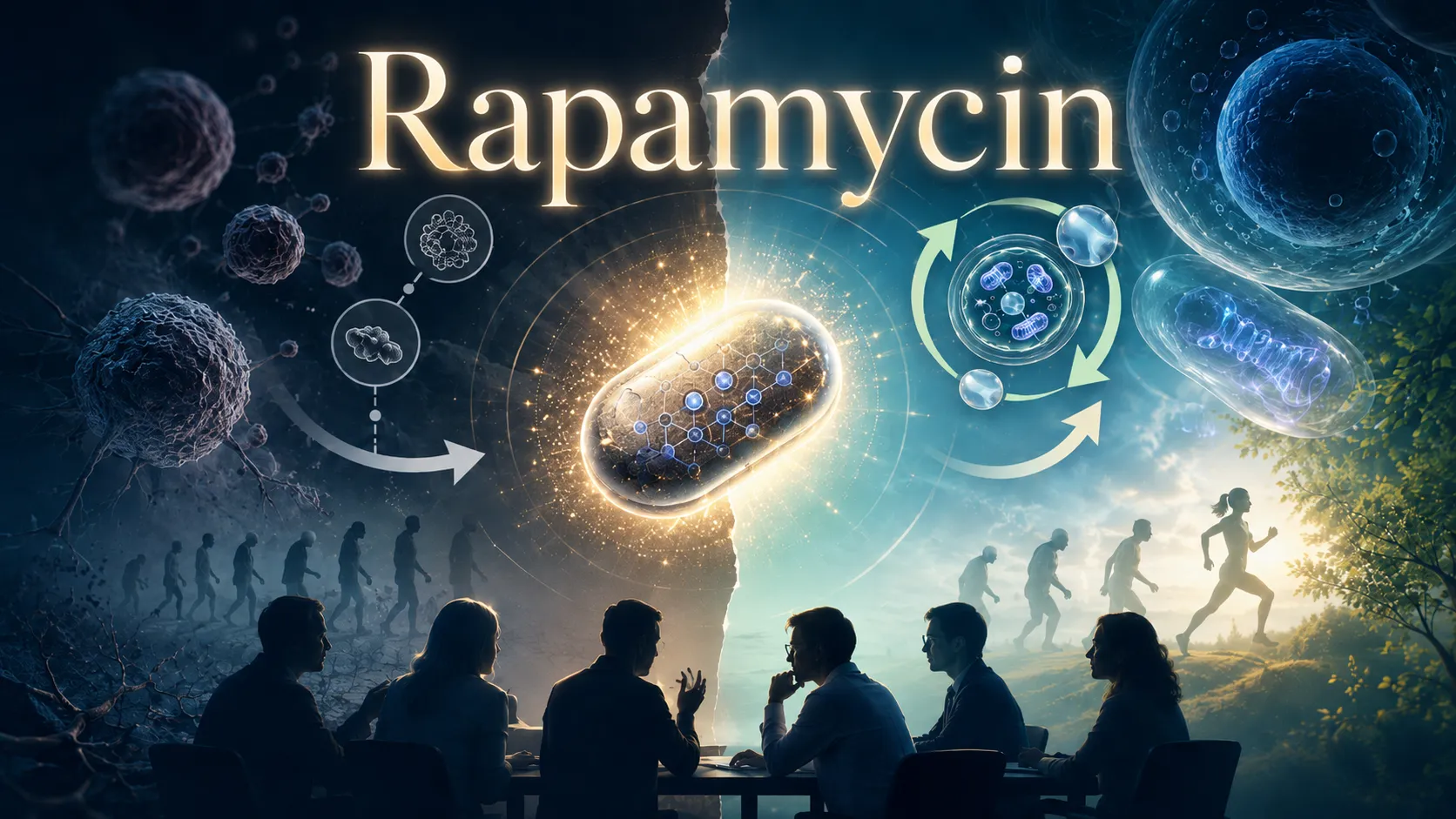

I've noticed rapamycin come up again and again in longevity discussions, so I decided to actually sit down and go through what the research says instead of just repeating the headlines. What I found is that rapamycin and longevity have become almost inseparable topics in aging science — this one compound has more consistent life-extension data behind it than anything else that's been tested.
What surprised me most is that this isn't really a story of hype versus skepticism. It's a group of serious researchers — Matt Kaeberlein, Joan Mannick, Peter Attia, David Sinclair, Brad Stanfield — who all take the underlying biology seriously, and still land in different places on how it should actually be used. That disagreement, to me, is more interesting than a simple "yes it works" headline would be.
Where This Started
Rapamycin wasn't built for aging at all — it was originally approved to stop the body from rejecting transplanted organs. Its second life began around 2009, when a National Institute on Aging program tested it in mice and found it extended lifespan even in mice that were already past their prime when treatment began.
That detail changed the conversation. Before this, most researchers assumed anti-aging interventions had to start early to matter. This study suggested otherwise — and because it was repeated by separate labs with the same result, it became one of the few genuinely reliable findings in a field known for results that don't hold up.
What It's Doing Inside Your Cells
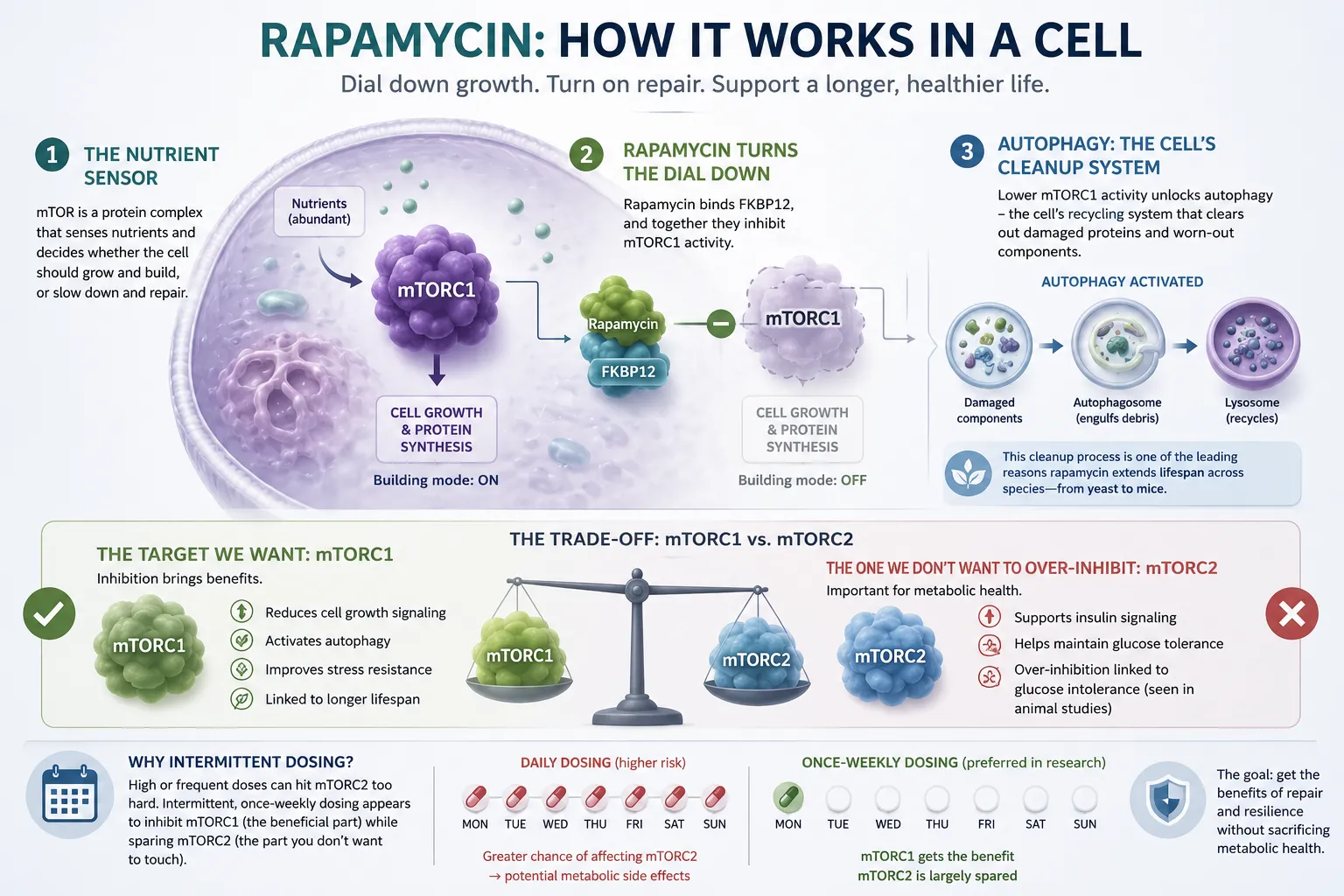
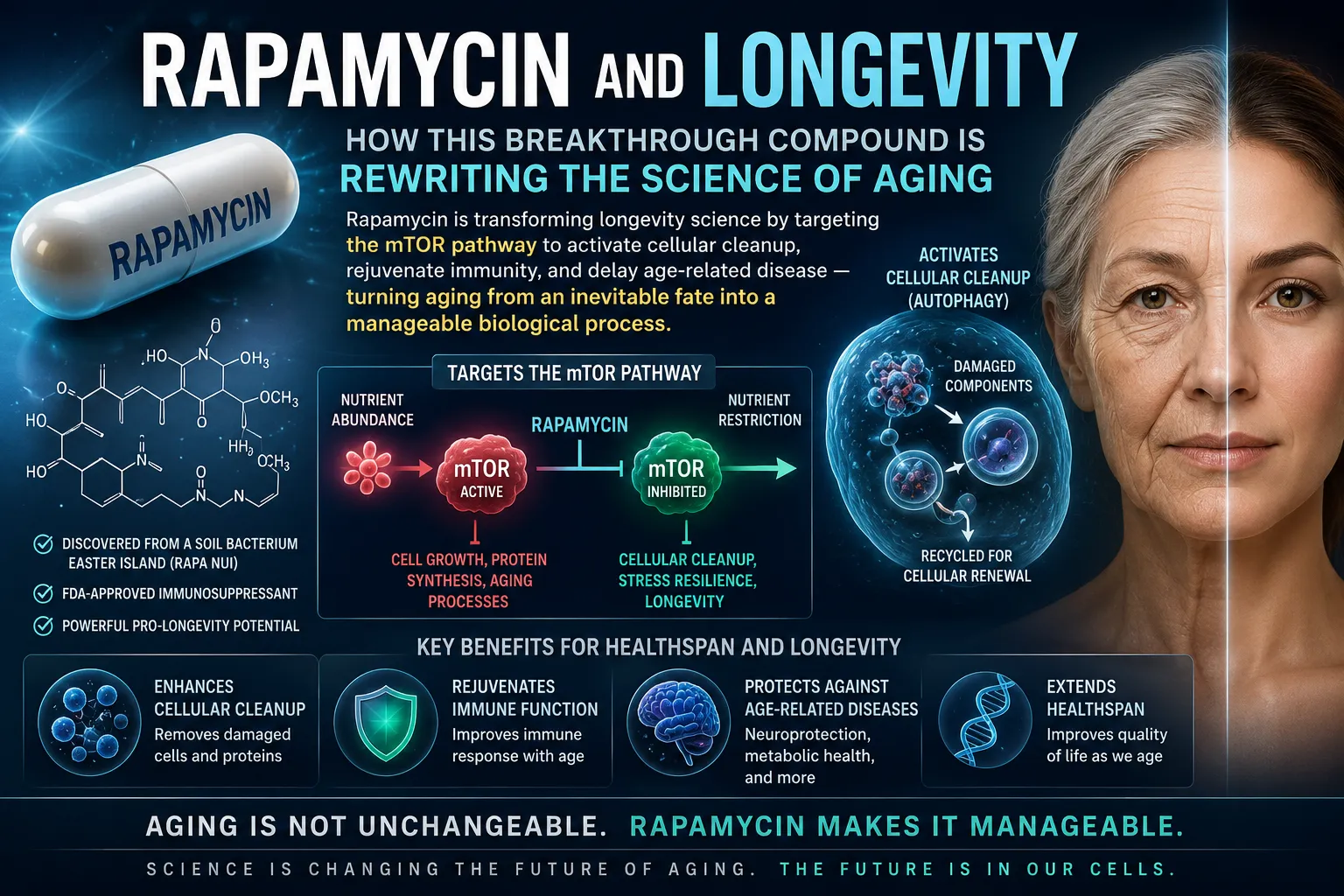
The mechanism runs through mTOR, a protein network that acts like a nutrient sensor inside every cell. When nutrients are plentiful, a branch of it called mTORC1 pushes the cell to keep growing. Rapamycin binds to a protein called FKBP12 and, through that, turns mTORC1 activity down — putting the cell into something closer to the state it would be in during a fast.
That's important because it switches on autophagy — a built-in system that clears out damaged proteins and cellular waste. This process slows down while mTORC1 stays active, which is part of why cellular "junk" tends to pile up as we get older. Restarting that cleanup process is one of the main reasons researchers believe rapamycin extends lifespan so consistently across species.
There's a genuine trade-off here, and I don't think it's fair to leave it out: at higher or more frequent doses, rapamycin also starts affecting a second complex called mTORC2, which is tied to insulin regulation. Reducing mTORC2 too much has been linked to glucose intolerance in animal studies. This is why the field has largely settled on intermittent, once-weekly dosing rather than daily use — it seems to protect the beneficial mTORC1 effect while leaving mTORC2 mostly alone.
The Animal Research Is About as Strong as It Gets
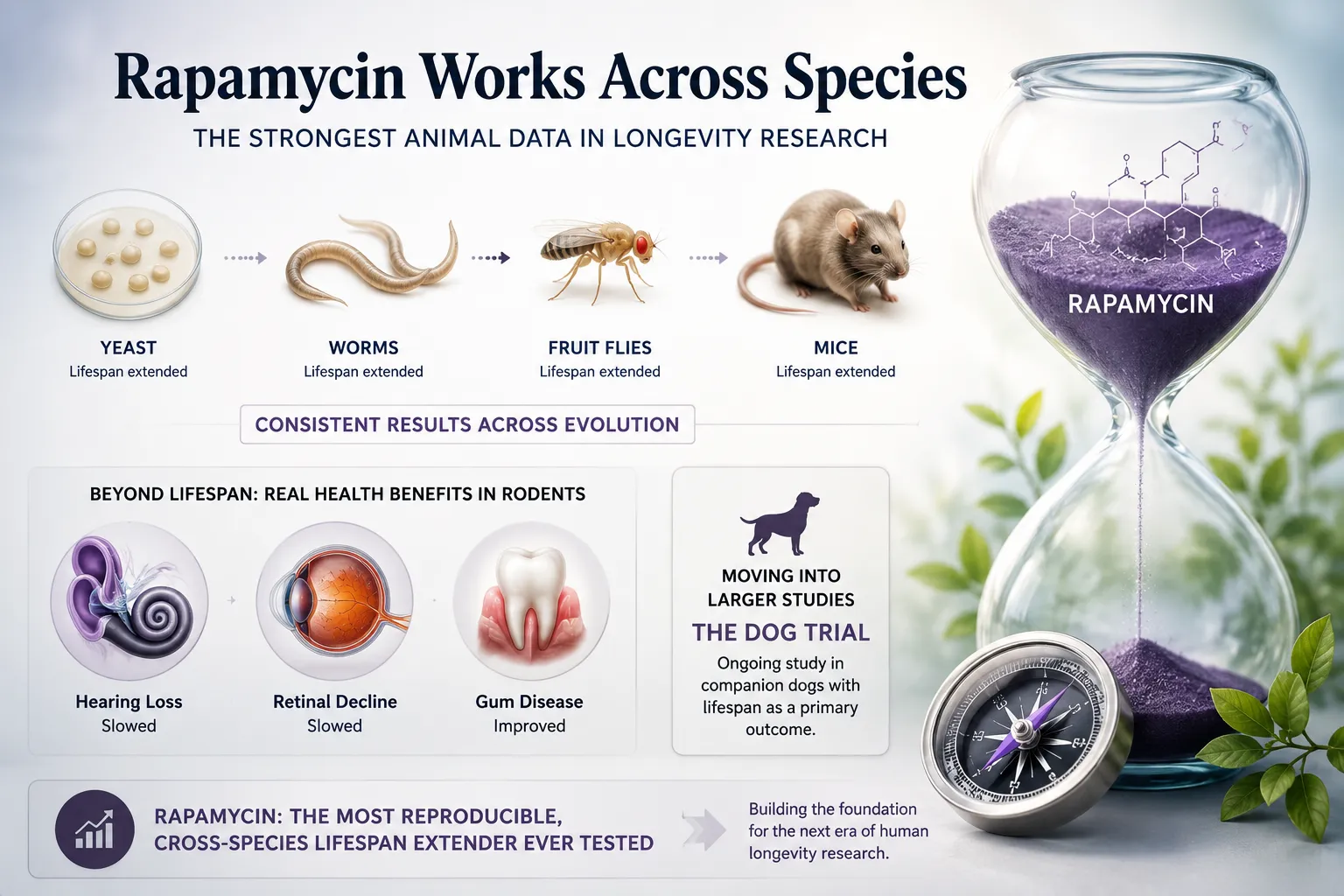
Rapamycin has extended lifespan in every organism it's been tested on — yeast, worms, fruit flies, and multiple strains of mice — with some studies showing large increases in maximum lifespan. It's also delayed or partially reversed hearing loss, vision decline, and gum disease in older rodents, which tells researchers this isn't a narrow effect but something closer to a general slowdown of aging processes.
That strength of evidence is why the research has expanded into longer-lived animals, including an active study tracking lifespan in pet dogs. Its results are expected to shape how confidently researchers move toward the next wave of large human trials.
What Human Trials Have Actually Found
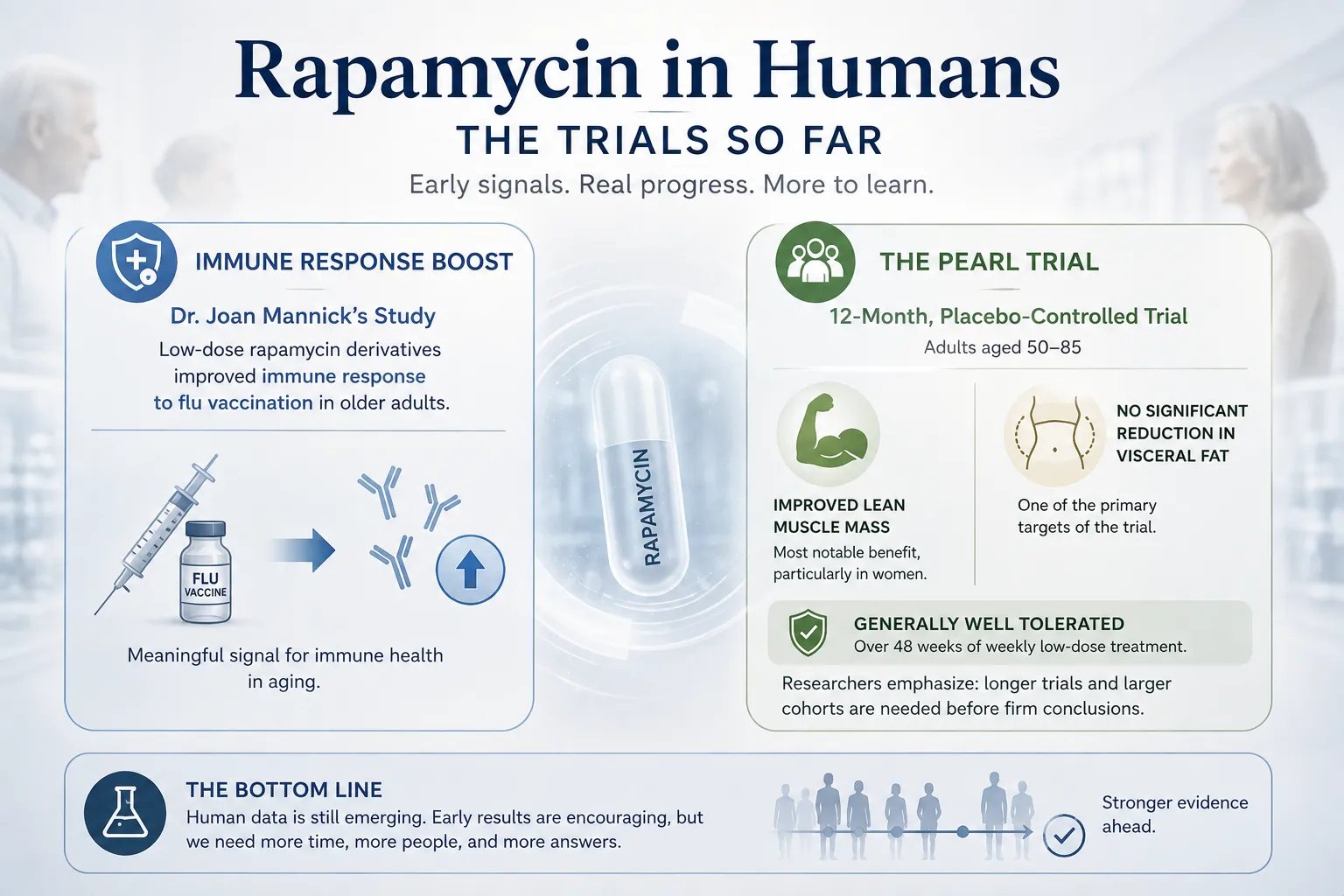
This is the part still catching up to the animal work. One of the earliest human results, from Dr. Joan Mannick's research, showed that a low dose of a rapamycin derivative improved older adults' immune response to a flu vaccine — a meaningful finding, since a fading immune system is one of the clearer markers of aging.
More recently, the year-long PEARL trial tested weekly low-dose rapamycin in adults aged 50 to 85 against a placebo. It was generally well tolerated across 48 weeks and showed a real improvement in lean muscle mass, particularly among women. It didn't achieve a significant reduction in visceral fat, which had been one of its main targets — something the researchers have been open about, alongside the need for bigger, longer studies before drawing firm conclusions.

Why the Experts Don't Fully Agree
Matt Kaeberlein is the strongest advocate, treating rapamycin as close to the gold standard for slowing biological aging, and he's fine with the idea that starting later in life still captures most of the benefit.
Brad Stanfield takes a more careful stance. His own trial found that 6mg weekly blunted the muscle-power gains older adults would normally get from starting resistance training — a real tension, since exercise is one of the best-supported tools for healthy aging we have. He'd rather wait for longer data before recommending off-label use.
Peter Attia treats it as a personal risk-benefit decision. He's convinced by the animal data and takes it himself, but is upfront that he sees it as self-experimentation, cycling the drug and monitoring for side effects rather than presenting it as a settled recommendation.
Joan Mannick is focused on finding the exact dose that helps the immune system without suppressing it, and admits that number isn't fully established yet.
David Sinclair sees mTOR inhibition as one part of a much larger picture of aging biology, alongside NAD+ pathways and epigenetic changes, rather than a solution on its own.
Who Might Actually Benefit Most
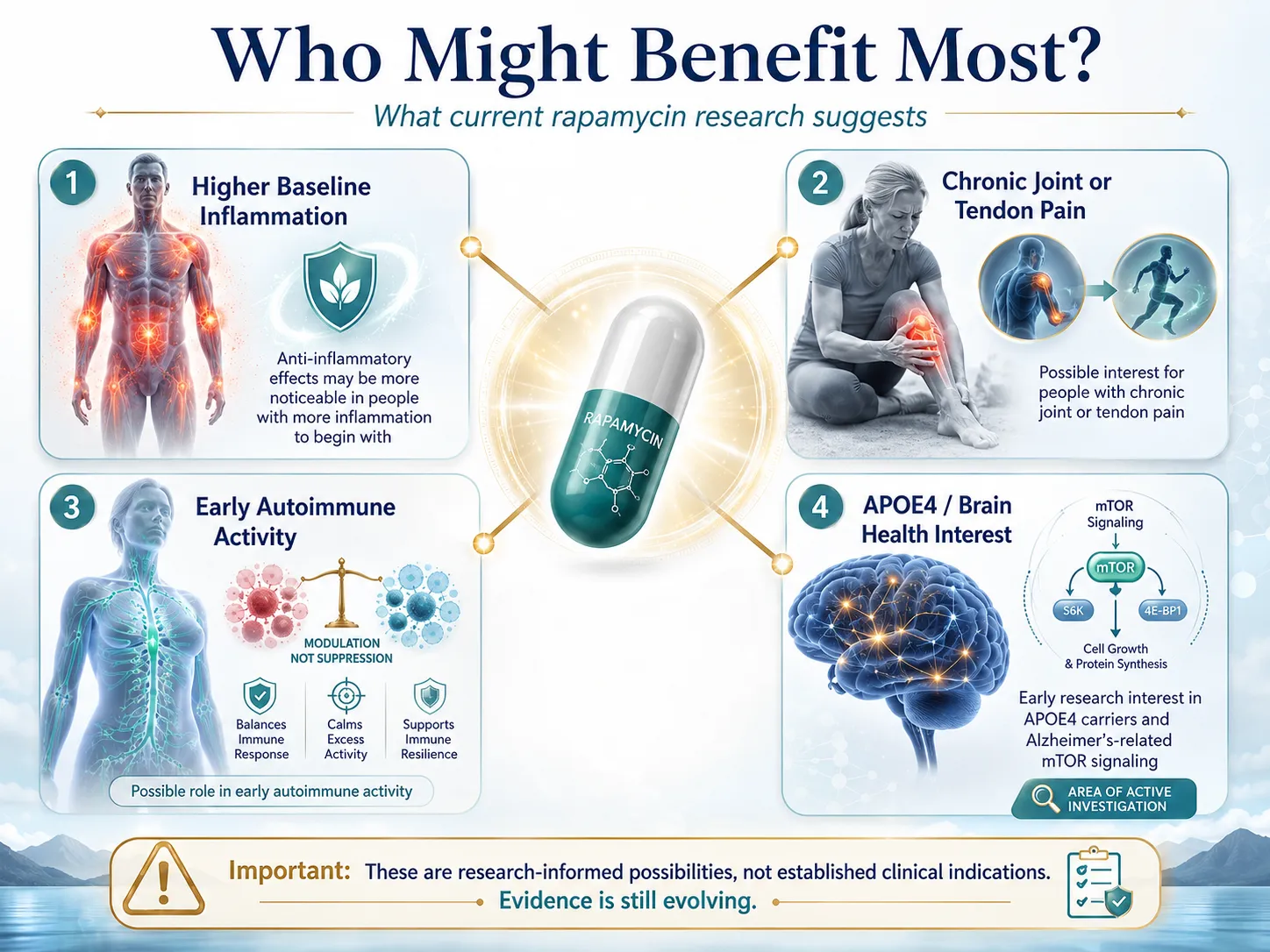
From what the research suggests, people with higher baseline inflammation — chronic joint pain, tendon issues, early autoimmune activity — seem to notice the clearest benefit, since rapamycin's anti-inflammatory effect tends to be strongest where there's more inflammation to begin with. There's also early interest in people who carry the APOE4 gene variant, since overactive mTOR signaling shows up as a feature of Alzheimer's biology, though this is still very much a research question rather than a confirmed use.
My Honest Takeaway
After going through this, my view is that rapamycin has the strongest, most reproducible animal data of any longevity compound available, and the human trials so far have been encouraging rather than a letdown. That's a genuinely exciting position for a single compound to be in.
But it's clearly not a finished story. The mTORC1/mTORC2 trade-off is real, Stanfield's exercise findings are real, and there's still no validated biomarker to confirm it's actually working the way a blood test confirms a cholesterol drug is working. It's a prescription medication, and I think anyone seriously considering it should be doing so alongside a doctor who can track bloodwork — not as a self-directed decision based on internet enthusiasm.

FAQs
Is rapamycin safe for someone in their 20s or 30s?
Most researchers, including Kaeberlein and Stanfield, recommend against it during the growth years (generally under 40), since it's anti-proliferative and could interfere with normal development.
Can rapamycin hold back muscle growth?
Yes, it can. Stanfield's trial found it blunted muscle-power gains from resistance training in older adults. Some people space their dose 24–48 hours from workouts, though this hasn't been formally studied.
Does it raise diabetes risk?
At the high, daily doses used for organ transplants, it can affect glucose tolerance. At the low, weekly doses studied for longevity, this effect has been much smaller, though slight increases in HbA1c have been reported.
What dose do studies usually use?
There's no officially approved longevity dose. Most research has used 5–10mg once weekly, though this varies by study and by person.
How would someone know if it's working?
There's no validated aging biomarker yet. Researchers currently rely on functional signs — less joint pain, better grip strength, improved inflammatory markers like CRP — tracked over months.
What's next in rapamycin research?
Larger, longer human trials, plus results from an ongoing lifespan study in pet dogs, are expected to clarify dosing and who benefits most.
























Sign in to leave a comment.