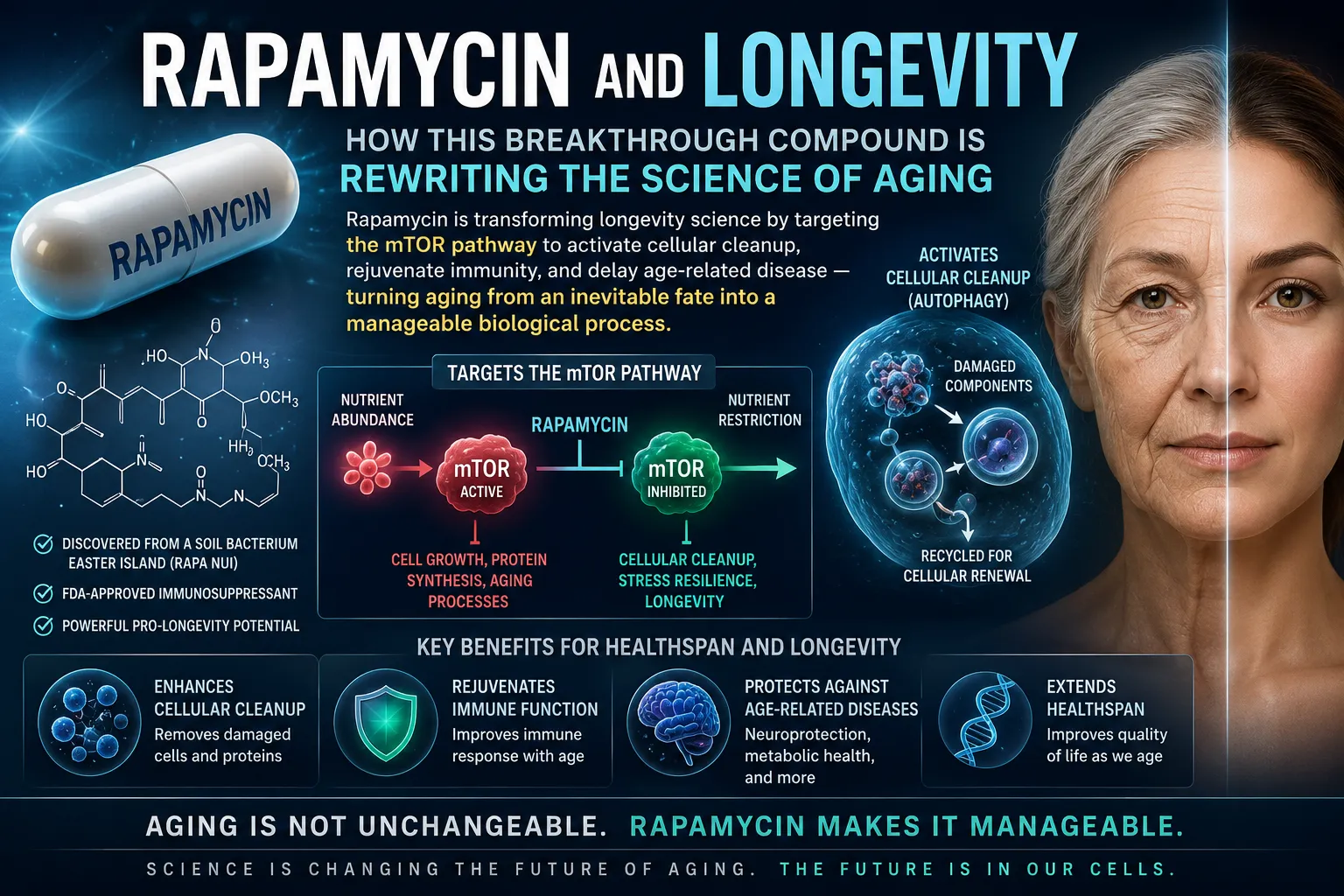

What if the most important medical discovery of our lifetime wasn't a new cancer drug, a gene therapy, or a surgical innovation — but a molecule found in the soil of a tiny island in the middle of the Pacific Ocean? What if that molecule had been sitting in scientific plain sight for decades, quietly waiting for longevity research to catch up with its potential?
That molecule is Rapamycin. And right now, in laboratories and clinical trial centers around the world, it is at the center of the most serious, rigorous, and genuinely exciting conversation in modern medicine: can we change the biology of aging itself?
Rapamycin works by targeting a protein complex inside your cells called mTOR — mechanistic Target of Rapamycin — which acts as your cell's master controller of growth, metabolism, and stress response. When Rapamycin dials down mTOR activity, cells shift from a state of constant growth into a mode of careful repair and maintenance. That shift, as it turns out, touches almost every major mechanism we associate with biological aging. The implications are profound, the evidence is mounting, and the conversation is no longer happening on the fringes of science. It is happening at Harvard, at the University of Washington, and in peer-reviewed journals around the world.
First: What Exactly Is Rapamycin?
Rapamycin — also known by its generic pharmaceutical name sirolimus — was discovered in 1972 in a soil sample collected from Easter Island, locally known as Rapa Nui. The name Rapamycin itself is a direct tribute to that origin. It was initially investigated as an antifungal compound, then pivoted into transplant medicine when researchers discovered its powerful ability to suppress immune rejection in organ transplant patients — making it an immunosuppressant, a drug that reduces immune system activity to prevent the body from attacking a new organ.
For decades, that was Rapamycin's story: a useful transplant drug with a well-understood mechanism. Then the longevity researchers got involved.
When the ITP — the Interventions Testing Program, a rigorous multi-site NIH-funded research program specifically designed to test compounds for their ability to extend healthy lifespan — ran Rapamycin through its paces in genetically diverse mice, the results stopped the scientific community in its tracks. Even when treatment began late in life, equivalent to a human starting in their 60s, mice given Rapamycin lived more than 25% longer than controls. The result was reproducible across multiple independent laboratories. In the world of longevity science, that is as strong a signal as it gets.
The Cellular Cleanup Revolution: Autophagy and the Power of Self-Repair
To understand why Rapamycin is so significant, you need to understand autophagy — a word derived from the Greek for "self-eating" that describes one of the most important biological processes your body runs. Autophagy is your cells' internal recycling and quality-control system. When it is working properly, it continuously identifies damaged proteins, dysfunctional mitochondria (the energy-producing structures inside cells), and other cellular waste — and breaks them down to be repurposed as fuel or building blocks for new, healthy cellular components.
Think of it as a highly sophisticated internal sanitation department. When the sanitation department is functioning well, the city runs cleanly and efficiently. When it falls behind, waste accumulates, infrastructure degrades, and problems compound.
That is precisely what happens with aging. As we get older, autophagic activity declines. Cellular debris accumulates faster than it can be cleared. Damaged proteins aggregate. Dysfunctional mitochondria multiply. This accumulation is one of the primary drivers of the chronic inflammation, tissue dysfunction, and organ decline that we experience as biological aging — and that eventually manifests as the diseases most commonly associated with growing older.
Rapamycin, by inhibiting mTOR, tells cells to stop prioritizing growth and start prioritizing cleanup. Autophagic activity increases meaningfully. The sanitation department gets back to full capacity. And the downstream effects of that — cleaner cells, more functional tissues, reduced inflammatory burden — are measurable, reproducible, and genuinely significant. This is not theoretical biology. This is one of the most well-documented mechanisms in aging research.
The Immune System Surprise: Rejuvenation Where You'd Least Expect It
Here is the part of the Rapamycin story that tends to genuinely surprise people — including, originally, the scientists themselves.
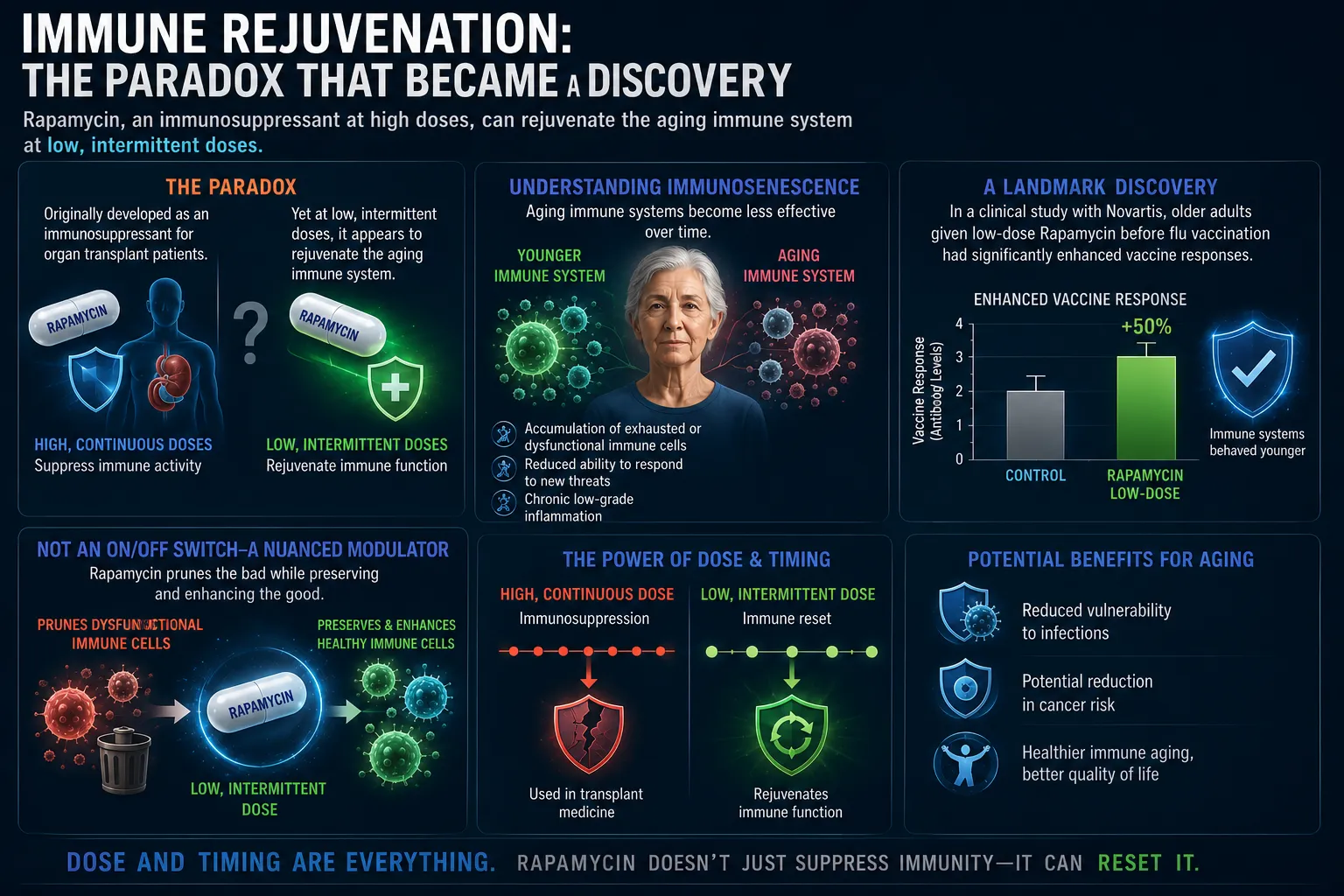
Given that Rapamycin was developed as an immunosuppressant, the intuitive assumption would be that using it in older adults — whose immune systems are already weakened by age — would be counterproductive at best and dangerous at worst. Less immune activity in an already-compromised aging body sounds like a straightforward recipe for more infections and worse health outcomes.
The research tells a more nuanced and far more optimistic story.
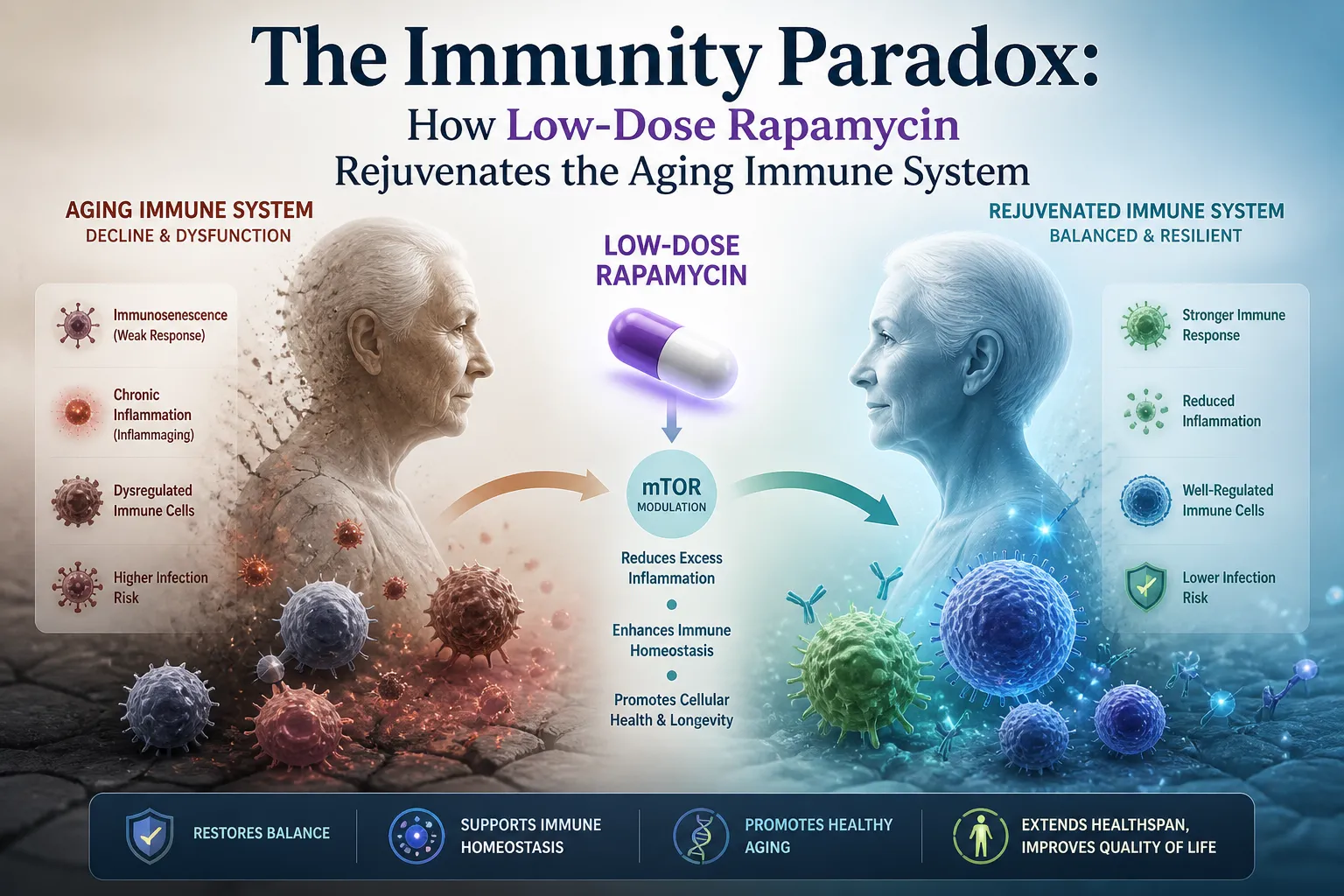
The aging immune system suffers from a condition called immunosenescence — a gradual deterioration of immune function that leaves older adults increasingly vulnerable to infection, less responsive to vaccines, and more prone to the chronic low-grade inflammation known as inflammaging. A major part of what drives immunosenescence is the accumulation of exhausted immune cells — cells that are still technically present in the body but have lost their functional capacity, crowding out the younger, more capable immune cells the body needs.
At low, intermittent doses, Rapamycin appears to help clear out these exhausted cells and restore a more youthful immune balance. In a landmark clinical trial conducted with pharmaceutical company Novartis, older adults who received low-dose Rapamycin prior to their annual influenza vaccination showed significantly enhanced immune responses compared to those who did not. Their immune systems, by measurable biological criteria, were performing more like younger immune systems.
This finding reframes Rapamycin entirely. It is not simply an immune suppressor. At the right dose and schedule, it is an immune modulator — capable of tuning the system toward better performance rather than simply turning it down. The same drug, used differently, produces a fundamentally different and deeply beneficial effect.
Epigenetics and the Information Theory of Aging
One of the richest intellectual frameworks for understanding Rapamycin's potential comes from the Information Theory of Aging, developed by Harvard researcher David Sinclair and colleagues. The theory offers a compelling reinterpretation of what aging actually is at its biological root.
The conventional view of aging focuses on DNA damage — the gradual accumulation of mutations and errors in the genetic code. Sinclair's theory proposes something different: that the primary driver of aging is not damage to the DNA sequence itself, but the progressive corruption of the epigenome — the biological software layer that controls which genes are switched on or off in each cell. Your epigenetic information is what makes a liver cell a liver cell and a neuron a neuron, despite every cell in your body carrying the same underlying DNA.
Over time, chronic stressors — oxidative damage, metabolic strain, inflammation — corrupt this epigenetic program. Cells begin misreading their own instructions. Gene expression becomes dysregulated. Tissues lose their functional coherence and identity. The underlying genetic code may be largely intact, but the software that reads it has become increasingly garbled.
Rapamycin, by reducing the metabolic burden on cells and activating repair-oriented signaling pathways, may help preserve epigenetic fidelity over time. Cells under less metabolic stress make fewer epigenetic errors. Fewer errors means better gene expression. Better gene expression means tissues that remain more functionally coherent, more capable, and more resilient as the years accumulate.
Metabolic Flexibility: Staying Adaptable as You Age
Beyond its effects on cellular cleanup, immunity, and epigenetic stability, Rapamycin also meaningfully influences metabolic flexibility — the body's capacity to shift smoothly and efficiently between different energy sources depending on availability and demand. In a young, metabolically healthy body, switching between burning glucose (sugar) and burning fat is seamless and automatic. With age, this flexibility typically erodes. Cells become less responsive to insulin, less efficient at fat oxidation, and less capable of adapting dynamically to physical and nutritional stress.
This matters because metabolic inflexibility is closely linked to some of the most prevalent and burdensome conditions of aging — type 2 diabetes, cardiovascular disease, non-alcoholic fatty liver disease, and accelerated muscle loss among them.
Because mTOR is deeply embedded in the cellular machinery that governs nutrient sensing, insulin signaling, and energy metabolism, modulating it with Rapamycin produces beneficial downstream effects on all of these systems. Improved insulin sensitivity, enhanced fatty acid metabolism, and more responsive energy regulation have all been observed in preclinical studies — and ongoing human trials at the University of Washington's Institute for Research on Aging are building the clinical evidence to support these findings in people.
The Future: Personalized Longevity Medicine
The scientific conversation around Rapamycin has evolved considerably. The question is no longer whether this compound has meaningful anti-aging biology — the evidence for that is now robust. The question is how to deploy it intelligently, safely, and individually.
The future of Rapamycin in longevity medicine almost certainly looks like personalized geroscience — the practice of tailoring longevity interventions to the specific biological profile of each individual. Central to this approach are epigenetic clocks: sophisticated biological aging tests that use patterns of DNA methylation (chemical tags on DNA) to estimate how old a person's cells actually are, independent of their chronological age. Tools like the Horvath Clock and GrimAge can identify whether your biological age is running ahead of or behind your birth year — and by how much.
Armed with that information, physicians can design Rapamycin protocols calibrated to where a patient actually sits on the aging curve, rather than applying a generic protocol uniformly across very different individuals.
The dosing strategy generating the most scientific excitement is pulsatile dosing — taking Rapamycin intermittently, typically once per week, rather than on a continuous daily schedule. This approach appears to preserve the core benefits of mTOR inhibition — enhanced autophagy, immune rejuvenation, metabolic support — while substantially reducing the side effect risks associated with the continuous high-dose regimens used in transplant medicine.
Active human clinical trials, including the PEARL trial (Participatory Evaluation of Aging with Rapamycin for Longevity) and studies led by researcher Matt Kaeberlein at the University of Washington, are building the evidence base that will eventually allow this personalized approach to become standard practice.
An Honest Word About Safety and Medical Supervision
The positive momentum around Rapamycin deserves to be matched with equal honesty about what it is and what it requires.
Rapamycin is a prescription medication — not a supplement, not a wellness product, not something to be approached casually. At the high continuous doses used in transplant settings, it carries meaningful risks: immune suppression, impaired wound healing, elevated blood lipids, mouth sores, and potential metabolic disruption. These are real side effects that reflect the potency of the compound.
At the lower, intermittent doses being explored for longevity, the side effect profile is considerably more manageable — but it is not zero, and it requires active monitoring. Regular bloodwork to track lipid levels, blood glucose, and immune markers is considered essential by the physicians and researchers working in this space.
There are currently no official regulatory guidelines for using Rapamycin as a longevity intervention. The evidence base, while genuinely promising, is still being assembled through clinical trials and observational data rather than large-scale approved protocols. Anyone exploring this path should do so through a physician with genuine expertise in longevity medicine — someone who can monitor your response, adjust your protocol, and catch any problems early.
Conclusion: A New Chapter in What Medicine Can Do
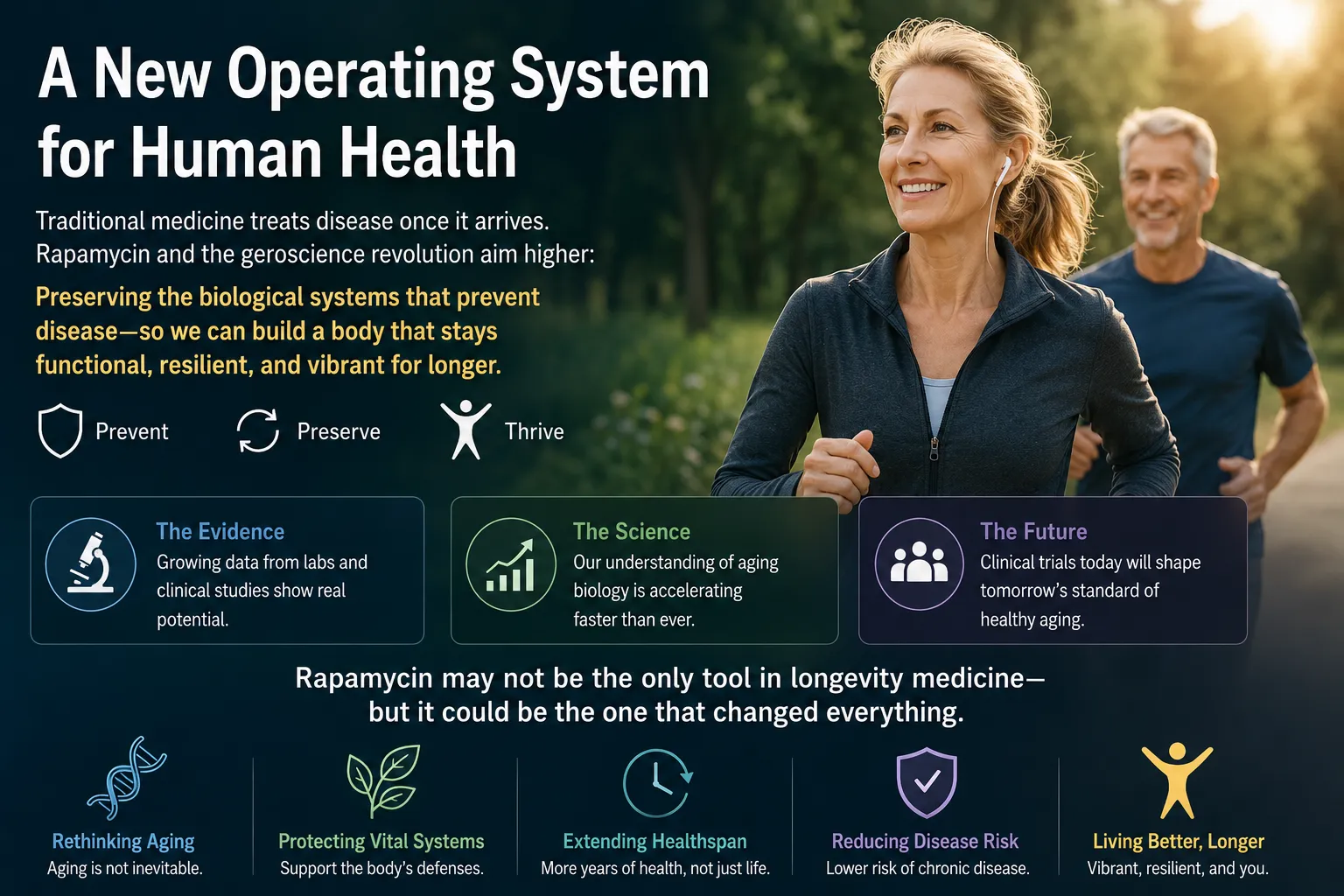
For most of its history, medicine has excelled at treating what goes wrong. Rapamycin represents something different — a genuine opportunity to engage with the biology of aging before things go wrong, to extend the window of cellular health, immune resilience, and metabolic vitality that makes life not just longer but better.
The evidence is stronger than most people realize. The science is moving faster than most media coverage reflects. And the clinical trials now underway will, in the coming years, transform what is currently an exciting frontier into what may become a cornerstone of preventive medicine.
Rapamycin is not magic. It is not a guarantee. But it is, right now, one of the most compelling and scientifically grounded tools in the emerging science of human longevity. And that is worth knowing about.

Frequently Asked Questions About Rapamycin
What is Rapamycin and how was it discovered?
Rapamycin — generic name sirolimus — is a naturally occurring compound first isolated in 1972 from a soil sample collected on Easter Island, known locally as Rapa Nui. Originally studied as an antifungal agent, it was later developed as an immunosuppressant for transplant medicine. Its remarkable longevity properties were discovered when researchers began testing it systematically in aging studies, finding consistent and significant lifespan extension in animal models.
How does Rapamycin extend lifespan in animal studies?
Primarily through two mechanisms. First, by inhibiting mTOR and activating autophagy — the cellular cleanup process — it reduces the accumulation of damaged cellular material that drives age-related decline. Second, by modulating immune function, metabolic signaling, and epigenetic stability, it addresses multiple independent drivers of aging simultaneously. In ITP studies, lifespan extension in mice exceeded 25% even when treatment started late in life.
Is Rapamycin safe for longevity use?
At the low, intermittent doses being explored for longevity — typically once weekly rather than daily — the side effect profile is considerably more manageable than at transplant-level doses. Commonly reported effects include mouth sores, mild lipid changes, and occasional fatigue. However, it remains a potent prescription drug that requires physician oversight, regular bloodwork monitoring, and individualized dosing. It should never be self-administered without medical supervision.
What is pulsatile dosing and why does it matter?
Pulsatile dosing refers to taking Rapamycin intermittently — for example, once per week — rather than every day. This approach is central to longevity-focused use because it appears to preserve the beneficial effects on autophagy and immune function while substantially reducing the risks associated with continuous dosing, which include immune suppression and metabolic disruption. Timing and frequency are everything with this compound.
What dose of Rapamycin is used for longevity?
No officially approved longevity dose currently exists. Physicians in the longevity medicine space typically discuss weekly doses in the range of 2 mg to 10 mg, calibrated to the individual's health status, biomarkers, and drug response. The correct dose varies meaningfully between individuals, which is one of many reasons medical supervision is non-negotiable.
Can Rapamycin reverse aging or only slow it?
The current weight of evidence suggests Rapamycin primarily slows the rate of biological aging rather than reversing damage that has already accumulated. That said, research on immune rejuvenation and autophagy activation does suggest genuine functional restoration in certain tissues — not merely a slowing of decline. Whether meaningful biological age reversal is achievable remains an open and actively investigated question, and one of the most exciting frontiers in the field.
Why does Rapamycin improve immune function if it is an immunosuppressant?
Because dose and timing completely transform the effect. At high continuous doses, Rapamycin suppresses immune activity — which is precisely what is needed to prevent organ rejection in transplant patients. At low intermittent doses, it does something quite different: it helps clear out the exhausted, dysfunctional immune cells that accumulate with age and restores a more youthful immune balance. The Novartis clinical trial demonstrating improved vaccine responses in older adults on low-dose Rapamycin is the clearest human evidence of this effect to date.
What are epigenetic clocks and how do they relate to Rapamycin?
Epigenetic clocks are biological aging tests — tools like the Horvath Clock and GrimAge — that use patterns of DNA methylation to estimate how old a person's cells are biologically, independent of their chronological age. In the context of personalized longevity medicine, they allow physicians to assess where an individual sits on the aging curve and to calibrate Rapamycin protocols accordingly. They also serve as outcome measures — a way to test whether a longevity intervention is actually slowing biological aging in a measurable way.
What is the Dog Aging Project and what has it found?
The Dog Aging Project is a large-scale, long-term scientific study led by Matt Kaeberlein and colleagues at the University of Washington, examining what Rapamycin does to the aging process in companion dogs. Dogs are an excellent aging model because they share our environment, develop many of the same age-related diseases, and have a lifespan compressed enough to yield meaningful longevity data within a reasonable research window. Early results have been encouraging and are directly informing the design of human longevity trials.
What is the PEARL trial?
PEARL stands for Participatory Evaluation of Aging with Rapamycin for Longevity. It is one of the first dedicated human clinical trials designed specifically to evaluate Rapamycin's effects on biological aging outcomes in healthy older adults. Along with parallel studies at the University of Washington and other institutions, it represents the leading edge of the effort to build a rigorous, evidence-based clinical framework for Rapamycin use in longevity medicine.


























Sign in to leave a comment.