
Outdoor Living in a Changeable Climate
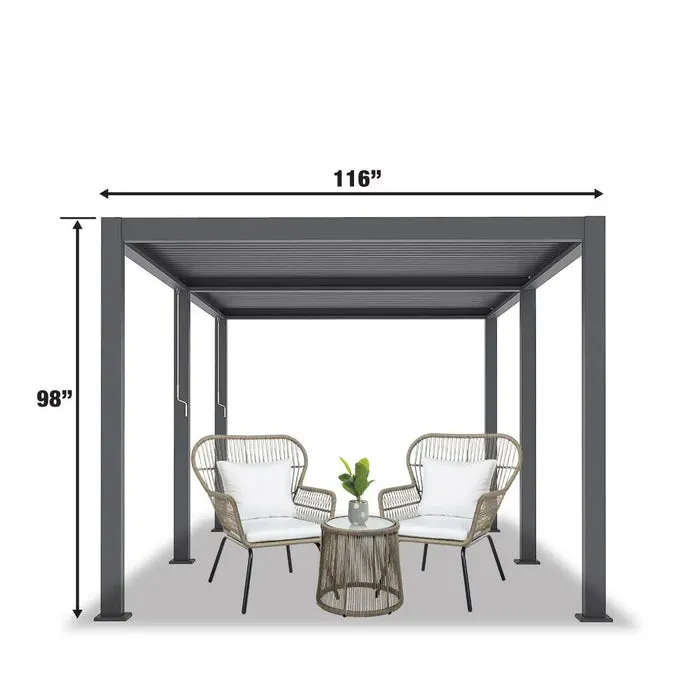
The maritime climate of the Netherlands brings sun and showers in quick succession, which limits how a fixed canopy can be used. A structure that adapts to the weather is more practical. An aluminum louvered pergola offers this control through a roof of adjustable blades.
How Adjustable Louvres Work
The roof is built from parallel slats, or louvres, that pivot on their axis. Opened, they admit sunlight and air; angled, they cast shade while keeping ventilation; closed, they form a near-continuous surface that sheds rain. A manual mechanism rotates the blades together, so a single adjustment changes the whole roof. This lets one structure move between open shade and weather cover as conditions change.
Why Aluminum
Aluminum suits an outdoor roof in a damp climate. It forms a natural oxide layer that resists corrosion, so it does not rust, and it is light enough to keep the frame and moving parts manageable. Many louvre systems also channel rainwater along the closed blades into the frame and down through the posts, keeping the area beneath dry.
Care and Considerations
The moving blades and their pivots benefit from occasional cleaning and a check that they rotate freely. In regions that see snowfall, the louvres should be opened or cleared so that weight does not accumulate on a closed roof. Clearing leaves and grit from the blade channels also keeps rainwater draining freely.
Conclusion
A louvered pergola combines shade, ventilation, and rain cover in one adjustable structure. With aluminum construction and simple maintenance of the moving parts, it adapts an outdoor space to a changeable climate.






















Sign in to leave a comment.