
Introduction
Modern broadcasters need more than a system that simply plays video files. As audiences move between connected TVs, mobile devices, websites, and streaming applications, media companies need infrastructure that can manage content efficiently while supporting reliable channel delivery. This has increased interest in an amagi alternative for businesses looking for flexible ways to organize and operate their streaming workflows.
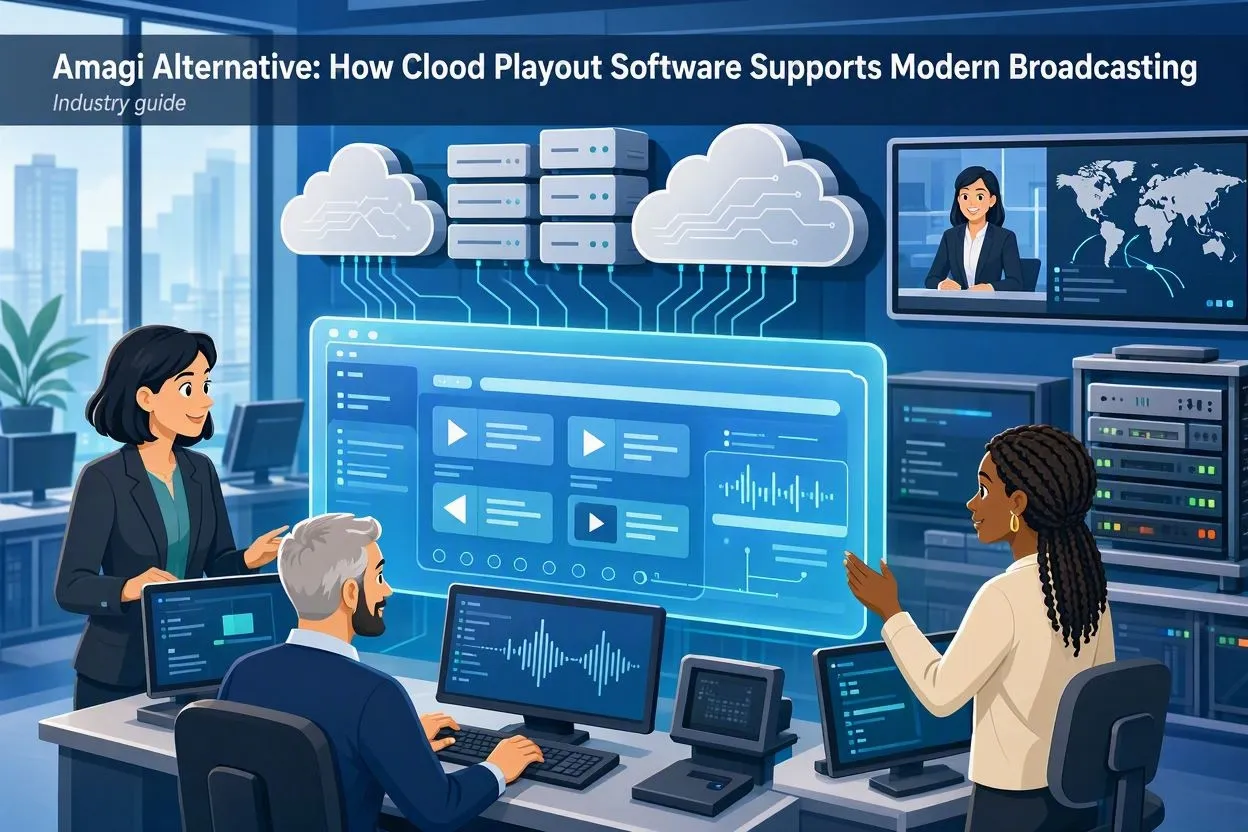
At the center of this discussion is cloud playout software, which can help broadcasters manage scheduled programming without depending entirely on traditional broadcast infrastructure. By moving important channel operations into a cloud environment, media companies can build workflows that are easier to scale, manage, and adapt as their content strategy changes.
Understanding the Need for an Amagi Alternative
Amagi has become associated with cloud-based broadcasting and FAST channel workflows, but different businesses have different technical and commercial requirements. A smaller broadcaster may need a straightforward solution for channel automation, while a larger media company may require extensive scheduling, multiple channel operations, advertising workflows, and distribution capabilities.
Choosing an amagi alternative therefore should not be about finding a direct copy of another platform. The better approach is to identify the operational requirements of the business and then evaluate whether another broadcasting platform can address those needs efficiently.
Evaluating the Broadcasting Workflow
A broadcasting workflow typically begins with content preparation. Video assets need to be uploaded, organized, checked, and prepared for scheduling. The system then needs to determine when each program should play and how different pieces of content should transition from one to another.
This is where automation becomes important. Instead of requiring an operator to control every part of the channel manually, automated workflows can handle scheduled playback, playlists, transitions, and recurring programming.
Centralized Content Management
A centralized environment can make it easier for teams to manage large libraries of video content. Operators can organize movies, shows, advertisements, trailers, promos, and other assets while maintaining a consistent programming structure.
This becomes especially valuable when a broadcaster manages several channels. Rather than maintaining isolated workflows, the organization can create a more coordinated approach to programming and distribution.
The Role of Cloud Playout Software
Cloud playout software provides the operational layer that turns a content library into a scheduled streaming channel. It can support playlist management, channel scheduling, automated playback, and other functions needed to maintain continuous programming.
Cloud-based systems can also provide flexibility when channel requirements change. A broadcaster launching a new channel may not want to invest heavily in dedicated hardware before understanding audience demand. A scalable cloud workflow can provide a more adaptable foundation for testing new programming concepts.
Supporting FAST Channel Operations
FAST channels have created new opportunities for broadcasters to repurpose existing content into linear streaming experiences. Instead of waiting for viewers to select individual programs, a FAST channel presents scheduled programming that resembles traditional television while being distributed through internet-connected platforms.
A reliable playout environment is essential for this model. Programs must follow the schedule accurately, advertising opportunities need to be managed, and the channel must remain available throughout its operating window.
Automation for Consistent Delivery
Automation can reduce repetitive operational work while improving programming consistency. A broadcaster can prepare schedules in advance and allow the platform to execute them according to predefined rules.
This approach can be useful for both established networks and emerging media companies that want to operate channels without maintaining a large technical team.
Distribution and Audience Growth
Building a channel is only part of the process. Content also needs to reach viewers through appropriate distribution channels. Modern broadcasters may deliver programming to connected television applications, streaming services, websites, mobile applications, and other digital endpoints.
An effective broadcasting platform should therefore fit into the wider distribution strategy. The playout workflow should produce reliable streams that can move efficiently toward the services where the audience actually watches.
Preparing for Multiple Channels
A successful streaming business may eventually operate several channels with different audiences. One channel might focus on entertainment, another on sports, and another on regional programming.
This makes scalability an important consideration when selecting an amagi alternative. The infrastructure should support additional channels without forcing the organization to completely redesign its workflow each time it expands.
Making the Right Platform Decision
Choosing between different cloud broadcasting platforms requires attention to practical business requirements. Pricing, automation capabilities, scheduling, integrations, content management, monitoring, distribution, and scalability should all be considered together.
Looking Beyond Features
A long list of features does not necessarily indicate that a platform is the right choice. Broadcasters should examine how easily the technology fits into their existing production and distribution environment.
Building for Long-Term Growth
The strongest solution is one that supports today's requirements while leaving room for tomorrow's expansion. As streaming audiences continue to grow, broadcasters need infrastructure that can adapt to new channels, content formats, advertising models, and viewing platforms.
Conclusion
An amagi alternative can be valuable for broadcasters that want to explore different approaches to cloud-based channel management. Rather than focusing only on brand comparisons, businesses should evaluate the complete broadcasting workflow, from content preparation and scheduling to automation and distribution.
With the right cloud playout software, media companies can create reliable linear streaming channels, support FAST initiatives, automate repetitive operations, and prepare their infrastructure for future growth. The goal is not simply to replace one platform with another. It is to build a broadcasting environment that matches the organization's content strategy, technical needs, and long-term audience ambitions.

























Sign in to leave a comment.