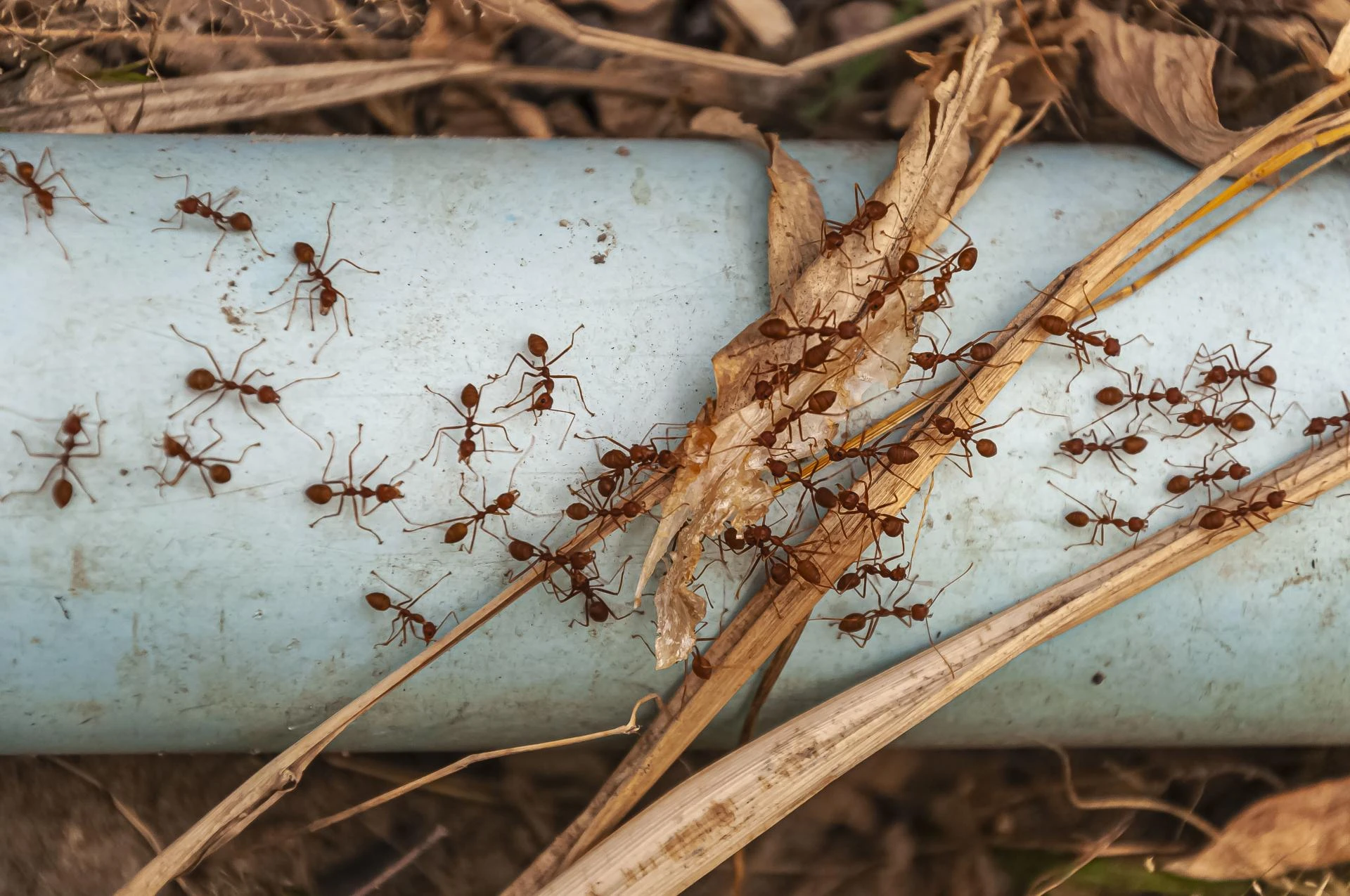

Many homeowners in Lakewood Ranch are surprised to discover ant infestations seemingly overnight. One day, everything appears normal; the next, ants are visible in kitchens, bathrooms, or near windows.
In reality, most ant problems develop slowly and out of sight. This article explains how ant infestations begin, why they often go unnoticed, and which early warning signs indicate a hidden colony.
How ant infestations actually begin
Ant infestations typically start with scout ants. These ants explore indoor spaces searching for food and moisture. When a suitable resource is found, the scout leaves a chemical trail that guides other ants to the location.
Over time, this repeated foraging leads to the establishment of a nearby nest.
Why infestations often stay hidden at first
Ant colonies prefer protected environments. Early nesting sites are commonly found:
- Inside wall cavities
- Beneath kitchen or bathroom cabinets
- Under flooring
- Around plumbing penetrations
Because these areas are concealed, colonies can grow for weeks or months before ants become visible.
Why ants appear in only one area initially
Early infestations are often localized. Kitchens, bathrooms, and laundry rooms are common starting points because they provide:
- Moisture
- Warmth
- Easy access to food
Homeowners may assume the issue is minor when ants appear in only one room, delaying action.
The significance of recurring ant sightings
Seeing ants repeatedly in the same location is rarely random. Patterns such as:
- Ants appearing at night
- Trails that vanish and return
- Activity increasing after rain
often indicate organized foraging behavior linked to a nearby colony.
Flying ants inside the home
Flying ants are a clear sign of colony maturity. Their presence typically means:
- Reproductive activity is underway
- The nest is stable and established
- Expansion is occurring
In Florida homes, flying ants are most commonly observed during warm, humid conditions.
Why DIY treatments often fall short
Many homeowners rely on sprays or bait stations to control ant problems. While these methods may reduce visible ants, they often fail to eliminate the nest.
Without addressing:
- Entry points
- Moisture sources
- Nest location
the infestation frequently returns.
How weather influences indoor ant activity
Weather plays a major role in ant movement. Heavy rain can flood outdoor nests, while extreme heat can dry them out. In both cases, ants seek refuge indoors.
This is why infestations often appear suddenly after storms or temperature spikes.
Long-term consequences of ignoring early signs
When left untreated, ant colonies continue to expand. Over time, this can lead to:
- Persistent seasonal infestations
- Increased indoor nesting
- Greater difficulty in elimination
Early detection significantly reduces these risks.
Prevention through awareness
Preventing ant infestations begins with observation. Homeowners should regularly monitor:
- Moisture-prone areas
- Entry points around doors and windows
- Changes in seasonal activity
Consistent awareness is one of the most effective prevention strategies.
Final thoughts
Ant problems in Lakewood Ranch homes rarely start as obvious infestations. They develop quietly, often behind walls or beneath floors, until colony growth forces ants into living spaces.
Recognizing early warning signs and understanding how infestations begin allows homeowners to take action before ant problems become persistent and difficult to control.






























Sign in to leave a comment.