

Introduction
Concrete is one of the most widely used construction materials in the world, yet it is not immune to deterioration. Among the most common and damaging processes affecting reinforced concrete structures is carbonation. To combat this phenomenon, protective coatings such as anti carbonation paint have been developed. These coatings are now extensively used in infrastructure, residential, industrial, and commercial projects to enhance the durability and service life of concrete.
This article explains what is anti carbonation paint, how it works, its purpose, specifications, application method, Indian standards, and its relevance in modern construction practices.
What Is Carbonation in Concrete?
Carbonation is a natural chemical reaction between carbon dioxide (CO₂) in the atmosphere and calcium hydroxide present in hardened concrete. When CO₂ penetrates the concrete pores, it reacts with calcium hydroxide to form calcium carbonate, reducing the alkalinity (pH) of concrete.
Once the pH drops below a critical level, the passive protective layer around reinforcing steel breaks down, leading to corrosion. This corrosion causes cracking, spalling, and eventual structural weakening.
What Is Anti Carbonation Paint?
Anti carbonation paint is a specialized protective coating designed to prevent or significantly slow down the ingress of carbon dioxide into concrete surfaces. By forming a dense, elastic, and breathable film, it acts as a barrier against CO₂ while still allowing water vapour to escape.
In simple terms, what is anti carbonation paint can be defined as:
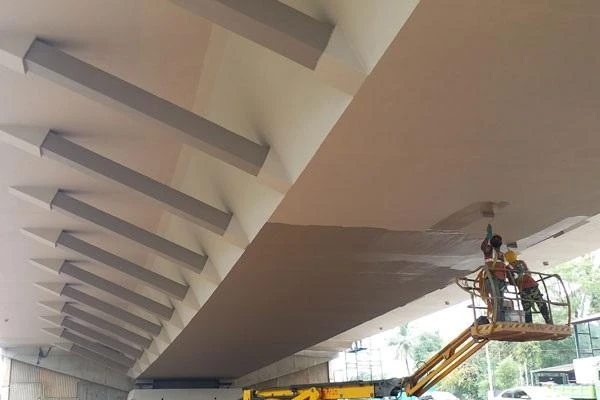
This type of coating is widely used on exposed reinforced concrete structures such as bridges, flyovers, tunnels, buildings, chimneys, and parking structures.
Anti Carbonation Paint Purpose
The primary anti carbonation paint purpose is to extend the life of reinforced concrete by maintaining the alkalinity of concrete around steel reinforcement.
Key objectives include:
- Preventing carbon dioxide penetration
- Reducing reinforcement corrosion
- Enhancing durability of concrete structures
- Minimizing repair and maintenance costs
- Improving surface aesthetics and weather resistance
By fulfilling these objectives, anti carbonation coatings play a critical role in sustainable construction.
Anti Carbonation Paint for Concrete Structures
Anti carbonation paint for concrete is suitable for both new and existing structures. It is commonly used on:
- RCC buildings
- Bridges and flyovers
- Metro rail structures
- Industrial plants
- Marine and coastal structures
- Power plants and substations
The coating is especially beneficial in urban and industrial environments where CO₂ levels are high.
Anti Carbonation Paint Specification
A typical anti carbonation paint specification includes the following characteristics:
- High resistance to CO₂ diffusion
- Excellent adhesion to concrete substrates
- Elastic and crack-bridging properties
- UV and weather resistance
- Vapour permeability
- Low water absorption
- Resistance to pollutants and chemicals
These properties ensure long-term performance even under aggressive exposure conditions.
Anti Carbonation Paint Method Statement
A standard anti carbonation paint method statement generally involves the following steps:
- Surface Preparation
- Remove dust, oil, grease, laitance, and loose particles
- Repair cracks, honeycombs, and damaged concrete
- Ensure surface is clean and sound
- Priming
- Apply compatible primer if recommended by the manufacturer
- Allow adequate drying time
- Application of Anti Carbonation Paint
- Apply using brush, roller, or spray
- Typically two coats are applied
- Maintain recommended dry film thickness
- Curing and Inspection
- Allow coating to cure as per technical data sheet
- Inspect for uniform coverage and defects
Anti Carbonation Paint IS Code and Standards
In India, there is no single exclusive anti carbonation paint IS code, but relevant standards and guidelines include:
- IS 456 – Code of Practice for Plain and Reinforced Concrete
- IS 16471 – Protective coatings for concrete
- ISO 12944 – Corrosion protection systems
- EN 1504 – Products and systems for concrete protection and repair
These standards guide selection, application, and performance evaluation of anti carbonation coatings.
Anti Carbonation Paint in India
The use of anti carbonation paint India has increased significantly due to:
- Rapid urbanization
- Aging infrastructure
- Exposure to pollution
- Emphasis on durability-based design
Government bodies, consultants, and infrastructure developers now actively specify anti carbonation coatings in tenders and project specifications.
Anti Carbonation Paint Vendors
Several anti carbonation paint vendors operate in India, supplying products for infrastructure and industrial projects. Vendors typically provide:
- Technical data sheets
- Application guidelines
- Site support
- Performance warranties
Selection of vendors should be based on compliance with standards, project references, and technical performance rather than price alone.
Anti Carbonation Paint Wikipedia-Style Summary
In a Wikipedia-style definition, anti carbonation paint can be described as:
This concise explanation reflects its functional role in concrete durability enhancement.
Advantages of Using Anti Carbonation Paint
- Extends service life of structures
- Protects reinforcement from corrosion
- Reduces lifecycle costs
- Improves surface appearance
- Enhances resistance to environmental exposure
Limitations and Considerations
While highly effective, anti carbonation coatings require:
- Proper surface preparation
- Skilled application
- Periodic inspection and maintenance
Incorrect application can compromise performance.
Conclusion
Anti carbonation paint is a proven and essential solution for protecting reinforced concrete structures against carbonation-induced deterioration. By understanding what is anti carbonation paint, its purpose, specifications, application method, and relevance in India, engineers and asset owners can make informed decisions that significantly enhance structural durability.
With increasing emphasis on sustainable and long-life infrastructure, anti carbonation coatings will continue to play a vital role in modern construction practices.

























Sign in to leave a comment.