
A tooth infection can cause severe pain, swelling, and discomfort if bacteria enter the inner layers of the tooth or gums. Without timely treatment, the infection may spread to nearby tissues and affect overall health. Dentists often prescribe antibiotics for tooth infection to control bacteria and reduce complications before performing further dental treatment.
What Is a Tooth Infection?
A tooth infection, also called a dental abscess, occurs when bacteria infect the tooth pulp, gums, or surrounding tissues. Common causes include untreated cavities, gum disease, cracked teeth, poor oral hygiene, and wisdom tooth problems.
The infection may lead to swelling, pus formation, and intense pain if left untreated.
Common Symptoms of Tooth Infection
Signs of a tooth infection may include:
- Severe or throbbing tooth pain
- Swollen gums or face
- Sensitivity to hot and cold foods
- Pain while chewing
- Bad breath or unpleasant taste
- Fever and fatigue
- Pus discharge near the tooth
Immediate dental care is important if swelling spreads or breathing becomes difficult.
Why Do Tooth Infections Happen?
Several factors increase the risk of infection, including:
- Untreated tooth decay
- Gum disease
- Broken or cracked teeth
- Poor oral hygiene
- Wisdom tooth infections
- Weak immune system
In some cases, dentists may prescribe an antibiotic for tooth and gum infection to reduce bacterial growth and swelling.
When Are Antibiotics Needed?
Dentists usually recommend antibiotics for tooth infection when:
- Swelling spreads to the jaw or face
- Fever develops
- Gum infection becomes severe
- The immune system is weakened
- Immediate dental treatment is not possible
Antibiotics help control infection but may not fully remove the source without dental procedures.
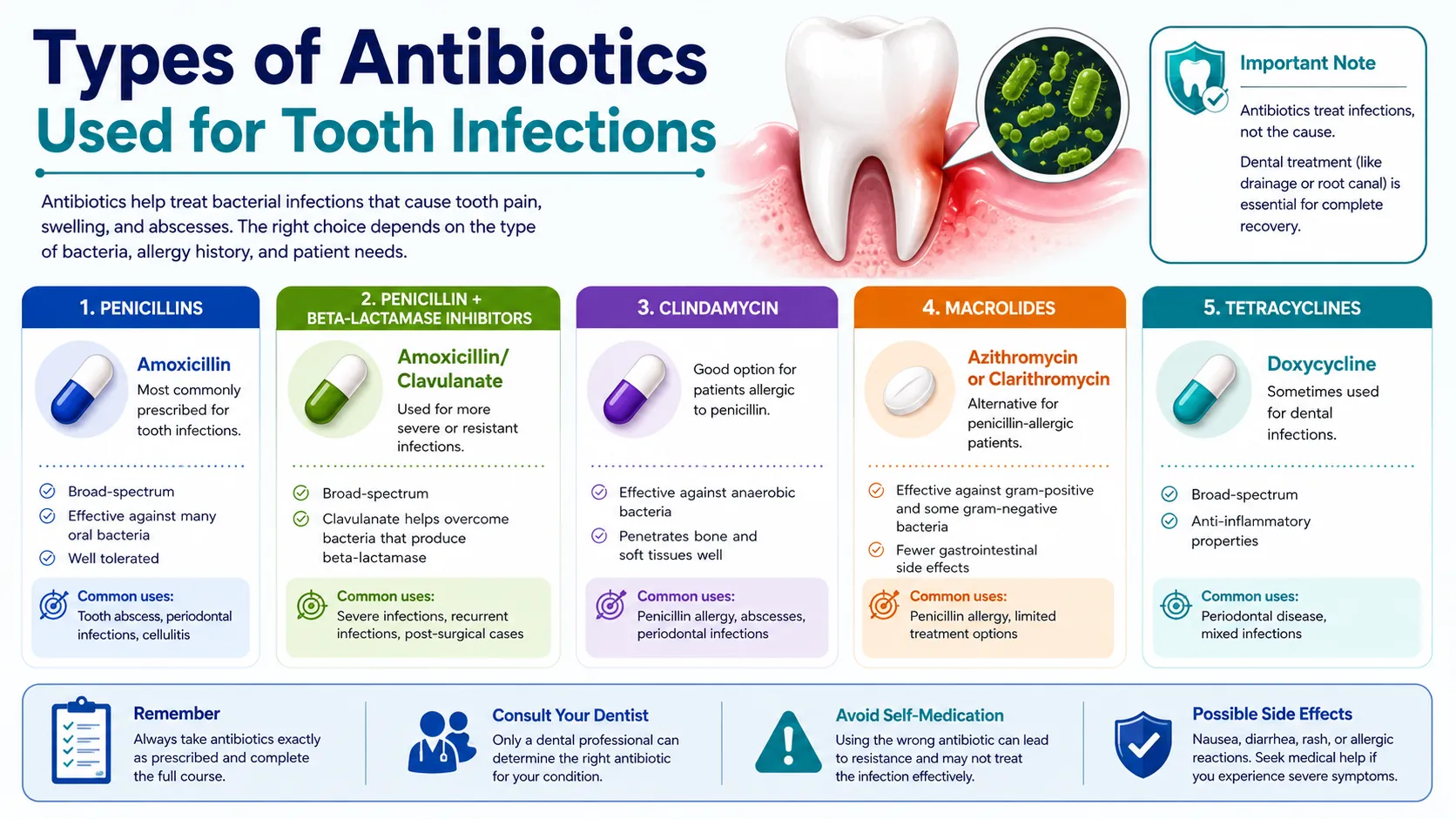
Common Antibiotics Used
Dentists may prescribe:
- Amoxicillin
- Penicillin
- Metronidazole
- Clindamycin
The best antibiotic for tooth infection depends on the patient’s condition, allergies, and infection severity.
How Long Do Antibiotics Take to Work?
Most patients notice improvement within 24 to 48 hours. Swelling and pain usually reduce gradually. However, completing the full course is important to prevent the infection from returning.
Benefits of Antibiotics
Proper use of antibiotics for tooth infection can:
- Reduce bacterial spread
- Relieve swelling and pain
- Support faster recovery
- Prevent serious complications
Possible Side Effects
Some people may experience:
- Nausea
- Diarrhea
- Stomach discomfort
- Mild allergic reactions
Patients should contact a dentist if severe side effects occur.
Home Care Tips
During treatment:
- Brush gently twice daily
- Rinse with warm saltwater
- Eat soft foods
- Drink plenty of water
- Avoid smoking and sugary foods
Home remedies may reduce discomfort but cannot replace professional dental care.
When to Visit a Dentist Immediately
Seek urgent treatment if you experience:
- Severe facial swelling
- Difficulty swallowing or breathing
- Persistent fever
- Severe pain or pus discharge
Conclusion
Tooth infections should never be ignored because they can quickly worsen and affect overall health. While antibiotics for tooth infection help control bacteria and reduce swelling, professional dental treatment is necessary to fully remove the infection and protect long-term oral health.
Read also https://kidznteenz.in/tooth-extraction-for-kids-in-chennai/.


























Sign in to leave a comment.