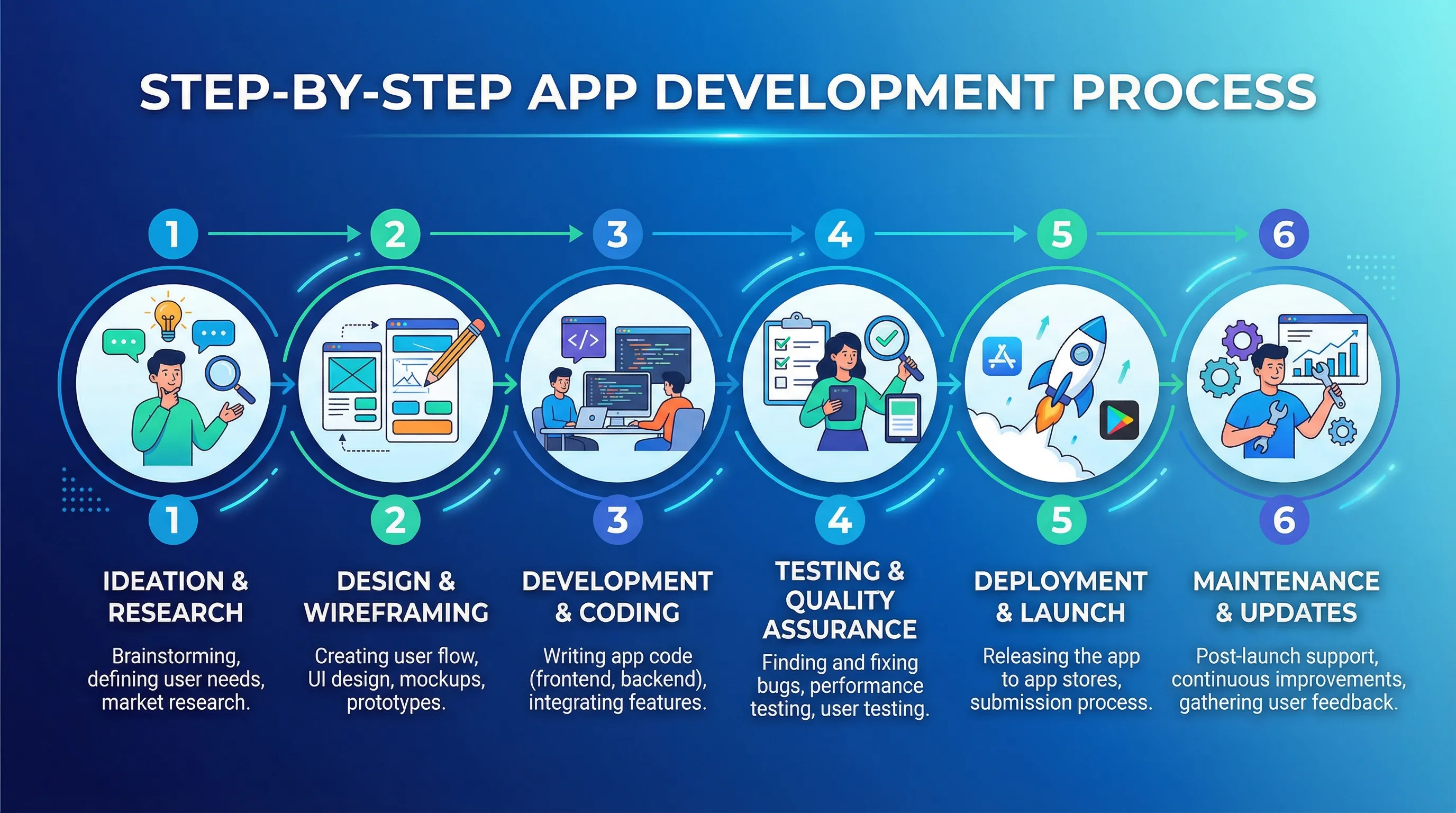

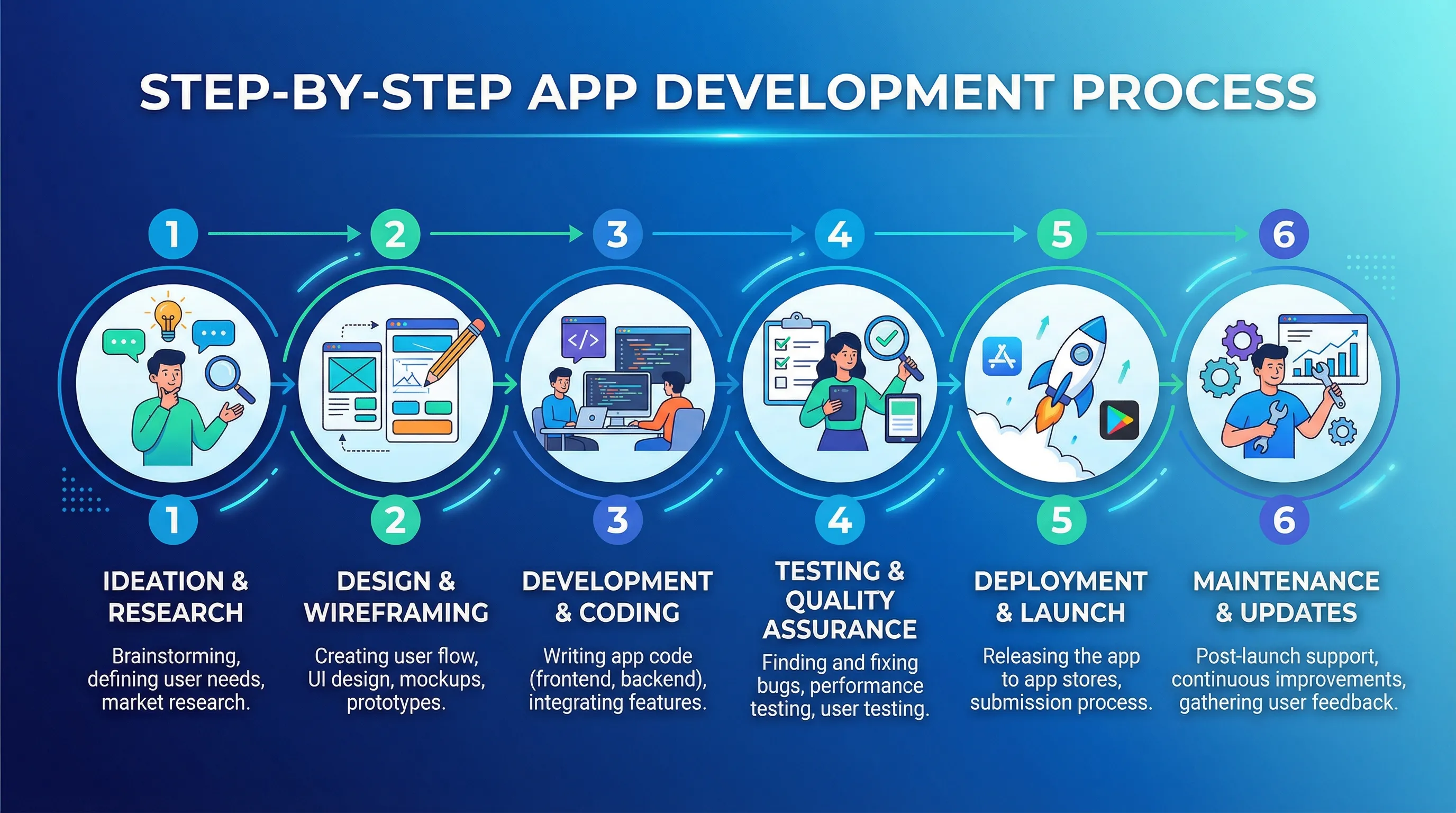
In today’s digital-first world, understanding the App Development Process is essential for businesses looking to build scalable, user-friendly, and high-performing mobile or web applications. Whether you are a startup, SMB, or enterprise, a structured app development process ensures smooth execution, reduced risks, and successful product delivery. From idea validation to deployment and post-launch support, every step plays a crucial role in building a reliable and market-ready application.
Mobile and web applications have become the backbone of modern businesses. Companies rely on apps to connect with customers, automate operations, improve efficiency, and increase revenue. However, many businesses fail to achieve success because they lack a clear understanding of how app development works. A well-defined app development process helps organizations move from concept to launch with clarity, efficiency, and measurable results.
This comprehensive guide explains the app development process step by step, helping you understand each phase and how it contributes to the overall success of your application.
1. Idea and Concept Validation
The first step in the app development process is transforming an idea into a validated concept. Every successful application starts with a strong idea, but not every idea is worth building. Businesses must evaluate whether their idea solves a real problem and has market demand.
During this stage, developers and business stakeholders work together to define the app’s purpose, target audience, and value proposition. The main goal is to ensure that the app addresses a specific need and stands out from competitors.
Key activities in this phase include:
- Identifying the problem the app will solve
- Defining the target audience
- Analyzing market demand
- Evaluating competitors
- Identifying unique selling points (USP)
- Determining business goals
Concept validation helps reduce risks and ensures that the project starts on a strong foundation. Without this step, businesses may invest time and money in building an app that does not meet market needs.
2. Market Research and Competitor Analysis
Once the idea is validated, the next step is conducting detailed market research. This phase helps businesses understand industry trends, customer expectations, and competitor strategies.
Market research provides valuable insights into:
- User behavior and preferences
- Popular app features
- Industry standards
- Pricing strategies
- Market gaps and opportunities
Competitor analysis plays a vital role in this phase. By studying competitor apps, businesses can identify strengths, weaknesses, and opportunities to create a better product.
For example, analyzing user reviews of competitor apps can reveal common issues, which can be avoided in your app. Similarly, studying successful apps helps in understanding design patterns, features, and monetization strategies.
This step ensures that your app is built with a clear market strategy and competitive advantage.
3. Defining App Requirements
After market research, the next step is defining app requirements. This phase involves creating a detailed plan of what the app will do and how it will function.
The requirement gathering process includes:
- Functional requirements (features and functionality)
- Non-functional requirements (performance, security, scalability)
- Platform selection (iOS, Android, web, or cross-platform)
- Technology stack selection
- Budget and timeline planning
At this stage, businesses and developers collaborate to create a clear project roadmap. A well-defined requirement document helps avoid confusion and ensures smooth development.
This step is crucial because unclear requirements often lead to project delays, increased costs, and poor results.
4. UI/UX Design Planning
User Interface (UI) and User Experience (UX) design is one of the most important steps in the app development process. A visually appealing and user-friendly design helps attract and retain users.
The UI/UX design phase focuses on:
- Creating wireframes
- Designing user journeys
- Developing prototypes
- Ensuring easy navigation
- Improving user engagement
Wireframes act as a blueprint for the app, showing how different screens and features will be structured. Prototypes allow stakeholders to visualize the app before development begins.
A good design ensures:
- Smooth user experience
- Easy navigation
- Faster user adoption
- Higher engagement
- Better conversion rates
Apps with poor design often fail, even if they have strong functionality. Therefore, investing in UI/UX design is essential.
5. Choosing the Right Technology Stack
Selecting the right technology stack is a critical step in app development. The technology stack determines how the app will perform, scale, and function.
The technology stack includes:
- Programming languages
- Frameworks
- Databases
- APIs
- Development tools
Businesses can choose between:
Native App Development
- Swift for iOS
- Kotlin for Android
- High performance and better user experience
Cross-Platform Development
- Flutter
- React Native
- Cost-effective and faster development
Web App Development
- Angular
- React
- Node.js
Choosing the right technology depends on project requirements, budget, and target audience.
A well-chosen technology stack ensures:
- Faster development
- Better performance
- Scalability
- Security
- Long-term stability
6. App Development Phase
This is the core stage where the actual app development begins. Developers start coding and building the application based on requirements and design.
The development phase is divided into two main parts:
Frontend Development
Frontend development focuses on the user interface and user experience. It includes:
- App layout
- Design implementation
- User interactions
- Navigation
- Animations
Frontend ensures that users can interact with the app smoothly.
Backend Development
Backend development focuses on server-side operations, including:
- Database management
- APIs
- Authentication
- Server configuration
- Data processing
Backend ensures that the app functions properly and handles data securely.
This phase requires continuous collaboration between developers, designers, and project managers.
7. App Testing and Quality Assurance
Testing is a crucial step in the app development process. It ensures that the app works correctly and is free from bugs and errors.
Quality assurance includes:
- Functional testing
- Performance testing
- Security testing
- Usability testing
- Compatibility testing
- Device testing
Testing helps identify issues before the app is launched.
Benefits of testing include:
- Improved app performance
- Better user experience
- Reduced bugs
- Increased security
- Higher reliability
Without proper testing, apps may crash, perform poorly, or fail to meet user expectations.
8. App Deployment and Launch
After testing, the app is ready for deployment. This step involves launching the app on platforms like:
- Google Play Store
- Apple App Store
- Web servers
The deployment process includes:
- App store submission
- Compliance checks
- App optimization
- Store listing creation
- App approval
Developers ensure that the app meets platform guidelines and requirements.
A successful launch requires:
- Proper app description
- Screenshots and visuals
- Keywords and SEO
- Marketing strategy
This phase marks the official release of the app to users.
9. Post-Launch Support and Maintenance
The app development process does not end with the launch. Post-launch support is essential for long-term success.
Maintenance includes:
- Bug fixes
- Performance monitoring
- Security updates
- Feature upgrades
- User feedback implementation
Regular updates keep the app relevant and competitive in the market.
Post-launch support ensures:
- Smooth performance
- Improved user experience
- Higher retention rates
- Long-term growth
Businesses that invest in maintenance achieve better results and customer satisfaction.
10. App Marketing and Scaling
After launching the app, marketing and scaling become important. Without proper marketing, even the best apps fail to gain users.
App marketing strategies include:
- App Store Optimization (ASO)
- Social media marketing
- Paid advertising
- SEO and content marketing
- Influencer marketing
- Email campaigns
Scaling involves:
- Adding new features
- Expanding to new markets
- Improving performance
- Increasing user base
This phase helps businesses grow and achieve long-term success.
Common Challenges in App Development
Businesses often face challenges during app development, such as:
- Unclear requirements
- Budget constraints
- Poor communication
- Technical issues
- Security risks
- Delayed timelines
These challenges can be avoided by working with an experienced app development company and following a structured process.
Benefits of a Structured App Development Process
A well-defined app development process offers several benefits:
- Clear project roadmap
- Better communication
- Reduced risks
- Faster development
- Improved quality
- Cost efficiency
- Better user experience
Businesses that follow a structured process achieve higher success rates and better ROI.
Why Choosing the Right App Development Company Matters
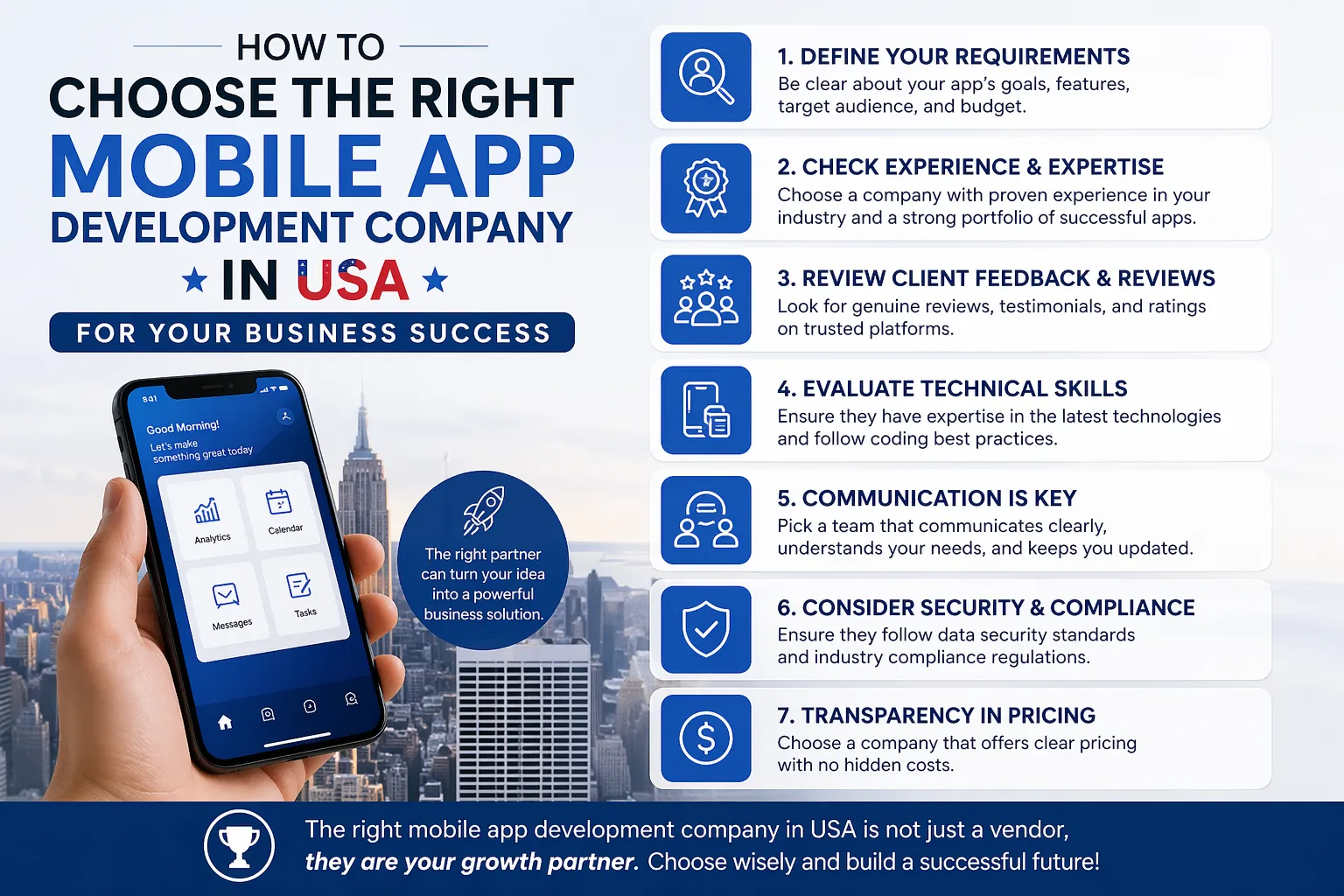
The success of your app depends heavily on the development company you choose. An experienced company understands the complete app development process and ensures smooth execution from start to finish.
A reliable app development company offers:
- Expert developers
- Modern technologies
- Custom solutions
- Quality assurance
- On-time delivery
- Post-launch support
Choosing the right partner helps businesses turn their ideas into successful applications.
Conclusion
The App Development Process Step by Step involves multiple stages, including idea validation, market research, requirement gathering, design, development, testing, deployment, and maintenance. Each step plays a crucial role in building a successful and scalable application.
Businesses that follow a structured app development process can reduce risks, improve efficiency, and deliver high-quality applications that meet user expectations. From planning to post-launch support, every phase contributes to the overall success of the app.
Promote 75way Technologies
If you are looking for a reliable partner to handle the complete app development process, 75way Technologies is a trusted choice. As a leading mobile and web app development company, 75way Technologies specializes in building custom iOS, Android, and cross-platform applications tailored to business needs.
With expertise in Flutter, React Native, AI/ML, UI/UX design, and scalable backend development, 75way Technologies helps startups, SMBs, and enterprises turn ideas into powerful digital solutions. From concept validation to deployment and post-launch support, their team ensures high-quality, secure, and performance-driven applications that deliver real business value.
Partnering with 75way Technologies means working with a dedicated team focused on innovation, quality, and long-term success.

























Sign in to leave a comment.