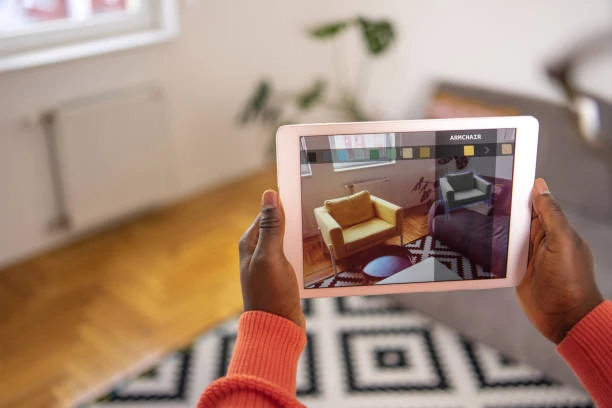

Augmented Reality (AR) has moved beyond being a buzzword and is now reshaping how we interact with the digital and physical worlds. From smartphone apps that overlay information on real-world objects to AR glasses that revolutionize how industries train their workforce, AR is no longer science fiction — it’s a rapidly growing reality.
But what exactly is AR? How does it work? And why is it becoming such a vital technology across various sectors? In this comprehensive blog, we’ll explore what AR is, how it functions, its key applications, benefits, challenges, and future potential.
What is Augmented Reality (AR)?
Augmented Reality (AR) is a technology that overlays digital content — such as images, information, or animations — onto the real-world environment, enhancing what users see, hear, and feel through devices like smartphones, tablets, AR glasses, or headsets.
Unlike Virtual Reality (VR), which immerses users in a completely virtual environment, AR enhances the real world without replacing it. AR blends digital and physical elements in real-time, creating an interactive experience that adds value to everyday life. Learn more.
How Does AR Work?
AR works through a combination of hardware and software components that recognise the real-world environment and superimpose relevant digital content onto it.
Key Components of AR:
- Sensors and Cameras: Capture the environment and collect data to understand spatial dimensions.
- Processing Units: Handle input data from sensors and render digital content in real-time.
- Display Devices: Present the augmented visuals to users through screens, glasses, or headsets.
- Software Algorithms: Recognise patterns, track objects, and align digital content with the physical world.
- Projection Technology: (in some AR devices) Projects digital information directly onto surfaces.
Popular AR development platforms include ARKit (Apple), ARCore (Google), Digilens ARGO, Microsoft Mixed Reality, and Unity3D for cross-platform AR experiences.
Types of Augmented Reality
- Marker-Based AR
- Uses visual markers (QR codes, images) to trigger digital overlays.
- Markerless AR (Location-Based AR)
- Uses GPS, accelerometers, and digital compasses to display content based on location.
- Projection-Based AR
- Projects light onto real surfaces to display interactive 3D holograms.
- Superimposition-Based AR
- Replaces the original view with an augmented, digitally enhanced version.
- SLAM-Based AR (Simultaneous Localization and Mapping)
- Creates 3D maps of environments in real-time to provide precise overlays.
Key Applications of Augmented Reality Across Industries
1. Retail and E-Commerce
AR allows customers to visualise products in real-life settings before making a purchase. Apps like IKEA Place let users see how furniture would look in their homes. Virtual try-ons for clothes, accessories, and makeup are revolutionizing online shopping by reducing returns and increasing buyer confidence.
2. Education and Training
AR makes learning immersive and interactive. From AR anatomy models in medical schools to hands-on industrial training simulations, AR enhances understanding through visual, experiential learning. Complex concepts become easier to grasp when presented in an augmented environment.
3. Healthcare
AR assists surgeons with real-time 3D visuals during procedures, improving precision and safety. It’s also used for patient education, physical therapy gamification, and medical equipment maintenance training.
4. Manufacturing and Field Services
AR empowers field technicians by providing remote visual guidance, hands-free instructions, and equipment diagnostics through AR smart glasses. This reduces errors, speeds up repairs, and decreases downtime.
5. Real Estate and Architecture
Architects and real estate agents use AR to create virtual walkthroughs of properties and 3D architectural visualizations. Clients can experience designs or properties before they’re even built.
6. Entertainment and Gaming
AR gaming apps like Pokémon GO showcased the technology’s mass appeal. Today, AR enhances interactive storytelling, museum exhibits, live events, and even TV broadcasts with immersive digital effects.
7. Automotive Industry
Car manufacturers use AR for dashboard heads-up displays (HUDs), driver assistance, and virtual showrooms. Maintenance procedures can also be visualised using AR manuals.
8. Tourism and Travel
AR apps provide historical overlays, navigation aids, and virtual guides for tourists exploring new cities or heritage sites, enriching the travel experience.
Benefits of Augmented Reality
1. Enhanced User Experience
AR provides interactive and engaging experiences that elevate how users interact with content, making it memorable and impactful.
2. Improved Learning and Training Outcomes
By blending theory with real-world applications, AR boosts retention rates and helps learners understand complex subjects through hands-on visualization.
3. Increased Efficiency and Productivity
In industries like field service, manufacturing, and healthcare, AR reduces operational errors, speeds up troubleshooting, and minimizes the need for on-site experts through remote assistance.
4. Competitive Advantage in Business
Brands adopting AR in marketing, sales, and customer service stand out by offering innovative experiences that resonate with tech-savvy consumers.
5. Cost-Effective Prototyping and Simulation
AR allows businesses to visualize product designs and workflows before investing in physical prototypes, reducing time and development costs.
Challenges and Limitations of Augmented Reality
While AR holds tremendous promise, it also faces several challenges:
1. Hardware Limitations
AR glasses and headsets are still relatively bulky and expensive for widespread consumer adoption. Battery life and processing power also remain limiting factors.
2. High Development Costs
Creating high-quality AR experiences requires advanced technical expertise and significant investment in development tools and 3D content creation.
3. Privacy and Data Security Concerns
AR applications often require access to cameras, location data, and personal information, raising privacy concerns that need strict regulation and secure systems.
4. User Adaptation
For some, AR can be overwhelming or difficult to use, especially among older demographics unfamiliar with immersive technologies.
5. Network Dependency
High-performance AR apps require low-latency networks (like 5G) to function smoothly, which may not be universally available yet.
Future Trends and Innovations in Augmented Reality
Despite these challenges, AR is advancing rapidly, with emerging trends poised to reshape industries further:
1. AR Glasses Going Mainstream
Tech giants like Apple, Meta, and Google are investing heavily in lightweight, stylish AR glasses aimed at replacing smartphones for everyday tasks.
2. AR and Artificial Intelligence (AI) Integration
The fusion of AR and AI will create smarter, context-aware applications that personalize user experiences based on behavior and environment.
3. 5G-Powered AR Experiences
With faster data speeds and lower latency, 5G will enable real-time AR experiences, making remote collaboration and cloud-based AR solutions more accessible.
4. AR in the Metaverse
AR will play a vital role in bridging physical and digital realities in the Metaverse, enabling users to interact with digital assets in the real world seamlessly.
5. AR in Remote Work and Virtual Collaboration
Virtual meetings will evolve into AR-based collaborative environments, where participants interact with 3D models and shared virtual spaces, enhancing remote teamwork.
Conclusion: Augmented Reality Is No Longer the Future — It’s Here Now
Augmented Reality is no longer a futuristic concept confined to gaming apps or sci-fi movies. It has become a transformative technology with the power to change how we shop, learn, work, and communicate. As industries continue to recognise its potential, AR will increasingly become an integral part of daily life, driving efficiency, engagement, and innovation.
For businesses, adopting AR early means staying ahead of the competition, enhancing customer experiences, and streamlining operations. For individuals, it represents a new way of interacting with the world — one that’s more immersive, informative, and connected.
As hardware improves, costs decrease, and 5G becomes ubiquitous, AR’s true potential will be unlocked. The question is not if AR will become mainstream — it’s when, and by all indications, that time is rapidly approaching.

























Sign in to leave a comment.