

For the better part of a decade, the "Data Scientist" was the undisputed rockstar of the tech world. With a mysterious blend of statistics, coding, and business acumen, they were the "Artists" of the digital age, painting predictive masterpieces on the canvases of corporate strategy. Universities scrambled to launch specialized degrees, and every ambitious professional sought to master the "science" of data.
However, as we move through 2026, a quiet but powerful shift has occurred. The spotlight has moved from the "Chef" to the "Kitchen Architect." In hiring boardrooms from New York to New Delhi, the demand for Data Engineering has not just met—but significantly surpassed—the demand for Data Science.
The industry has realized a hard truth: You can have the best artist in the world, but if the studio is collapsing and the paint is toxic, you won’t get a masterpiece. You’ll get a mess. This realization has sparked a hiring frenzy for the builders, the plumbers, and the architects of the data world.
The "Model-First" Failure: A Reality Check
To understand why the "Architect" is winning in 2026, we have to look at the failures of the early 2020s. Thousands of companies hired data scientists to build cutting-edge machine learning models. These "Artists" spent months perfecting algorithms, only to find that:
- The data was too dirty to be used.
- The "pipes" were too small to handle real-time streaming.
- The model worked in a lab but crashed in production.
This led to the famous industry statistic that nearly 85% of big data projects failed. The missing link wasn't the science; it was the engineering. Organizations began to understand the Data Science vs Data Engineering hierarchy: Science is the luxury that sits atop the necessity of Engineering.
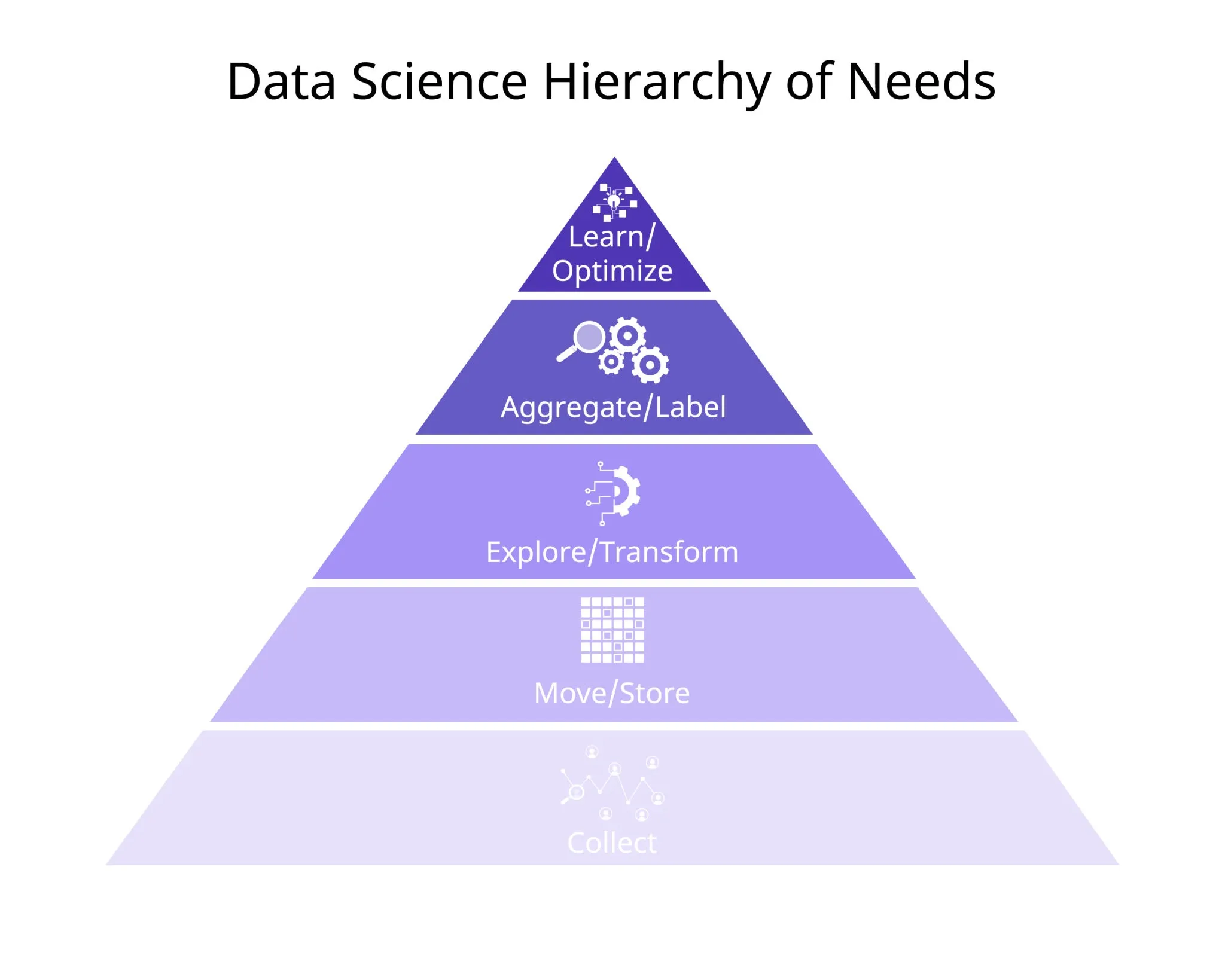
1. The Rise of the Data Architect
Data Engineers are the Architects. They don't just "move" data; they design the complex ecosystems that allow data to exist, breathe, and move safely. In 2026, an Architect's role is far more sophisticated than just writing ETL scripts.
The Engineering Complexity
Modern data engineering involves managing distributed clusters, ensuring sub-second latency for streaming applications, and building robust Data Meshes. As companies move toward decentralized data ownership, the Engineer is the one who creates the standards, the security protocols, and the interoperability between different departments.
The Reliability Factor
If a Data Scientist’s model is 80% accurate instead of 82%, the company might lose some efficiency. If a Data Engineer’s pipeline fails, the company stops. This critical dependency is why senior management has shifted their budget toward the engineering side of the house.
2. The Generative AI Explosion
The surge in Generative AI and Large Language Models (LLMs) has been the single biggest catalyst for the Data Engineering boom. While a Data Scientist might fine-tune an LLM, a Data Engineer is responsible for the RAG (Retrieval-Augmented Generation) infrastructure that makes the AI useful for a business.
Building a production-grade AI requires:
- Vector Databases: Specialized storage that Engineers must optimize for high-dimensional search.
- Prompt Pipelines: Managing the flow of context from internal documents to the model.
- Continuous Ingestion: Ensuring the AI has access to what happened five minutes ago, not five months ago.
The "Artist" provides the spark, but the "Architect" provides the electricity. Without the Engineer, a Generative AI tool is just a fancy chatbot with no memory and a tendency to hallucinate.
3. The "Tooling" Paradox
Ironically, as Data Science tools have become easier to use (with Auto-ML and no-code platforms), the tools for Data Engineering have become more complex.
- For the Scientist: An AI can now help write a Python script for a regression model in seconds.
- For the Engineer: Managing a multi-cloud Snowflake-Databricks hybrid environment with real-time Kafka streams and dbt transformations still requires deep, manual, and highly specialized expertise.
This "Complexity Gap" has made Data Engineers much harder to find and, consequently, much more valuable in the job market. To truly understand where you fit in this shifting landscape, it’s essential to evaluate the Data Science vs Data Engineering career paths to see which technical challenges excite you more.
4. Salary and Job Security
In 2026, the "Engineering Premium" is real. Data Engineers in many regions are commanding higher starting salaries than their Scientist counterparts. Moreover, they enjoy greater job security.
During economic downturns, research projects (often the domain of Data Science) are the first to be cut. Infrastructure maintenance and operational pipelines (the domain of Data Engineering) are considered "mission-critical." You can't turn off the pipes without flooding the house.
5. The Hybrid Evolution: Analytics Engineering
The demand for "Architects" has even birthed a new sub-role: the Analytics Engineer. These professionals sit between the two worlds, applying engineering rigor (version control, testing, documentation) to the analytics layer. This further proves that the industry is no longer satisfied with "Artists" who just deliver a chart; they want "Engineers" who deliver a sustainable, repeatable process.
How to Choose Your Path: Artist or Architect?
Despite the higher demand for Engineers, the "best" path is entirely dependent on your personality.
- Choose the "Architect" (Data Engineering) path if: You love building things. You find satisfaction in a system that runs perfectly and efficiently. You enjoy the challenge of distributed systems, cloud infrastructure, and the "plumbing" of technology.
- Choose the "Artist" (Data Science) path if: You love solving puzzles. You enjoy statistics, psychology, and searching for the "Why" behind the "What." You want to be the one who explains the meaning of the data to the CEO.
Both roles are vital, but in 2026, the world is realizing it has enough chefs—it needs more people who can build a kitchen that doesn't catch fire.
Conclusion: Building the Future
The shift in demand from Data Science to Data Engineering isn't a sign that science is dead; it's a sign that the industry is maturing. We have moved past the "experimental" phase of data and into the "industrial" phase.
If you want to be at the forefront of this industrial revolution, you must master the foundations. Whether you choose to be the Architect who builds the system or the Artist who interprets the results, your success depends on your ability to navigate the tension between Data Science vs Data Engineering.
In 2026, the most valuable professionals aren't just those who can read the data—they are those who can build the world that data lives in.




























Sign in to leave a comment.