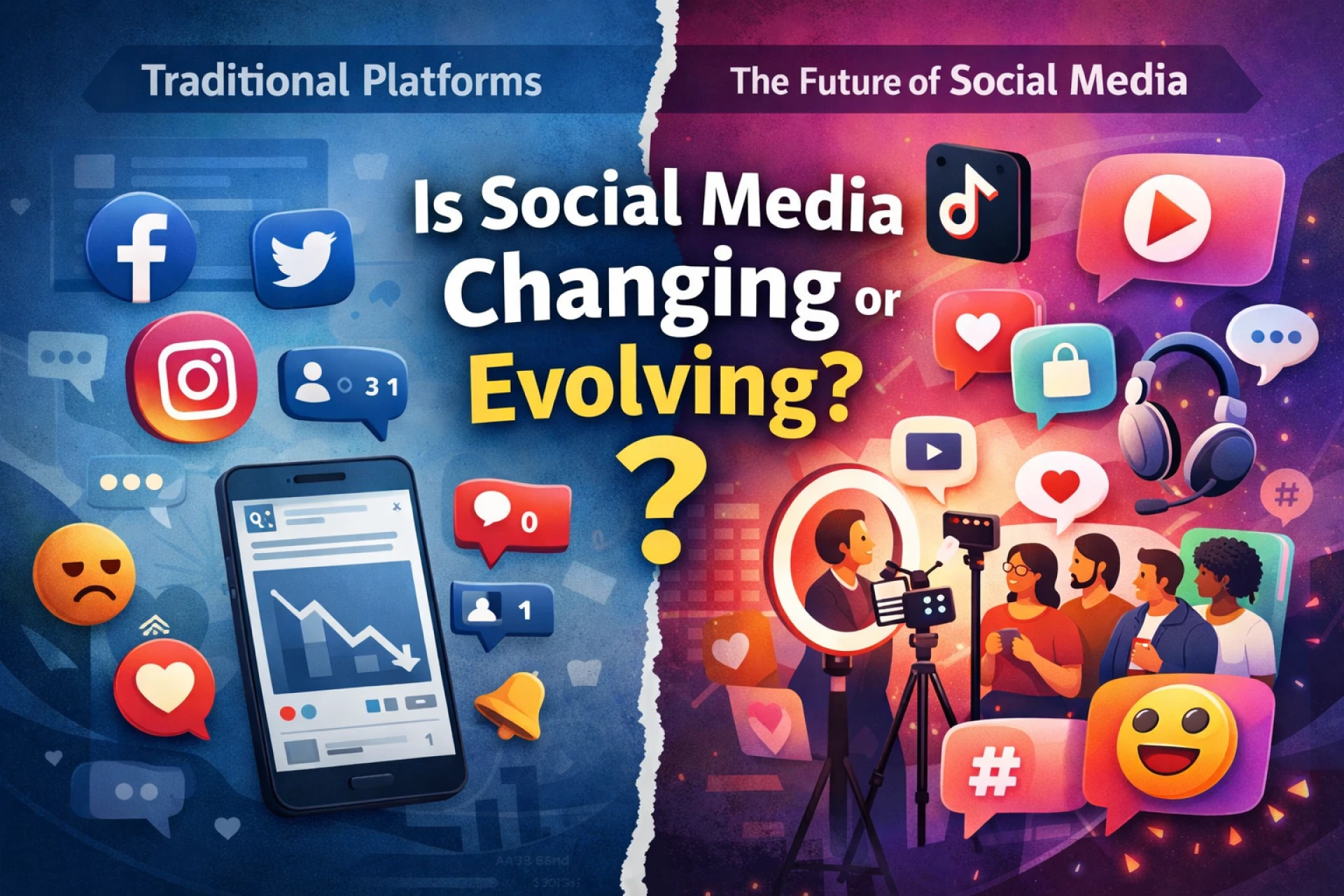

For years, platforms like Facebook, X (formerly Twitter) and even Instagram have been the backbone of social media marketing. But as user behaviour shifts, new platforms emerge, and content consumption habits evolve, a big question is gaining momentum: are traditional social media platforms slowly losing relevance?
The answer is not a simple yes or no. Traditional platforms are not disappearing overnight, but their role is changing rapidly. For brands and professionals, this shift means rethinking strategy, skills and expectations. This is exactly why many businesses are choosing to hire social media manager who can anticipate change rather than react to it.
What Are Traditional Platforms?
Traditional platforms refer to social networks that dominated the early and mid-2010s, such as Facebook, Instagram, LinkedIn and X. These platforms were built around feeds, followers and public engagement. While they still have massive user bases, the way people interact with them has evolved significantly.
Organic reach has declined, competition for attention has increased, and audiences are becoming more selective about what they engage with. Instead of endless scrolling, users now seek value, entertainment and relevance in much shorter timeframes.
Example: Facebook Groups continue to thrive, but brand pages often struggle to achieve the same reach they once did, pushing brands to rethink how they show up on the platform.
Why User Behaviour Is Shifting?
The biggest reason traditional platforms feel less powerful is changing user behaviour. Audiences are no longer loyal to a single platform. Instead, they move fluidly between apps based on purpose, mood and content type.
Key behavioural shifts include:
- Preference for short-form and video-first content
- Growing interest in private communities and direct messaging
- Reduced tolerance for overly promotional content
- Increased trust in creators over brands
Younger audiences, especially Gen Z, often treat platforms like TikTok, Discord and Snapchat as discovery and connection spaces, while using older platforms more passively.
To adapt to these patterns, brands increasingly hire social media managers who understand platform psychology rather than relying on outdated posting formulas.
The Rise of Niche and Community-Driven Platforms
Instead of one-size-fits-all platforms, users are gravitating towards niche spaces built around shared interests, identities or goals. Communities feel safer, more personal and more valuable than noisy public feeds.
This does not mean traditional platforms are dying, but it does mean their dominance is being challenged by:
- Private groups and invite-only communities
- Creator-led ecosystems
- Messaging-first platforms
- Interest-based networks
Example: A fitness brand may see higher engagement inside a private WhatsApp or Discord community than on a public Instagram page, because members feel more connected and invested.
Content Strategy Is Changing Faster Than Platforms
The real shift is not the platforms themselves, but how content needs to perform. Posting consistently is no longer enough. Content now has to educate, entertain or emotionally connect almost instantly.
Social media managers must move beyond scheduling posts and focus on:
- Storytelling instead of selling
- Conversation instead of broadcasting
- Value instead of visibility
AI-generated content has made posting easy, but meaningful engagement harder. This makes human strategy and creativity more important than ever.
That is why businesses continue to hire social media managers who can turn content into connections, even on platforms with declining organic reach.
What Social Media Managers Should Prepare for Next?
The future of social media management will be defined by adaptability. Social media managers must prepare for a landscape where platforms evolve quickly, and attention is fragmented.
Key areas to prepare for include:
Platform Agnosticism
Instead of mastering one platform, managers need transferable skills that work across formats, audiences and ecosystems.
Community Building
Engagement will shift from likes and shares to conversations, loyalty and long-term relationships.
Video and Audio Dominance
Short-form video, live content and audio-based interactions will continue to grow across both old and new platforms.
Data Interpretation and AI Collaboration
AI will assist content creation and analytics, but humans will guide strategy, tone and decision-making.
Brands that hire social media managers with these future-ready skills will be far better positioned than those relying on outdated playbooks.
Are Traditional Platforms Still Worth Investing In?
Yes, but with realistic expectations. Traditional platforms still offer scale, targeting and brand presence, especially for certain industries and demographics. However, success now requires a smarter strategy rather than higher volume.
The focus should be on:
- Using platforms for specific objectives
- Integrating content across multiple channels
- Measuring impact beyond vanity metrics
A strong social media strategy today is diversified, intentional and audience-led, not platform-dependent.
Conclusion
Traditional social media platforms are not dying, but the way they function and deliver value is changing rapidly. Attention is fragmented, communities are becoming more private, and audiences are demanding authenticity over promotion.
For brands and professionals, this shift presents both a challenge and an opportunity. Those who adapt early, experiment wisely and invest in strategic expertise will continue to grow, regardless of platform changes.
This is why forward-thinking businesses choose to hire a social media manager who understands evolving behaviour, emerging platforms and human connection. In a constantly shifting digital world, adaptability is the real competitive advantage.






















Sign in to leave a comment.