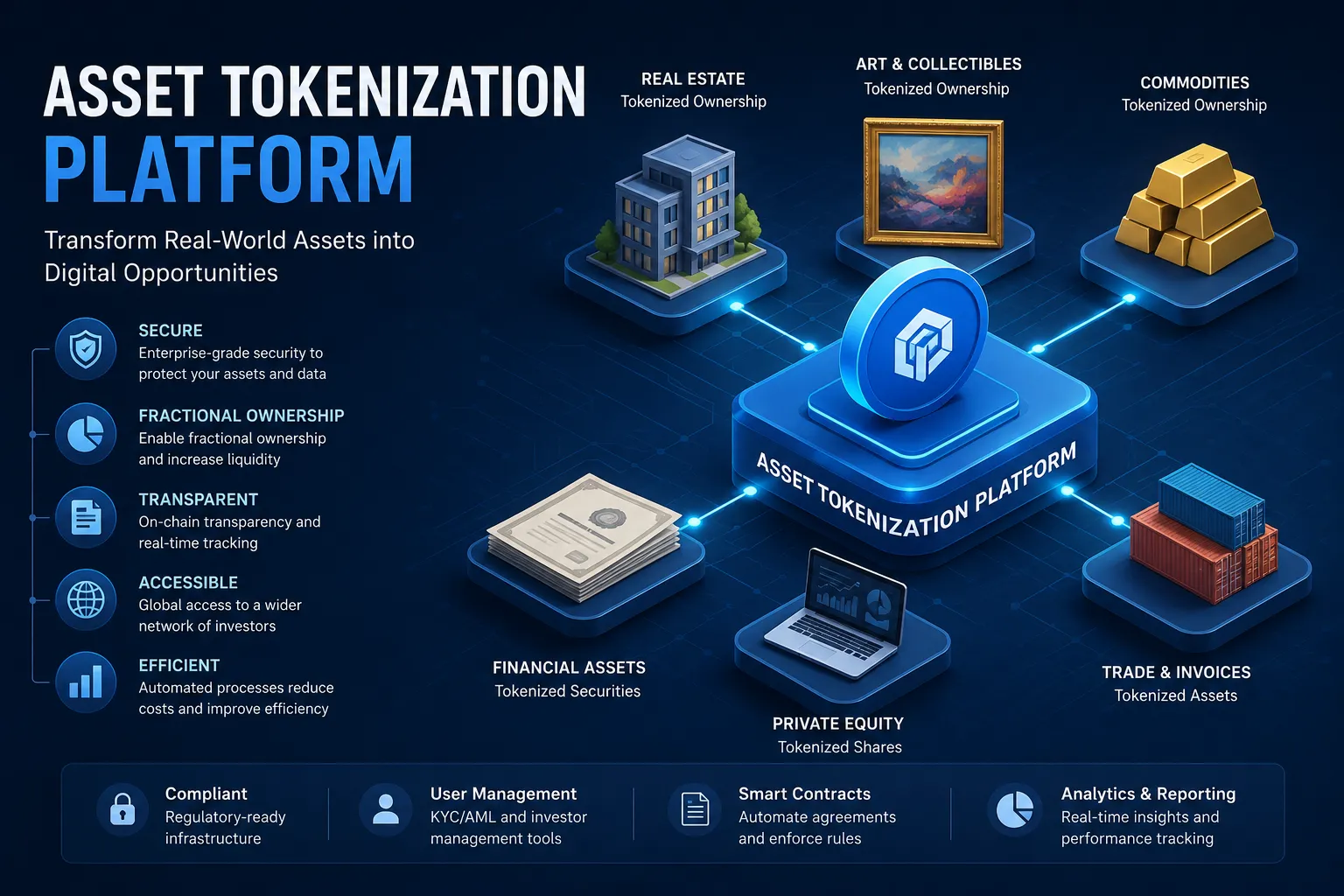
The financial and digital technology landscape is evolving rapidly, creating new ways to own, manage, and transfer valuable assets. One of the emerging innovations in this space is asset tokenization. An Asset Tokenization Platform helps businesses convert the ownership or rights associated with eligible assets into digital tokens that can be securely managed and transferred through appropriate digital infrastructure.
From real estate and financial instruments to art, commodities, and other valuable assets, tokenization has the potential to make asset management more efficient, transparent, and accessible.
What Is an Asset Tokenization Platform
An Asset Tokenization Platform is a technology solution that enables the creation, management, issuance, and transfer of digital tokens representing ownership interests or rights associated with an underlying asset.
The asset may be physical, financial, or digital, depending on the platform, legal structure, and applicable regulations.
A tokenized asset may represent:
- Full ownership
- Fractional ownership
- Economic rights
- Revenue-sharing rights
- Access rights
- Other legally defined interests
The exact rights connected to a token depend on how the asset is structured and the legal and regulatory framework governing the transaction.
How Asset Tokenization Works
The asset tokenization process generally begins with identifying an asset that may be suitable for digital representation.
The ownership structure, value, rights, and other important information are then reviewed. After appropriate legal and technical processes, digital tokens can be created to represent defined interests connected to the asset.
A typical Asset Tokenization Platform may support the following process:
- Identifying and evaluating the underlying asset
- Defining ownership or rights associated with the asset
- Completing necessary legal and compliance processes
- Creating digital tokens based on the approved structure
- Recording and managing token ownership
- Enabling authorized transfers or transactions
- Providing reporting and asset management tools
The exact process can vary based on the type of asset, jurisdiction, technology, and regulatory requirements.
Benefits of Using an Asset Tokenization Platform
Asset tokenization can offer several potential benefits for businesses, investors, and asset owners.
Fractional Ownership Opportunities
Traditionally, some high-value assets require significant capital to purchase. Tokenization may allow an asset to be divided into smaller ownership interests, subject to the applicable legal and investment structure.
This can potentially make certain investment opportunities accessible to a broader range of eligible participants.
Improved Transparency
Digital records can help create a more transparent history of token ownership and transactions.
An Asset Tokenization Platform may provide participants with better visibility into ownership records, transfers, and other relevant information.
More Efficient Asset Management
Digital systems can simplify certain administrative processes related to ownership management, record keeping, reporting, and transactions.
Automation can also help reduce manual processes and improve operational efficiency.
Potential for Increased Liquidity
Some traditionally illiquid assets may benefit from more efficient transfer mechanisms through tokenization. However, liquidity is not guaranteed and depends on factors such as market demand, regulations, trading infrastructure, and asset characteristics.
Global Accessibility
Digital platforms can potentially connect asset owners and eligible participants across different locations, subject to local laws, regulations, and platform restrictions.
Types of Assets That Can Be Tokenized
An Asset Tokenization Platform can potentially support a variety of asset categories.
Real Estate
Real estate tokenization can represent defined ownership interests or rights associated with residential, commercial, or other properties.
Fractional structures may allow eligible participants to gain exposure to a portion of a larger real estate asset.
Financial Assets
Certain financial instruments and investment products may be represented through digital tokens, depending on regulatory requirements and the structure of the offering.
Art and Collectibles
High-value art and collectibles may be digitally represented to support ownership management, provenance tracking, or fractional interests.
Commodities
Assets such as precious metals and other commodities may potentially be connected with digital tokens representing defined ownership or contractual rights.
Private Assets
Businesses may explore tokenization for private assets, funds, and other alternative investment structures where legally and technically appropriate.
Key Features of an Asset Tokenization Platform
A reliable Asset Tokenization Platform may include several important features.
Digital Asset Issuance
The platform should support the creation and management of tokens based on clearly defined asset structures and ownership rights.
Investor or User Management
Platforms may provide tools for onboarding users, managing accounts, and maintaining required records.
Compliance Support
Depending on the use case, the platform may support identity verification, investor eligibility checks, transaction restrictions, and other compliance workflows.
Secure Transaction Management
Security is an essential consideration when managing digital assets. A platform should use appropriate security measures to protect user accounts, transaction records, and digital infrastructure.
Asset Management Dashboard
A centralized dashboard can help asset owners and administrators monitor tokenized assets, ownership records, transactions, and platform activity.
Reporting and Analytics
Reporting tools can help users access relevant information about asset activity, ownership, and transactions.
The Role of Blockchain in Asset Tokenization
Blockchain technology is commonly associated with asset tokenization because it can provide a shared and tamper-resistant record of transactions.
Smart contracts may also be used to automate specific actions based on predefined rules.
For example, depending on the legal and technical design, smart contracts may support processes related to:
- Ownership transfers
- Transaction settlement
- Distribution calculations
- Access management
- Compliance restrictions
However, blockchain technology alone does not determine the legal ownership or regulatory status of a tokenized asset. Proper legal structuring and compliance remain important parts of an asset tokenization project.
Important Security and Compliance Considerations
Asset tokenization involves both technology and financial or legal considerations. Businesses developing or using an Asset Tokenization Platform should carefully evaluate applicable laws and regulations.
Important considerations may include:
- Identity verification requirements
- Anti-money laundering procedures
- Investor eligibility
- Securities regulations
- Data protection
- Cybersecurity
- Asset custody
- Smart contract security
- Jurisdiction-specific requirements
Working with qualified legal, compliance, cybersecurity, and financial professionals can help organizations develop an appropriate framework for their specific use case.
How Businesses Can Benefit from Asset Tokenization
Businesses can use asset tokenization technology to explore new methods of capital formation, ownership management, and digital asset administration.
Potential benefits may include:
- Streamlined ownership management
- Digital transaction records
- Greater automation
- Fractional asset structures
- Improved transparency
- Reduced administrative complexity
- New digital business models
The actual benefits will depend on the type of asset, regulatory environment, technology implementation, and market adoption.
Choosing the Right Asset Tokenization Platform
When selecting an Asset Tokenization Platform, businesses should consider their technical, operational, legal, and security requirements.
Important factors include:
Security Infrastructure
The platform should have strong security controls to protect accounts, transaction data, and digital assets.
Scalability
The technology should support future growth in assets, users, and transactions.
Compliance Capabilities
Businesses should evaluate whether the platform can support relevant compliance and regulatory workflows.
Integration Options
The platform should work effectively with existing systems, including payment solutions, identity verification services, accounting platforms, and asset management tools where required.
User Experience
A simple and intuitive interface can make it easier for asset owners, administrators, and authorized participants to use the platform.
The Future of Asset Tokenization
Asset tokenization is expected to continue developing as blockchain infrastructure, digital identity solutions, regulatory frameworks, and institutional adoption evolve.
The future may include greater use of tokenized real-world assets, improved interoperability between platforms, automated compliance processes, and more advanced digital asset management solutions.
As the technology and regulatory environment mature, Asset Tokenization Platforms could play an increasingly important role in the broader digital economy.
Conclusion
An Asset Tokenization Platform provides businesses with technology to digitally represent and manage defined ownership interests or rights connected to real-world and financial assets.
By combining digital infrastructure, secure transaction management, automation, and appropriate compliance processes, tokenization can create new possibilities for asset management and ownership structures.
Businesses considering asset tokenization should carefully evaluate technology providers, security measures, legal requirements, and regulatory obligations. With the right strategy and implementation, an Asset Tokenization Platform can support the transition toward more efficient, transparent, and digitally connected asset ecosystems.

























Sign in to leave a comment.