


"Amazon, Walmart and eBay isn’t a courtroom. Standard legal arguments and threatening tones carry zero weight with internal enforcement teams. You need niche, platform-specific defense."

“Intellectual Property Law dates back to the 17th Century. Whether it protects human innovation after the takeover by Artificial Intelligence remains to be seen.”
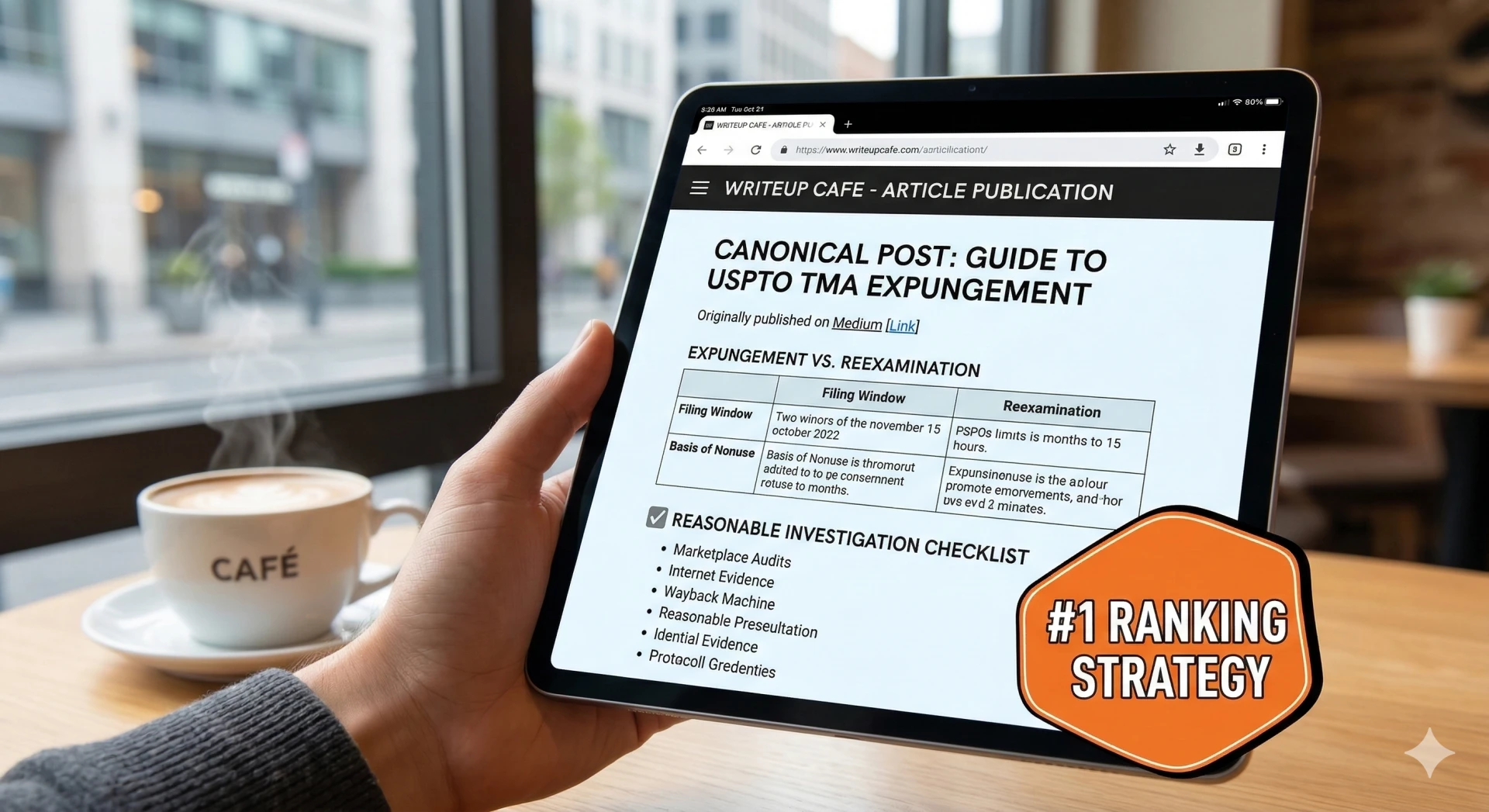
Executive Summary: Predatory e-commerce litigation—driven by trademark squatters and patent trolls—aims to eliminate competition through algorithmic suppression rather than legal merit. To restore marketplace leverage, brands must deploy the Trademark Modernization Act (TMA). By utilizing Expungement and Reexamination petitions, sellers can cancel "deadwood" registrations and clear 2(d) Likelihood of Confusion rejections. Success requires a Verified Statement of Reasonable Investigation, documenting nonuse evidence across Amazon, Walmart, and digital archives like the Wayback Machine.

Many sellers believe Amazon Brand Registry alone protects their brand, but real protection requires legal strategy. Trademark disputes, counterfeit claims, and false infringement reports can all threaten listings and brand control. This article explains how Brand Registry fits into broader intellectual property enforcement and how Amazon Brand Registry lawyers help sellers protect their trademarks, maintain listing authority, and defend against abusive enforcement tactics.

Trademark disputes don’t end with registration. Many Amazon sellers face oppositions and cancellations at the Trademark Trial and Appeal Board (TTAB), where brand rights, Brand Registry status, and marketplace control can be at risk. This article explains how TTAB litigation works, why it impacts Amazon enforcement, and how experienced Amazon TTAB lawyers help sellers defend their trademarks and protect long-term brand stability.
Amazon dispute services are increasingly being marketed as “faster alternatives” to arbitration—but speed does not equal leverage. This article explains how branded escalation products like Synthetic Arbitration® reflect a broader shift from legal remedies to operational protocol, and why that distinction matters for suspended sellers. Understanding the difference between correspondence and adjudication can mean the difference between resolution and delay.

Amazon invoice rejections often have nothing to do with your supplier—and everything to do with hidden PDF metadata. Before a human ever reviews your appeal, Amazon’s automated systems inspect how your invoice was created, edited, and saved. This article explains the invisible “metadata check” that flags invoices as untrustworthy, why new sellers fail it most often, and how to inspect your files before Amazon does.
If Amazon denied your Brand Registry application, it’s almost always because your trademark details, brand name, and product/packaging proof don’t match exactly. The fastest fix is to align the brand name to the trademark record, submit clear real-world photos showing the mark permanently affixed, correct ownership/authority mismatches, and reapply only after your evidence set is consistent and verification-ready.
Suspended on eBay—MC011, an account hold, or an “indefinite” ban? The wrong appeal can lock you out longer. This guide shows how to evaluate eBay appeal services, avoid template traps, assemble the right invoices and tracking proof, and decide when a lawyer-supervised appeal is the safest path to reinstatement.

An Amazon TRO can freeze your storefront and payouts overnight—often in fast-moving IP lawsuits naming dozens or hundreds of sellers. The right response is evidence + deadlines + a practical legal strategy: preserve screenshots and records, stop risky edits, gather invoices and authenticity proof, then pursue a settlement or targeted motion that clearly tells the marketplace how funds can be released when permitted. AMZ Sellers Attorney® provides attorney-supervised TRO defense built around how platforms actually implement restraining orders—so you can protect your business, reduce exposure, and get back to selling.
Searching for the “best Amazon Brand Registry lawyer” usually returns the same handful of IP Accelerator firms, boutique practices, and low-cost Brand Registry services. This guide breaks down what each actually does, the risks they don’t tell you about, and when a marketplace-first firm like AMZ Sellers Attorney® is the better fit.

Amazon listing hijackers can undercut your price, damage reviews, and trigger “inauthentic” complaints on your best ASINs. This article explains how attorney-supervised hijacker removal works in practice—from evidence gathering to cease and desist letters and Amazon IP complaints—so you can remove unauthorized sellers and protect your brand long term.

Temporary restraining orders (TROs) in IP “Schedule A” cases can freeze Amazon and Walmart seller funds overnight—especially in the Northern District of Illinois. This article explains how these TROs work, what defense can cost, and how long funds can stay frozen after a preliminary injunction.

<p><em>Amazon’s new AI shopping assistant, Rufus, isn’t just a cute chatbot. It’s quickly becoming one of the most po

Many suspended Amazon sellers discover too late that Section 2 of the Business Solutions Agreement lets Amazon freeze and permanently retain their funds for alleged policy violations. This piece breaks down how Section 2 operates, why it looks more like an unlawful penalty than valid liquidated damages under Washington law, what arbitrators have done in frozen-funds cases, and how AMZ Sellers Attorney® helps sellers push back.

Hello. My name is Annie, and I have 6 years of experience transforming locks into works of art. I'm passionate about creating unique and beautiful hairstyles that represent individual flare, and I specialize in installing virgin remy human hair. https://www.indiquehair.com/

f you sell on Amazon, Walmart, Etsy, eBay, or TikTok Shop, you already know: one email from “Seller Performance” can wipe out your entire revenue