
Every marketer knows this painful truth: creating great content is only half the battle. The other half? Making sure the right audience actually sees it. In today’s noisy digital landscape, where thousands of blogs and whitepapers are published daily, even the best content often fails to reach decision-makers.
That’s where B2B content syndication comes in. It’s not just about getting more views — it’s about strategically amplifying your reach, generating qualified leads, and fueling revenue growth. In this article, we’ll explore what B2B content syndication is, why it’s so important in 2025, common challenges, and how to use it effectively for maximum ROI.
What is Content Syndication?
At its core, content syndication is the republishing of your existing content on third-party websites, platforms, or networks to expand reach and visibility. Instead of waiting for prospects to stumble upon your blog, syndication puts your content directly in front of the people who matter most: decision-makers, influencers, and buyers in your target market.
For B2B marketers, it’s less about vanity metrics like page views and more about capturing high-quality leads. Syndication partners often offer targeting filters such as:
- Job titles (e.g., Marketing Director, CTO)
- Company size (e.g., SMBs vs. Enterprises)
- Industry (e.g., SaaS, Healthcare, Manufacturing)
- Geography (regional or global)
This ensures your content doesn’t just spread wide but also lands deep within the right accounts.
Why It Matters in 2025
The way businesses consume content has changed drastically. Buyers are overwhelmed, skeptical, and selective. Syndication is no longer optional — it’s essential.
Key reasons why it’s so powerful:
- Extended Reach → You move beyond your own website and social channels to tap into established audiences on authoritative platforms.
- Qualified Leads → Unlike generic traffic, syndicated leads are filtered to match your ideal customer profile.
- Content ROI → Every piece of content requires time and money; syndication maximizes its value by giving it multiple lifelines.
- ABM Alignment → Account-Based Marketing thrives when your target accounts consistently see your brand across channels — syndication helps make that happen.
Think of it as a growth engine that keeps your pipeline warm and flowing, even when organic reach stalls.
Types of Syndicated Content
Not all content is created equal for syndication. Some formats perform better than others because they offer deeper value and generate stronger intent.
- Whitepapers & eBooks → Great for educating prospects on trends and solutions.
- Research Reports → Establish thought leadership and credibility.
- Webinars & Video Replays → Allow you to capture engagement data and buyer intent.
- Case Studies → Show real-world proof of your solution’s success.
- Blogs & Articles → Drive awareness, but less effective for lead capture compared to gated assets.
Pro tip: Always include a clear CTA (Call to Action), like “Download the full report” or “Schedule a demo,” to convert interest into action.
Benefits of B2B Content Syndication
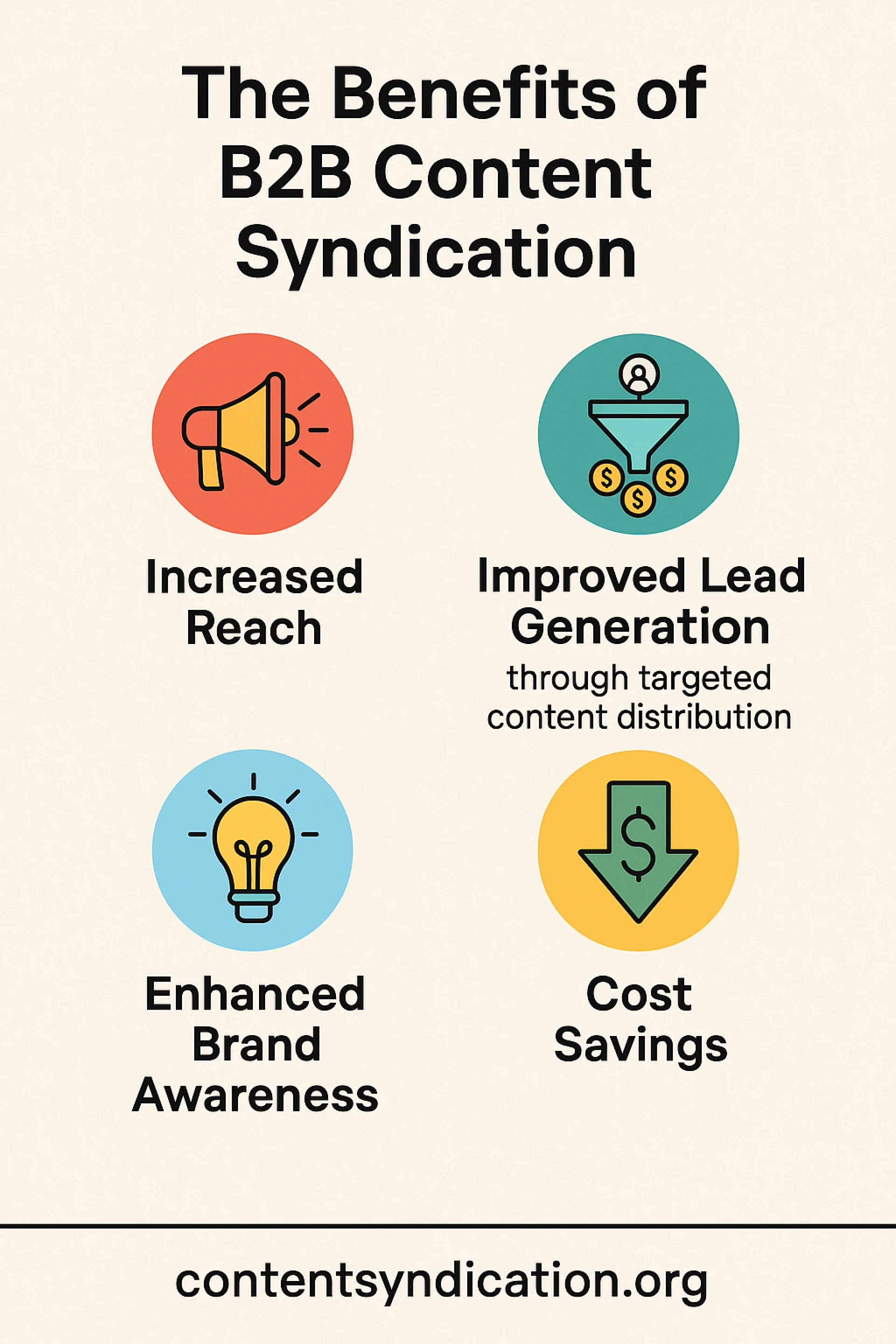
Done right, syndication provides multiple business advantages:
✅ Marketing Qualified Leads (MQLs): Consistently adds fresh, relevant contacts to your pipeline.
✅ Brand Authority: Publishing across reputable industry sites strengthens credibility.
✅ SEO Value: Generates backlinks and referral traffic that improve search rankings.
✅ Faster Sales Cycles: Content speaks directly to buyer pain points, warming them up before sales outreach.
✅ Content Longevity: Evergreen assets continue to drive leads long after their original launch.
Challenges to Watch Out For
Like any strategy, syndication comes with its pitfalls. Here are the major ones to be aware of:
- Lead Quality Variability → Not every lead will be sales-ready; you’ll need a nurturing process.
- Duplicate Content Concerns → Republishing may cause SEO issues if not handled with canonical tags or proper attribution.
- Cost vs. ROI → Paid syndication platforms can be expensive; you must track conversion rates carefully.
- Over-Saturation → Too much gated content may frustrate readers; balance is key.
Best Practices for Successful Syndication
Choose the Right Partners
Don’t scatter content everywhere. Work with platforms that align with your target audience. Examples: B2B tech publishers, niche industry blogs, or content syndication vendors.
Use Evergreen, High-Value Assets
A trending blog might fade quickly, but a research report or whitepaper can keep generating leads for months.
Layer Syndication with Lead Nurturing
Capturing the lead is step one. Step two is guiding them down the funnel with email campaigns, retargeting ads, and personalized outreach.
Measure, Track, Optimize
- Use UTM tags to track performance.
- Compare CPL (Cost Per Lead) vs. pipeline contribution.
- Double down on content that drives conversions.
Integrate With ABM & CRM
Ensure syndicated leads sync seamlessly with your CRM (HubSpot, Salesforce, etc.) and tie into Account-Based Marketing efforts.
Real-World Example
Imagine you’re a SaaS company targeting mid-market IT managers. You publish a whitepaper on “The Future of Cloud Security.” By syndicating it through an industry network, you don’t just get random downloads — you capture 500+ leads specifically from IT decision-makers at companies that match your ICP.
Your sales team now has warm conversations ready to go, saving months of cold outreach.
Final Thoughts
In 2025, B2B content syndication is a critical growth lever for marketers. It bridges the gap between creating great content and ensuring it reaches the right buyers. By republishing your assets strategically, you maximize content ROI, build authority, and keep your sales pipeline strong.
If your marketing content isn’t delivering the results you expected, content syndication may just be the missing piece of your growth strategy.
What about you?
Have you tried B2B content syndication in your marketing campaigns? Did it help generate qualified leads, or did you struggle with ROI? Share your experiences in the comments — let’s learn from each other!




























Sign in to leave a comment.