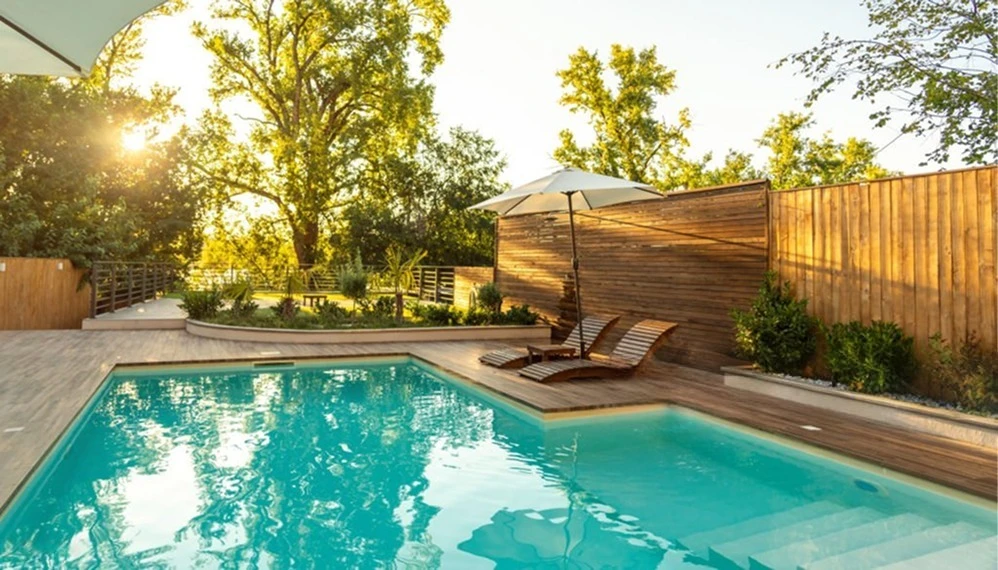

Pool areas are supposed to feel effortless, but they’re one of the hardest places to design well. People are barefoot, moving quickly, and often distracted. At the same time, nobody wants the space to look like a safety project. The balance comes from details that guide behavior quietly, so the deck feels relaxed while it stays predictable.
Homeowners planning deck installation in Vancouver, WA usually start by thinking about the “main zone” around the water, but the real work happens at the edges. Steps, corners, and the path back to the house carry the most wet traffic. If the walking line forces people to cut through seating, towels and toys spread everywhere, and the deck feels chaotic. A clearer route — wide enough to pass without brushing furniture — keeps movement calm and keeps clutter from taking over.
Safety starts with rhythm, not warnings. Consistent risers and tread depth matter more around pools because glare can hide depth cues and wet feet land differently. Measure from finished surfaces, keep the first and last step easy to read, and avoid small “surprise” changes in level near turns. The same logic applies to surface feel. Texture helps, but consistency helps more. A deck that’s smooth near the door and aggressive near the stairs makes people adjust their step constantly. Predictable grip across the whole poolside zone reduces slips without calling attention to itself.
Water management is the quiet separator between “wet but fine” and “always cautious.” Splash water should leave the surface the same way rain does: subtle slope, clear exits, and no runoff directed toward stair starts or door thresholds. Debris traps matter here. Tight grooves, heavy borders, and low corners collect grit and organic debris, and that debris holds moisture right where bare feet land. Details that rinse clean — clean seams, disciplined spacing, and simple borders — keep the surface feeling the same after a busy weekend as it does on a quiet morning.
Transitions decide whether the deck feels relaxed. The top step at a sliding door, the landing near an outdoor shower, and the grill route are where people move quickly and carry things. Those points need clear alignment and stable “arrival” areas, not wobbly boards over soft soil. Under the surface, airflow matters too. If the underside is boxed in, shaded framing stays damp longer, hardware stays wet longer, and corrosion quietly reduces stiffness. When drying patterns are even, trust builds naturally.
Heat is part of safety too. Boards that overheat push people to the shady perimeter, where wet pockets and edges live. Lighter tones, matte finishes, and shade planning keep barefoot comfort through peak hours, so traffic doesn’t funnel into one narrow strip each day...
Lighting should support orientation, not perform. Soft, low-glare cues at stair starts and along the main walking line help people read edges at night without turning the pool area into a spotlight. If you add a gate, make sure it latches without pulling posts out of square; a sagging gate makes the whole edge feel unreliable.
A relaxed pool deck isn’t careless — it’s calm on purpose. When steps, edges, drainage, and drying are handled as one system, people stop thinking about where to place their feet and start using the space normally. That’s where experienced deck contractors make the difference: the safety is real, but it never gets in the way.























Sign in to leave a comment.