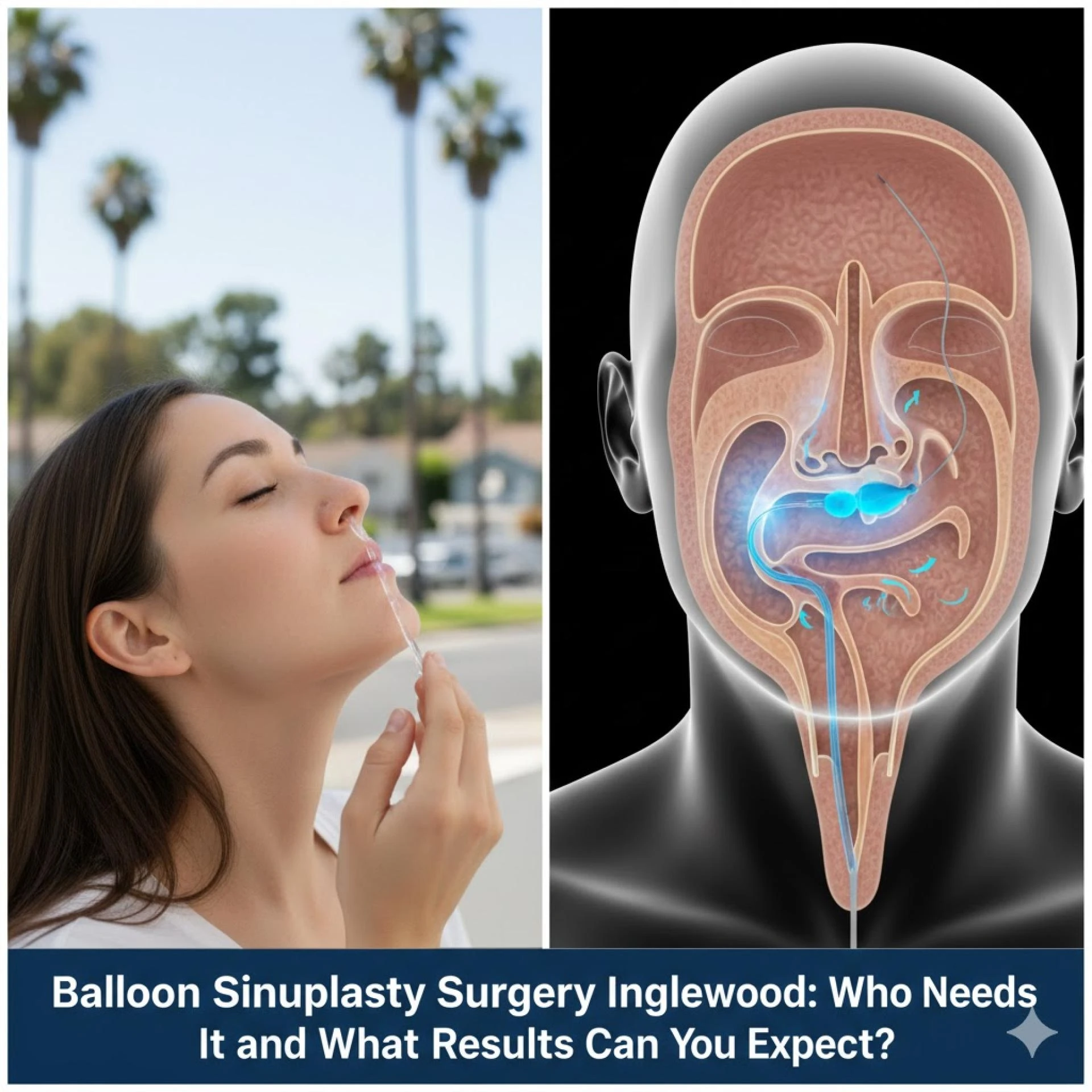

Some of you may have chronic sinus inflammation if you experience persistent sinus pressure, facial pain, postnasal drip, or congestion that never completely goes away. Medications including nasal sprays, antihistamines, and antibiotics only offer short-term relief for many individuals. A minimally invasive surgery might provide a longer-term remedy if symptoms don't go away.
Balloon sinuplasty surgery Inglewood is an advanced option designed to open blocked sinus pathways without removing bone or tissue. It has become a popular choice for patients seeking faster recovery, improved breathing, and meaningful symptom relief. In Beverly Hills and Los Angeles, patients often explore balloon sinuplasty as part of a complete nasal and sinus care plan—especially when sinus issues overlap with nasal obstruction, allergies, or turbinate enlargement.
This guide explains who may benefit, what the procedure involves, and what results you can realistically expect.
What Is Balloon Sinuplasty?
Balloon sinuplasty is a minimally invasive sinus procedure that gently widens narrowed sinus drainage pathways. Instead of cutting tissue, the surgeon uses a small balloon catheter inserted into the sinus opening. Once positioned, the balloon is inflated to remodel the sinus passage and improve airflow and drainage.
After dilation, the balloon is removed, leaving the sinus pathway more open so mucus can drain properly and inflammation can reduce over time.
Because the procedure focuses on restoring natural drainage, balloon sinuplasty is often recommended for patients with chronic sinusitis or recurrent sinus infections that don’t improve with standard treatments.
Who Is a Good Candidate for Balloon Sinuplasty?
Not everyone with sinus congestion needs surgery. Many sinus symptoms come from allergies, irritants, colds, or structural nasal issues. However, you may be a strong candidate for balloon sinuplasty if you experience:
1) Chronic sinus symptoms lasting 12 weeks or more
Chronic sinusitis is often defined by symptoms such as:
- Facial pressure or pain
- Thick nasal drainage
- Nasal congestion
- Reduced sense of smell
- Postnasal drip
- Headaches related to sinus pressure
2) Recurrent sinus infections
If you get multiple sinus infections per year and require repeated antibiotics, balloon sinuplasty may reduce the cycle of inflammation and blockage.
3) Sinus blockage seen on imaging
A CT scan is often used to confirm whether sinus pathways are narrowed or obstructed. Patients in Los Angeles and Beverly Hills commonly undergo imaging to determine whether balloon sinuplasty is appropriate.
4) Symptoms that persist despite medical therapy
Balloon sinuplasty is typically considered after trying treatments such as:
- Saline irrigation
- Steroid nasal sprays
- Allergy management
- Antibiotics (when needed)
5) Patients seeking a minimally invasive option
Many patients prefer balloon sinuplasty because it generally involves:
- No cutting of bone
- Minimal tissue disruption
- Faster recovery compared to traditional sinus surgery
Who May Not Be the Best Candidate?
Balloon sinuplasty is highly effective for the right patient, but it isn’t ideal for every sinus condition. You may need a different approach if you have:
- Severe nasal polyps
- Advanced chronic sinus disease affecting multiple sinus areas
- Significant anatomical blockage requiring tissue removal
- Certain complex sinus infections or fungal disease
In these cases, your ENT specialist may recommend functional endoscopic sinus surgery (FESS) or a combination approach.
How Balloon Sinuplasty Helps Patients in Beverly Hills and Los Angeles
In busy areas like Beverly Hills and Los Angeles, many patients want effective symptom relief with minimal downtime. Balloon sinuplasty is often appealing because it can improve quality of life without a lengthy recovery.
Benefits often include:
- Easier nasal breathing
- Reduced sinus pressure and congestion
- Fewer sinus infections over time
- Improved sinus drainage
- Better sleep and less mouth breathing
- Reduced dependence on repeated antibiotics
Patients frequently report that their “heavy head” feeling improves and that they can finally breathe more comfortably through the nose.
What Happens During Balloon Sinuplasty?
While each clinic may have a slightly different process, the typical steps include:
Step 1: Evaluation and diagnosis
Your ENT specialist will review your symptoms, medical history, nasal exam findings, and often a CT scan.
Step 2: Preparing for the procedure
Depending on your needs, balloon sinuplasty may be performed:
- In-office with local anesthesia
- In a surgical center under sedation
Many patients appreciate that an office-based approach can be efficient and comfortable when appropriate.
Step 3: Balloon dilation
A small balloon catheter is guided into the narrowed sinus opening. The balloon is inflated to widen the passage, then removed.
Step 4: Recovery and aftercare
Most patients return home the same day and follow aftercare instructions such as:
- Saline rinses
- Avoiding heavy exercise for a short period
- Follow-up visits for healing assessment
Expected Results: What Improvements Can You Realistically Expect?
One of the most common questions patients ask is: “Will I finally feel normal again?” While results vary, many patients experience significant improvement in sinus-related symptoms.
Common results include:
- Less facial pressure
- Reduced congestion
- Improved breathing
- Fewer sinus flare-ups
- Better ability to manage allergies and irritants
When will you notice improvement?
Some patients feel better within days, while others improve gradually over a few weeks as swelling decreases and the sinuses begin draining more naturally.
How long do results last?
Balloon sinuplasty is designed to create long-term improvement by opening sinus drainage pathways. Many patients enjoy lasting relief, especially when they continue supportive care like allergy control and nasal hygiene.
Why Some Patients Need More Than Balloon Sinuplasty Alone
Sinus problems are often connected to nasal anatomy. A patient might have sinus blockage and nasal obstruction caused by enlarged turbinates, a deviated septum, or chronic inflammation.
That’s why some patients benefit from combination treatment plans that may include:
- Septoplasty (to straighten the nasal septum)
- Allergy therapy
- Nasal valve support
- Turbinate reduction surgery los angeles options for patients with persistent nasal blockage
What are turbinates and why do they matter?
Turbinates are structures inside the nose that warm and filter air. When they become enlarged due to allergies or chronic inflammation, they can cause constant congestion—even if the sinuses are treated.
For patients who feel “blocked” all the time, combining sinus care with turbinate reduction can lead to more complete breathing improvement.
Balloon Sinuplasty vs. Traditional Sinus Surgery
Many patients in Beverly Hills and Los Angeles ask whether balloon sinuplasty is “real surgery.” It is a medical procedure, but it’s less invasive than traditional sinus surgery.
Balloon sinuplasty:
- Opens sinus pathways without tissue removal
- Often less bleeding
- Typically faster recovery
- Ideal for specific types of blockage
Traditional sinus surgery (FESS):
- Removes inflamed tissue or polyps when necessary
- Can address more severe disease
- Often used when balloon sinuplasty alone isn’t enough
Your ENT specialist will recommend the approach that matches your anatomy and the severity of your condition.
Choosing the Right Specialist in Los Angeles or Beverly Hills
The best results come from accurate diagnosis and personalized planning. A high-quality ENT evaluation should include:
- A detailed symptom review
- Nasal endoscopy (when appropriate)
- CT imaging if chronic sinusitis is suspected
- A discussion of both medical and procedural options
A clinic that offers both balloon sinuplasty and related nasal procedures can create a more complete treatment plan, especially for patients who also need breathing improvement.
Final Thoughts: Is Balloon Sinuplasty Worth It?
For the right candidate, balloon sinuplasty can be a life-changing solution—especially if you’ve spent months or years managing constant sinus symptoms. If you’re considering balloon sinuplasty surgery Inglewood, it’s important to work with an experienced ENT specialist who can confirm whether your symptoms come from sinus blockage, nasal obstruction, or both.
Patients across Beverly Hills and Los Angeles often choose this procedure because it is minimally invasive, effective, and designed for meaningful long-term relief. With the right evaluation and follow-up care, many patients enjoy easier breathing, fewer sinus infections, and improved daily comfort.
FAQs About Balloon Sinuplasty Surgery Inglewood
1) What is balloon sinuplasty surgery Inglewood used to treat?
It is commonly used to treat chronic sinusitis or recurring sinus infections by opening blocked sinus drainage pathways and improving airflow.
2) How do I know if I’m a candidate for balloon sinuplasty?
You may be a candidate if you have sinus symptoms lasting more than 12 weeks, frequent sinus infections, and imaging showing blocked sinus openings—especially if medications haven’t worked well.
3) Is balloon sinuplasty painful?
Most patients report mild pressure rather than significant pain. Discomfort is typically manageable, and recovery is often easier than traditional sinus surgery.
4) How long is recovery after balloon sinuplasty?
Many patients return to normal daily activities within a few days. Your doctor may recommend avoiding heavy exercise briefly and using saline rinses during healing.
5) Will balloon sinuplasty fix my constant nasal congestion?
It can improve sinus drainage and reduce sinus pressure, but constant nasal blockage may also involve turbinate enlargement or a deviated septum. Some patients may benefit from turbinate reduction surgery los angeles as part of a complete breathing plan.



























Sign in to leave a comment.