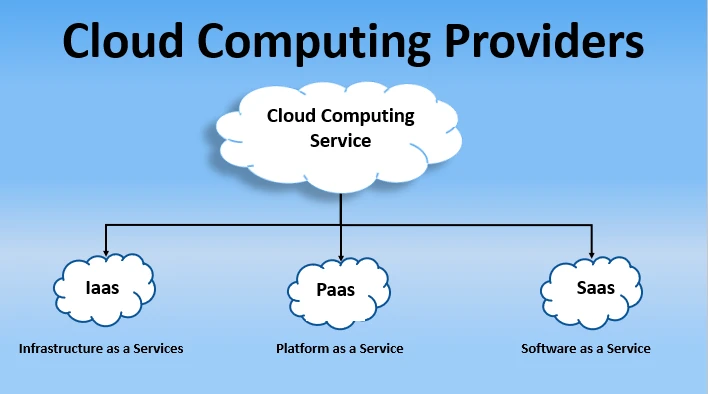

Cloud infrastructure is a phrase used to refer to the hardware, abstracted resources, storage, and network resources that are required for cloud computing. Consider cloud infrastructure to be the technologies required to create a cloud. Cloud infrastructure services are required to host services and applications in the cloud.
Categories:
1. Computing: Server racks provide the computational element of the infrastructure, allowing various services and partners to access cloud services.
2. Networking: Routers and switches are used in this section of the infrastructure to transport data both inside and externally and between computer and storage systems.
3. Storage: A cloud architecture would almost certainly require a lot of storage, which will most likely be a mix of hard drives and flash storage.
3 methods of Cloud Infrastructure
●Private: The cloud infrastructure services are delivered in-house and on-premise with private cloud architecture. For a high degree of control and protection for sensitive data, resources are shared internally among gated users. This technique works best when a firm is large enough to run its cloud data centre and has the financial resources. If a company's business depends on an application and its data, a private cloud makes sense.
● Public: A public cloud infrastructure is an internet-based service delivered, managed, and maintained off-site. This technique can assist streamline processes and cooperation on multi-user applications (such as email), making resource sharing more efficient. A public offering, on the other hand, carries a greater risk of vulnerability. A public cloud makes sense if a firm is working on an ad hoc software development project using a PaaS service.
●Hybrid: In hybrid cloud architecture, private and public cloud services are combined. This service combines the efficiency of a public cloud with the security of a private cloud. Still, it requires a firm to maintain several platforms simultaneously while guaranteeing smooth API interaction. A hybrid cloud makes the most sense if a firm wishes to allow a SaaS app while emphasising security. As a result, the SaaS company would set up a private cloud behind its firewall.
PROs of Cloud Infrastructure
1. Cost: First of all, and mainly, the cloud eliminates or significantly decreases the operating costs associated with a firm setting up and managing its own data centre. This procedure begins to pile up with all of the numerous gear, software, servers, electricity bills, IT specialists, and upgrades that come with such a complex setup. With cloud infrastructure, a firm pays for it all to be handled while only paying for the used services.
2. Security: There is a widespread belief that cloud services are inherently insecure and that data may be readily stolen. With stronger firewalls, advanced encryption keys, and a hybrid approach that stores sensitive data in a private cloud and other data, including apps, in a public cloud, cloud infrastructure technologies and providers are constantly improving protection against hackers, viruses, and other data breaches.
CONs of Cloud Infrastructure
1. Connection Reliance: The network connectivity of cloud architecture is only as good as it is. As a result, the cloud cannot function without a stable connection. A dependable network ensures that business promises and service level agreements (SLAs) are met.
2. Control: Because its service provider often manages a company's cloud infrastructure, businesses may sometimes have restricted access to data. With restricted access to programmes, data, and tools housed on a server, corporate customers have even less control than they would desire.




























Sign in to leave a comment.