Structures like retaining walls are robustly built and don't give up easily. Lack of maintenance, improper material selection, improper installation, and ground/soil movements are among the major reasons these structures fail prematurely. Material choice is a crucial factor here, and people understand this very clearly. This is why concrete blocks are the first choice when dealing with clay soil, coastal moisture, sudden downpour and neglected maintenance. Besser blocks also come into the scenario to confuse builders and homeowners. They have to decide which material is better for retaining wall construction. Let us find out the answer in this article.
WHAT IS THE DIFFERENCE BETWEEN BESSER BLOCKS AND SOLID CONCRETE BLOCKS?
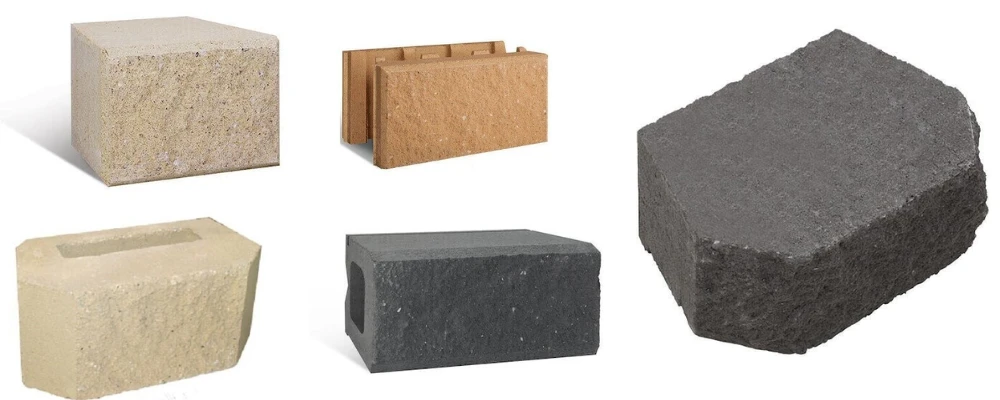
In Australia, Besser blocks usually refer to hollow concrete masonry units. Traditionally, concrete blocks can be solid or hollow depending on the usage. Some key structural differences between besser blocks and solid concrete blocks are listed below.
BESSER BLOCKS (HOLLOW):
- Core cavities for steel reinforcement
- Lighter to handle on-site
- Easier to grout for structural strength
SOLID CONCRETE BLOCKS:
- Heavier per unit
- Higher mass without reinforcement
- More labour-intensive to lie
For retaining walls over 600 mm high, besser blocks offered by concrete block suppliers are ideal, and they are reinforced with steel and filled with concrete. In this way, these besser blocks for sale can easily outperform solid units. With the availability of a wide range, Besser blocks for sale allow proper engineering control and retaining walls constructed using these blocks comply with Australian standards maintained by Standards Australia.
PERFORMANCE IN AUSTRALIAN CONDITIONS
Local conditions play a major role in selecting the right material for retaining walls. Queensland has reactive clay, Western Australia has sandy coastal soils, and some parts of Victoria experience frequent freeze-thaw. In these situations, it is important to select the material carefully, which is why Besser blocks for sale are preferred. They create a structural grid once filled and tied with rebar. Solid concrete blocks, on the other hand, rely purely on mass, and they are sufficient for garden edging and load-bearing retaining walls.
DRAINAGE – THE REAL FAILURE POINT
Retaining walls mostly collapse due to water pressure, and soil weight is not a culprit at all. Besser blocks for sale, offered by concrete blocks suppliers, provide the flexibility needed for –
- Core filling with reinforced concrete
- Installation of AG pipe drainage behind the wall
- Proper weep hole placement
Good drainage, a geotextile membrane, and backfill gravel are more important than the brand name alone. Block design is a major factor to consider to ensure the success of your retaining wall structure.
COST CONSIDERATION
The cost is another important factor to consider while selecting between concrete blocks and Besser blocks for sale. Labour and reinforcement also influence the final expenditure.
WHEN COMPARING BESSER BLOCKS FOR SALE ACROSS AUSTRALIAN SUPPLIERS:
- Hollow units cost less per piece
- Steel and core filling add material cost
- Installation runs faster due to lighter handling
WHEN BESSER BLOCKS MAKE MORE SENSE?
For most residential retaining walls above knee height, reinforced hollow systems provide:
- Better engineering flexibility
- Higher long-term durability
- Easier compliance with council requirements
- Simpler integration with drainage systems
They also come in a wide range, Besser blocks suited for different structural loads and finishes.
On commercial sites, engineers almost always specify reinforced hollow blocks.
WHEN SOLID CONCRETE BLOCKS WORK?
SOLID BLOCKS SUIT:
- Small garden edging
- Non-load-bearing landscape features
- Short boundary walls under 600mm
PRACTICAL CONSTRUCTION ADVICE FOR RETAINING WALL STRUCTURES
Some common mistakes must be avoided that we have been experiencing in Australia with retaining wall structures. The best step is to consult with concrete blocks suppliers about the wide range of besser blocks and concrete blocks. Here is a quick list of the top mistakes to avoid related to retaining wall construction.
- Skipping proper footing depth
- Ignoring soil classification
- Inadequate back drainage
- Choosing blocks based on price alone
FAQs
ARE BESSER BLOCKS STRONGER THAN SOLID CONCRETE BLOCKS?
- Reinforced and core-filled besser blocks provide greater structural strength for retaining walls than unreinforced solid blocks.
DO I NEED COUNCIL APPROVAL FOR A RETAINING WALL IN AUSTRALIA?
- Most councils require approval for walls over 1 metre high.
- Check your local authority for specific height and engineering requirements.
HOW MANY CONCRETE BLOCKS DO I NEED PER SQUARE METRE?
- It depends on the block size.
- Standard 390x190 blocks typically require around 12–13 units per m².
ARE BESSER BLOCKS SUITABLE FOR COASTAL AREAS?
- Yes, when reinforced properly and protected against corrosion.
- Use appropriate steel and ensure proper drainage.
























Sign in to leave a comment.