
Technology is changing fast. Teenagers are no longer just playing games or watching videos. Many now want to build apps, create robots, explore AI, and understand how technology really works.
That is where coding kits come in.
The right coding kit can turn a curious teenager into a confident builder. Today, many parents, teachers, and schools are looking for Digital technology kits for secondary school students that teach coding through hands on projects, electronics, robotics, and problem solving. Some classrooms also use school robotic kits to help teenagers learn coding in a fun and practical way.
But which coding kit is actually worth buying in 2026?
Let us compare some of the best options.
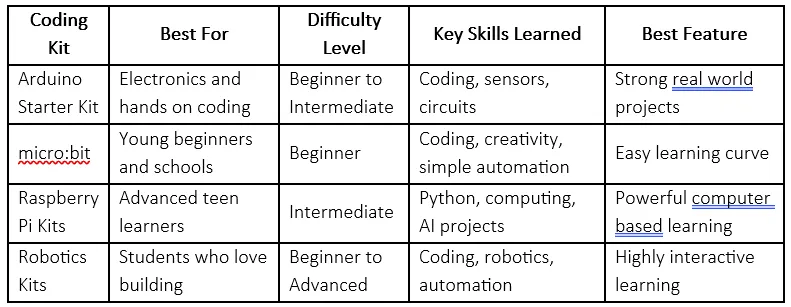
Quick Comparison Table
Arduino Starter Kit
Best for Teenagers Who Want Real World Coding Skills
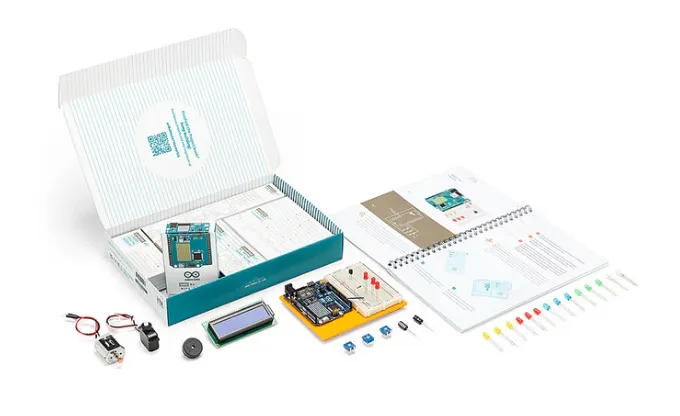
If there is one coding kit that consistently appears in classrooms, maker spaces, and STEM programs, it is the Arduino Starter Kit.
And there is a good reason for that.
Arduino does not just teach coding. It teaches teenagers how code connects with the physical world.
Instead of only writing commands on a computer, students can build working projects that use sensors, lights, motors, buttons, and electronic components. A teenager can create a temperature alarm, a motion detector, a smart lighting project, or even a simple automated system.
That hands on experience changes the learning process.
Coding starts feeling useful instead of abstract.
For teenagers who enjoy experimenting, solving problems, or understanding how devices actually work, Arduino provides a strong learning foundation.
However, Arduino does come with a small learning curve. Students need patience, curiosity, and a willingness to troubleshoot. But that challenge is often part of what makes the platform valuable.
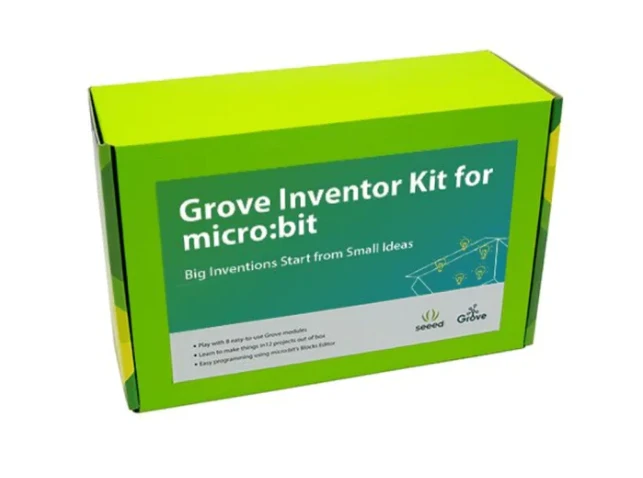
micro:bit
Best for Beginners Who Need an Easy Starting Point
Not every teenager wants to jump straight into electronics wiring and circuit building.
Some students need a smoother introduction to coding.
That is where micro:bit stands out.
micro:bit was designed to make technology education simple, visual, and beginner friendly. Students can start coding quickly without feeling overwhelmed by technical complexity.
With micro:bit, teenagers can build simple games, digital timers, fitness trackers, music projects, and basic interactive devices.
Many teachers prefer micro:bit for classrooms because students can achieve early success. That matters more than people often realise.
When teenagers see their projects working quickly, confidence grows. And confidence is one of the biggest reasons students continue learning technology instead of giving up after a frustrating first experience.
micro:bit may not offer the same depth as Arduino for advanced electronics learning, but it excels at building coding confidence and creative thinking.
Raspberry Pi Kits
Best for Teenagers Interested in Computing, Python, and AI
Arduino teaches electronics. micro:bit teaches beginner coding.
Raspberry Pi moves into a different category.
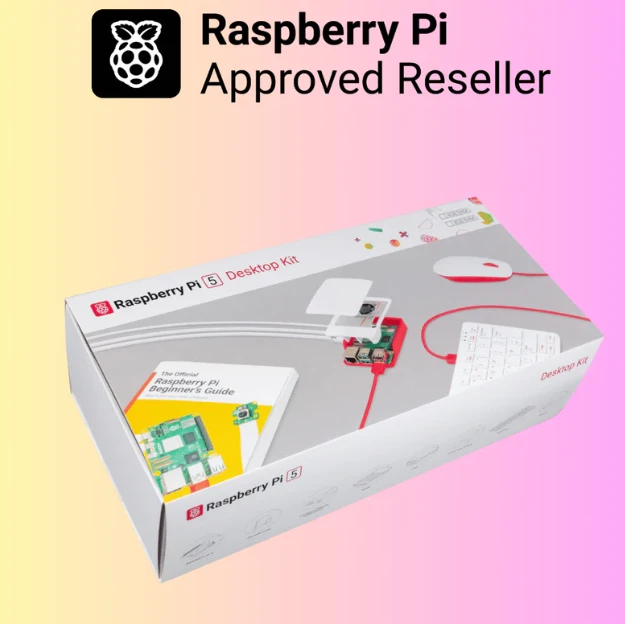
It is essentially a small computer that opens the door to more advanced technology learning.
Teenagers using Raspberry Pi can explore Python programming, web development, operating systems, computer vision, automation, and beginner AI projects.
That wider capability makes Raspberry Pi attractive for students who already have some coding experience or want to go deeper into computing.
For example, a student can use Raspberry Pi to create a smart home controller, a media centre, a security camera project, or a basic AI powered experiment.
The learning possibilities are much broader.
But that flexibility also means Raspberry Pi can feel more complex for complete beginners. Students often need more setup time and a stronger willingness to explore technical concepts independently.
For teenagers interested in future technology careers, however, Raspberry Pi can be an incredibly powerful learning platform.
Robotics Kits
Best for Students Who Learn by Building and Experimenting
Some teenagers do not connect deeply with traditional coding lessons.
But give them a moving robot, a programmable machine, or a challenge involving automation, and their entire attitude toward technology changes.
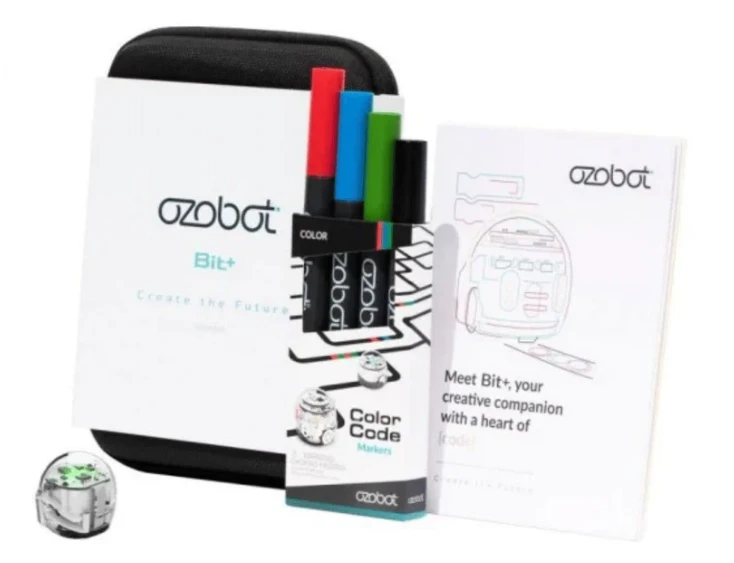
This is why school robotic kits have become increasingly popular in classrooms and STEM learning programs.
Robotics kits combine coding, engineering, creativity, and problem solving into one learning experience.
Instead of seeing code only on a screen, students see immediate physical results. They can build machines that move, react to sensors, follow instructions, avoid obstacles, or respond to environmental changes.
That creates a powerful feedback loop.
Robotics kits are particularly valuable for teenagers who prefer visual, hands on, or project based learning environments.
The main consideration is cost and complexity. Some robotics platforms are simple enough for beginners, while others require stronger technical knowledge.
Which Coding Kit Is Actually Best in 2026?
There is no single winner for every teenager.
Each kit serves a different purpose.
If a teenager enjoys electronics, real world projects, and understanding how devices function, Arduino is often the strongest choice.
If the goal is beginner friendly coding with quick progress and creative experimentation, micro:bit is hard to ignore.
If a student wants deeper computing knowledge, Python programming, or AI related exploration, Raspberry Pi becomes a strong option.
And for teenagers who learn best through movement, building, and interactive projects, robotics kits can make technology education far more engaging.
The best coding kit is not always the most advanced one.
It is the one that makes a teenager curious enough to keep learning.
What Makes a Great Coding Kit for Teenagers?
A good coding kit should teach more than commands and syntax.
It should help teenagers build confidence, solve problems, think creatively, and understand how technology works in the real world.
Final Thoughts
Coding education continues to evolve, and teenagers now have more powerful learning tools than ever before.
Arduino Starter Kit delivers strong practical learning through electronics and coding.
micro:bit makes technology approachable for beginners.
Raspberry Pi expands into computing, Python, and advanced project building.
Robotics kits bring coding to life through movement, experimentation, and interactive design.
Each option has clear strengths.
The real goal is not choosing the most popular kit. The goal is choosing the kit that turns curiosity into capability.
Because when teenagers enjoy learning technology, coding stops feeling like another school subject.


























Sign in to leave a comment.