
Introduction
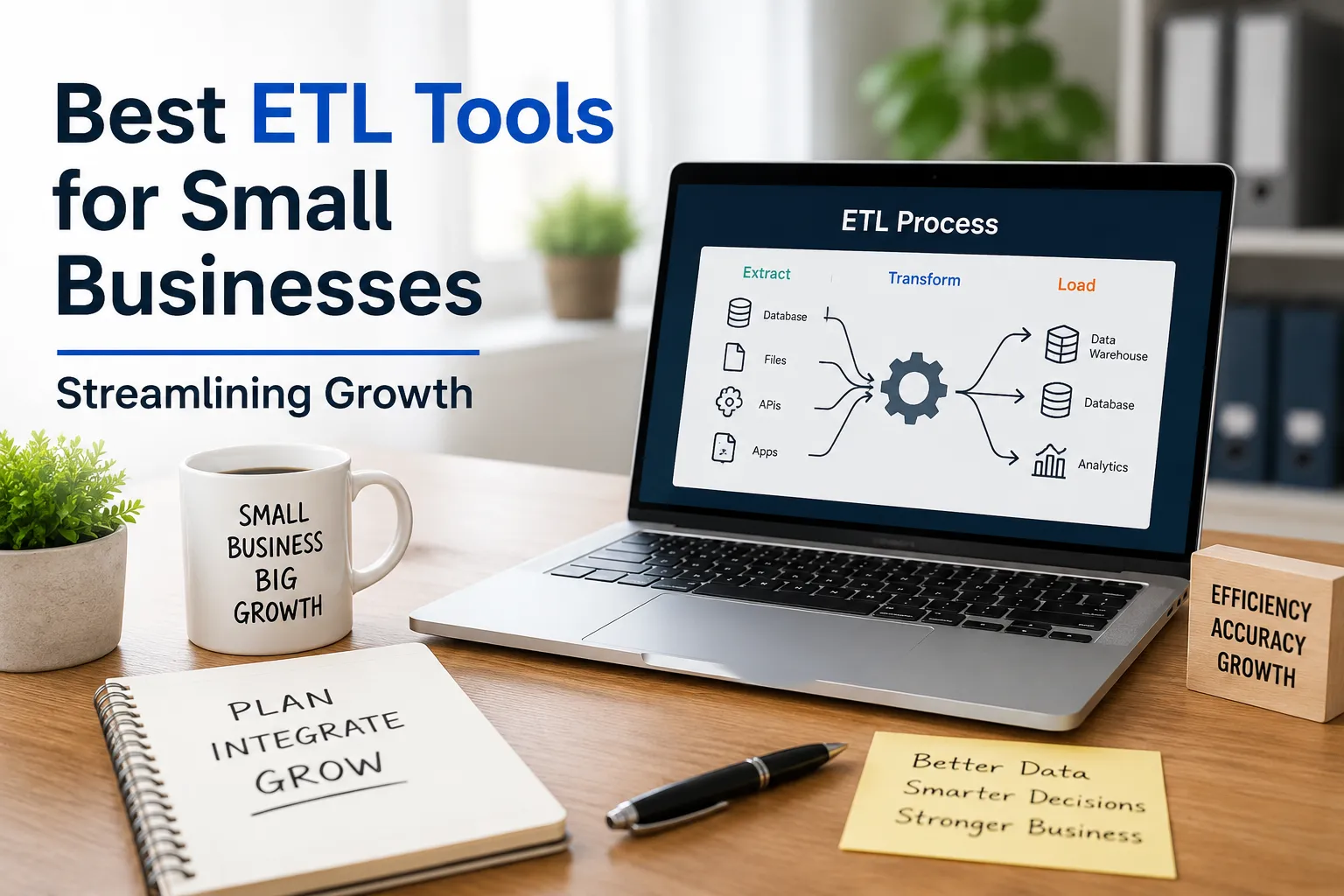
Every growing company eventually hits the same wall: data scattered across spreadsheets, CRMs, payment platforms, and marketing tools that never quite talk to each other. For a small business owner trying to make sense of sales trends or customer behavior, this fragmentation costs time and, often, revenue. This is exactly where the best ETL tools for small businesses come into play. ETL, short for extract, transform, and load, describes the process of pulling raw data from multiple sources, cleaning and reshaping it, and delivering it into a single destination such as a data warehouse. What used to require a dedicated engineering team can now be handled by lightweight, affordable platforms built with smaller operations in mind. This article walks through what to look for, why it matters, and which options genuinely deserve a small business owner's attention.
Why Small Businesses Need Reliable Data Integration
Unlike large enterprises with in-house data teams, small businesses usually rely on a handful of people wearing multiple hats. Manually exporting reports from one platform and importing them into another is not just tedious, it invites human error. A missed column mapping or a duplicated row can quietly distort financial forecasts or inventory counts. Choosing among the best ETL tools for small businesses removes this manual burden and creates a dependable pipeline that runs quietly in the background, refreshing dashboards and reports without anyone touching a keyboard. Over time, this reliability builds trust in the numbers, which is essential when decisions about hiring, marketing spend, or product pricing depend on accurate figures.
What Makes the Best ETL Tools for Small Businesses Different
Enterprise-grade data platforms are often built for scale first and simplicity second, which makes them intimidating and expensive for a ten-person company. The tools that genuinely serve smaller teams share a few traits. They offer prebuilt connectors for common apps like Shopify, QuickBooks, HubSpot, and Google Analytics, so setup takes hours rather than weeks. They also tend to price by usage or by connector count rather than demanding a six-figure annual contract. Ease of use matters just as much as functionality, since most small business teams do not have a dedicated data engineer to maintain complex scripts. A platform that a marketing manager or operations lead can configure without writing code tends to win out over one that requires specialized skills.
Top Considerations Before Choosing a Platform
Before settling on any provider, it helps to map out exactly which systems need to be connected and how often data should refresh. A retail business might need near real-time syncing between its point-of-sale system and inventory software, while a service-based company may only need daily updates from its billing platform. Budget matters too, since some vendors charge based on data volume, which can spike unexpectedly during a busy sales season. It is also worth checking whether a tool supports the destination database or warehouse already in use, such as Google BigQuery, Snowflake, or even a simple PostgreSQL instance. Security certifications, uptime guarantees, and customer support responsiveness are equally important, since a broken pipeline during month-end reporting can create real headaches.
Popular Options Worth Evaluating
Several platforms have built strong reputations among smaller companies. Fivetran offers an extensive connector library and largely automated maintenance, appealing to teams that want a hands-off experience. Stitch, now part of the Talend family, provides an approachable interface with transparent pricing tiers suited to leaner budgets. Airbyte has gained traction because of its open-source model, letting technically inclined teams self-host and customize connectors without licensing fees. For businesses already invested in the Google ecosystem, Google Cloud's Dataflow integrates naturally with BigQuery, though it demands a bit more technical comfort. Hevo Data markets itself specifically toward small and mid-sized businesses, emphasizing a no-code setup and responsive support. Comparing a shortlist of these platforms against the specific needs identified earlier usually narrows the decision quickly.
Cost and Scalability Factors
Price is rarely just about the monthly subscription. Hidden costs can appear through overage fees, connector limits, or charges for historical data syncing. A tool that feels affordable at launch might become expensive once transaction volume grows, so it pays to model out costs at twice or three times current data volume before committing. Scalability also means considering what happens as the business adds new sales channels or software tools. The strongest platforms among the best ETL tools for small businesses allow new connectors to be added without a full pipeline rebuild, which saves both time and frustration later.
Building Long-Term Data Confidence
Adopting an ETL tool is not a one-time project; it is an ongoing commitment to data quality. Regularly auditing which connectors are still needed, monitoring for failed syncs, and revisiting pricing plans as usage changes all contribute to a healthier data operation. Small businesses that treat their ETL setup as a living system, rather than a set-and-forget purchase, tend to get far more value from it over time.
Final Thoughts
Selecting from the best ETL tools for small businesses does not need to be an overwhelming exercise. By focusing on ease of setup, transparent pricing, and compatibility with existing software, even a lean team can build a data pipeline that rivals what larger competitors use. The right platform frees up hours previously spent on manual exports and lets business owners focus on what the data is actually telling them, rather than how to gather it in the first place.





























Sign in to leave a comment.